225682211880


Silk scarves

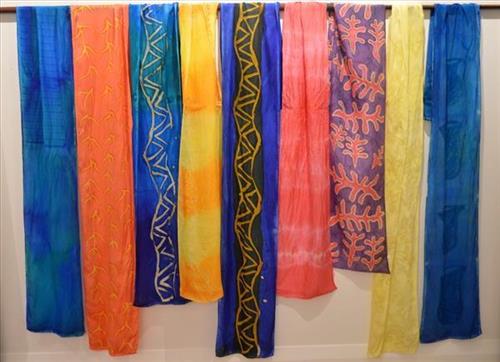
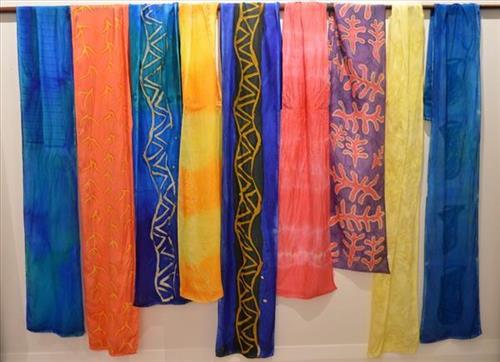
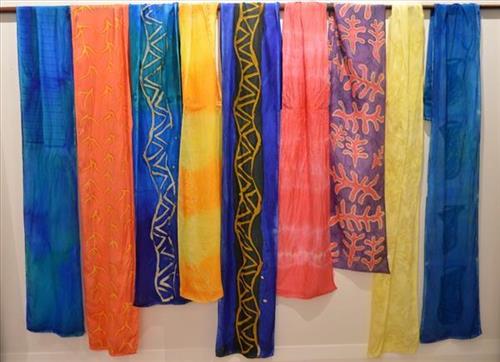
These silk scarves have been hand painted/ printed using different patterns, colours, shapes and designs to create a design that represents the artists country, culture and stories. All the scarves have been created at the Bana Yirriji Art and Cultural Centre by local community artists.

225682211879


Silk scarves

These silk scarves have been hand painted/ printed using different patterns, colours, shapes and designs to create a design that represents the artists country, culture and stories. All the scarves have been created at the Bana Yirriji Art and Cultural Centre by local community artists.

225682211877


Silk scarves

These silk scarves have been hand painted/ printed using different patterns, colours, shapes and designs to create a design that represents the artists country, culture and stories. All the scarves have been created at the Bana Yirriji Art and Cultural Centre by local community artists.

225682211876


Silk scarves

These silk scarves have been hand painted/ printed using different patterns, colours, shapes and designs to create a design that represents the artists country, culture and stories. All the scarves have been created at the Bana Yirriji Art and Cultural Centre by local community artists.

377810582211785


Dakarra (cockle)

Dakarra is the Burrara Gun-nartpa word for a type of cockle shell with prominant scaled ribs and an orange colour. This is part of a diet of shellfish which has been enjoyed by people whose country lies on the saltwater estuaries at the opening of  rivers throughout Arnhem Land.

Elizabeth Wullunmingu’s mother country is Djunawunya, near Gupunga on the Bligh river. This is saltwater country. Her design Dakarra represents a songline for this particular type of edible shellfish and the fishing lifestyle that is enjoyed by her people. 

Elizabeth’s grandfather Frank Gurrmanamana was seen in the documentary ‘Waiting For harry’  1978  by Ronin films which is filmed on Elizabeth’s mother country, Djunawunya. In this documentary, the late Frank Gurrmanamana is preparing the final mortuary ceremonies for his brother who died six years before. Central to the ceremonies is Harry Diama, the senior blood-relative of the deceased man, but Harry lives in Maningrida and is pre-occupied with a pending court-case there involving his son.

https://www.sbs.com.au/topics/video/1068702275809/Waiting-For-Harry
 

111982211581


Jima Jima (Waterlily)

Jimi jima is one of Tommy Gondorra Steele’s personal dreamings. It is similar to what is commonly known as a waterlily (monochoria australasica). Jimi jima is mainly associated with a waterhole named Yalija, but also other sacred waterholes in the Wurdeja area. Tommy’s painting of jima jima depicts the lily as it exists naturally in wet water areas at Wurdeja. They have an edible root, which is brownish and bitter when raw, but once roasted on coals it is deliciously sweet. They are only found in sacred waterholes in the Wurdeja area, including Yalija, and humans and spirits live off them. They are a bright blue flowering plant.

Tommy Gondorra Steele is the last male member of the Garnawula Niya clan. He lives at Wurdeja outstation, about four kilometres east of the Blyth River. He is the traditional owner of that area. Wurdeja is surrounded by a series of sacred waterholes and it is these waterholes, which provide the subject matter for Steele’s art.

111982211580


Jima Jima (Waterlily)

Jimi jima is one of Tommy Gondorra Steele’s personal dreamings. It is similar to what is commonly known as a waterlily (monochoria australasica). Jimi jima is mainly associated with a waterhole named Yalija, but also other sacred waterholes in the Wurdeja area. Tommy’s painting of jima jima depicts the lily as it exists naturally in wet water areas at Wurdeja. They have an edible root, which is brownish and bitter when raw, but once roasted on coals it is deliciously sweet. They are only found in sacred waterholes in the Wurdeja area, including Yalija, and humans and spirits live off them. They are a bright blue flowering plant.

Tommy Gondorra Steele is the last male member of the Garnawula Niya clan. He lives at Wurdeja outstation, about four kilometres east of the Blyth River. He is the traditional owner of that area. Wurdeja is surrounded by a series of sacred waterholes and it is these waterholes, which provide the subject matter for Steele’s art.

111982211579


Jima Jima (Waterlily)

Jimi jima is one of Tommy Gondorra Steele’s personal dreamings. It is similar to what is commonly known as a waterlily (monochoria australasica). Jimi jima is mainly associated with a waterhole named Yalija, but also other sacred waterholes in the Wurdeja area. Tommy’s painting of jima jima depicts the lily as it exists naturally in wet water areas at Wurdeja. They have an edible root, which is brownish and bitter when raw, but once roasted on coals it is deliciously sweet. They are only found in sacred waterholes in the Wurdeja area, including Yalija, and humans and spirits live off them. They are a bright blue flowering plant.

Tommy Gondorra Steele is the last male member of the Garnawula Niya clan. He lives at Wurdeja outstation, about four kilometres east of the Blyth River. He is the traditional owner of that area. Wurdeja is surrounded by a series of sacred waterholes and it is these waterholes, which provide the subject matter for Steele’s art.

111982211578


Wak Wak

This painting depicts a sacred site at ‘Kurrurldul’, an outstation south of Maningrida.

The ‘rarrk’, or abstract crosshatching, on this work represents the design for the crow totem ancestor called ‘Djimarr’. Today this being exists in the form of a rock, which is permanently submerged at the bottom of Kurrurldul Creek. The ‘Djimarr’ rock in the stream at Kurrurldul is said to move around and call out in a soft hooting tone at night. Both the stone itself and the area around it are considered sacred.

The imagery represents the rock mentioned above at the bottom of Kurrurldul creek, which is the final transmutation of the dreaming ancestor ‘Djimarr’. Finally, the pattern used here is also the crow design used in the sacred ‘Mardayin’ ceremony, which is a large regional patri-moiety ceremony now rarely conducted in central and eastern Arnhem Land.

111982211577


Wak Wak

This painting depicts a sacred site at ‘Kurrurldul’, an outstation south of Maningrida.

The ‘rarrk’, or abstract crosshatching, on this work represents the design for the crow totem ancestor called ‘Djimarr’. Today this being exists in the form of a rock, which is permanently submerged at the bottom of Kurrurldul Creek. The ‘Djimarr’ rock in the stream at Kurrurldul is said to move around and call out in a soft hooting tone at night. Both the stone itself and the area around it are considered sacred.

The imagery represents the rock mentioned above at the bottom of Kurrurldul creek, which is the final transmutation of the dreaming ancestor ‘Djimarr’. Finally, the pattern used here is also the crow design used in the sacred ‘Mardayin’ ceremony, which is a large regional patri-moiety ceremony now rarely conducted in central and eastern Arnhem Land.