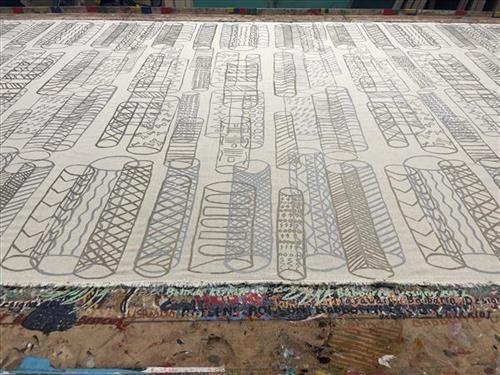
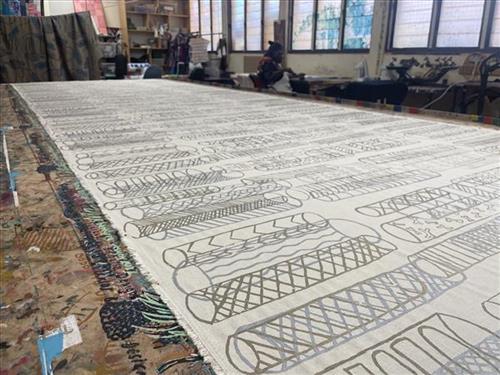
35970941772


Status: Stock


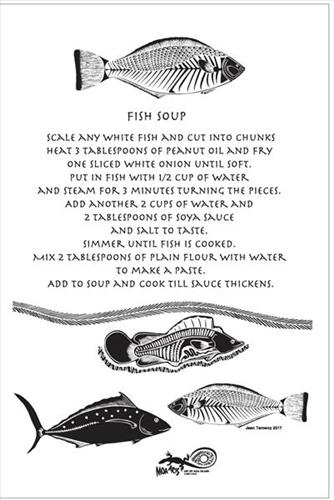
Jean Tamwoy

Wisway, take a bite into the life on Moa Island!

Follow traditional recipes by our artists and you’ll be a Torres Strait Master Chef in no time!

Our dishes are made for special gatherings like weddings, birthdays and tombstone unveilings.

If upla feeling like a lil’ snack is coming on; have a go and try making one of our delicious recipes.  Eso


Fish Soup by Flora Warria


Scale any white fish and cut into chunks.

Heat 3 tablespoon of peanut oil and fry

One sliced white onion until soft.

Put in fish with ½ cup of water and steam for 3 minutes turning the pieces.

Add another2 cups of eater and 2 tablespoon of soya sauce.

And salt to taste.

Simmer until fish is cooked.

Mix 2 tablespoons of plain flour with water to make paste.

Add to coup and cook till sauce thickens.


Connect with us: we would love to see your version of Flora’s recipe. Take a photo and tag us on the Moa Art’s Instagram


#islandstyle #islandrecepie #islandcookout #torrestrait #moaarts #moaislandfnq


Check out our website www.moaart.com.au for a range of traditional recipe.


Print by Jean Tamwoy

35970941771


Status: Stock


Fiona Elisala

Wisway, take a bite into the life on Moa Island!

Follow traditional recipes by our artists and you’ll be a Torres Strait Master Chef in no time! 

Our dishes are made for special gatherings like weddings, birthdays and tombstone unveilings.

If upla feeling like a lil’ snack is coming on; have a go and try making one of our delicious recipes.  Eso


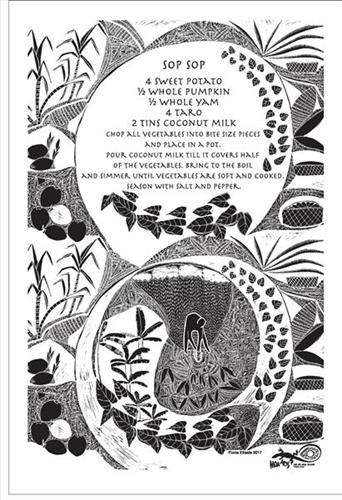
Sop Sop by Flora Warria


4 sweet potatoes

½ whole pumpkin

½ whole yam

4 taros

2 tins coconut milk


Chop all vegetables into bite size pieces.

And place in a pot

Pour coconut milk till it covers half.

Of the vegetables bring to the boil

And simmer until vegetables are soft and cooked.

Season with salt and pepper.


Connect with us: we would love to see your version of Flora’s recipe. Take a photo and tag us on the Moa Art’s Instagram


#islandstyle #islandrecepie #islandcookout #torrestrait #moaarts #moaislandfnq


Check out our website www.moaart.com.au for a range of traditional recipe.


Print by Fiona Elisala/Mosby

35970941769


Status: Stock


Solomon Booth

Wisway, take a bite into the life on Moa Island!

Follow traditional recipes by our artists and you’ll be a Torres Strait Master Chef in no time!

Our dishes are made for special gatherings like weddings, birthdays and tombstone unveilings.

If upla feeling like a lil’ snack is coming on; have a go and try making one of our delicious recipes.  Eso


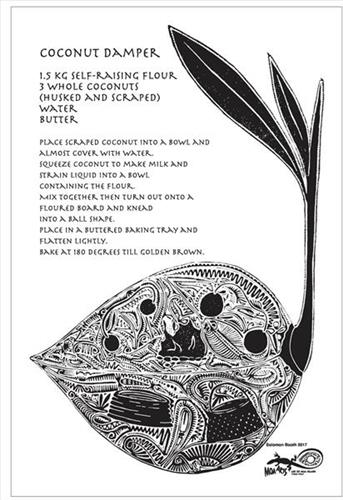
Coconut Damper Recipe by Flora Warria

1.5 KG self-rising flour

3 whole coconuts (husked and scraped)

Water

Butter


Place scraped coconut into bowl and almost cover with water.

Squeeze coconut to make milk and strain liquid into bowl.

Containing the flour.

Mix then turn out onto a

Floured board and knead.

Into a ball shape

Place in a buttered baking tray and

Flatten lightly.

Bake at 180 degrees till golden brown.


Connect with us: we would love to see your version of Flora’s recipe. Take a photo and tag us on the Moa Art’s Instagram


#islandstyle #islandrecepie #islandcookout #torrestrait #moaarts #moaislandfnq


Check out our website www.moaart.com.au for a range of traditional recipe.


Print by Solomon Booth


111582223465


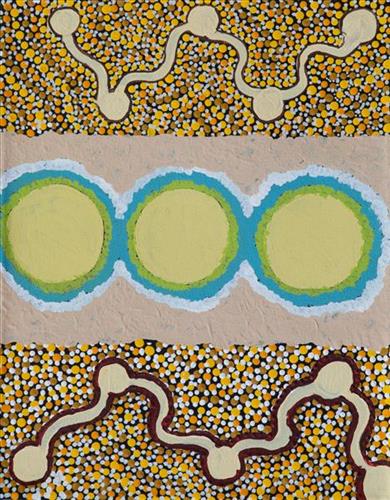
Untitled

“When Martu paint, it’s like a map. Martu draw story on the ground and on the canvas, and all the circle and line there are the hunting areas and different waters and tracks where people used to walk, and [some you] can’t cross, like boundaries. So nowadays you see a colourful painting and wonder what it is, but that’s how Martu tell story long ago. It’s not just a lovely painting, it’s a story and a songline and a history and everything that goes with it.” 

– Ngalangka Nola Taylor and Joshua Booth

This work portrays an area of Country that can be interpreted in multiple ways. Firstly, the image may be read as an aerial representation of a particular location known to the artist- either land that they or their family travelled, from the pujiman (traditional, desert dwelling) era to now. During the pujiman period, Martu would traverse very large distances annually in small family groups, moving seasonally from water source to water source, and hunting and gathering bush tucker as they went. At this time, one’s survival depended on their intimate knowledge of the location of resources; thus physical elements of Country, such as sources of kapi (water), tali (sandhills), different varieties of warta (trees, vegetation), ngarrini (camps), and jina (tracks) are typically recorded with the use of a use of a system of iconographic forms universally shared across the desert. 

An additional layer of meaning in the work relates to more intangible concepts; life cycles based around kalyu (rain, water) and waru (fire) are also often evident. A thousands of year old practice, fire burning continues to be carried out as both an aid for hunting and a means of land management today. As the Martu travelled and hunted they would burn tracts of land, ensuring plant and animal biodiversity and reducing the risk of unmanageable, spontaneous bush fires. The patchwork nature of regrowth is evident in many landscape works, with each of the five distinctive phases of fire burning visually described with respect to the cycle of burning and regrowth.  

Finally, metaphysical information relating to a location may also be recorded; Jukurrpa (Dreaming) narratives chronicle the creation of physical landmarks, and can be referenced through depictions of ceremonial sites, songlines, and markers left in the land. Very often, however, information relating to Jukurrpa is censored by omission, or alternatively painted over with dotted patterns.
111982223620


Nawarlah – Brown River Stingray

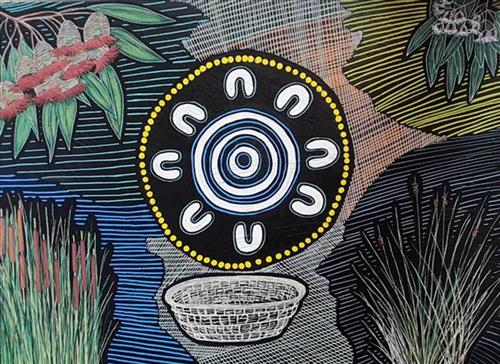
We hunt the Nawarlah (Brown River Stingray) during the wet season.  There is a plant with a yellow flower that tells us that it is the right time.  We know it will be fat. 

It is well known that Aboriginal art often depicts images of sacred totems or dreamings of Aboriginal culture. However, the world of the non-sacred also provides a rich source of subject matter for Aboriginal art. Much of the rock art of western Arnhem Land for example features secular topics such as common food animals and plants, depicted because of their economic importance but also merely because of their existence in the environment.

222082223828


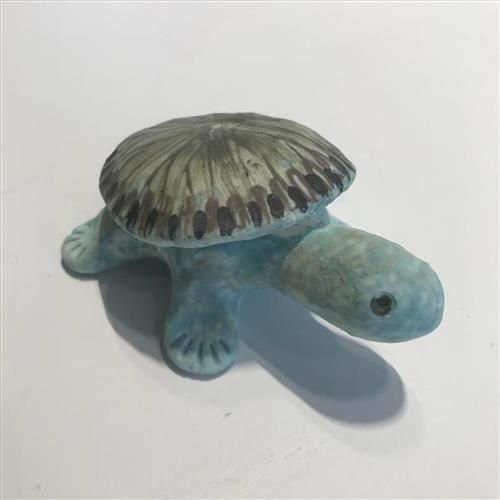
Bayadherra, baby turtle

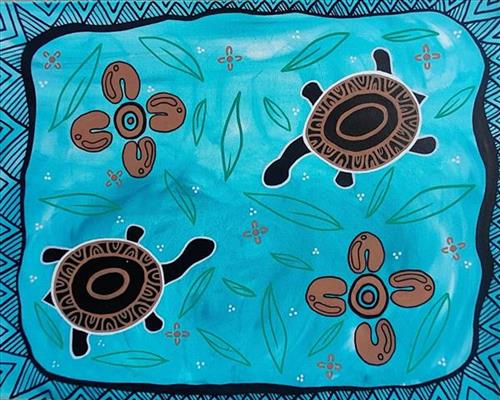
Hand formed shape of Bayadherra (turtle), porcelain with coloured glaze

Bayadherra is the Yorta Yorta word for the Long-Neck turtle.  Bayadherra is my totem. .

222082223826


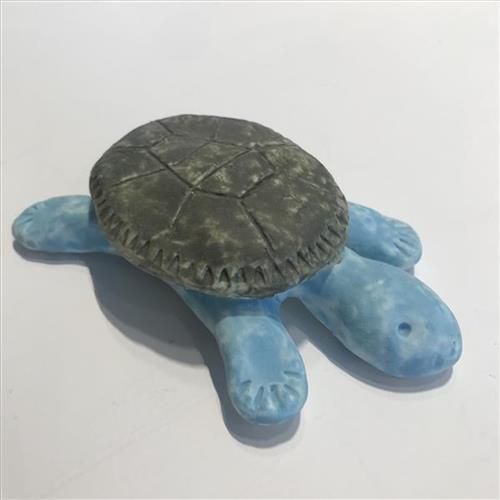
Bayadherra

Hand formed shape of Bayadherra (turtle), porcelain with coloured glaze

Bayadherra is the Yorta Yorta word for the Long-Neck turtle.  Bayadherra is my totem. .

377810582223939


Lorrkkon – Marilyn James

Marilyn’s first screen print design depicts the story of lorrkkon (hollow funeral logs). This the story of her great, great grandfather and grandmother who were bark painters, as well as also sacred lorrkkon painters.

When designing this screen print, Marilyn was remembering her childhood living in a small house on Liverpool river Ngar-wunja (Thompson hole) with other families.

Through the painting process, Marilyn remembered and relived the times when people still lived permanently on remote homelands, living off the land before balanda (non-indigenous people) arrived.

Marilyn recalls “it makes me think back, we did lots of things, some people was hunting, some was weaving, some was painting barks and lorrkkon. As my great, great grandfather and grandmother was painters, I painted this my story for them.”