222082233234


Weaving On The Lake – Barmah

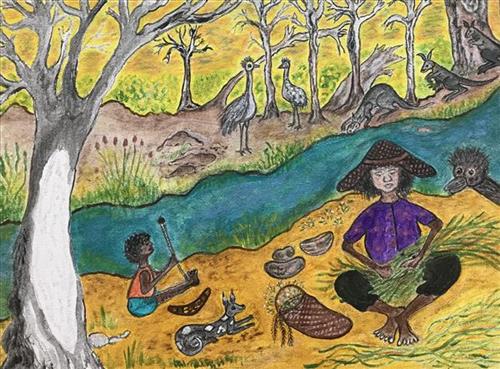
Memories are a connection to our past, present and future. Stories told by our elders and passed down, areas of significance where our families congregated and came together for camping, fishing or picnics and lovely sun, doing arts and crafts. This painting depicts life on the lake, sitting on the banks and enjoying the land and the day, weaving and being in the moment and teaching our children about our culture

222082233223


March For Land Rights

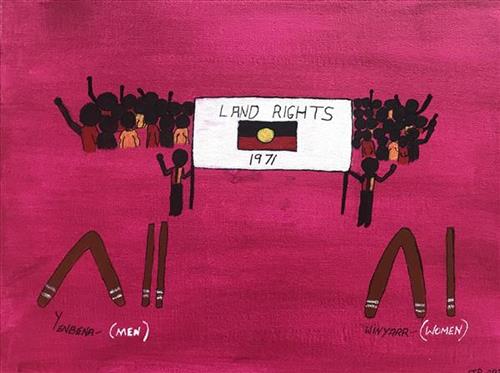
How our people banded together to fight for Aborignal rights. The march started in Melbourne, one of many in the mid to late 60s -70s. I’m proud to be able to paint my memory of being in the marches and putting it on canvas

222082233211


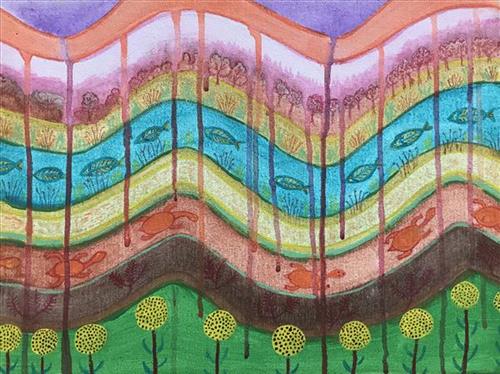
Climate Change

It means being able to express ourselves and our culture, being able to put their stories and memories on canvas. It gives me satisfaction to know that we’re leaving something to our next generation of now and the future. I think that the world we live in today makes us aware how vulnerable our planet is. If we don’t look after it and our families, our native animals and flora. I tried to depict it in my painting of Mother Earth crying for change and healing. To take away how we depend on the land for our survival, that was passed down from generations of our families and parents and grandparents and that our art opens doors to express those stories and our culture

222082233199


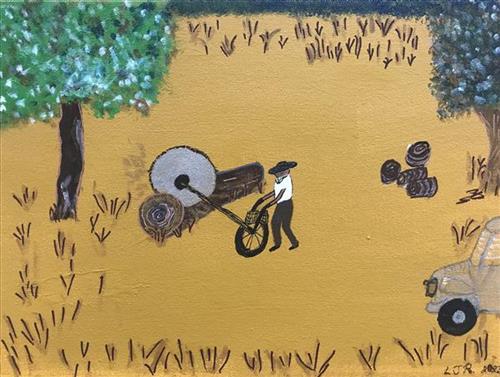
The Woodcutter (Mid 1940’s to early 1960’s)

A story about a man who worked hard to provide for his family and extended family by cutting wood with his saw in the bush and isolated properties. He would sell it to local townspeople. Sometimes would provide for his local aboriginal community. He would always have family to help him in case of accidents in isolated areas. Coal briquettes put him out of business. He worked wherever he could after that. Manager of an orchard at Shepp East, Orvale, carting hay, picking cherries, manager of 1st boys hostel Syd NSW

115682233786


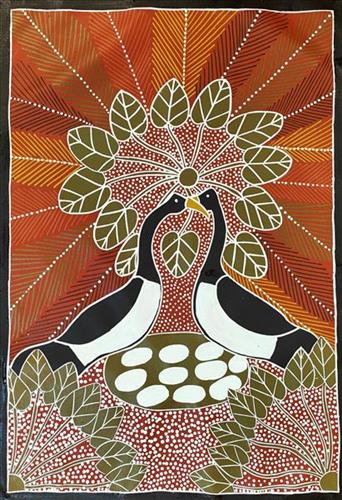
Gumang (Magpie Geese)

The Yolngu people of Arnhem Land originate from a spiritual source, fixed in a particular place in their land or the sea. These ‘Spiritual Reservoirs’ are often in the form of special waterholes made by Wangarr (Creative Beings) long ago close to the beginning of time.

The creator beings moved across the country side, shaping the land and implanting in each tract of country, the spiritual life force for the people who were to own it. These Creative Spirits took many forms. When they gave the land to each group they also gave songs, dances, ceremony, the associated laws and language. The Creation story for Ganalbingu people took place near the middle section of the Glyde River where it becomes the Goyder River. Their land, Ngaliyindi, sits astride the Arafura Swamp in Central Arnhem Land.

In this painting, the artist has depicted Gumang (magpie geese), which are sacred to the Ganalbingu people. To the east of the Arafura Swamp is a freshwater billabong which is said to have been made by the Goose Spirit and is in the shape of a goose nest. As a result, geese, their eggs and their nests are sacred.

115682233779


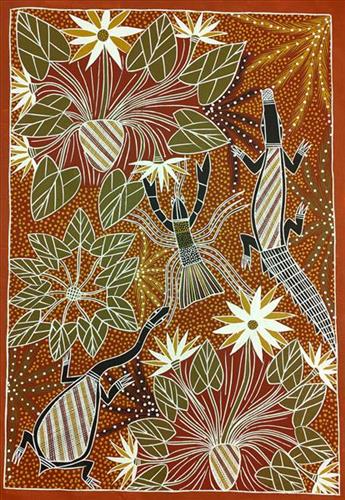
Raypiny Dhawu (Fresh Water Story)

All Aboriginal people originate from a spiritual source, fixed in a particular place in their land or the sea. These ‘spiritual reservoirs’ are often in the form of special waterholes made by Wangarr (creative spirits) that were created long ago close to the beginning of time. These creator beings moved across the countryside, shaping the land and implanting in each tract of country, the spiritual life force for the people who were to own it. These creative spirits took many forms and when they gave the land to each group, they also gave songs, dances, ceremony, the associated laws and language.


The creation story for Ganalbingu people took place near the middle section of the Glyde River where it becomes the Goyder River. Their land, Ngaliyindi, sits astride the Arafura Swamp in Central Arnhem Land. Many Ganalbingu artists paint totemic species significant to their clan. These can include baru (crocodile), banda (long necked turtle), buliya (catfish), yalman (waterlilies), gumang (magpie geese), dakawa (fresh water yabby), ratjuk (barramundi), warrnyu (flying fox) and more.
 

115682233552


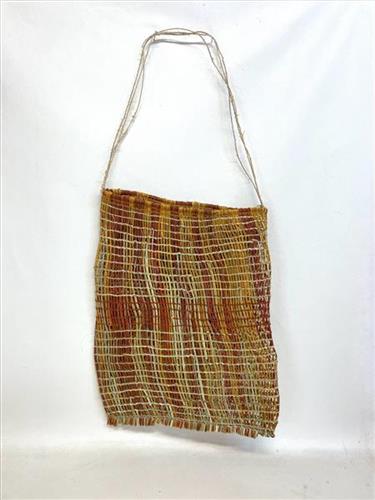
Bathi (Pandanus Basket)

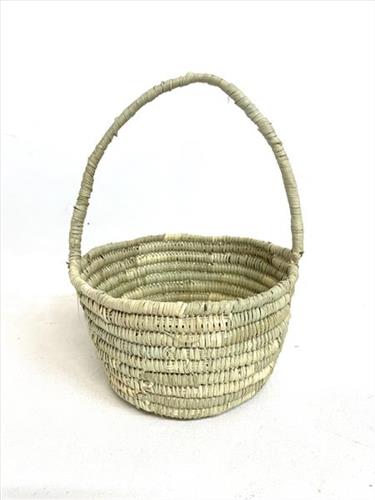
Bathi are woven from the split leaves of the Screw Palm (Pandanus Spiralis). Coil weaving was introduced to Arnhem Land in the 1930s. It was adapted from techniques used by Indigenous women throughout South East Australia.

115682233550


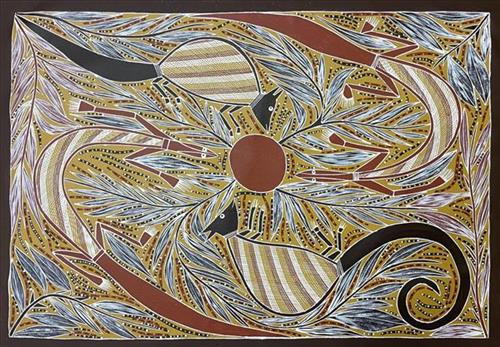
JB Fisher – Narrgi’ṉarrgi (possum- sugar glider)

JB paints stories from his Dhuwa homeland in northeast Arnhem Land. Stories are passed on either paternally or maternally, and JB would have learnt these stories from his ancestors. The cross-hatching style is a traditional painting style of this area and can represent elements such as water, air and wind.

His paintings often feature totemic animals of the fresh waters of north east Arnhem Land.

115682233499


Bathi (Pandanus Basket)

Bathi are woven from the split leaves of the Screw Palm (Pandanus Spiralis). Coil weaving was introduced to Arnhem Land in the 1930s. It was adapted from techniques used by Indigenous women throughout South East Australia.