Wild Gum Leaves
These are in leaves of the eucalyptus tree used to print on canvas. I’m inspired by the shapes and patterns in the landscape.
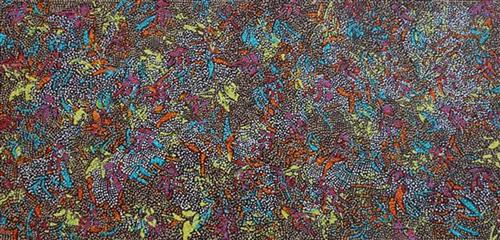
These are in leaves of the eucalyptus tree used to print on canvas. I’m inspired by the shapes and patterns in the landscape.
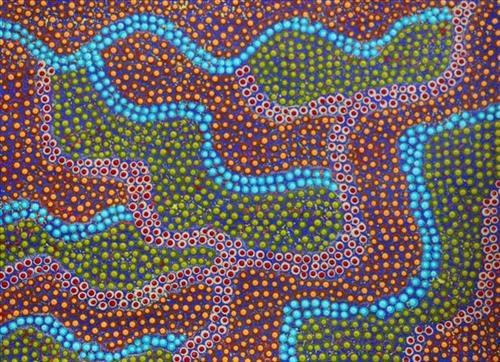
This painting is of the Ngurin (Harding River) when it is running in the wet season. The Running water fills the river up and there are several “pools” created for swimming. The three main pools are Jubilee pool,Government pool and round pool.
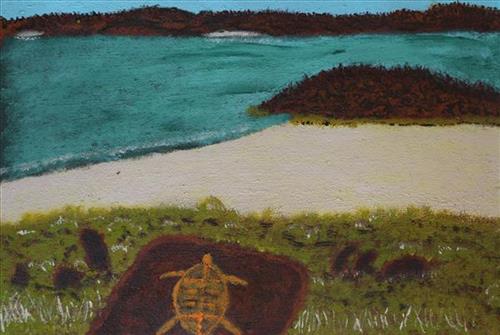
This is Angel Island which is off the Burrup in Dampier Archipelago
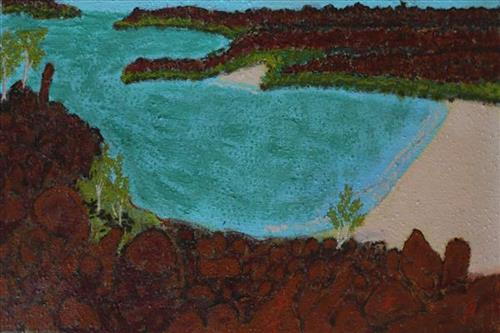
This is the Burrup in Karratha
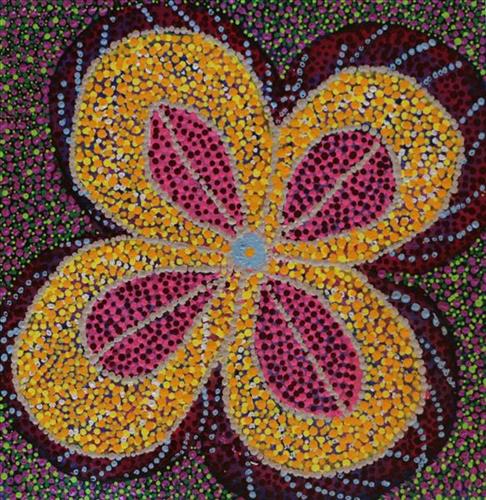
The bright cheery colours of the sun flower
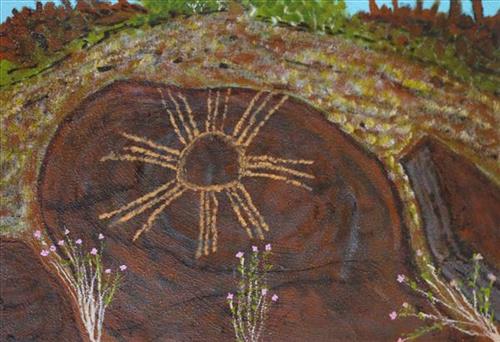
Sun Valley in the Burrup Peninsular Karratha WA

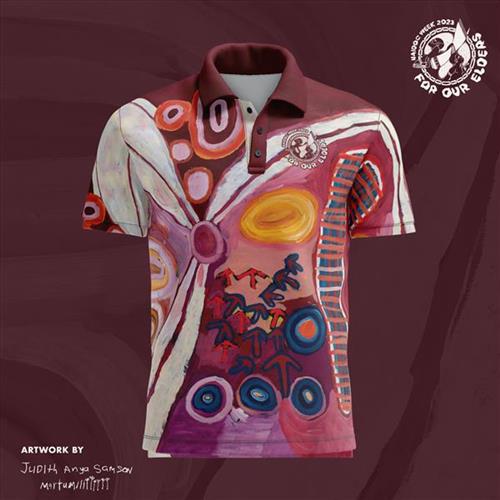
Status: Stock
“We drink water at Puntawarri. We clean and dig that waterhole. This Country is Puntawarri. My nanna, Dadda, taught me to paint this Country. Puntawarri is important because it is my pop’s, my nannas’ husband’s, place. They camped there and went hunting for goanna or anything, kangaroo or turkey. At Puntawarri there are all the waterholes. Good hunting this Country. There is still some Rabbit Proof Fence there.”
– Judith Anya Samson
Puntawarri is an important cultural area located on the middle stretches of the Canning Stock Route and east of the Jigalong Mission (now Jigalong Aboriginal community), where Judith grew up with her grandmother and renowned Martumili Artist, Dadda Samson (dec.). Puntawarri is also the site of an abandoned community, a waterhole, creek and lake. Puntawarri’s close proximity to Jigalong Mission made it a popular site for Martu to visit during the ‘mission days’.
While growing up at Jigalong Mission in the 1960’s, Dadda would return to Puntawarri every weekend to hunt and camp. Dadda has been teaching Judith to paint for a number of years, sharing the knowledge and Jukurrpa (Dreaming) stories associated with her ngurra (home Country, camp).
For many Martu, like Dadda and her family, Jigalong Mission was the site where their pujiman (traditional, desert dwelling) lifestyle came to an end from the late 1940s as they transitioned to a life as stockmen and women working in cattle stations in the Pilbara region and beyond. In the wake of the extreme and prolonged drought of the 1960s, the last of the remaining pujimanpa (desert dwellers) were forced to move to missions like Jigalong, where a supply of food and water was assured. There, many Martu were reunited with family members that had already moved in from the desert.
The waterhole at Puntawarri is said to be populated by several kinds of ancestral jila (snake), however the site is best known for its association with the Ngayurnangalku, fearsome ancestral cannibal beings. During the Jukurrpa the Ngayurnangalku came together from all over the desert, first stopping near Puntawarri on their travels to Kumpupirntily (Kumpupintily, Lake Disappointment). At Kumpupirntily, they had a big meeting to debate whether or not they would continue to live as cannibals, and eventually came to the decision to stop eating people. That night, a female baby cannibal was born to the eastern Ngayurnangalku on the red sandhills at Puntawarri, where she continues to live today as the ‘big mummy’ Ngayurnangalku. Following protocol, the baby also had to be consulted by the group. She determined that the Ngayurnangalku should continue to eat people. Her decision divided the group, and from this point the group from the east continued to live as ‘bad’ cannibals at Kumpupirntily, while the group from the west became ‘good’, thereafter consuming only animals.

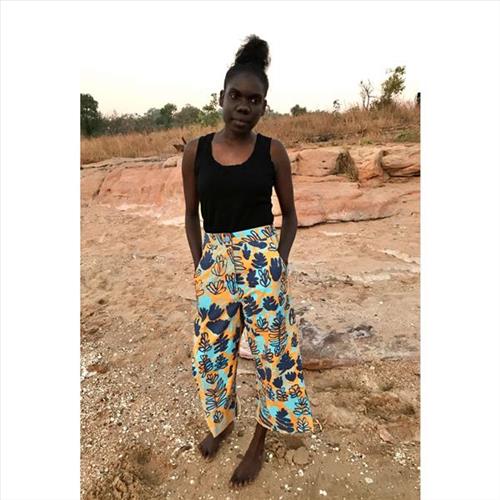
Status: Stock
The wide leg culottes take their name from the 60’s stunner and inspiration behind the song Brown Sugar by The Rolling Stones, Marsha Hunt.Featuring an elastic back, zip and button closure and generous side pockets
This design depicts certain clouds that signal to people of central Arnhem Land that the end of the wet season is approaching. After months of daily monsoonal rain in Arnhem Land, these clouds are light and fluffy, not like the dark, heavy clouds of the monsoonal sky. At the time of the kunngol clouds, people know the country will soon dry up and the cold season (dry season) will arrive. When the kunngol clouds appear, all of the billabongs are already filled, the rivers are high and the country is brimming with life and fresh new growth after months of fresh water pouring from the sky.
Model: Anocha Taylor
Photography: Bábbarra Womens Centre
Treat this handmade garment with love and it will love you back! Cold machine wash, drip dry in shade, warm iron. Avoid the tumble dryer and dry cleaner.
Being handmade there may be some print variations, making each garment unique.
Hand printed and made in Australia
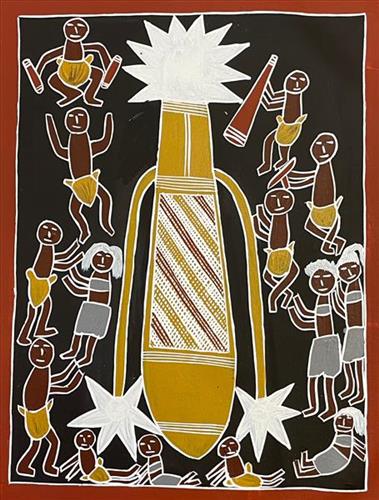
Banumbirr – Morning Star Ceremony (Dhuwa moiety)
The Morning Star Ceremony is from the Dhuwa moiety. I have painted the ceremony here. It’s got leaves from the banyan tree (ficus virnens) that makes figs for people to eat – they are part of our bush tucker.
The Morning Star is from my great grandfather, my grandfather and my father. I paint it for my family to show my sisters and brothers. My grandfather and my father have both passed away, so I teach the bunggul (dancing) to my children.
We make a little Morning Star (you can see a man holding that on the right side of the painting), so the big Morning Star can came out. It is a long ceremonial pole that we dance around. You can also see the little Morning Star in this painting. There are men with yidaki (didjeridoo) and bilma (clap sticks) singing the Morning Star song cycle part for my people. The women have banyan tree leaves that they are dancing with.
We make a big Morning Star pole as part of the ceremony. You can see that in the middle of this painting.
Banumbirr – Morning Star – is an exchange ceremony with other clans in the Bapurru (clan group).
The Morning Star is the first star you see in the sky in the mornings.
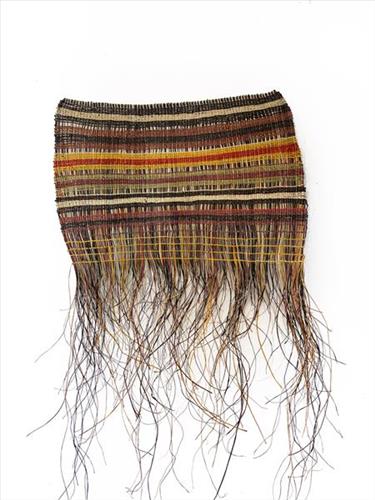
Shields were used as modesty shields for women, normally worn around the shoulders or around the waist.