Uralcar Basket
Art Centre notes:
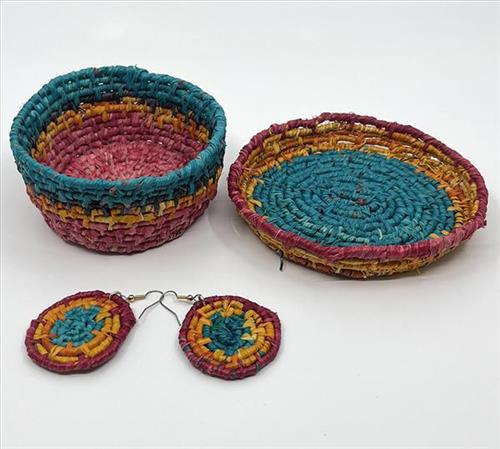
This basket is made using a traditional weaving method over-and-under technique with a needle.
The materials used are colour-fast.
Art Centre notes:
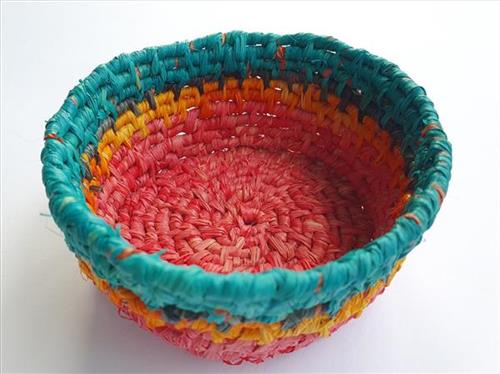
This basket is made using a traditional weaving method over-and-under technique with a needle.
The materials used are colour-fast.
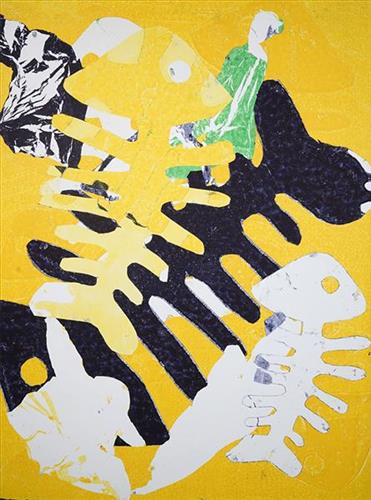
Me and my family always have dinner together sometimes overnight leaving yellow bones after big feast from celebrating our day out fishing all day collecting other seafoods and other foods.
Art Centre notes: The artwork is a ‘pochoir’ print, or monoprint, printed on BFK Rives paper (100% cotton rag with strong archival properties). The print covers the paper from edge to edge.
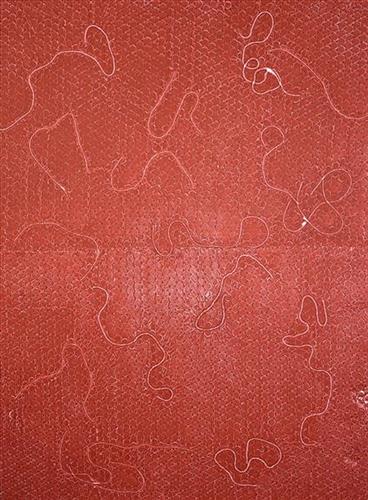
This print is like a brownish prints with a bubble wrap effect and I basically used all the left over string from cutting all my woven bags to make a effect and image print.
Art Centre notes: The artwork is a ‘pochoir’ print, or monoprint, printed on BFK Rives paper (100% cotton rag with strong archival properties). The print covers the paper from edge to edge.
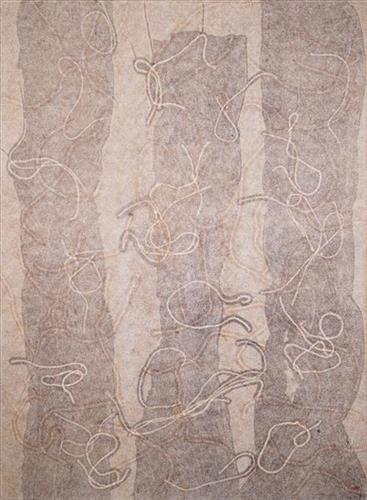
This string you can have a close up look of all the different sizes and shapes of strings that came through in this print which I like very much I use like a princess background and also the same colour for the strings as-well.
Art Centre notes: The artwork is a ‘pochoir’ print, or monoprint, printed on BFK Rives paper (100% cotton rag with strong archival properties). The print covers the paper from edge to edge.
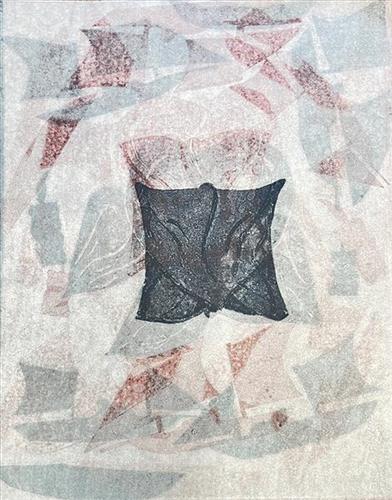
The Maritime strike began in 1936, this strike was about the under payed worker, that government took advantage, The protection act was in place removal of our people and under rated worker The word was used to pass by an boat named Wakaidnah the skipper was (Athe)Walter Mairu, who travel around each island Telling that there was a strike on and everyone need to stop working, because of the treatment that was given to us back then. Eventually the first Island Council was formed back in august 23 1937. The images on the print are reflected on the Maritime Strike that took place in 1937, when you reflect back and think how the word traveled to each Island, That created the maritime Strike.
Art Centre notes: The artwork is a ‘pochoir’ print, or monoprint, printed on BFK Rives paper (100% cotton rag with strong archival properties). The print covers the paper from edge to edge.
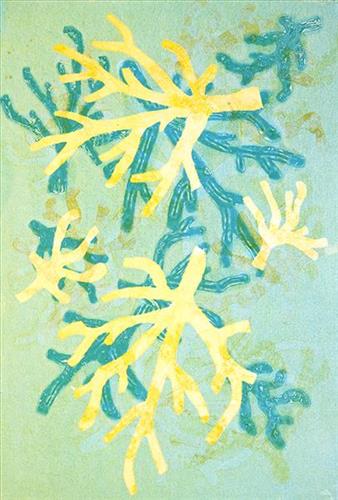
Coral plays an important part on our island reef. For years our island reefs have experience the impact of coral bleaching that is cause by the temperature changers of the water because of the global warming contribution. There were area around Mua that have been affect by this impact, and this prints is my impression of these changers how it went from its beautiful colours to the dead colour of white. But somehow I also now see how this bleaching coral areas are healing it’s own self and naturally propagate itself and developing new coral growth around these areas and bit by bit and turning back into coral forest again.
Art Centre notes: The artwork is a monoprint, printed on BFK Rives paper (100% cotton rag with strong archival properties).
Printer assist: Fiona Mosby. Artist: Loretta Glanvile.
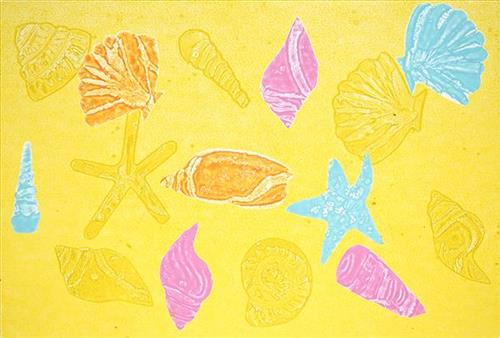
Shells were once alive with marine specimens inhabited these shells each with their unique challenges yet beautiful and bright coloured in the watery habitat. Now empty they leave behind on the bottom of the ocean. Without goodness of god in us we can be like these shells on the bottom of the ocean without life, without brightness of his spirit.
Art Centre notes: The artwork is a ‘pochoir’ print, or monoprint, printed on BFK Rives paper. 100% cotton rag with strong archival properties.
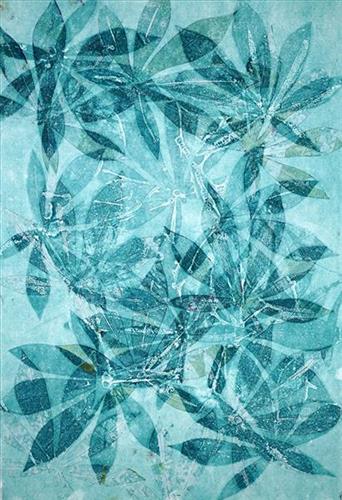
My story is about garden kaikai. I grew up with my parents planting cassava bones, this monyotha leaf gives me a glimpse of my childhood.
Art Centre notes: The artwork is a ‘pochoir’ print, or monoprint, printed on Hahnamule paper. 100% cotton rag with strong archival properties.
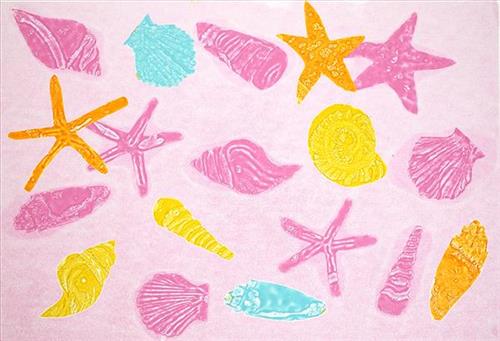
Shells were once alive with marine specimens inhabited these shells each with their unique challenges yet beautiful and bright coloured in the watery habitat. Now empty they leave behind on the bottom of the ocean. Without goodness of god in us we can be like these shells on the bottom of the ocean without life, without brightness of his spirit.
Art Centre notes: The artwork is a ‘pochoir’ print, or monoprint, printed on BFK Rives paper. 100% cotton rag with strong archival properties.
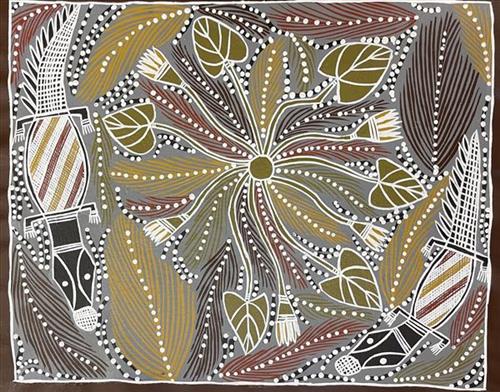
Baru (the crocodile man), was from the Gumatj clan. People usually call him Gurdu Gurdu or Baru which means crocodile. He lived his life at a place called Yirrkala. Living near him were other people, and when Baru didn’t have enough to eat he began to kill and eat these other people. After a while others noticed that some people were missing. When Baru went to the toilet, the people could smell this strong smell, so they knew that he ate the other people. Some men went to get help and they took message sticks to the other tribes. Some were sending smoke signals. When they came to Baru’s camp they started to spear him in the left side of his ribs. He dropped into the fire and burnt his left hand and maybe his right hand. He then ran into the bush and yelled to his countrymen – the animals, birds and fish that live on the land and in the sea. He stopped and he named the tribes and clans and also the places until he came to a place called Gamarru/Guyurru. There he took a rest and said to himself “This is where I stop and call this place Gamarru/Guyurru”. Baru, still in pain from the fire, then jumped into the water and turned himself into a crocodile. The fire left scars on his back. Baru paintings belong to Gumatj and Warrawarra and also the Marpi clan. This painting is used at death ceremonies or initiations and it normally is painted on the belly, which means the person the design is painted on is part of Gurdu Gurdu (the crocodile people).