Pilbara Wildflowers
These are the Pilbara wildflower’s that grow on the ground they have a beautiful orange colour blending in the country during flower season.
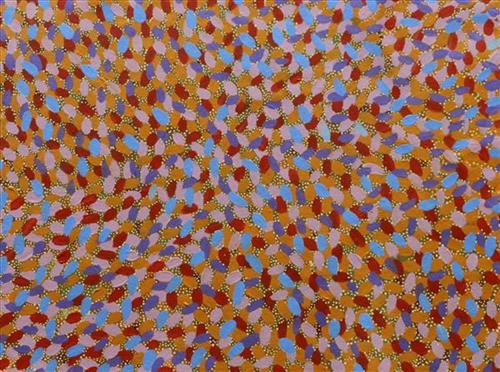
These are the Pilbara wildflower’s that grow on the ground they have a beautiful orange colour blending in the country during flower season.
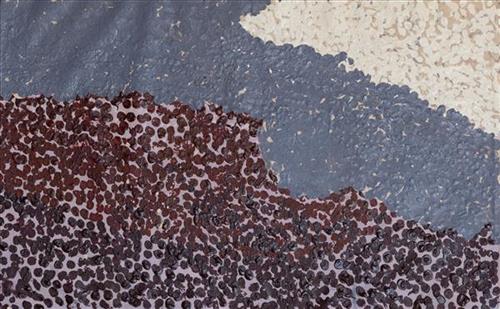
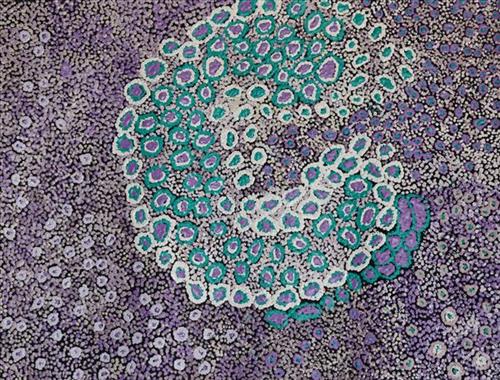
This is Mulyatingki’s Country- her ‘ngurra’ (home Country, camp). People identify with their ngurra in terms of specific rights and responsibilities, and the possession of intimate knowledge of the physical and cultural properties of one’s Country. Painting ngurra, and in so doing sharing the Jukurrpa (Dreaming) stories and physical characteristics of that place, has today become an important means of cultural maintenance.
Mulyatingki’s ngurra encompasses the Country that she and her family walked in the pujiman (traditional, desert-dwelling) era. Mulyatingki was born at Nyinyiri, a small soak yulparirra (south) of Juntu-juntu (Canning Stock Route Well 30). She grew up, walked and hunted primarily around the Country extending across the Punmu, Kunawarritji (Canning Stock Route Well 33) and Karlamilyi (Rudall River) regions. Following the death of both their parents, Mulyatingki and her sisters travelled alone between Punmu and Kunawarritji, occasionally meeting with other family groups. They continued to live nomadically before eventually deciding to move to Jigalong Mission along with many other relatives following an extreme and prolonged drought in the 1960s.
Portrayed in this work are features of Mulyatingki’s ngurra, such as the dominant permanent red tali (sandhills), warta (trees, vegetation), and the individually named water sources she and her family camped at. These include Januwa, Jilankujarra, Karlajarntu, Kartungu, Kularti, Kumpupajanu, Kunalimpi, Kunarra, Marnakarti, Pangkapirni, Wilunganinya, Wurur-wururna, Yilyara, and Yirrajarra Rock holes, waterholes, soaks and springs were all extremely important sites for Martu people during the pujiman period, and are generally depicted with circular forms.
The encyclopaedic knowledge of the location, quality and seasonal availability of the hundreds of water bodies found in one’s Country sustained Martu as they travelled across their Country, hunting and gathering, visiting family, and fulfilling ceremonial obligations. They would traverse very large distances annually, visiting specific areas in the dry and wet season depending on the availability of water and the corresponding cycles of plant and animal life on which hunting and gathering bush tucker was reliant. As they travelled and hunted they would also burn areas of Country, generating a greater diversity of plant and animal life.
“Ngurra (home Country, camp) is a very special Country- where we grew up. We go mostly out on Country and camp out. We go swimming and looking for honey on the trees. We would hunt turkey, emu, kangaroo, look for bardi (witchetty grub), honey ants, yellow berries. It’s an outstation. We call it home. We grew up there. Good memories of that place.”
– Roxanne Newberry
The Western Desert term ‘ngurra’ is hugely versatile in application. Broadly denoting birthplace and belonging, ngurra can refer to a body of water, a camp site, a large area of Country, or even a modern house. People identify with their ngurra in terms of specific rights and responsibilities, and the possession of intimate knowledge of the physical and cultural properties of one’s Country. This knowledge is traditionally passed intergenerationally through family connections. Country for Martu is full of memory; not just the memory of their own movement through it, but also of their family. As summarised by Ngalangka Nola Taylor, “painting the ngurra, they do it to remember their connections.”
Painting ngurra, and in so doing sharing the Jukurrpa (Dreaming) stories and physical characteristics of that place, has today become an important means of cultural maintenance. Physical maintenance of one’s ngurra, like cultural maintenance, ensures a site’s wellbeing, and is a responsibility of the people belonging to that area.
Punmu is an Aboriginal community located 670km North-East of Newman, in the Pilbara region of Western Australia. Created during the return to Country movement of the 1980s, with the recognition of Martu land rights and native title, the community was named after a nearby jukurrpa (dreamtime) story.
Punmu community sits on the edge of a large salt lake known as Nyayartakujarra, or Lake Dora. The lake runs south into Karlamilyi River. There are many yinta (permanent water sources) in Punmu’s nearby vicinity including Wilarra, Rawa, Yilyara, Jilajila and Tuutuu.
Punmu features in several jukurrpa narratives. Of particular importance for the Warnman people is the story of the ‘Jila Kujarra’ (Two Snakes). These snakes travelled through Parnngurr, Punkulyi, Yulpu, and Winukurrujunu, forming lakes, claypans, rocks, rockholes, waterholes and soaks as they went. The powerful elder of the two snakes, Wirnpa, finally stopped at the site of Wirnpa, named for him. The young snake kept on travelling until coming to Punmu waterholes Rawa and Yilyarra, making that Country his ngurra (home camp). Another jukurrpa story describes the formation of Nyayartakujarra as occurring when two travelling snakes were first sung to sleep and then killed by magic men. The snakes’ fat was said to have burned away and melted into Nyayartakujarra.
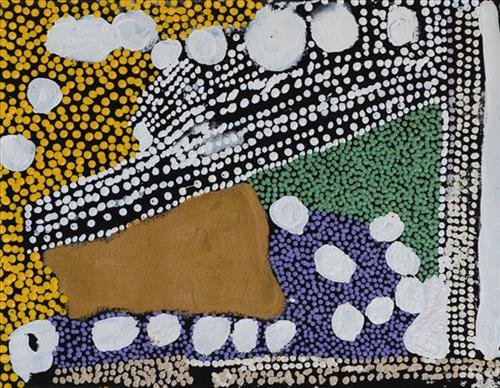
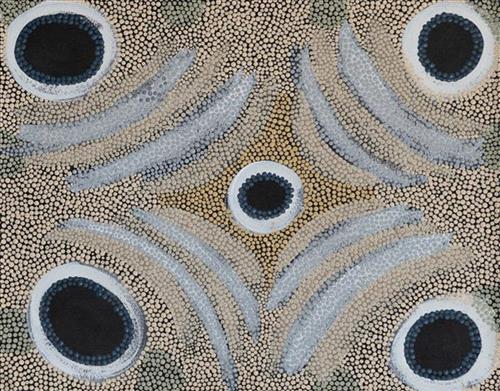
This is Minyawe’s warrarn (Country), his ‘ngurra’ (home Country, camp). People identify with their ngurra in terms of specific rights and responsibilities, and the possession of intimate knowledge of the physical and cultural properties of one’s Country. Painting ngurra, and in so doing sharing the Jukurrpa (Dreaming) stories and physical characteristics of that place, has today become an important means of cultural maintenance.
Minyawe’s warrarn encompasses the Country that he and his family walked in the pujiman (traditional, desert-dwelling) era. Minyawe was born at Yilyara, a yinta (permanent spring) located on the border of Punmu Aboriginal community and immediately east of Nyayartakujarra (Ngayarta Kujarra, Lake Dora). He grew up, walked and hunted primarily around the Kulyakartu and Karlamilyi (Rudall River) regions. He continued to live nomadically before eventually deciding to move to Jigalong Mission along with many other relatives following an extreme and prolonged drought in the 1960s.
Portrayed in this work are features of Minyawe’s warrarn, such as the dominant permanent red tali (sandhills), warta (trees, vegetation), and the individually named water sources he and his family camped at. These include Jinawanura, Kukulyurru, Kukupurtu, Kunti-kunti (Coondecoon Pool), Kurruka, Matulpa, Nyakula, Paji, Wilunganinya, Wungungarlkulu, Yilyara, Karlajarntu, Katarr, Wantamata, and Yanytikuji. Rock holes, waterholes, soaks and springs were all extremely important sites for Martu people during the pujiman period, and are generally depicted with circular forms.
The encyclopaedic knowledge of the location, quality and seasonal availability of the hundreds of water bodies found in one’s Country sustained Martu as they travelled across their Country, hunting and gathering, visiting family, and fulfilling ceremonial obligations. They would traverse very large distances annually, visiting specific areas in the dry and wet season depending on the availability of water and the corresponding cycles of plant and animal life on which hunting and gathering bush tucker was reliant. As they travelled and hunted they would also burn areas of Country, generating a greater diversity of plant and animal life.
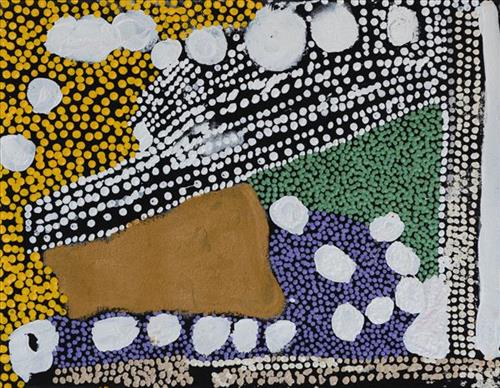
This is Minyawe’s warrarn (Country), his ‘ngurra’ (home Country, camp). People identify with their ngurra in terms of specific rights and responsibilities, and the possession of intimate knowledge of the physical and cultural properties of one’s Country. Painting ngurra, and in so doing sharing the Jukurrpa (Dreaming) stories and physical characteristics of that place, has today become an important means of cultural maintenance.
Minyawe’s warrarn encompasses the Country that he and his family walked in the pujiman (traditional, desert-dwelling) era. Minyawe was born at Yilyara, a yinta (permanent spring) located on the border of Punmu Aboriginal community and immediately east of Nyayartakujarra (Ngayarta Kujarra, Lake Dora). He grew up, walked and hunted primarily around the Kulyakartu and Karlamilyi (Rudall River) regions. He continued to live nomadically before eventually deciding to move to Jigalong Mission along with many other relatives following an extreme and prolonged drought in the 1960s.
Portrayed in this work are features of Minyawe’s warrarn, such as the dominant permanent red tali (sandhills), warta (trees, vegetation), and the individually named water sources he and his family camped at. These include Jinawanura, Kukulyurru, Kukupurtu, Kunti-kunti (Coondecoon Pool), Kurruka, Matulpa, Nyakula, Paji, Wilunganinya, Wungungarlkulu, Yilyara, Karlajarntu, Katarr, Wantamata, and Yanytikuji. Rock holes, waterholes, soaks and springs were all extremely important sites for Martu people during the pujiman period, and are generally depicted with circular forms.
The encyclopaedic knowledge of the location, quality and seasonal availability of the hundreds of water bodies found in one’s Country sustained Martu as they travelled across their Country, hunting and gathering, visiting family, and fulfilling ceremonial obligations. They would traverse very large distances annually, visiting specific areas in the dry and wet season depending on the availability of water and the corresponding cycles of plant and animal life on which hunting and gathering bush tucker was reliant. As they travelled and hunted they would also burn areas of Country, generating a greater diversity of plant and animal life.
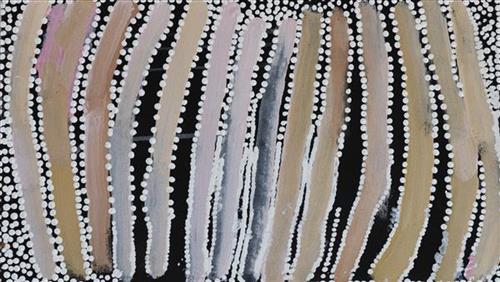
This is Minyawe’s warrarn (Country), his ‘ngurra’ (home Country, camp). People identify with their ngurra in terms of specific rights and responsibilities, and the possession of intimate knowledge of the physical and cultural properties of one’s Country. Painting ngurra, and in so doing sharing the Jukurrpa (Dreaming) stories and physical characteristics of that place, has today become an important means of cultural maintenance.
Minyawe’s warrarn encompasses the Country that he and his family walked in the pujiman (traditional, desert-dwelling) era. Minyawe was born at Yilyara, a yinta (permanent spring) located on the border of Punmu Aboriginal community and immediately east of Nyayartakujarra (Ngayarta Kujarra, Lake Dora). He grew up, walked and hunted primarily around the Kulyakartu and Karlamilyi (Rudall River) regions. He continued to live nomadically before eventually deciding to move to Jigalong Mission along with many other relatives following an extreme and prolonged drought in the 1960s.
Portrayed in this work are features of Minyawe’s warrarn, such as the dominant permanent red tali (sandhills), warta (trees, vegetation), and the individually named water sources he and his family camped at. These include Jinawanura, Kukulyurru, Kukupurtu, Kunti-kunti (Coondecoon Pool), Kurruka, Matulpa, Nyakula, Paji, Wilunganinya, Wungungarlkulu, Yilyara, Karlajarntu, Katarr, Wantamata, and Yanytikuji. Rock holes, waterholes, soaks and springs were all extremely important sites for Martu people during the pujiman period, and are generally depicted with circular forms.
The encyclopaedic knowledge of the location, quality and seasonal availability of the hundreds of water bodies found in one’s Country sustained Martu as they travelled across their Country, hunting and gathering, visiting family, and fulfilling ceremonial obligations. They would traverse very large distances annually, visiting specific areas in the dry and wet season depending on the availability of water and the corresponding cycles of plant and animal life on which hunting and gathering bush tucker was reliant. As they travelled and hunted they would also burn areas of Country, generating a greater diversity of plant and animal life.
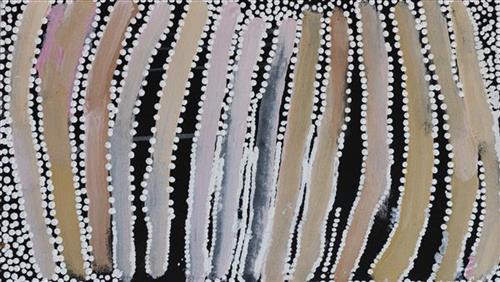
This is Minyawe’s warrarn (Country), his ‘ngurra’ (home Country, camp). People identify with their ngurra in terms of specific rights and responsibilities, and the possession of intimate knowledge of the physical and cultural properties of one’s Country. Painting ngurra, and in so doing sharing the Jukurrpa (Dreaming) stories and physical characteristics of that place, has today become an important means of cultural maintenance.
Minyawe’s warrarn encompasses the Country that he and his family walked in the pujiman (traditional, desert-dwelling) era. Minyawe was born at Yilyara, a yinta (permanent spring) located on the border of Punmu Aboriginal community and immediately east of Nyayartakujarra (Ngayarta Kujarra, Lake Dora). He grew up, walked and hunted primarily around the Kulyakartu and Karlamilyi (Rudall River) regions. He continued to live nomadically before eventually deciding to move to Jigalong Mission along with many other relatives following an extreme and prolonged drought in the 1960s.
Portrayed in this work are features of Minyawe’s warrarn, such as the dominant permanent red tali (sandhills), warta (trees, vegetation), and the individually named water sources he and his family camped at. These include Jinawanura, Kukulyurru, Kukupurtu, Kunti-kunti (Coondecoon Pool), Kurruka, Matulpa, Nyakula, Paji, Wilunganinya, Wungungarlkulu, Yilyara, Karlajarntu, Katarr, Wantamata, and Yanytikuji. Rock holes, waterholes, soaks and springs were all extremely important sites for Martu people during the pujiman period, and are generally depicted with circular forms.
The encyclopaedic knowledge of the location, quality and seasonal availability of the hundreds of water bodies found in one’s Country sustained Martu as they travelled across their Country, hunting and gathering, visiting family, and fulfilling ceremonial obligations. They would traverse very large distances annually, visiting specific areas in the dry and wet season depending on the availability of water and the corresponding cycles of plant and animal life on which hunting and gathering bush tucker was reliant. As they travelled and hunted they would also burn areas of Country, generating a greater diversity of plant and animal life.
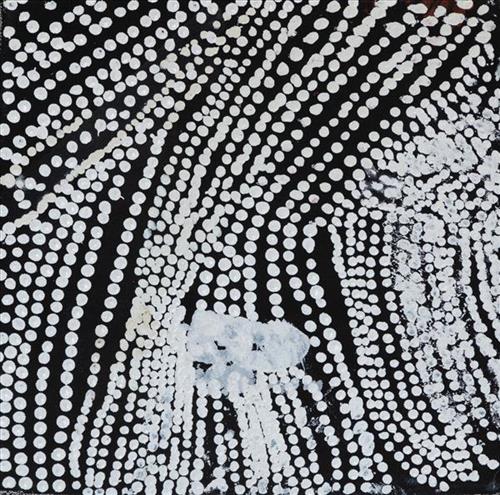
This is Minyawe’s warrarn (Country), his ‘ngurra’ (home Country, camp). People identify with their ngurra in terms of specific rights and responsibilities, and the possession of intimate knowledge of the physical and cultural properties of one’s Country. Painting ngurra, and in so doing sharing the Jukurrpa (Dreaming) stories and physical characteristics of that place, has today become an important means of cultural maintenance.
Minyawe’s warrarn encompasses the Country that he and his family walked in the pujiman (traditional, desert-dwelling) era. Minyawe was born at Yilyara, a yinta (permanent spring) located on the border of Punmu Aboriginal community and immediately east of Nyayartakujarra (Ngayarta Kujarra, Lake Dora). He grew up, walked and hunted primarily around the Kulyakartu and Karlamilyi (Rudall River) regions. He continued to live nomadically before eventually deciding to move to Jigalong Mission along with many other relatives following an extreme and prolonged drought in the 1960s.
Portrayed in this work are features of Minyawe’s warrarn, such as the dominant permanent red tali (sandhills), warta (trees, vegetation), and the individually named water sources he and his family camped at. These include Jinawanura, Kukulyurru, Kukupurtu, Kunti-kunti (Coondecoon Pool), Kurruka, Matulpa, Nyakula, Paji, Wilunganinya, Wungungarlkulu, Yilyara, Karlajarntu, Katarr, Wantamata, and Yanytikuji. Rock holes, waterholes, soaks and springs were all extremely important sites for Martu people during the pujiman period, and are generally depicted with circular forms.
The encyclopaedic knowledge of the location, quality and seasonal availability of the hundreds of water bodies found in one’s Country sustained Martu as they travelled across their Country, hunting and gathering, visiting family, and fulfilling ceremonial obligations. They would traverse very large distances annually, visiting specific areas in the dry and wet season depending on the availability of water and the corresponding cycles of plant and animal life on which hunting and gathering bush tucker was reliant. As they travelled and hunted they would also burn areas of Country, generating a greater diversity of plant and animal life.
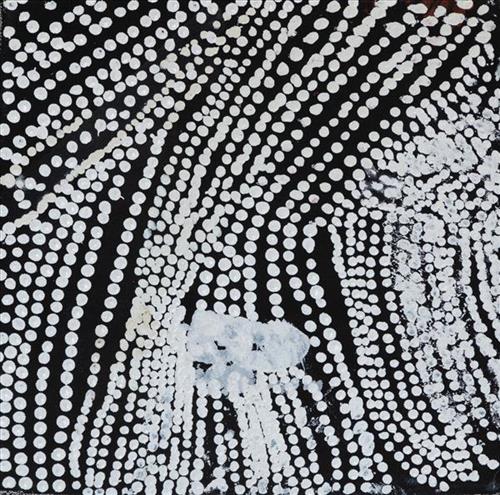
This is Minyawe’s warrarn (Country), his ‘ngurra’ (home Country, camp). People identify with their ngurra in terms of specific rights and responsibilities, and the possession of intimate knowledge of the physical and cultural properties of one’s Country. Painting ngurra, and in so doing sharing the Jukurrpa (Dreaming) stories and physical characteristics of that place, has today become an important means of cultural maintenance.
Minyawe’s warrarn encompasses the Country that he and his family walked in the pujiman (traditional, desert-dwelling) era. Minyawe was born at Yilyara, a yinta (permanent spring) located on the border of Punmu Aboriginal community and immediately east of Nyayartakujarra (Ngayarta Kujarra, Lake Dora). He grew up, walked and hunted primarily around the Kulyakartu and Karlamilyi (Rudall River) regions. He continued to live nomadically before eventually deciding to move to Jigalong Mission along with many other relatives following an extreme and prolonged drought in the 1960s.
Portrayed in this work are features of Minyawe’s warrarn, such as the dominant permanent red tali (sandhills), warta (trees, vegetation), and the individually named water sources he and his family camped at. These include Jinawanura, Kukulyurru, Kukupurtu, Kunti-kunti (Coondecoon Pool), Kurruka, Matulpa, Nyakula, Paji, Wilunganinya, Wungungarlkulu, Yilyara, Karlajarntu, Katarr, Wantamata, and Yanytikuji. Rock holes, waterholes, soaks and springs were all extremely important sites for Martu people during the pujiman period, and are generally depicted with circular forms.
The encyclopaedic knowledge of the location, quality and seasonal availability of the hundreds of water bodies found in one’s Country sustained Martu as they travelled across their Country, hunting and gathering, visiting family, and fulfilling ceremonial obligations. They would traverse very large distances annually, visiting specific areas in the dry and wet season depending on the availability of water and the corresponding cycles of plant and animal life on which hunting and gathering bush tucker was reliant. As they travelled and hunted they would also burn areas of Country, generating a greater diversity of plant and animal life.