
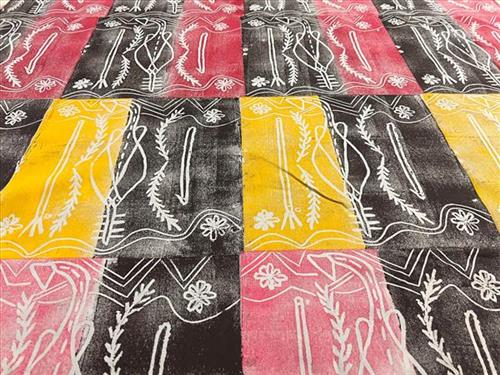

377810582257471
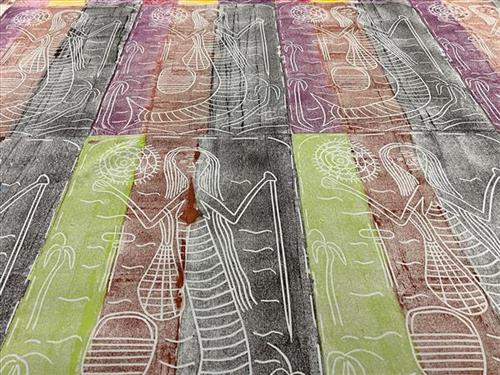
Djomi (Fresh Water Spirit)
This design depicts the story of the artist’s ancestral dreaming, the Djomi fresh water spirit mermaid.
The Djomi figure is a mermaid like spirit with fish tail that lives in the fresh water stream that flows out to the sea cliff near Maningrida. Djomi is a known to be a very powerful fertility symbol.
‘If you go there you can get pregnant easily. Djomi has babies, and they can give others babies too. The Djomi spirit is so powerful, that women can end up with multiple babies at once, twins or sometimes even more. The Djomi spirits lay eggs near the sacred freshwater stream in Maningrida. Inside the eggs are human babies as well as young Djomi.
Men do not go near that swamp, because Djomi is so powerful that men might get pregnant there too. So men, they are too scared of that Djomi. When we visit the Djomi freshwater spring, we can hear young Djomi crying. They sound like normal babies crying, those Djomi spirits. They are looking for a mother.
This Djomi is my dreaming, I got permission from my djunguys to paint this Djomi design. For me I always ask my djunguy permission to paint, because that is our cultural way.
This design also depicts the fresh water lily leaves, and seaweed from the base of the sea floor.

377810582257468
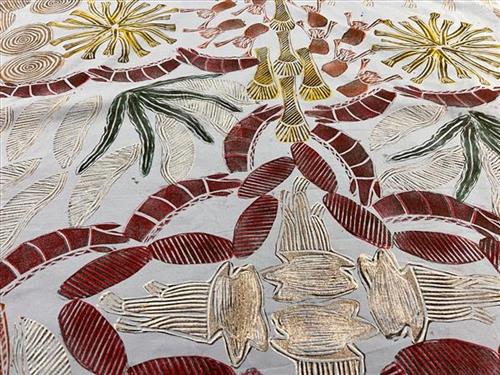
Sacred Yabbie

377810582257467
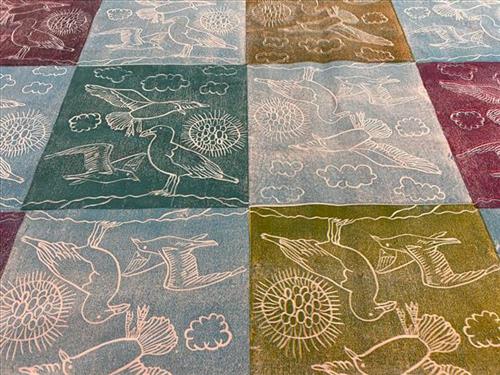
Seagull

377810582257466
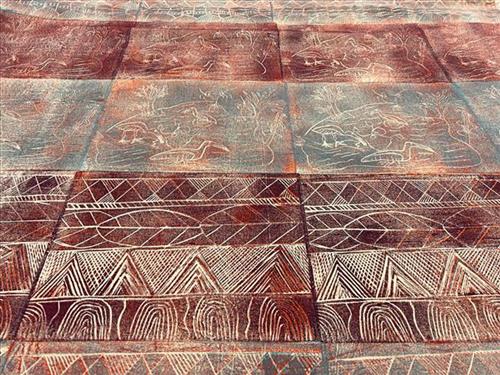
Welebme (flat)
This is a Kune word that refers to the flattening out of items stones, flat leaves and kunbad (money).
This design shows different items that have flattened out. Carol designed this for her grandkids to show them the tradition of Welebme.

377810582257465
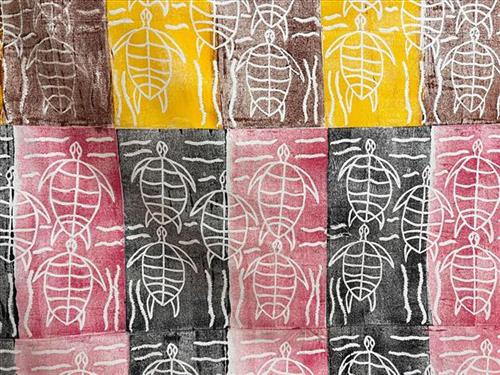
Makéddja (Turtle)
Makéddja means turtle in the Ndjébbana language of the Kunibidji people of Maningrida.
225682257447
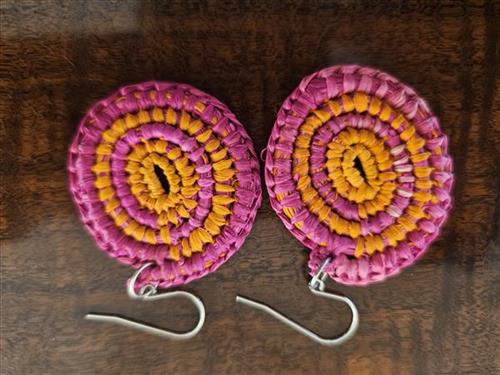
Woven Earrings
Bana Yirriji Art Centre represents artists from the Yalanji, Nyungkul and Jalunji clan groups.
These earrings have been woven using collected and found materials. Each pair are different creating different shapes and patterns that represents the artists totem’s and connection to country, making each set individual.
225682257445
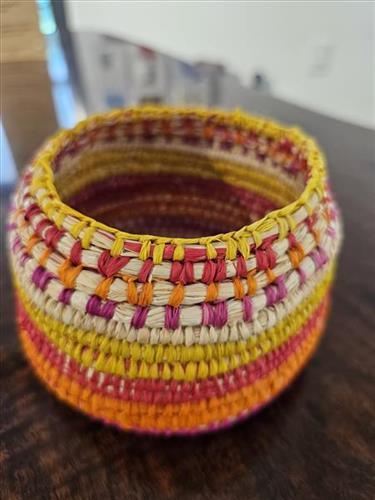
Raffia Basket
I learnt how to weave by my mother. She taught me how to make baskets from pandanus using the coiling technique. At the moment I am just using raffia palm. We will be going out to collect pandanus and other weaving materials after the busy season.

377810582257160
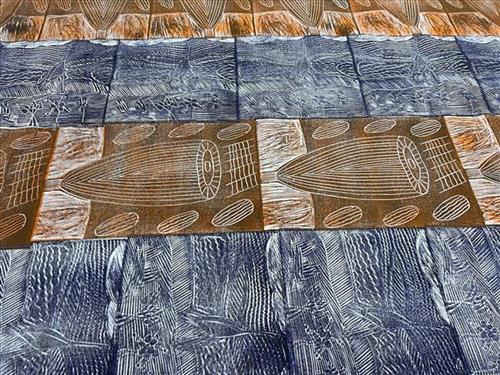
Jabiru & Dilly Bag
111582257438
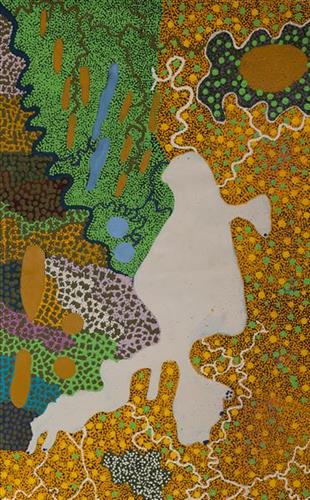
Nyayartakujarra
“Just like your on a plane looking down. This one here lake Nyayartakujarra connecting with this one here.
Water comes from Karlamilyi. Water flows to the lake and Jamparri, Jintirripalangu and Pinangu claypan. This one here Tarl, Wawul water next to lake. Blue dots water Rawa next to Punmu and this one Jilla Jilla This is Rudal River. Wilurr is the water there its a soak there. Green over here grasses and Spinifex. Orange one Parna (ground). All the purple ones Kalaru (bush damper seed).
If you go on the plane to Newman you see this one here, its a creek. You can see from the air water flowing from creek to claypans. This all area my family being walking here. Warnman country my father country and grandmother and grandfather”.
– Damien Miller
This work portrays an area of Country that can be interpreted in multiple ways. Firstly, the image may be read as an aerial representation of a particular location known to the artist- either land that they or their family travelled, from the pujiman (traditional, desert dwelling) era to now. During the pujiman period, Martu would traverse very large distances annually in small family groups, moving seasonally from water source to water source, and hunting and gathering bush tucker as they went. At this time, one’s survival depended on their intimate knowledge of the location of resources; thus physical elements of Country, such as sources of kapi (water), tali (sandhills), different varieties of warta (trees, vegetation), ngarrini (camps), and jina (tracks) are typically recorded with the use of a use of a system of iconographic forms universally shared across the desert.
An additional layer of meaning in the work relates to more intangible concepts; life cycles based around kalyu (rain, water) and waru (fire) are also often evident. A thousands of year old practice, fire burning continues to be carried out as both an aid for hunting and a means of land management today. As the Martu travelled and hunted they would burn tracts of land, ensuring plant and animal biodiversity and reducing the risk of unmanageable, spontaneous bush fires. The patchwork nature of regrowth is evident in many landscape works, with each of the five distinctive phases of fire burning visually described with respect to the cycle of burning and regrowth.