225682265818


Kiju

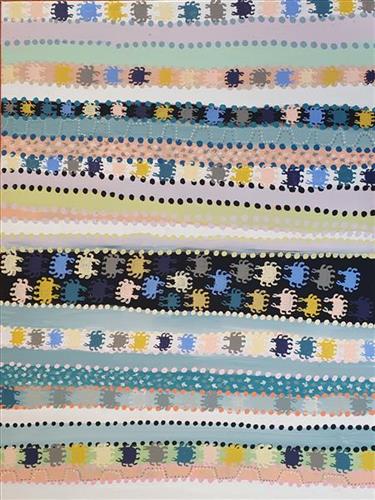
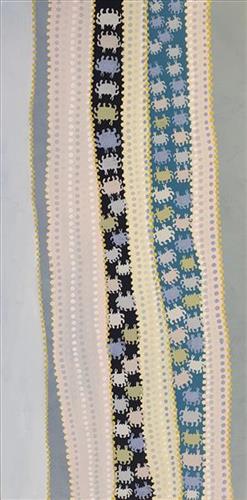
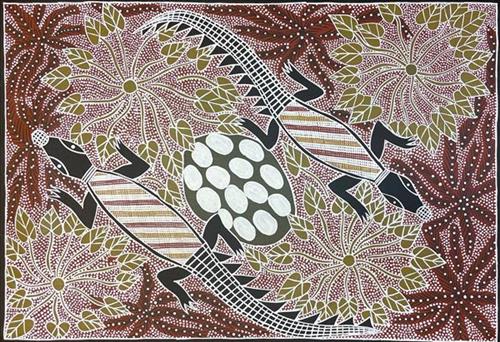
Kiju (mud crab) is very good eating. I have been hunting kiju with my family all my life. We make a fire on the beach and wait for it to die down and then cook the kiju on the coals.  In my culture, we leave the shell where we catch the kiju so next time there will be plenty more to hunt and eat. This was what my elders taught me, and I am showing the young ones how to look after their Country and to do things the right way.

The best time to go hunting for mud crab is when the mangkurru (mangroves) are flowering.  That’s when we know the kitju is nice and fat.

Us Bama (people), use plants to tell us when to hunt or collect certain foods. It’s our culture and lore. 

225682265813


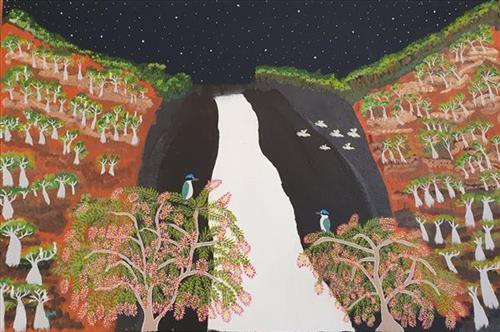
Wujal Wujal Waterfall at Nighttime

My Father is from Wujal Wujal. I moved from East Arnhem Land to Wujal Wujal in September 2022 to be with my father sides family and to learn about his culture and country. 

I got inspired to paint the Wujal Wujal Waterfall because its where the freshwater meets the sea. I put in the white cockatoos in this painting because its my grandmothers totem on my mothers side, The rainforent king fisher is from wujal wujal.   

225682265803


Kababina & Kunjuri

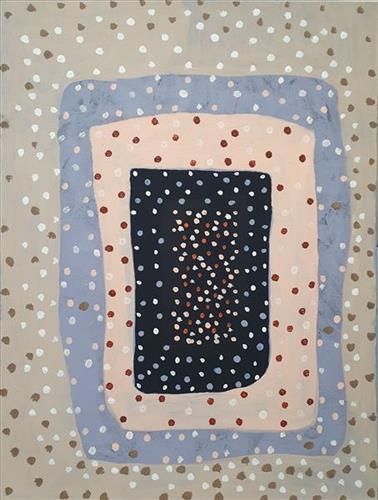
I am a Nyungul woman. My art depicts cultural, historical and contemporary stories from my bubu (Country) located in the Helensvale and Shipton’s Flat areas in Far North Queensland.

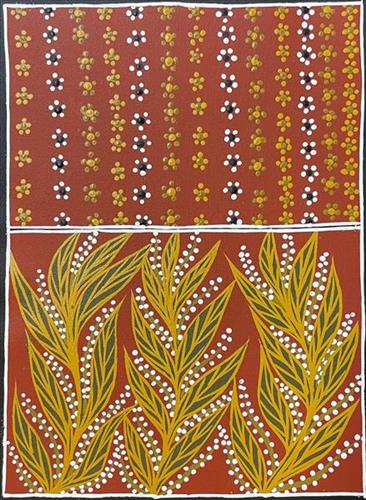
I wanted to paint one of the many lagoons from my Country. A kunjuri (shield) shape represents the lagoon and I have then painted my water lilies floating in the water.  This lagoon has lots of long-neck turtles. The spaces between the kababina represent the turtles pushing aside the plants and making corridors as they swim through the water.  

There are many species of kababina (water lilies) that grow in the lagoons and wetlands on my bubu (Country). There are lots of different colours, big and small ones.

My father told me that in the old days bama (people) would harvest the water lilies for food. I love going out bush with my family and enjoy looking at the wetlands, plants and animals.

Nature is the inspiration for my artwork. Anne Nunn

225682266078


Baḻgurr Bathi

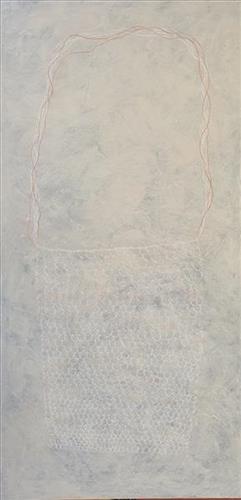
I learnt how to make baḻgurr bathi (string bags) from my mum when I lived in Milingimbi (Northern Territory) and worked with the Crocodile Islands Junior Rangers. We would go and collect baḻgurr (Kurrajong – Brachychiton Populneus).  We would cut good sized branches from the tree and then smash them with a rock on a hard surface to break up the fibres. Sometimes we dyed the fibres by boiling it with natural dyes.   Once smashed up, we would then strip and separate the fibres from the bark and let them dry in the sun.  Once dried we’d start twisting and rolling the fibres on our thigh to make a few meters of string and then weave it into a bag using the looping technique. This is a very time-consuming process.

Traditionally string bags are used by women and mothers to carry bush foods such as maypal (oysters).  These days people use the bags for their shopping and carrying items like mobile phones!

I am Garawirrtja on my mother’s side and Kuku-Yalanji on my father’s side. Doreen Collins

225682266017


Kababina & Kunjuri

I am a Nyungul woman. My art depicts cultural, historical and contemporary stories from my bubu (Country) located in the Helensvale and Shipton’s Flat areas in Far North Queensland.

I wanted to paint one of the many lagoons from my Country. A kunjuri (shield) shape represents the lagoon and I have then painted my water lilies floating in the water.  This lagoon has lots of long-neck turtles. The spaces between the kababina represent the turtles pushing aside the plants and making corridors as they swim through the water.  

There are many species of kababina (water lilies) that grow in the lagoons and wetlands on my bubu (Country). There are lots of different colours, big and small ones.

My father told me that in the old days bama (people) would harvest the water lilies for food. I love going out bush with my family and enjoy looking at the wetlands, plants and animals.

Nature is the inspiration for my artwork. Anne Nunn

225682265989


Kiju

Kiju (mud crab) is very good eating. I have been hunting kiju with my family all my life. We make a fire on the beach and wait for it to die down and then cook the kiju on the coals.  In my culture, we leave the shell where we catch the kiju so next time there will be plenty more to hunt and eat. This was what my elders taught me, and I am showing the young ones how to look after their Country and to do things the right way.

The best time to go hunting for mud crab is when the mangkurru (mangroves) are flowering.  That’s when we know the kiju is nice and fat.

Us Bama (people), use plants to tell us when to hunt or collect certain foods. It’s our culture and lore. 

115682266005


Raypiny Dhawu (Fresh Water Story)

All Aboriginal people originate from a spiritual source, fixed in a particular place in their land or the sea. These ‘spiritual reservoirs’ are often in the form of special waterholes made by Wangarr (creative spirits) that were created long ago close to the beginning of time. These creator beings moved across the countryside, shaping the land and implanting in each tract of country, the spiritual life force for the people who were to own it. These creative spirits took many forms and when they gave the land to each group, they also gave songs, dances, ceremony, the associated laws and language.


The creation story for Ganalbingu people took place near the middle section of the Glyde River where it becomes the Goyder River. Their land, Ngaliyindi, sits astride the Arafura Swamp in Central Arnhem Land. Many Ganalbingu artists paint totemic species significant to their clan. These can include baru (crocodile), banda (long necked turtle), buliya (catfish), yalman (waterlilies), gumang (magpie geese), dakawa (fresh water yabby), ratjuk (barramundi), warrnyu (flying fox) and more.


115682266002


Warrnyu Dhawu (Flying Fox Story)

Back in the Creation time, Warrnyu (Flying Foxes) once lived, like men, in the cave at the place called Kurrki Warrnyu Yirri Djaringal (they also lived in caves called Wadatilmurr & Gurngurmirrngu). Warrnyu lived in these caves for many years and then one day Djanyarr (The Dog), an ancestral being in the form of a man, came along. He was looking around for a place to live. Djanyarr heard the sound of a Flying Fox screaming. He went down to the cliff and pushed the rock and the water came out at the Ganalbingu place called Gurrkawakarrmurr. He then went into the cave and into the sacred hole, frightening all the Flying Fox away. When he went into the hole he left his dilly bag in the tree and went out on the other side of the sacred cave and leaving his spear and woomera. He sat there for a long time. The Dog made three streams and the water went inside the cave. Two of these streams are good drinking water. In the middle it is a sacred water. No-one drinks from the middle of the stream. Children, men, women, young boys or girls are not allowed to drink from the middle of the stream. If they drink the water from the middle of the stream they will go grey too early.

At Kurrki Warrnyu Yirri Ngilaya Djaringal, the Flying Fox made himself into a young man… that’s what Aboriginal people do today. They have ceremonies and dances to make the young boys into men. The songs are called Yirrarwu, Gulumu, Rruburra and Burryun. Dhapi (initiation ceremony) happen today because the Warrnyu (Flying Fox) people performed them a long time ago before the Yolgnu people. It was the Warrnyu people who first performed circumcision of the young boys to make them into men. It all happened at Kurrki Warrnyu Yirri Ngilaya Djaringal, this is how this place got its name.

Leaving behind the cave at Kurrki Warrnyu Yirri Djaringal, the Dog travelled west across the Arafura Swamp and came to Djalkulmurr (Mount Delight). From there he travelled north and came to Dunganda (a hill situated a few kilometres east of Ramingining). There he met a female Dog, then they both headed north and came to a place called Garanydjirrmurr where they spoke the Mildjingi language. From Garanydjirrmurr they changed their direction and went west through Guliny’barra, Burgumara and onto the plains. When they reached the plains they smelled something cooking, way up in the north – at Wessel Islands. The aroma they smelt was so enticing that they decided to go there. Lungurrma (the north-east wind) was carrying the smell. One Dog headed north again, but the other Dog decided not to go with him and went back the opposite way. The first Dog that went to Malwanatharra (Sandy Point) went into the sea following its nose to wherever the smell was coming from. It is believed that this Dog still lives in the sea…

115682265999


Peter Gambung – Guwarrtji (sea turtle)

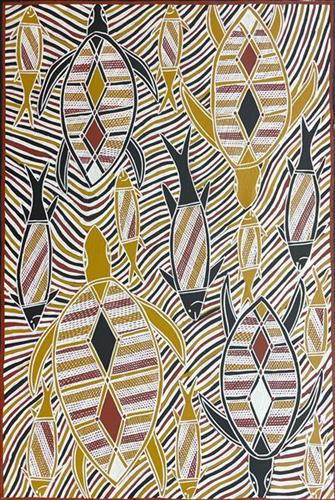
Peter is painting a sea turtle (or Hawksbill Turtle) from his Yirritja song line. This depiction of the Guwarrtji is a small part of a great story which Peter inherited from the Liyagal-wu Mirr tribe, his mother tribe. The diamonds on the Guwarrtji’s shell connect this story to the honey story, another part of Peter’s song line. Upon Peter’s death, his spirit will return to the Guwarrtji.

111582266224


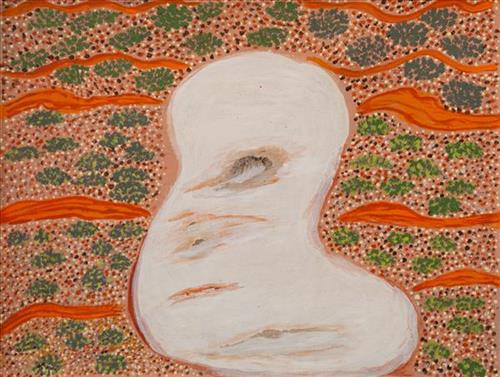
The Lake Near Katjarra

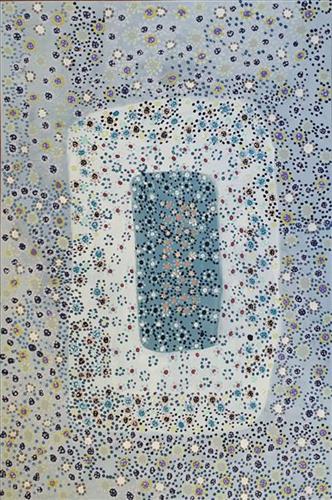
“This is my father’s Country; this is where my grandfather and grandmother come from. Katjarra is homeland for Putijarra, it’s their ngurra (home Country, camp). This is where pujiman (traditional, desert dwelling) Martu used to live a long time ago. Most of them pass[ed] away and are buried there. Some of them left and went looking for their families in Wiluna and Jigalong. Long, long time ago, the old Martu people used to roam this Country. They used to sleep in the caves away from the wind and the rain of winter. 

Katjarra is well known as a sacred area, no mining companies can’t do any mining round Katjarra because the oldies say the sites are not to be destroyed.”

 – Noreena Kadibil

Katjarra (Carnarvon Range) mountain ranges are part of Noreena’s ngurra (home Country, camp). The mountain range, distinctive from a distance for its blue hue, is located in the south western corner of Birriliburu Indigenous Protected Area. This region lies at the southern end of Martu Country and at the intersection of the Little Sandy and Gibson Deserts of Western Australia. Katjarra was an important camping place for Martu walking between Jigalong and Wiluna for law business up until the late 1960s, as well as Martu who walked the Canning Stock Route into Wiluna. Katjarra was also the site of the 2008 Birriliburru Native Title Determination, one of the first land grants to Martu.

Within the Katjarra mountain range are many water sources, including a culturally significant creek close to Milyinirri (Canning Stock Route Well 6), also named Katjarra. This creek is home to an ancestral rainmaking jila (snake), and its waters cascade down the hill from here. The Western Desert term jila is used interchangeably to describe springs considered to be ‘living’ waters and snakes, both of which play a central role in Martu culture and Jukurrpa (Dreaming). During the pujiman period, knowledge of water sources was critical for survival, and today Martu Country is still defined in terms of the location of water sources. Of the many permanent springs in Martu Country, very few are ‘living waters’; waters inhabited by powerful ancestral snakes. Before they became snakes, these beings were men who made rain, formed the land and introduced cultural practices like ceremonies and ritual songs. Some of the men travelled the desert together, visiting one another, but they all ended their journeys at their chosen spring alone, transformed into a snake. These important springs, like Katjarra, are named after their jila inhabitant.

Katjarra also features as a site in the Minyipuru (Jakulyukulyu, Seven Sisters) Jukurrpa, and that of the yalapara (perentie goanna), an ancestral goanna being who was responsible for the creation of many significant land features in the area.