Rainbow Colours & Rainbow Birds
There are many kinds of birds in my country. They come in all sorts of rainbow colours.
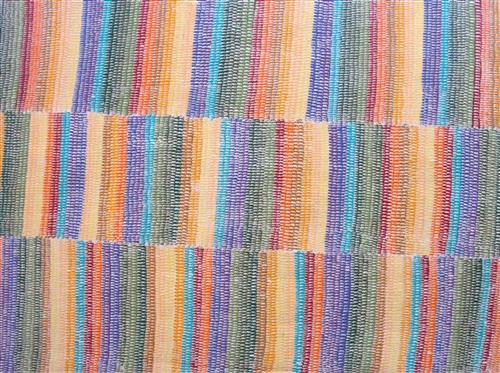
There are many kinds of birds in my country. They come in all sorts of rainbow colours.
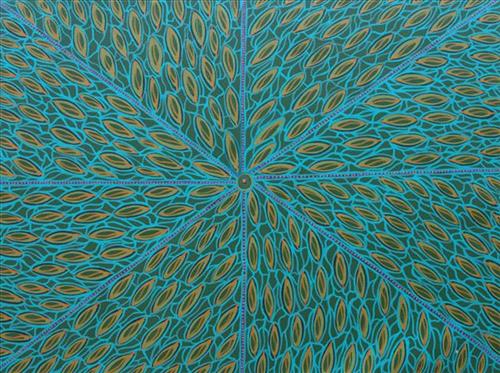
The Pilbara bush is surprisingly resilient and the plants can survive many months without rain. We use many of the leaves as medicine like our ancestors taught us.
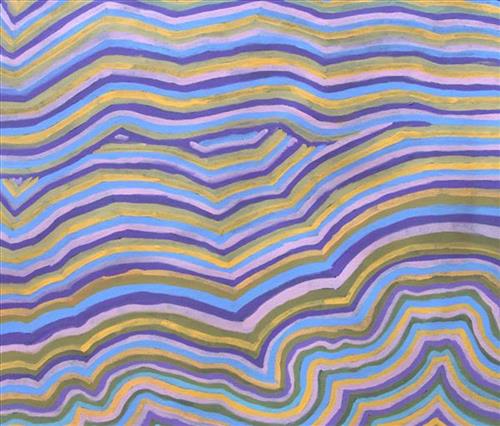
In our land when you come to our country you will see lots of colours in the rocks. This painting is about these colours – ochres, reds and oranges, which stream across the rock face as the sun gets lower in the sky.
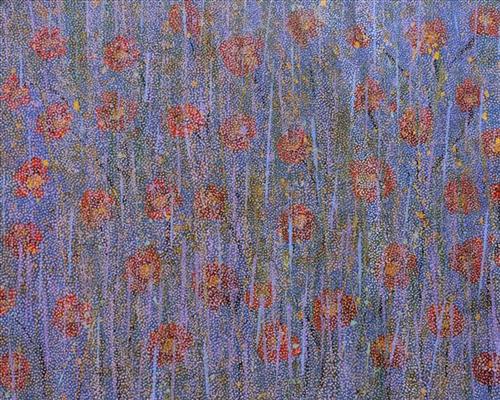
This is my interpretation of the Sturt Pea. It has a vibrant red flower and a succulent sweet juice that can be eaten.
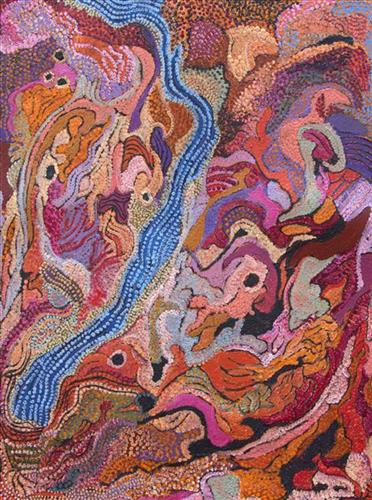
We have many of these hidden creeks running through our country. Some are dry, but you know there is water beneath the surface because of the birds flying into the thick growth of grass alongside. This is where we will find a soak for water.
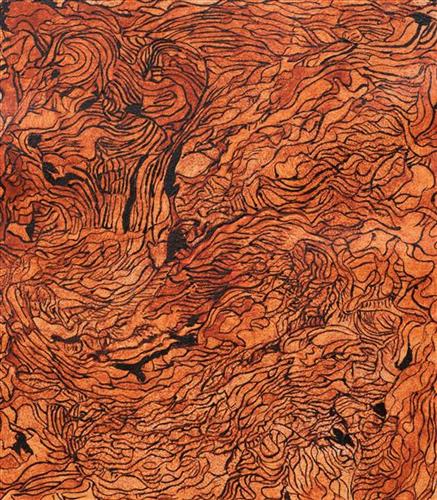
During dry summer months our country looks so dry, but the beauty of the red earth, the spinifex and dry grass make it beautiful.
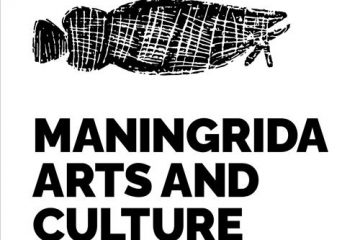
The artist has carved the ‘Gomarla’, which in the Burarra word for Egret. This bird is native to the country of Yilan, which is the coastal region North West of Maningrida Community.
People use feathers from gomarla to make ceremonial regalia for Yirrichinga. Many Yirrichinga groups own manikay ‘song’ for gomarla.
Gomarla mun-baparrurr Gopungorra. Jin-gubatbatcha jin-banga jiny-yorkiya. Gomarla waykin makukuya mu-guyinda.
The egret belongs to the Gopungorra clan. It always eats grasshoppers. The egret is high in a nest (builds its nest in the tree).

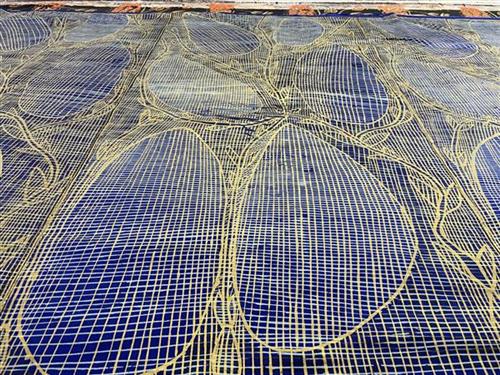
Susan Marawarr is a Kuninjku artist from the Kurulk clan whose country lies around the outstation of Mumeka in central Arnhem Land. In this design, she has depicted karrbarda (long yam) on her traditional country, the kunwardde (stone country).
The large stones represent the kunwardde rocky outcrops, which are elevated above the flat floodplains. The vines creeping around the large rocks are from the karrbarda. Women dig up karrbarda with kungarrndutj (digging sticks) and they are then cooked in the ashes of the fire to be eaten.
These yams are purple on the saltwater side of country and on inland freshwater country they are white. Karrbarda are an important manme (bush food) that are collected during the wet and dry seasons.

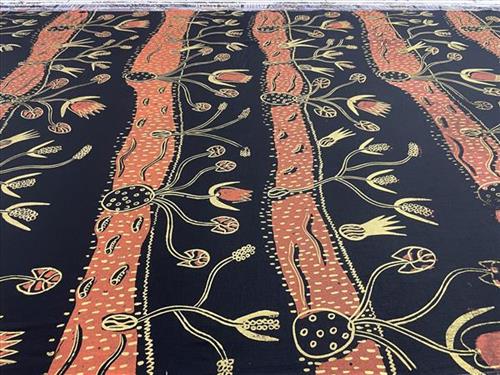
Karrinung kukurlk kare, karrijare manme (we are going underground looking for food).
“This is my country. In this painting, I’m looking at her little bit different way. This is what we see when we’re kukurlk kare (going underground)
Man-kurndalh (Black plum) I call mother. It is my mother’s Djang/Dreaming. The bush onion (kulumuduk) is white, the same as onions you buy at the store. We don’t eat this one though, it’s poison.
Wayuk is the water lily, with the big root growing in the earth. This is when that water is drying up a bit. There are worms and beetles- this is what we see underground, when we are digging for manme.”
-Jennifer Wurrkidj

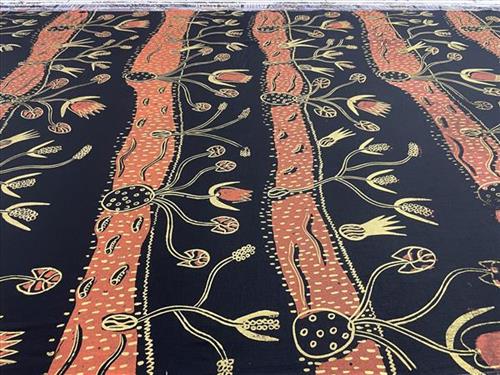
Karrinung kukurlk kare, karrijare manme (we are going underground looking for food).
“This is my country. In this painting, I’m looking at her little bit different way. This is what we see when we’re kukurlk kare (going underground)
Man-kurndalh (Black plum) I call mother. It is my mother’s Djang/Dreaming. The bush onion (kulumuduk) is white, the same as onions you buy at the store. We don’t eat this one though, it’s poison.
Wayuk is the water lily, with the big root growing in the earth. This is when that water is drying up a bit. There are worms and beetles- this is what we see underground, when we are digging for manme.”
-Jennifer Wurrkidj