111982273287


Mako (didjeridu)

Arnhem Land and the Top End of the Northern Territory is the traditional home of the didjeridu, a rhythmic wind instrument used by Aboriginal people of the region. Its use spread globally in part because the instrument was adopted by world music enthusiasts, and the profile of the instrument reached new heights through Aboriginal rock bands from Arnhem Land, such as Yothu Yindi. It’s an instrument that is now played around the world, in genres ranging from classical to hip hop.

The didjeridu has come to mean many different things to people who have a reason for playing it around the world. In Maningrida it remains primarily an instrument of song accompaniment used in public ceremony. The manner of playing provides an instant recognition to listeners of both language and regional stylistic affiliation. In the wake of the development of new non-Aboriginal ‘world’ styles of playing the instrument, Arnhem Land styles of playing take on new meaning as markers of the cultural and historical origins of the didjeridu.

All of the language groups of the Maningrida region have their own musical genres and song series in which the didjeridu is used as an instrument of accompaniment. Traditionally, it is primarily a secular instrument used in song genres that are performed for two main types of public ceremony: the music of diplomacy (exchange) ceremonies and of funerals and some mortuary rituals. The didjeridu is generally not used as a solo instrument and nor is it used in the most secret and sacred ceremonies still practiced in the western and central Arnhem Land region.

Aboriginal people living today in the rocky escarpment country of western Arnhem Land say that humans were first shown and taught to play the didjeridu by spirit beings who live among the dark caves and crevices of the stone country. These beings are known as mimih and are said to be tall and slender with necks so fragile they are easily snapped by the gentlest of breezes. Because of this, mimih live inside their own worlds within the rock. Mimih are credited with teaching Aboriginal people of the stone country about the foundations of stone country culture, including how to play the didjeridu. Many of the stone country language groups today describe their song and dance genres as mimih.

Researchers of Arnhem Land rock art have identified depictions of the didjeridu as belonging to the most recent phase of rock art, commencing around 1500 years ago.

Aboriginal names

Maningrida is a highly multilingual community and the linguistic diversity of western Arnhem Land is reflected in the various names used for the didjeridu. Here are the names for the instrument in the languages of the Maningrida region:

  • Ndjébbana (the language of the Kunibídji people) – ngalidjbinja
  • Kunwinjku, Kune, Kuninjku – mako [mago]
  • Rembarrnga – liddung, djalubbu
  • Burarra, Gun-nartpa – ngorla
  • Dangbon, Dalabon – morlo
  • Djinang, Wurlaki – wuyimbarl
  • Nakkara – ngunebobanja
  • Gurrgoni – mudburuja
  • Gundjeihmi (and also Kune) – morle

Process

The didjeridu-maker looks through bushland for a tree of the right species with the right diameter trunk. Most didjeridus in the Maningrida region are made from young trunks of the stringybark tree (Eucalyptus tetradonta) or the Darwin Woollybutt (Eucalyptus miniata).

The trunk needs to have been lived in and hollowed out by termites. To listen for hollowness, a tree with potential is stripped of a small patch of bark and the timber is tapped. The sound produced indicates the quality of the instrument the trunk will become. Having selected a good tree, the artist fells it and cleans out the hollow inside of the trunk, usually by ramming out any termite debris with a stick or pole. He strips all the bark off the outside, and smooths both ends. Traditionally, dark wax resin (cerumen or, in Kunwinjku and Rembarrnga languages, birdi) from native bees is applied to the mouthpiece. This substance sets hard but always becomes soft and pliable under pressure, enabling an airtight seal when playing.

Styles

In the Maningrida region, didjeridus are made to accompany songs in either of two styles: the bunggurl style of the language groups of eastern Arnhem Land (such as Bararra) or the kun-borrk style of language groups in the west of Arnhem Land (including Kunwinjku). People of central and south-western Arnhem Land whose country borders east and west (Rembarrnga and Kune), perform both styles.

Didjeridus of the region range in length from just under one metre to two metres. A less flared and longer didjeridu (1.5–2m) makes it easier to produce the characteristic hooted overblown tone that is used in bunggurl-style music. Longer didjeridus have a deeper tone than shorter didjeridus, and more resonance. To play them, you vibrate your lips at a lower frequency than you need to for a shorter didjeridu.

The decoration applied to the instrument can indicate its intended use. Rembarrnga artist Bob Burruwal often uses a design called bedjekbedjek. This is the same design used in body painting for the public diplomacy ceremonies of the Rembarrnga (and many other kun-borrk dance performances). Burruwal slaps wet white ochre over the surface of the instrument with his hands or with a bunch of leaves dipped in the ochre.
 

111982273283


Birlmu or Namarnkorl (Barramundi)

It is well known that Aboriginal art often depicts images of sacred totems or dreamings of Aboriginal culture. However, the world of the non-sacred also provides a rich source of subject matter for Aboriginal art. Much of the rock art of western Arnhem Land for example features secular topics such as common food animals and plants, depicted because of their economic importance but also merely because of their existence in the environment. The artist has painted ‘birlmu’ or ‘namarnkorl’ (Barramundi [Lates calcarifer]). During the dry season the barramundi is an important food source for inland Aboriginal people. These fish are caught throughout the artist’s clan estate, either in fishtraps woven from pandanus or sedge grass, or else hunted with spears and fishing lines in billabongs and streams where they shelter from the sun under fallen logs or amongst the leaves of water plants.

111982273278


Mimih Spirit

The mimih spirit exists in a realm that runs parallel to and mirrors many facets of human life, also demonstrating the deep sense of time and place understood by Aboriginal and Torres Strait Islander people. Such spirits feature importantly in relation to Aboriginal spirituality, cosmology, social and moral tales as well as ritual. As is true with the multiple mediums employed by artists of West Arnhem Land, the development of artistic style and form is in line with an awareness by the artist that the work produced is predominantly made for a broader audience. Whether show in a national or international context these works communicate and exist in a particular space that is cross-cultural and simultaneously so particular to the Arnhem region.


The mimih sits within a complex and important pedagogical and religious body of knowledge which links Kuninjku people to their distinctive escarpment homelands. Young Kuninjku artists, or apprentices, employ the mimih as an important exercise for the practice of the rarrk technique, as it could be achieved on a smaller surface area before, being attempted in larger scale, on pieces of bark. The mimih serves a purpose for those young artists first learning to carve in a social space of sharing and innovating. The initial mimih manifestation was a large form that almost mirrored the anatomy of a human and at this stage the sculptures have been likened to morkuy carvings visible in eastern Arnhem Land. Contemporaneously, mimih are depicted in a refined, slender, even emaciated form with a broad range of facial expressions giving both individual character to, and denoting the potential volatility and humour that mimih spirits are notable for in their interaction with bininj (humans). The sculptures are frequently carved from the thin trunks of softwoods such as kapok (bombax ceiba or cottonwood) kurrajong, beach hibiscus or leichardt and are painted with earth pigments for their colouring and design.

A leading figure engaging the spirit in visual storytelling was Crusoe Kuningbal, a Kuninjku man, who while traveling was familiarised with carving styles from the east of Arnhem at the mission in Milingimbi pre-dating World War II. This showing a notable connection and interaction of different language groups across such space. As well as travel and the development of art forms being informed by cross cultural dialogues within northern Aboriginal language groups. The mimih became a valued inclusion in performance and public ceremony by Kuninjku people like Kuningbal. At times these ceremonies were performed for extended language groups in the local region.


Now a familiar and broadly depicted figure of iconography, it is important to acknowledge the development of this quite recent sculptural tradition. The depiction of this particular spirit being, once used as an addition to the sharing of song cycles and ceremony, has since been elevated to a prominent form and subject of contemporary sculpture. Variation in the creation of
mimih acts as an indication of the individualism of each artist and their stylistic markers. Additionally significant to note is that in the space of the past thirty years the mimih has begun being produced by multiple language groups residing in the Maningrida area including the traditional owners of Maningrida, the Ndjébbana, speaking Kunibidji as well as Gurrgoni people who have strong ties to Kuninjku.

________
*Maningrida Arts & Culture acknowledge the work of many academic and non-academic voices when writing on this topic, it is important to note Luke Taylor, who’s broad research has informed this text.

116482273264


Early Morning Mist

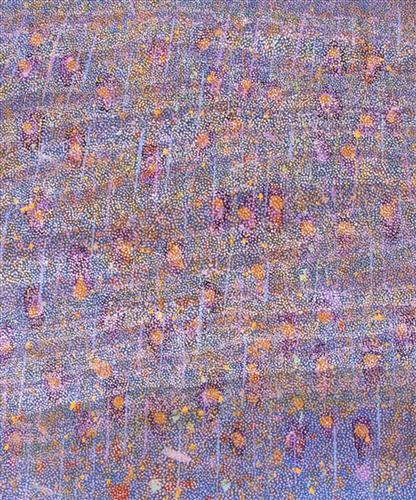
The early morning mist over the water is the smoke from the breakfast fires of the Marrga, the creation spirits. According to Yindjibarndi law, in the beginning the sky was very low. When the creation spirits, Marrga, arose from the ground they raised the sky and the world out of the ocean. This creation story is called Ngurru Nyujunnggama, ‘When the World was Soft’. The Marrga gave names and form to the country and then to all the birds and animals. Finally they created the Ngaardangarli, the Aboriginal people.

111982273249


Mimih Spirit

The mimih spirit exists in a realm that runs parallel to and mirrors many facets of human life, also demonstrating the deep sense of time and place understood by Aboriginal and Torres Strait Islander people. Such spirits feature importantly in relation to Aboriginal spirituality, cosmology, social and moral tales as well as ritual. As is true with the multiple mediums employed by artists of West Arnhem Land, the development of artistic style and form is in line with an awareness by the artist that the work produced is predominantly made for a broader audience. Whether show in a national or international context these works communicate and exist in a particular space that is cross-cultural and simultaneously so particular to the Arnhem region.


The mimih sits within a complex and important pedagogical and religious body of knowledge which links Kuninjku people to their distinctive escarpment homelands. Young Kuninjku artists, or apprentices, employ the mimih as an important exercise for the practice of the rarrk technique, as it could be achieved on a smaller surface area before, being attempted in larger scale, on pieces of bark. The mimih serves a purpose for those young artists first learning to carve in a social space of sharing and innovating. The initial mimih manifestation was a large form that almost mirrored the anatomy of a human and at this stage the sculptures have been likened to morkuy carvings visible in eastern Arnhem Land. Contemporaneously, mimih are depicted in a refined, slender, even emaciated form with a broad range of facial expressions giving both individual character to, and denoting the potential volatility and humour that mimih spirits are notable for in their interaction with bininj (humans). The sculptures are frequently carved from the thin trunks of softwoods such as kapok (bombax ceiba or cottonwood) kurrajong, beach hibiscus or leichardt and are painted with earth pigments for their colouring and design.

A leading figure engaging the spirit in visual storytelling was Crusoe Kuningbal, a Kuninjku man, who while traveling was familiarised with carving styles from the east of Arnhem at the mission in Milingimbi pre-dating World War II. This showing a notable connection and interaction of different language groups across such space. As well as travel and the development of art forms being informed by cross cultural dialogues within northern Aboriginal language groups. The mimih became a valued inclusion in performance and public ceremony by Kuninjku people like Kuningbal. At times these ceremonies were performed for extended language groups in the local region.


Now a familiar and broadly depicted figure of iconography, it is important to acknowledge the development of this quite recent sculptural tradition. The depiction of this particular spirit being, once used as an addition to the sharing of song cycles and ceremony, has since been elevated to a prominent form and subject of contemporary sculpture. Variation in the creation of
mimih acts as an indication of the individualism of each artist and their stylistic markers. Additionally significant to note is that in the space of the past thirty years the mimih has begun being produced by multiple language groups residing in the Maningrida area including the traditional owners of Maningrida, the Ndjébbana, speaking Kunibidji as well as Gurrgoni people who have strong ties to Kuninjku.

________
*Maningrida Arts & Culture acknowledge the work of many academic and non-academic voices when writing on this topic, it is important to note Luke Taylor, who’s broad research has informed this text.

111982273247


Mimih Spirit

The mimih spirit exists in a realm that runs parallel to and mirrors many facets of human life, also demonstrating the deep sense of time and place understood by Aboriginal and Torres Strait Islander people. Such spirits feature importantly in relation to Aboriginal spirituality, cosmology, social and moral tales as well as ritual. As is true with the multiple mediums employed by artists of West Arnhem Land, the development of artistic style and form is in line with an awareness by the artist that the work produced is predominantly made for a broader audience. Whether show in a national or international context these works communicate and exist in a particular space that is cross-cultural and simultaneously so particular to the Arnhem region.


The mimih sits within a complex and important pedagogical and religious body of knowledge which links Kuninjku people to their distinctive escarpment homelands. Young Kuninjku artists, or apprentices, employ the mimih as an important exercise for the practice of the rarrk technique, as it could be achieved on a smaller surface area before, being attempted in larger scale, on pieces of bark. The mimih serves a purpose for those young artists first learning to carve in a social space of sharing and innovating. The initial mimih manifestation was a large form that almost mirrored the anatomy of a human and at this stage the sculptures have been likened to morkuy carvings visible in eastern Arnhem Land. Contemporaneously, mimih are depicted in a refined, slender, even emaciated form with a broad range of facial expressions giving both individual character to, and denoting the potential volatility and humour that mimih spirits are notable for in their interaction with bininj (humans). The sculptures are frequently carved from the thin trunks of softwoods such as kapok (bombax ceiba or cottonwood) kurrajong, beach hibiscus or leichardt and are painted with earth pigments for their colouring and design.

A leading figure engaging the spirit in visual storytelling was Crusoe Kuningbal, a Kuninjku man, who while traveling was familiarised with carving styles from the east of Arnhem at the mission in Milingimbi pre-dating World War II. This showing a notable connection and interaction of different language groups across such space. As well as travel and the development of art forms being informed by cross cultural dialogues within northern Aboriginal language groups. The mimih became a valued inclusion in performance and public ceremony by Kuninjku people like Kuningbal. At times these ceremonies were performed for extended language groups in the local region.


Now a familiar and broadly depicted figure of iconography, it is important to acknowledge the development of this quite recent sculptural tradition. The depiction of this particular spirit being, once used as an addition to the sharing of song cycles and ceremony, has since been elevated to a prominent form and subject of contemporary sculpture. Variation in the creation of
mimih acts as an indication of the individualism of each artist and their stylistic markers. Additionally significant to note is that in the space of the past thirty years the mimih has begun being produced by multiple language groups residing in the Maningrida area including the traditional owners of Maningrida, the Ndjébbana, speaking Kunibidji as well as Gurrgoni people who have strong ties to Kuninjku.

________
*Maningrida Arts & Culture acknowledge the work of many academic and non-academic voices when writing on this topic, it is important to note Luke Taylor, who’s broad research has informed this text.

111982273213


Lorrkon (Hollow Log)

The Lorrkon or bone pole coffin ceremony was the final ceremony in a sequence of mortuary rituals celebrated by the people of Arnhem Land. This ceremony involves the placing of the deceased’s bones into a hollow log which was decorated with painted clan designs and ceremonially placed into the ground where it remained until it slowly decayed over many years.

The log is made from a termite hollowed Stringybark tree (Eucalyptus tetradonta) and is decorated with totemic emblems. The western Arnhem Land version of the Lorrkon ceremony involves the singing of sacred songs to the accompaniment of karlikarli, a pair of sacred boomerangs used as rhythm instruments. During the final evening of the ceremony, dancers decorate themselves with kapok down, or today, cotton wool and conduct much of the final segments of the ceremony in the secrecy of a restricted mens’ camp. The complete ceremony may stretch over a period of two weeks, but on the last night the bones of the deceased, which have been kept in a bark container or today wrapped in cloth and kept in a suitcase are taken out, are painted with red ochre and placed inside the hollow log. This ceremony may take place many years after the person has died.

At first light on the final morning of the Lorrkon ceremony, the men appear, coming out of their secret bush camp carrying the pole towards the women’s camp. The two groups call to each other using distinct ceremonial calls. The women have prepared a hole for the pole to be placed into and when it is stood upright, women in particular kinship relationships to the deceased dance around the pole in a jumping/shuffling motion. The Lorrkon is then often covered with a tarpaulin and left to slowly decay.

111982273212


Lorrkon (Hollow Log)

The Lorrkon or bone pole coffin ceremony was the final ceremony in a sequence of mortuary rituals celebrated by the people of Arnhem Land. This ceremony involves the placing of the deceased’s bones into a hollow log which was decorated with painted clan designs and ceremonially placed into the ground where it remained until it slowly decayed over many years.

The log is made from a termite hollowed Stringybark tree (Eucalyptus tetradonta) and is decorated with totemic emblems. The western Arnhem Land version of the Lorrkon ceremony involves the singing of sacred songs to the accompaniment of karlikarli, a pair of sacred boomerangs used as rhythm instruments. During the final evening of the ceremony, dancers decorate themselves with kapok down, or today, cotton wool and conduct much of the final segments of the ceremony in the secrecy of a restricted mens’ camp. The complete ceremony may stretch over a period of two weeks, but on the last night the bones of the deceased, which have been kept in a bark container or today wrapped in cloth and kept in a suitcase are taken out, are painted with red ochre and placed inside the hollow log. This ceremony may take place many years after the person has died.

At first light on the final morning of the Lorrkon ceremony, the men appear, coming out of their secret bush camp carrying the pole towards the women’s camp. The two groups call to each other using distinct ceremonial calls. The women have prepared a hole for the pole to be placed into and when it is stood upright, women in particular kinship relationships to the deceased dance around the pole in a jumping/shuffling motion. The Lorrkon is then often covered with a tarpaulin and left to slowly decay.

116482273208


Turtle Dreaming

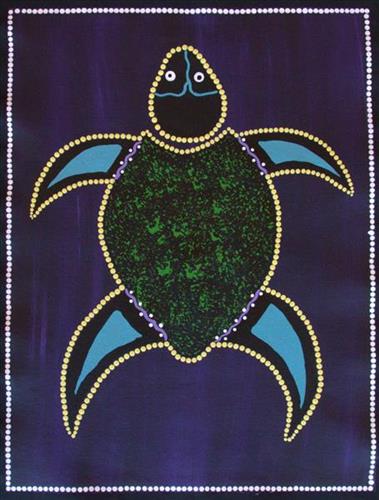
Kenny likes to depict the sea turtles that inhabit the waters of his country. His style is impeccably neat and precise.