111982273109


Gomarla (Egret bird)

The artist has carved the ‘Gomarla’, which in the Burarra word for Egret. This bird is native to the country of Yilan, which is the coastal region North West of Maningrida Community. 

People use feathers from gomarla to make ceremonial regalia for Yirrichinga. Many Yirrichinga groups own manikay ‘song’ for gomarla.

Gomarla mun-baparrurr Gopungorra. Jin-gubatbatcha jin-banga jiny-yorkiya. Gomarla waykin makukuya mu-guyinda.

The egret belongs to the Gopungorra clan. It always eats grasshoppers. The egret is high in a nest (builds its nest in the tree).

359709482273104


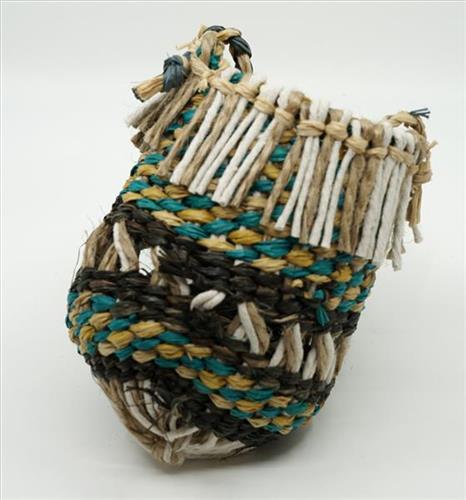
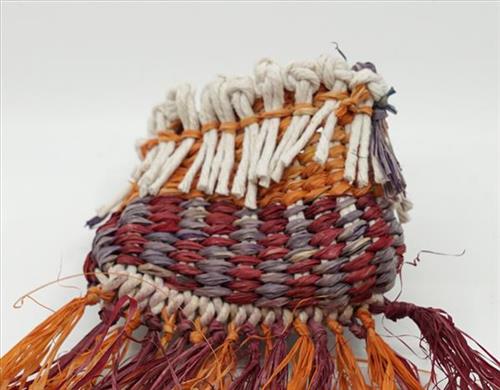
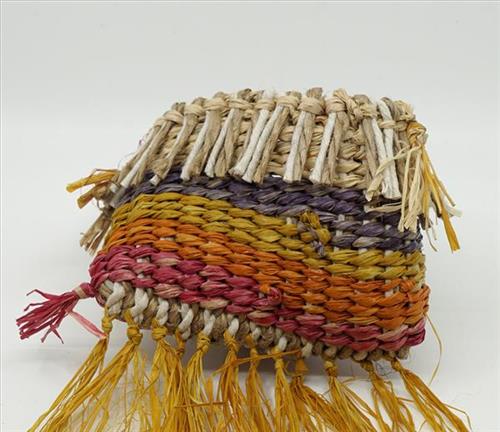
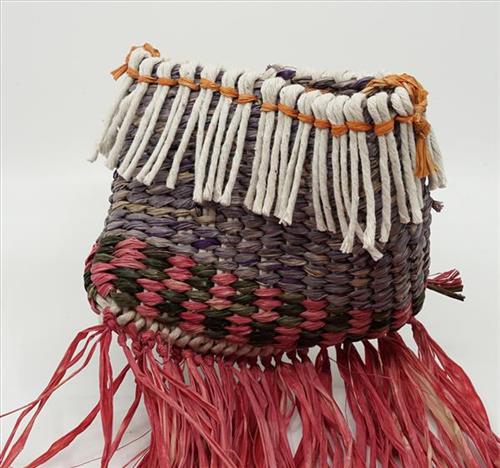
Art Centre notes: The bag is made of natural raffia / cotton / jute. It is made using a traditional ‘one twist’ method. The dyes are commercial and colour fast.  Size of bowl: 10 x 25cmcm

359709482273100


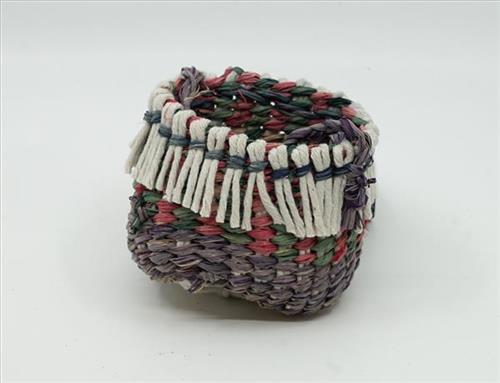
Art Centre notes: The bag is made of natural raffia / cotton / jute. It is made using a traditional ‘one twist’ method. The dyes are commercial and colour fast.  Size of bowl: 9 x 7cm

377810582273099


Mankorlod Rock – Ruth Bindebal

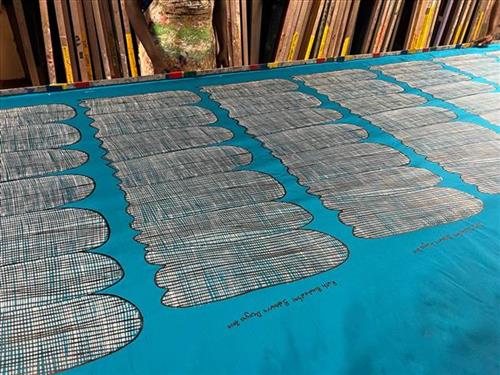
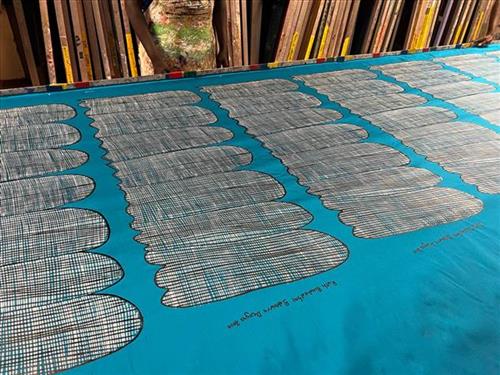
A simple, symbolic two colour design dating back to 2010. Ruth has depicted the shapes of the rock formations in her rocky country homeland of Mankorlod. 

377810582273098


Mankorlod Rock – Ruth Bindebal

A simple, symbolic two colour design dating back to 2010. Ruth has depicted the shapes of the rock formations in her rocky country homeland of Mankorlod. 

359709482273097


Art Centre notes: The bag is made of natural raffia / cotton / jute. It is made using a traditional ‘one twist’ method. It has a thin / thick plaited strap and long tassles underneath. The strap is adjustable / open / closed at the end. It has long tassles above and/or below. The dyes are commercial and colour fast.  Size of bowl:10 x 8cm cm Length of strap: 33cm Tassles: 45cm

377810582273094


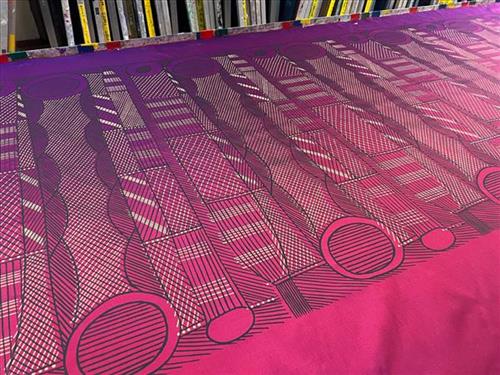
Lorrkon

Jennifer Wurrkidj

TITLE                         Lorrkon (Hollow funeral log)

YEAR                          2010

MEDIUM                     Screen print

DETAILS                    2 screen design, 1000 x 420mm

Before, a long time ago, when old people would die they would put their bones inside the lorrkkon and leave it outside. It is part of ceremony. The old people remembering and thinking about that person who passed away, there is lots of talking about where that lorrkkon needs to go.

My father, James Iyuna, taught me how to paint, to paint that rarrk. That memory is from him, he taught my sister Deborah and me. This story is from him, this design. When he was painting and drawing we would watch and we would learn.

Jennifer Wurrkidj

Jennifer is a Kuninjku artist from the Kurulk clan whose country lies around the outstation of Mumeka in central Arnhem Land. She has depicted lorrkkon (hollow-log coffin), kun-karninj (digging stick) and mandjabu (fishtrap) in this design.

The Lorrkkon or hollow-log coffin ceremony is the final ceremony in a sequence of mortuary rituals celebrated by the people of Arnhem Land. This ceremony might take place many years after the person has died, and involves the placing of the deceased’s bones into a hollow log that is decorated with painted clan designs and ceremonially placed into the ground where it slowly decays over many years.

The lorrkkon (hollow-log coffin) is made from the trunk of a termite-hollowed manbuluduk (stringybark tree, Eucalyptus tetradonta) and is decorated with totemic emblems. The western Arnhem Land version of the Lorrkkon ceremony involves the singing of sacred songs to the accompaniment of karlikarli, a pair of sacred boomerangs used as rhythm instruments. During the final evening of the ceremony, dancers decorate themselves with kapok down or, today, cotton wool, and conduct much of the final segments of the ceremony in the secrecy of a restricted men’s camp. The complete ceremony may stretch over a period of two weeks, but on the last night the bones of the deceased, which have been kept in a bark container, or today wrapped in cloth and kept in a suitcase, are taken out, and are painted with red ochre and placed inside the hollow-log coffin.

At first light on the final morning of the Lorrkkon ceremony, the men appear, coming out of their secret bush camp carrying the lorrkkon towards the women’s camp. The two groups call to each other using distinct ceremonial calls. The women have prepared a hole for the lorrkkon to be placed into, and when it is stood upright, women in particular kinship relationships to the deceased dance around the lorrkkon in a jumping/shuffling motion. It is then often covered with a tarpaulin and left to slowly decay.
359709482273089


Art Centre notes: The bag is made of natural raffia / cotton / jute. It is made using a traditional ‘one twist’ method. It has a thin / thick plaited strap and long tassles underneath. The strap is adjustable / open / closed at the end. It has long tassles above and/or below. The dyes are commercial and colour fast.  Size of bowl:13 x 9cm Length of strap: 47cm Tassles: 45cm

359709482273087


Art Centre notes: The bag is made of natural raffia / cotton / jute. It is made using a traditional ‘one twist’ method. It has a thin / thick plaited strap and long tassles underneath. The strap is adjustable / open / closed at the end. It has long tassles above and/or below. The dyes are commercial and colour fast.  Size of bowl:14 x 12cm Length of strap: 39cm Tassles: 45cm

377810582273082


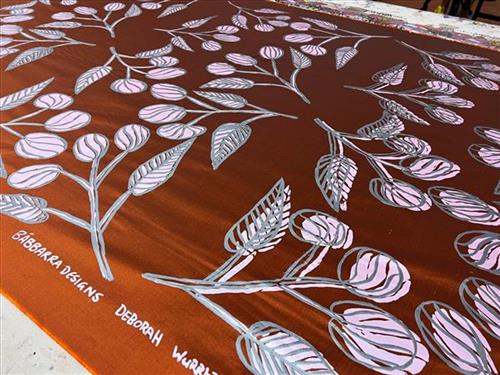
Man-djarduk (Red Bush Apples)

Deborah Wurrkidj is a Kuninjku artist from the Kurulk clan whose country lies around the outstation of Mumeka in central Arnhem Land.

In this design she has depicted man-djarduk (red bush apples) – a sweet, crisp bush food that is a favourite to collect.

Man-djarduk fruits in kurrung and kunumeleng seasons, the build-up and first rains seasons.