111576419243


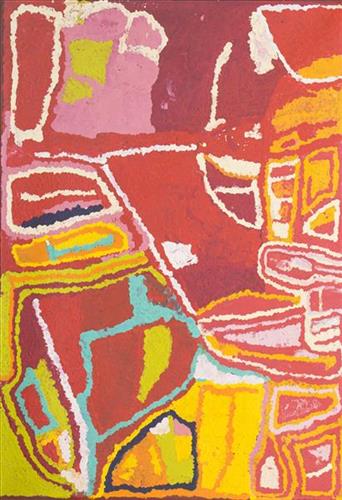
Yirrajarra – That’s my country, that’s my place, that’s my camp

“Yirrajarra, it’s a yinta (permanent spring) in Warman Country. That’s my camp, that’s my place, that’s my Country. Home there,”

–  Mitutu Mabel Wakarta (dec.)

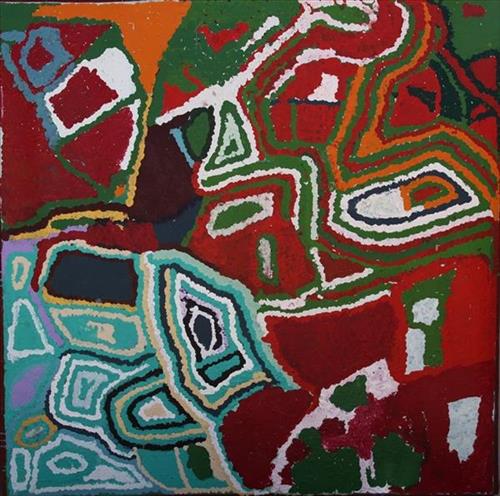
Yirrajarra comprises of two soaks situated near Lake Auld, and north of Tiwa (Canning Stock Route Well 26). As the site of a continuous source of good fresh water, surrounded by plentiful puri (shade), Yirrajarra was an important semi-permanent camping ground during the pujiman (traditional, desert dwelling) era. 

Yirrajarra is Mabel Mitutu’s birthplace, and as such an integral part of her ngurra (home Country, camp). Having walked all of this country with her family in her youth, Mabel Mitutu here depicts her knowledge of the region and its features in detail. Physical characteristics of the land and the location of its resources are portrayed alongside the Jukurrpa (Dreaming) narratives associated with this area.

During the pujiman period, Martu would traverse very large distances annually in small family groups, moving seasonally from water source to water source, and hunting and gathering bush tucker as they went. At this time knowledge of water sources was critical for survival, and today Martu Country is still defined in terms of the location and type of water. Each of the hundreds of claypans, rockholes, waterholes, soaks and springs found in the Martu desert homelands is known by name, location, quality and seasonal availability through real life experience and the recounting of Jukurrpa (dreaming) narratives.

111576676195


Yirrajarra

“Yirrajarra, it’s a yinta (permanent spring) in Warman Country. That’s my camp, that’s my place, that’s my Country. Home there,”

–  Mitutu Mabel Wakarta (dec.)

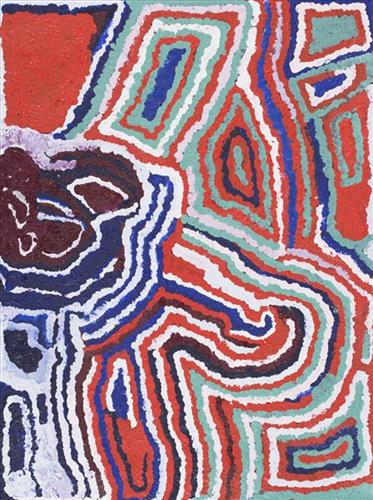
Yirrajarra comprises of two soaks situated near Lake Auld, and north of Tiwa (Canning Stock Route Well 26). As the site of a continuous source of good fresh water, surrounded by plentiful puri (shade), Yirrajarra was an important semi-permanent camping ground during the pujiman (traditional, desert dwelling) era. 

Yirrajarra is Mabel Mitutu’s birthplace, and as such an integral part of her ngurra (home Country, camp). Having walked all of this country with her family in her youth, Mabel Mitutu here depicts her knowledge of the region and its features in detail. Physical characteristics of the land and the location of its resources are portrayed alongside the Jukurrpa (Dreaming) narratives associated with this area.

During the pujiman period, Martu would traverse very large distances annually in small family groups, moving seasonally from water source to water source, and hunting and gathering bush tucker as they went. At this time knowledge of water sources was critical for survival, and today Martu Country is still defined in terms of the location and type of water. Each of the hundreds of claypans, rockholes, waterholes, soaks and springs found in the Martu desert homelands is known by name, location, quality and seasonal availability through real life experience and the recounting of Jukurrpa (dreaming) narratives.

111577093919


Yirrajarra

“Yirrajarra, it’s a yinta (permanent spring) in Warman Country. That’s my camp, that’s my place, that’s my Country. Home there,”

–  Mitutu Mabel Wakarta (dec.)

Yirrajarra comprises of two soaks situated near Lake Auld, and north of Tiwa (Canning Stock Route Well 26). As the site of a continuous source of good fresh water, surrounded by plentiful puri (shade), Yirrajarra was an important semi-permanent camping ground during the pujiman (traditional, desert dwelling) era. 

Yirrajarra is Mabel Mitutu’s birthplace, and as such an integral part of her ngurra (home Country, camp). Having walked all of this country with her family in her youth, Mabel Mitutu here depicts her knowledge of the region and its features in detail. Physical characteristics of the land and the location of its resources are portrayed alongside the Jukurrpa (Dreaming) narratives associated with this area.

During the pujiman period, Martu would traverse very large distances annually in small family groups, moving seasonally from water source to water source, and hunting and gathering bush tucker as they went. At this time knowledge of water sources was critical for survival, and today Martu Country is still defined in terms of the location and type of water. Each of the hundreds of claypans, rockholes, waterholes, soaks and springs found in the Martu desert homelands is known by name, location, quality and seasonal availability through real life experience and the recounting of Jukurrpa (dreaming) narratives.
111577093908


Yirrajarra

“Yirrajarra, it’s a yinta (permanent spring) in Warman Country. That’s my camp, that’s my place, that’s my Country. Home there,”

–  Mitutu Mabel Wakarta (dec.)

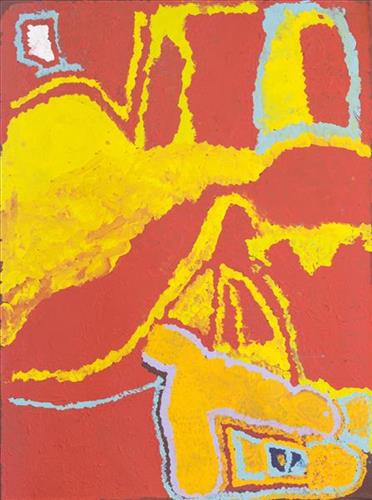
Yirrajarra comprises of two soaks situated near Lake Auld, and north of Tiwa (Canning Stock Route Well 26). As the site of a continuous source of good fresh water, surrounded by plentiful puri (shade), Yirrajarra was an important semi-permanent camping ground during the pujiman (traditional, desert dwelling) era. 

Yirrajarra is Mabel Mitutu’s birthplace, and as such an integral part of her ngurra (home Country, camp). Having walked all of this country with her family in her youth, Mabel Mitutu here depicts her knowledge of the region and its features in detail. Physical characteristics of the land and the location of its resources are portrayed alongside the Jukurrpa (Dreaming) narratives associated with this area.

During the pujiman period, Martu would traverse very large distances annually in small family groups, moving seasonally from water source to water source, and hunting and gathering bush tucker as they went. At this time knowledge of water sources was critical for survival, and today Martu Country is still defined in terms of the location and type of water. Each of the hundreds of claypans, rockholes, waterholes, soaks and springs found in the Martu desert homelands is known by name, location, quality and seasonal availability through real life experience and the recounting of Jukurrpa (dreaming) narratives.

359709482262081


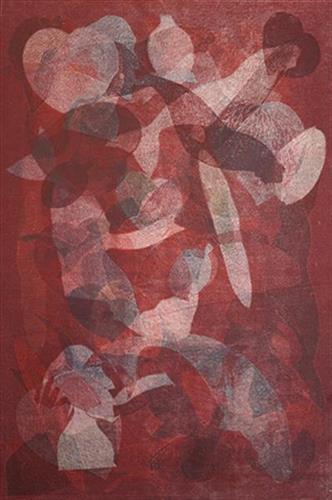
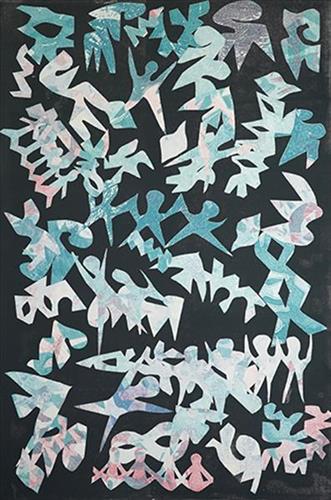
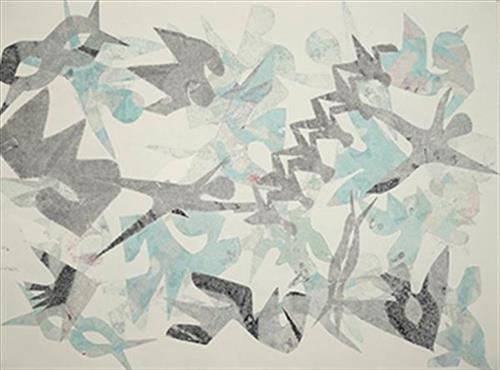
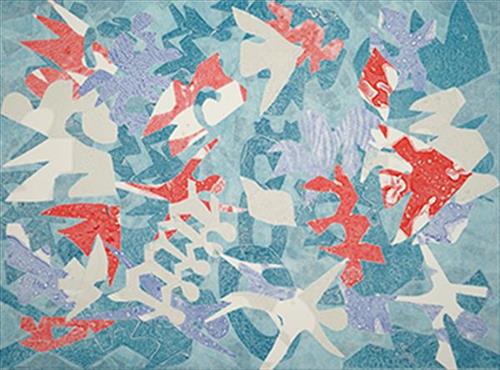
Theradhayaw Sabi (Traditional Adoption Lore) I

Ceremonies and rituals play a central role in Torres Strait kinship. 
They mark important life events, such as birth, initiation, and death, and strengthen community bonds.
The Torres Strait kinship system assigns roles and responsibilities within the community. 
This includes obligations related to marriage, child-rearing, and land management.
 
Traditional adoption in the Torres Strait involves a cultural practice where individuals or families within the community formally take on the responsibility of caring for and raising a child who is not their biological offspring. 
This practice is deeply rooted in Torres Strait Islander culture and has been a way of strengthening family and community bonds. 
Traditional adoption is guided by cultural protocols and often involves ceremonies to mark the occasion. 
It’s important to note that this practice is specific to the Torres Strait region and differs from Western adoption systems.

Art Centre notes:

Print size: 120 x 80cm.The artwork is a ‘pochoir’ print, or monoprint, printed on BFK Rives paper 100% cotton rag with strong archival properties. The image covers the paper from edge to edge.

Printer: David Bosun

Print Assistant: Dian Darmansjah

Printed; Northsite Print Studio, Cairns, September 2023.


359709482262074


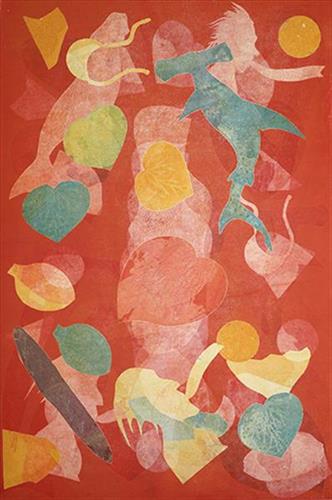
Joyful

Joyfulness is a wonderful feeling that encompasses a sense of happiness, delight and positivity. It is a state of being that can uplift our spirits, create a sense of contentment and add colour to our daily lives.

Art Centre notes: The artwork is a ‘pochoir’ print, or monoprint, printed on BFK Rives paper. 100% cotton rag with strong archival properties. 

The print covers the paper from edge to edge.

Printer: Fiona Mosby

Print Assistant: Dian Darmansjah

Printed; Northsite Print Studio, Cairns, September 2023.

359709482262055


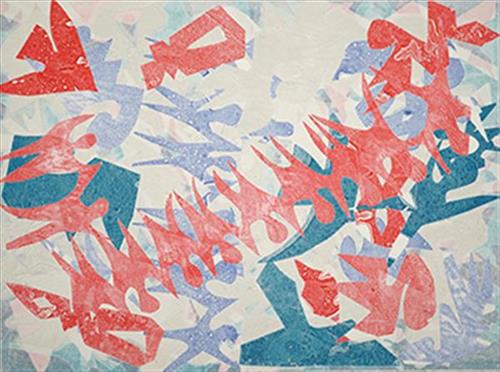
Theradhayaw Sabi (Traditional Adoption Lore) III

Ceremonies and rituals play a central role in Torres Strait kinship. 
They mark important life events, such as birth, initiation, and death, and strengthen community bonds.
The Torres Strait kinship system assigns roles and responsibilities within the community. 
This includes obligations related to marriage, child-rearing, and land management. 
Traditional adoption in the Torres Strait involves a cultural practice where individuals or families within the community formally take on the responsibility of caring for and raising a child who is not their biological offspring. 
This practice is deeply rooted in Torres Strait Islander culture and has been a way of strengthening family and community bonds. 
Traditional adoption is guided by cultural protocols and often involves ceremonies to mark the occasion. 
It’s important to note that this practice is specific to the Torres Strait region and differs from Western adoption systems.
 

Art Centre notes:

Print size: 120 x 80cm. The artwork is a ‘pochoir’ print, or monoprint, printed on BFK Rives paper. 100% cotton rag with strong archival properties. 

The print covers the paper from edge to edge.

Printer: David Bosun

Print Assistant: Dian Darmansjah

Printed; Northsite Print Studio, Cairns, September 2023.


359709482262054


Intrinsic Value II

Intrinsic Value is a vital aspect of our existence that oftern goes unoticed or under valued. BY acknowledging and embracing our intrinsic worth, we unlock a world of authenticity, self aceptance and personal growth. Let us strice to live in alignment with our true selves and recognise the inherent value we posses fostering abrighter and more fulfilling life journey.

Art Centre notes: The artwork is a ‘pochoir’ print, or monoprint, printed on BFK Rives paper. 100% cotton rag with strong archival properties. 

The print covers the paper from edge to edge.

Printer: Fiona Mosby

Print Assistant: Dian Darmansjah

Printed; Northsite Print Studio, Cairns, September 2023.

359709482262025


Purity and love

Art has the unique ability to evoke thoughts and emotions. 

Art Centre notes:

Image size: 40 x 60 cm, Paper size: 60cm x 80 cm 

The artwork is a ‘pochoir’ print, or monoprint, printed on BFK Rives paper

100% cotton rag with strong archival properties. 

The print covers the paper from edge to edge.

Printer: Fiona Mosby 

Print Assistant: Dian Darmansjah

Northsite Print Studio, Cairns, September 2023.

359709482261926


Freedoom & Celebration

Art Centre notes: The artwork is a ‘pochoir’ print, or monoprint, printed on BFK Rives paper. 100% cotton rag with strong archival properties. 

The print covers the paper from edge to edge.

Printer: Fiona Mosby

Print Assistant: Dian Darmansjah

Printed; Northsite Print Studio, Cairns, September 2023.