115682272098


Woven Mat

Traditionally, Nganiyal (conical mats) were used as an insect screen when erected, and as a sitting mat when folded. They are used in Ceremony as well as a functional item. 

Nowadays, artists weave many different shapes including flat, round and oblong. 

116482272529


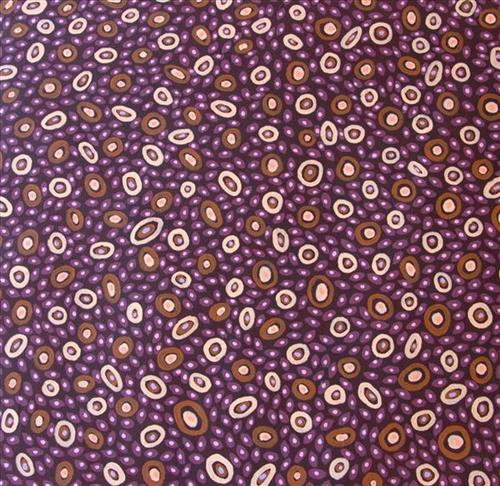
Emu Seeds

In this painting I have depicted the pods of a shrub which is common in the Pilbara area. It is a smallish bush which comes into seed in September, when the Emu is visible in the Milky Way. This is the time the emu chicks hatch and it is one of their main sources of food. When the pod opens the parent emus feed the little black seeds to their chicks. The seed pod, which is about the size and the shape of a cockroach, turns from orange to yellow, so when all the bushes are in pod at different stages, there is a brilliant display of orange and yellow colours throughout the country. The official name of this annual shrub is Senna notabilis, but, due to the oblong, flat shape and the glossy golden brown colour of its pods, it is known commonly as Cockroach Bush. It has a little round fruit, a berry, that starts of green and turns red when it is ripe, but it’s poisonous. The shrub starts off as a light green colour and then, as it matures, it gets darker. The flowers are a yellowy orange and they, too, get darker with a bit of black as they are fading away.

116482272520


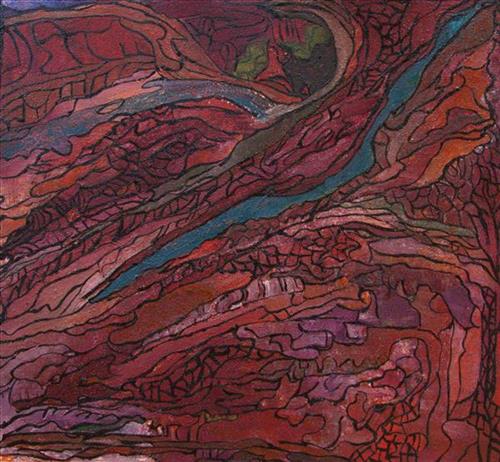
The Ochre Colours

In our land, when you come to our country, you will see lots of colours in the rocks, especially in the morning or towards evening. This painting shows these colours.

116482272518


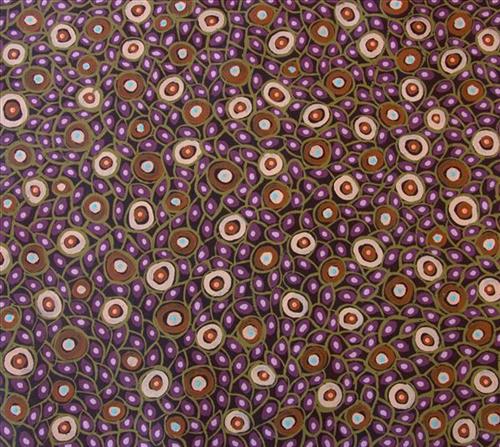
Purple Mulla Mulla

Purple Mulla Mulla grows among the grasses, blending beautifully with the bushes.

116482272514


Dry Soaks

These are the dry soaks of my country before the rain comes. Even when the country is dry there is still beauty.

116482272504


Hidden Valley

We have many of these hidden creeks running through our country. Some are dry, but you know there is water beneath the surface because of the birds flying into the thick growth of grass alongside. This is where we will find a soak for water.

116482272498


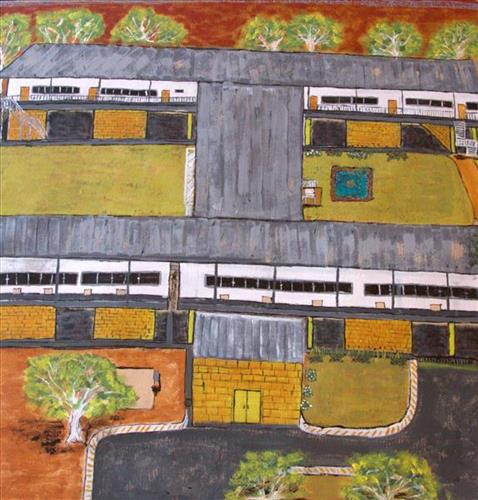
Memory of Roebourne School 80s

This is how I remember Roebourne school in the 80s before it was demolished. There was even a fishpond on the school grounds.

377810582272620


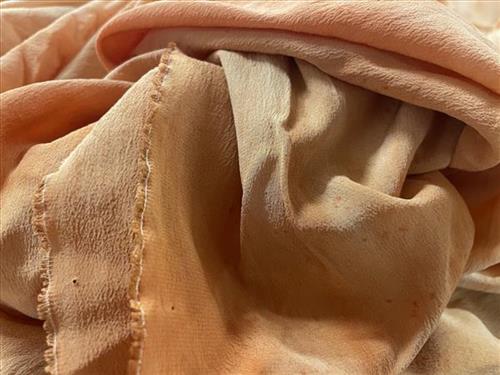
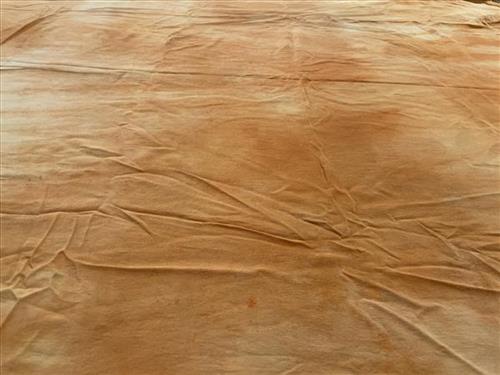
man-kurdudjumuk and ashes

The striking yellow – gold hue comes from the root of the man-kurdudjumuk plant (coelospermum reticulatum) which has been harvested from the sandy country near the flood plains. This laborious and tiring process requires digging up the entire shrub. The root is shaven into a pot of water and the colour is released into water through the boiling process. Ashes sprinkled into the mix create beautiful orange tones. 

This silk has been dyed by Jocelyn at Bolkjam Outstation where she has been attending ceremony

377810582272607


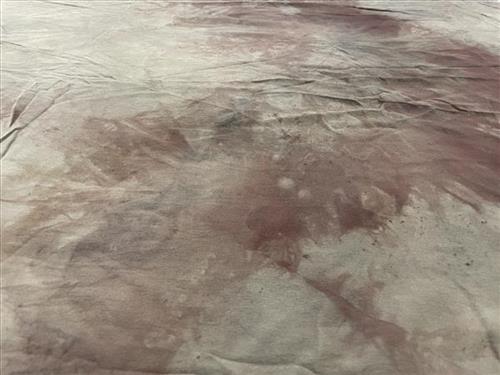
Wirndilk

Wirndilk, haemodorum coccineum is a tropical grass growing in the well draining and sandy soil around the stony country. Commonly known as scarlet bloodroot, the bright red bulb can achieve shimmering red or rust dye tones.

The seeds of wirndilk can make a beautiful and bright purple-pink colour.

Wirndilk continues to be used women of Arnhem Land to dye pandanus for dilly bags and woven baskets. 

11151030972


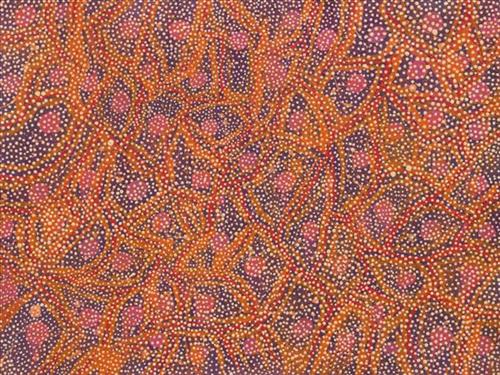
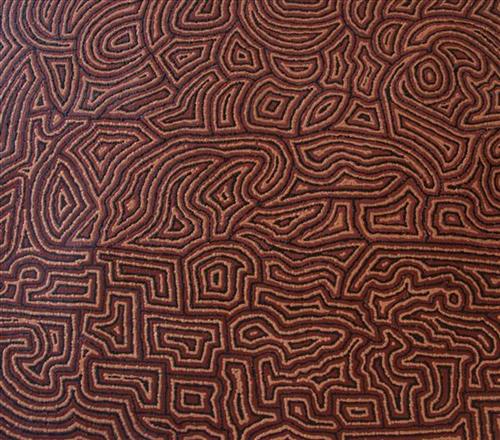
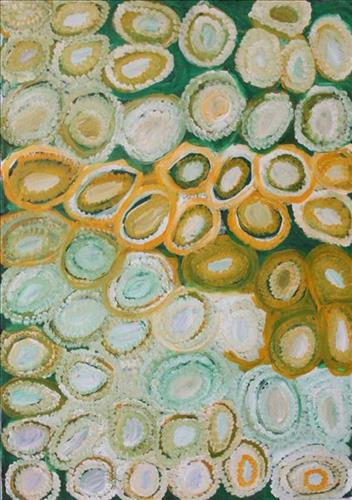
Kunawarritji (Canning Stock Route Well 33)

“I learnt how to paint in Kunawarritji; I’ve been painting here. I go to Punmu, Jigalong and Parnngurr, but I always go home to Kunawarritji. I learnt how to paint in Kunawarritji.

[When I was young] I was walking around Kunawarritji and Kun Kun, looking for meat with Jakayu and her family.”

 – Bugai Whyoulter

Kunawarritji is an important site in the Great Sandy Desert where multiple stories and histories intersect. Originally a spring water and major Martu pujiman (traditional, desert dwelling) camping site, at the turn of the 20th century Kunawarritji was converted to a well along the Canning Stock Route. Each year throughout the 1930-50s, the well became a site of contact between the drovers, their cattle, and desert families such as Bugai’s. Bugai grew up, walked and hunted primarily around Punmu, Kunawarritji and Kun Kun (Kuny-Kuny), and as a young woman travelled up and down large tracts of the 1850km long Canning Stock Route, where she and her husband met and walked with cattle drovers. 

Long before colonial history entered this Country, however, other stories dominated this site. Primarily, Kunawarritji features in the Minyipuru (Jakulyukulyu, Seven Sisters) Jukurrpa (Dreaming). Minyipuru is a central Jukurrpa narrative for Martu, Ngaanyatjarra, Pitjantjatjara and Yankunytjatjara people that is associated with the seasonal Pleiades star constellation. Beginning in Roebourne on the west coast of Western Australia, the story morphs in its movement eastward across the land, following a group of women as they walk, dance, and even fly from waterhole to waterhole. As they travelled the women left markers in the landscape and create landforms that remain to this day. During the entirety of their journey the women are pursued by a lustful old man, Yurla, although interactions with other animals, groups of men, and spirit beings are also chronicled in the narrative.

The Minyipuru travelled to Kunawarritji from Nyipily (Nyipil, Nibil, Canning Stock Route Well 34), and transformed themselves into a distinctive group of trees that remain in the area between these two sites. From Kunawarritji Yurla followed the sisters to Pangkapirni, where he finally caught one of the women. 

Today, Kunawarritji is a site of return, a place where people came back to continue their life in the desert with the formation of Kunawarritji Aboriginal community in the early 1980s. The community’s cultural significance endures, with the population swelling up to 1000 during cultural business.

 Kunawarritji is Bugai’s home today, and the place where she first began painting her Country. As is clearly expressed in her account, for Bugai Kunawarritji is her ngurra (home Country, camp).