111982282562


Bush Jewellery – Earrings

The women of Maningrida and surrounding homelands use a combination of locally found seeds, bone and shells to make a variety of jewellery including necklaces. earrings and bracelets.  Many of the artists use complex patterns and designs to make their beautiful creations.

111982282561


Bush Jewellery – Earrings

The women of Maningrida and surrounding homelands use a combination of locally found seeds, bone and shells to make a variety of jewellery including necklaces. earrings and bracelets.  Many of the artists use complex patterns and designs to make their beautiful creations.

111982282560


Bush Jewellery – Earrings

The women of Maningrida and surrounding homelands use a combination of locally found seeds, bone and shells to make a variety of jewellery including necklaces. earrings and bracelets.  Many of the artists use complex patterns and designs to make their beautiful creations.

111982282559


Bush Jewellery – Earrings

The women of Maningrida and surrounding homelands use a combination of locally found seeds, bone and shells to make a variety of jewellery including necklaces. earrings and bracelets.  Many of the artists use complex patterns and designs to make their beautiful creations.

111982282558


Bush Jewellery – Earrings

The women of Maningrida and surrounding homelands use a combination of locally found seeds, bone and shells to make a variety of jewellery including necklaces. earrings and bracelets.  Many of the artists use complex patterns and designs to make their beautiful creations.

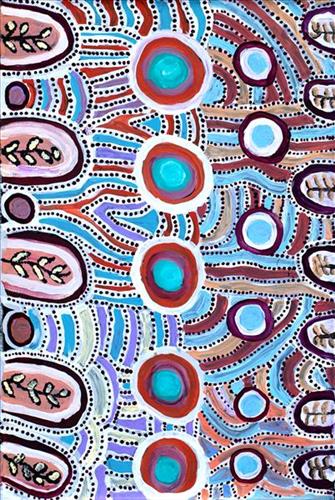
377816182266563


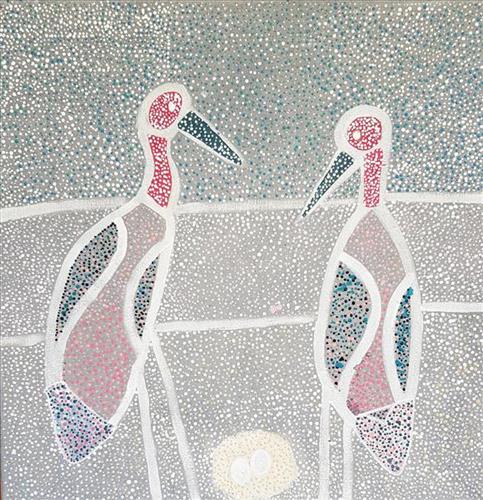
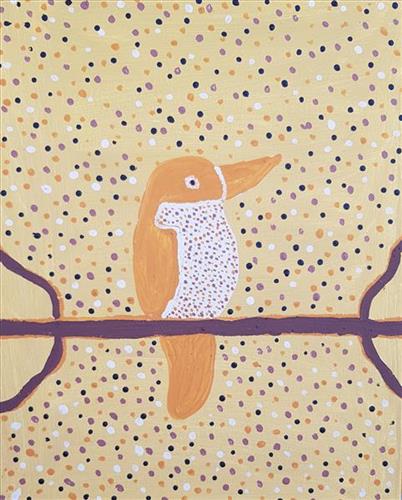
Kubal Kababina

Anne Nunn is Nyungul woman. Her paintings depict cultural, historic and contemporary stories from her Country, the Helensvale and Shipton’s Flat area in Far North Queensland.

“My painting depicts the plants and animals that live and grow around my bubu (country). I love going out bush and am especially inspired by the wetland dikal (birds) like the kubal (brolga) that live in the walngka (swamp grasses) and kababina (water lilies)”.

377816182266859


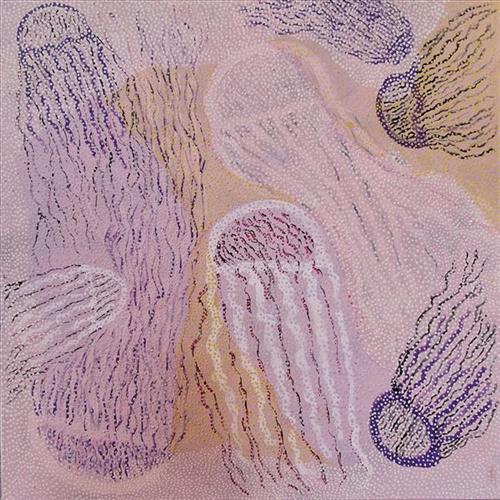
Mili

I am a Jalanji saltwater woman. Jalanji people have lots of stories about the reef. My painting’s story is about Mili (stinging jellyfish) stirring out on the reef.

We were taught at a young age to watch out because these mili sting and can be very dangerous. There are special plants that we can use on mili stings. Our elders passed on this knowledge to us.

377816182270401


Mili

I am a Jalanji saltwater woman. Jalanji people have lots of stories about the reef. My painting’s story is about Mili (stinging jellyfish) stirring out on the reef.

We were taught at a young age to watch out because these mili sting and can be very dangerous. There are special plants that we can use on mili stings. Our elders passed on this knowledge to us.

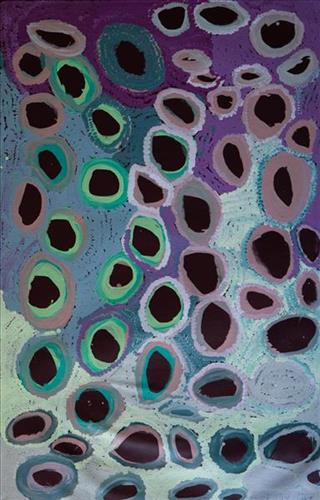
377816182280518


Jarntinti

“I, me, Nyanjilpayi paint this one, Jarntinti Lake. I been born there, mine. I been little girl born there, Jarntinti area.

Jarntinti big claypan near Punmu. Tarlpa, Jutupa, Wawulpa, all waterhole and yinta (permanent spring) in Jarntinti area. Long time [ago] plenty bush tucker there, yukuri (green grass, vegetation) everywhere, plenty kalaru (Samphire, salt bush). You can find him biggest mob there. You got to get that kalaru, grind it and make a damper. Get him up and wash him, wash him, wash him then grind him into flour for a damper.

No kalaru today, no bush tucker, nothing. I don’t know [why]. Bush tucker nothing now, he never grow there anymore. Jarntinti everywhere clean water today, big rain there. I don’t know why no bush tucker now. I don’t know what’s wrong”.
– Nyanjilpayi (Ngarnjapayi) Nancy Chapman

“When I was born, my spirit appeared at Jarntinti. I was born at the waterhole called Jarntinti. That’s my Country, Jarntinti. I know all about it, about that water over there, about my home, our grandparent’s Country. We travelled all around as pujiman (traditional, desert dwelling), camping and then setting off again by foot. My family’s water, my grandmother’s, my grandfathers and my ancestors. I was taught from them. Our knowledge is ancient and has been passed on by our grandparents.”
– Nyanjilpayi Nancy Chapman, as translated by Kanyirninpa Jukurrpa

Jarntinti is a large claypan at the Southern end of Nyayartakujarra (Lake Dora), a large salt lake surrounded by tali (sand hills) within the Karlamilyi (Rudall River) region. This area is Nyanjilpayi’s birthplace; her ngurra (home Country, camp). Jarntinti formed part of the region which Nyanjilpayi traversed extensively as a young girl. During the pujiman era, Jarntinti was primarily used as a camping site in the wantajarra (wet season), when the claypan filled with kapi (water).

As related by Nyanjilpayi, an abundance of bush tucker could be found at Jarntinti. During the pujiman period, Martu would traverse very large distances annually in small family groups, moving seasonally from water source to water source, and hunting and gathering bush tucker as they went. Whilst desert life has moved away from mobile hunter-gatherer subsistence throughout the course of the twentieth century, bush tucker continues to be a significant component of the modern Martu diet. Hunting and gathering bush tucker remains equally valuable as an important cultural practice that is passed on intergenerationally.
377816182280512


Jarntinti

“I, me, Nyanjilpayi paint this one, Jarntinti Lake. I been born there, mine. I been little girl born there, Jarntinti area.

Jarntinti big claypan near Punmu. Tarlpa, Jutupa, Wawulpa, all waterhole and yinta (permanent spring) in Jarntinti area. Long time [ago] plenty bush tucker there, yukuri (green grass, vegetation) everywhere, plenty kalaru (Samphire, salt bush). You can find him biggest mob there. You got to get that kalaru, grind it and make a damper. Get him up and wash him, wash him, wash him then grind him into flour for a damper.

No kalaru today, no bush tucker, nothing. I don’t know [why]. Bush tucker nothing now, he never grow there anymore. Jarntinti everywhere clean water today, big rain there. I don’t know why no bush tucker now. I don’t know what’s wrong”.
– Nyanjilpayi (Ngarnjapayi) Nancy Chapman

“When I was born, my spirit appeared at Jarntinti. I was born at the waterhole called Jarntinti. That’s my Country, Jarntinti. I know all about it, about that water over there, about my home, our grandparent’s Country. We travelled all around as pujiman (traditional, desert dwelling), camping and then setting off again by foot. My family’s water, my grandmother’s, my grandfathers and my ancestors. I was taught from them. Our knowledge is ancient and has been passed on by our grandparents.”
– Nyanjilpayi Nancy Chapman, as translated by Kanyirninpa Jukurrpa

Jarntinti is a large claypan at the Southern end of Nyayartakujarra (Lake Dora), a large salt lake surrounded by tali (sand hills) within the Karlamilyi (Rudall River) region. This area is Nyanjilpayi’s birthplace; her ngurra (home Country, camp). Jarntinti formed part of the region which Nyanjilpayi traversed extensively as a young girl. During the pujiman era, Jarntinti was primarily used as a camping site in the wantajarra (wet season), when the claypan filled with kapi (water).

As related by Nyanjilpayi, an abundance of bush tucker could be found at Jarntinti. During the pujiman period, Martu would traverse very large distances annually in small family groups, moving seasonally from water source to water source, and hunting and gathering bush tucker as they went. Whilst desert life has moved away from mobile hunter-gatherer subsistence throughout the course of the twentieth century, bush tucker continues to be a significant component of the modern Martu diet. Hunting and gathering bush tucker remains equally valuable as an important cultural practice that is passed on intergenerationally.