222082281959
Cushion Cover
222082281958
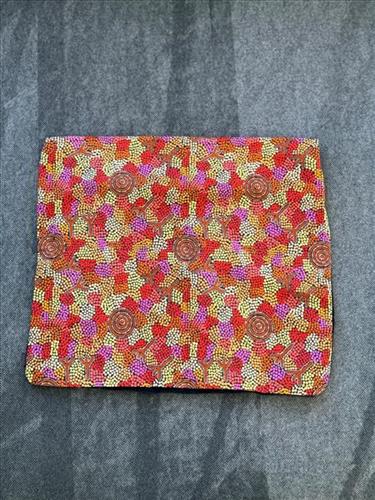
Cushion Cover
222082281957
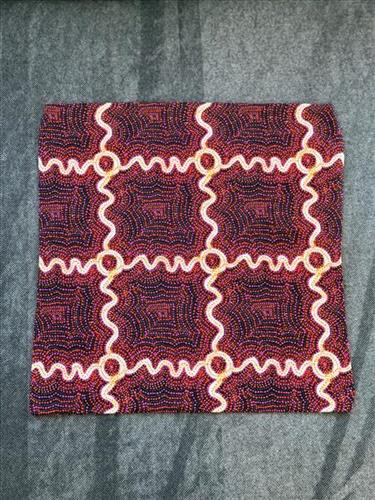
Cushion Cover
222082281956
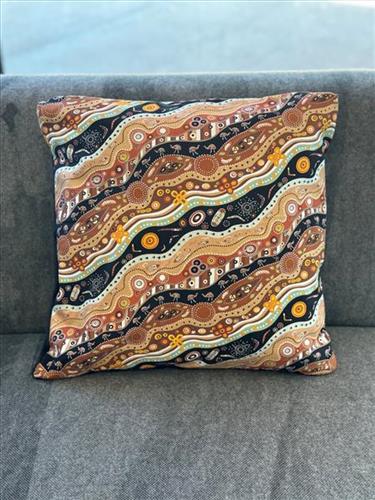
Cushion Cover
37781614004260

Status: Stock
Jarntinti
“I, me, Nyanjilpayi paint this one, Jarntinti Lake. I been born there, mine. I been little girl born there, Jarntinti area.
Jarntinti big claypan near Punmu. Tarlpa, Jutupa, Wawulpa, all waterhole and yinta (permanent spring) in Jarntinti area. Long time [ago] plenty bush tucker there, yukuri (green grass, vegetation) everywhere, plenty kalaru (Samphire, salt bush). You can find him biggest mob there. You got to get that kalaru, grind it and make a damper. Get him up and wash him, wash him, wash him then grind him into flour for a damper.
No kalaru today, no bush tucker, nothing. I don’t know [why]. Bush tucker nothing now, he never grow there anymore. Jarntinti everywhere clean water today, big rain there. I don’t know why no bush tucker now. I don’t know what’s wrong”.
– Nyanjilpayi (Ngarnjapayi) Nancy Chapman
“When I was born, my spirit appeared at Jarntinti. I was born at the waterhole called Jarntinti. That’s my Country, Jarntinti. I know all about it, about that water over there, about my home, our grandparent’s Country. We travelled all around as pujiman (traditional, desert dwelling), camping and then setting off again by foot. My family’s water, my grandmother’s, my grandfathers and my ancestors. I was taught from them. Our knowledge is ancient and has been passed on by our grandparents.”
– Nyanjilpayi Nancy Chapman, as translated by Kanyirninpa Jukurrpa
Jarntinti is a large claypan at the Southern end of Nyayartakujarra (Lake Dora), a large salt lake surrounded by tali (sand hills) within the Karlamilyi (Rudall River) region. This area is Nyanjilpayi’s birthplace; her ngurra (home Country, camp). Jarntinti formed part of the region which Nyanjilpayi traversed extensively as a young girl. During the pujiman era, Jarntinti was primarily used as a camping site in the wantajarra (wet season), when the claypan filled with kapi (water).
As related by Nyanjilpayi, an abundance of bush tucker could be found at Jarntinti. During the pujiman period, Martu would traverse very large distances annually in small family groups, moving seasonally from water source to water source, and hunting and gathering bush tucker as they went. Whilst desert life has moved away from mobile hunter-gatherer subsistence throughout the course of the twentieth century, bush tucker continues to be a significant component of the modern Martu diet. Hunting and gathering bush tucker remains equally valuable as an important cultural practice that is passed on intergenerationally.

111581260547
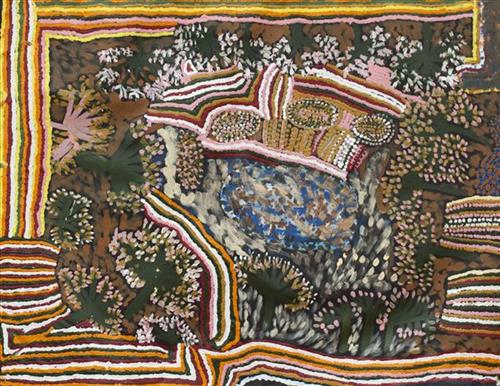
Yatutuma
Yatutuma is part of a large group of warla’s (lakes) that run from Lake Dora next to Punmu community, around in an arc and then up towards the Percival lakes. Yatutuma is on the south eastern end near Mukurtu another very significant place for the artist and her family.When the artist and her sister fellow artist Mulyatingki Marney were younger they would jamana (walk) all around this area during the Pujiman (bush) days. They were naked fella’s and only wore a little belt. One day they were stopping there with their Tati (daddy) and Tilypu (mummy) and Nancy wandered away from the camp to have a look around for Jinjiwirrily (bush Tomato). Mulyatingki the older sister went after her to tell her to come back. Both of the girls got chased by a very large wild dog that bit them both quite badly. It chased them for a long way and they had to go down to the water to wash off the blood.
116482281486
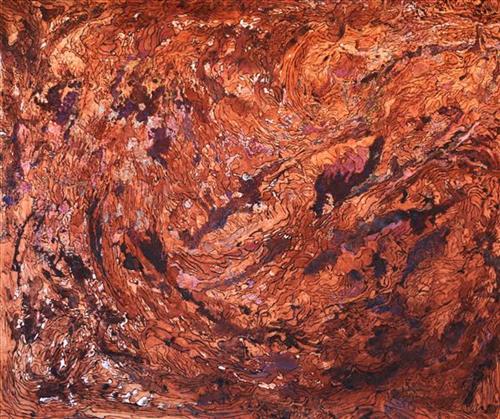
After the Bushfire
After the bushfire when you look at the Country it looks bare, there’s no vegetation, just a small amount of growth within the area. The moist at night, I call it the bunyjad (heavy dew) when it falls at night and it brings a little bit of life to the earth . In the early days when we were growing up in the station they used to go out mustering, but always aware of how much spinifex they could burn bringing the cattle and the sheep back into the station for shearing, they were mustering days. Our Elders knew how to look after the Country and look after the land and knew when the time and the season came for rain. Today we see so many bush fires around and it just burns the whole Country. We just wait for rain to come, or nice bunyjad to fall at night to water the mother earth and bring life back.
116482281479
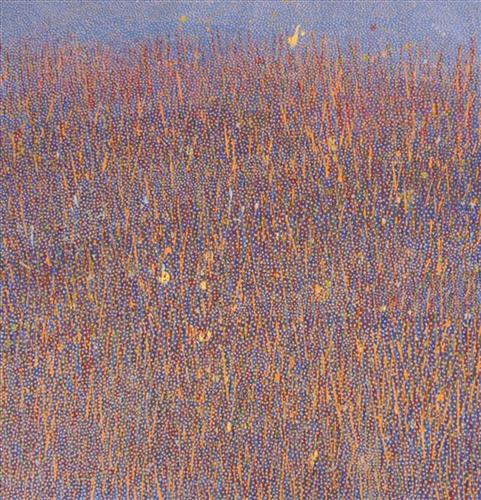
Millstream
111982281470
Warraburnburn
In Burarra and Gun-nartpa languages the figure represented in this artwork is generally known as a wangarra ‘ghost spirit’. For the Warrawarra clan ghost spirits have their own particular characteristics and their own name – Warraburnburn.
The Warraburnburn and the closely related Galabarrbarr spirit (owned by the Balkarranga clan) are also manikay song topics. The spirits are related to each other as maternal grandparent and grandchild, just as the people of Warrawarra and Balkarranga are. The dancing of the two ghost spirit figures forms the finale performance for funerals, and is the final goodbye to a deceased family member.
In many ways the Warraburnburn and Galabarrbarr ghost spirits are like people. They emerge from the patches of jungle on Warrawarra and Balkarranga country in the late afternoon and go hunting in family groups of men, women and children. They stay in contact with each other by calling out as the men hunt for fish and the women walk with their dillybags looking for vegetable food.
The ghost spirits are associated closely with white ochre and artists commonly paint the bodies of carved figures in white. Different types of ghost spirit wear different patterns. Warraburnburn is decorated with uniform white dots while others are painted white all over. Some ghost spirits are shown with a design painted on their chest infilled with rarrk ‘cross-hatching’, the same designs that are painted onto japi an-guyinda ‘male initiations’.
They also have supernatural characteristics including superhuman size (jarra anbaykarda ‘super tall’). They know the country intimately – some are malevolent towards humans and will lead people astray, taking them to unfamiliar and dangerous places. These malevolent spirits are likened to an-muburda ‘sorcerers’ and can conduct dangerous rituals that cause harm to people. Others are benign and will lead humans back to familiar paths and their own camps.