111582296285


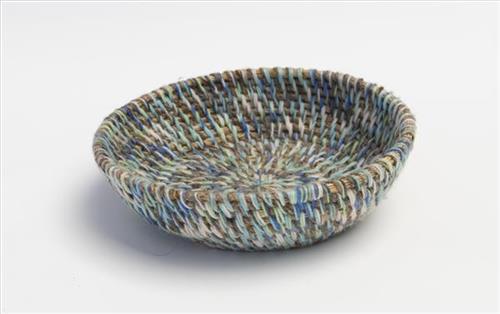
Basket

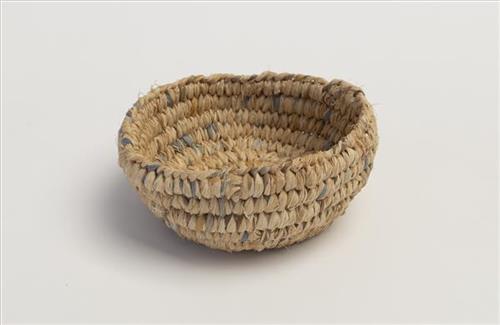
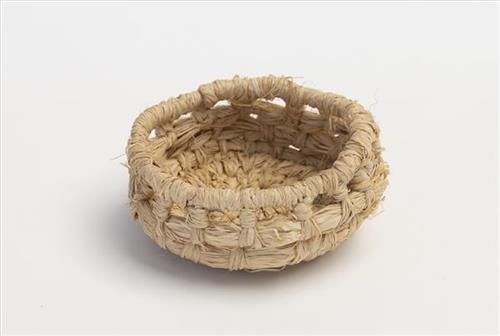
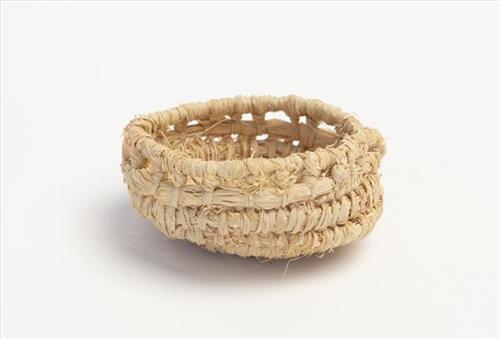
Weaving is a skill that has been practiced by Martu for thousands of years in the making of utilitarian and ceremonial items, such as yakapiri (bark sandals) and manguri (head pads for balancing carved carrying dishes). However, coiled basket weaving as an artform is a relatively newly adopted practice for the Martu, a skill passed on from Central Desert artists in the 1990’s. Leading Martu fibre arts practitioner Nola Taylor says that basket weaving was so popular amongst Martu women that it “spread across the desert like a waru (fire)”.

Each basket is built up through wrapping fine bundles of grass in brightly coloured wool and then stitching each round on to the previous one. The baskets are primarily made from puntayarra and minarri (Amphipogon Caricinus) grass, usually collected incidentally during trips to visit family, attend ceremonies, maintain Country, and hunt and gather bush tucker. Martu artists have developed a distinctive style of basketry and individual artists continue to develop new designs and incorporate novel materials, including steel, wire and wood, into their work. 
111582296284


Basket

Weaving is a skill that has been practiced by Martu for thousands of years in the making of utilitarian and ceremonial items, such as yakapiri (bark sandals) and manguri (head pads for balancing carved carrying dishes). However, coiled basket weaving as an artform is a relatively newly adopted practice for the Martu, a skill passed on from Central Desert artists in the 1990’s. Leading Martu fibre arts practitioner Nola Taylor says that basket weaving was so popular amongst Martu women that it “spread across the desert like a waru (fire)”.

Each basket is built up through wrapping fine bundles of grass in brightly coloured wool and then stitching each round on to the previous one. The baskets are primarily made from puntayarra and minarri (Amphipogon Caricinus) grass, usually collected incidentally during trips to visit family, attend ceremonies, maintain Country, and hunt and gather bush tucker. Martu artists have developed a distinctive style of basketry and individual artists continue to develop new designs and incorporate novel materials, including steel, wire and wood, into their work. 
111582296282


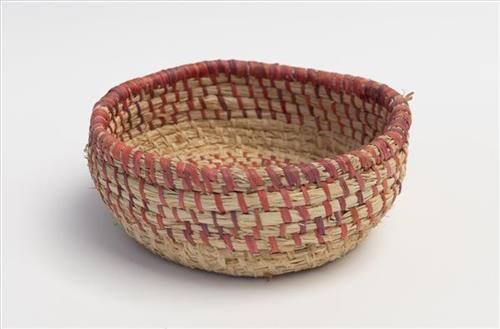
Basket

Weaving is a skill that has been practiced by Martu for thousands of years in the making of utilitarian and ceremonial items, such as yakapiri (bark sandals) and manguri (head pads for balancing carved carrying dishes). However, coiled basket weaving as an artform is a relatively newly adopted practice for the Martu, a skill passed on from Central Desert artists in the 1990’s. Leading Martu fibre arts practitioner Nola Taylor says that basket weaving was so popular amongst Martu women that it “spread across the desert like a waru (fire)”.

Each basket is built up through wrapping fine bundles of grass in brightly coloured wool and then stitching each round on to the previous one. The baskets are primarily made from puntayarra and minarri (Amphipogon Caricinus) grass, usually collected incidentally during trips to visit family, attend ceremonies, maintain Country, and hunt and gather bush tucker. Martu artists have developed a distinctive style of basketry and individual artists continue to develop new designs and incorporate novel materials, including steel, wire and wood, into their work. 
111582296281


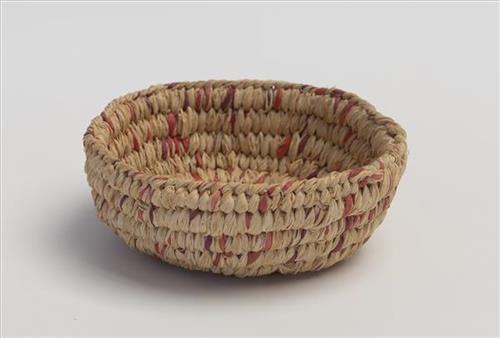
Basket

Weaving is a skill that has been practiced by Martu for thousands of years in the making of utilitarian and ceremonial items, such as yakapiri (bark sandals) and manguri (head pads for balancing carved carrying dishes). However, coiled basket weaving as an artform is a relatively newly adopted practice for the Martu, a skill passed on from Central Desert artists in the 1990’s. Leading Martu fibre arts practitioner Nola Taylor says that basket weaving was so popular amongst Martu women that it “spread across the desert like a waru (fire)”.

Each basket is built up through wrapping fine bundles of grass in brightly coloured wool and then stitching each round on to the previous one. The baskets are primarily made from puntayarra and minarri (Amphipogon Caricinus) grass, usually collected incidentally during trips to visit family, attend ceremonies, maintain Country, and hunt and gather bush tucker. Martu artists have developed a distinctive style of basketry and individual artists continue to develop new designs and incorporate novel materials, including steel, wire and wood, into their work. 
111582296280


Basket

Weaving is a skill that has been practiced by Martu for thousands of years in the making of utilitarian and ceremonial items, such as yakapiri (bark sandals) and manguri (head pads for balancing carved carrying dishes). However, coiled basket weaving as an artform is a relatively newly adopted practice for the Martu, a skill passed on from Central Desert artists in the 1990’s. Leading Martu fibre arts practitioner Nola Taylor says that basket weaving was so popular amongst Martu women that it “spread across the desert like a waru (fire)”.

Each basket is built up through wrapping fine bundles of grass in brightly coloured wool and then stitching each round on to the previous one. The baskets are primarily made from puntayarra and minarri (Amphipogon Caricinus) grass, usually collected incidentally during trips to visit family, attend ceremonies, maintain Country, and hunt and gather bush tucker. Martu artists have developed a distinctive style of basketry and individual artists continue to develop new designs and incorporate novel materials, including steel, wire and wood, into their work. 
111982296279


Ngokngok (Owl)

Ngokngok or mun-ngokngok is the Southern Boobook owl. Their clan is Warrawarra and the are connected to witch doctors and traditional healers.


111582296278


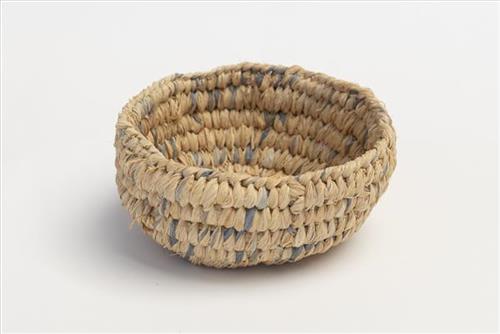
Basket

Weaving is a skill that has been practiced by Martu for thousands of years in the making of utilitarian and ceremonial items, such as yakapiri (bark sandals) and manguri (head pads for balancing carved carrying dishes). However, coiled basket weaving as an artform is a relatively newly adopted practice for the Martu, a skill passed on from Central Desert artists in the 1990’s. Leading Martu fibre arts practitioner Nola Taylor says that basket weaving was so popular amongst Martu women that it “spread across the desert like a waru (fire)”.

Each basket is built up through wrapping fine bundles of grass in brightly coloured wool and then stitching each round on to the previous one. The baskets are primarily made from puntayarra and minarri (Amphipogon Caricinus) grass, usually collected incidentally during trips to visit family, attend ceremonies, maintain Country, and hunt and gather bush tucker. Martu artists have developed a distinctive style of basketry and individual artists continue to develop new designs and incorporate novel materials, including steel, wire and wood, into their work. 
111582296277


Basket

Weaving is a skill that has been practiced by Martu for thousands of years in the making of utilitarian and ceremonial items, such as yakapiri (bark sandals) and manguri (head pads for balancing carved carrying dishes). However, coiled basket weaving as an artform is a relatively newly adopted practice for the Martu, a skill passed on from Central Desert artists in the 1990’s. Leading Martu fibre arts practitioner Nola Taylor says that basket weaving was so popular amongst Martu women that it “spread across the desert like a waru (fire)”.

Each basket is built up through wrapping fine bundles of grass in brightly coloured wool and then stitching each round on to the previous one. The baskets are primarily made from puntayarra and minarri (Amphipogon Caricinus) grass, usually collected incidentally during trips to visit family, attend ceremonies, maintain Country, and hunt and gather bush tucker. Martu artists have developed a distinctive style of basketry and individual artists continue to develop new designs and incorporate novel materials, including steel, wire and wood, into their work. 
111582296275


Basket

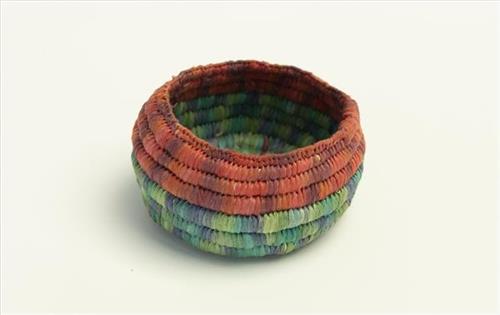
Weaving is a skill that has been practiced by Martu for thousands of years in the making of utilitarian and ceremonial items, such as yakapiri (bark sandals) and manguri (head pads for balancing carved carrying dishes). However, coiled basket weaving as an artform is a relatively newly adopted practice for the Martu, a skill passed on from Central Desert artists in the 1990’s. Leading Martu fibre arts practitioner Nola Taylor says that basket weaving was so popular amongst Martu women that it “spread across the desert like a waru (fire)”.

Each basket is built up through wrapping fine bundles of grass in brightly coloured wool and then stitching each round on to the previous one. The baskets are primarily made from puntayarra and minarri (Amphipogon Caricinus) grass, usually collected incidentally during trips to visit family, attend ceremonies, maintain Country, and hunt and gather bush tucker. Martu artists have developed a distinctive style of basketry and individual artists continue to develop new designs and incorporate novel materials, including steel, wire and wood, into their work. 
111982296274


Wak Wak

This painting depicts a sacred site at ‘Kurrurldul’, an outstation south of Maningrida.

The ‘rarrk’, or abstract crosshatching, on this work represents the design for the crow totem ancestor called ‘Djimarr’. Today this being exists in the form of a rock, which is permanently submerged at the bottom of Kurrurldul Creek. The ‘Djimarr’ rock in the stream at Kurrurldul is said to move around and call out in a soft hooting tone at night. Both the stone itself and the area around it are considered sacred.

The imagery represents the rock mentioned above at the bottom of Kurrurldul creek, which is the final transmutation of the dreaming ancestor ‘Djimarr’. Finally, the pattern used here is also the crow design used in the sacred ‘Mardayin’ ceremony, which is a large regional patri-moiety ceremony now rarely conducted in central and eastern Arnhem Land.