222082294862
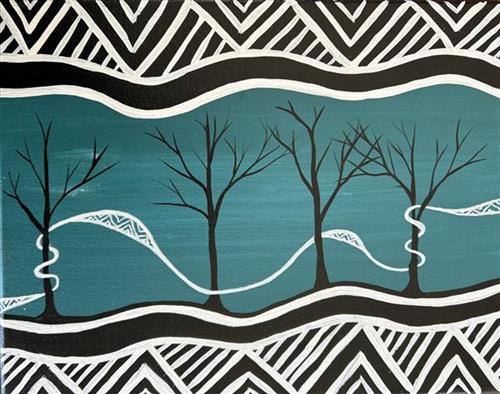
Pathway through the land
Pathway through the land
222082294860
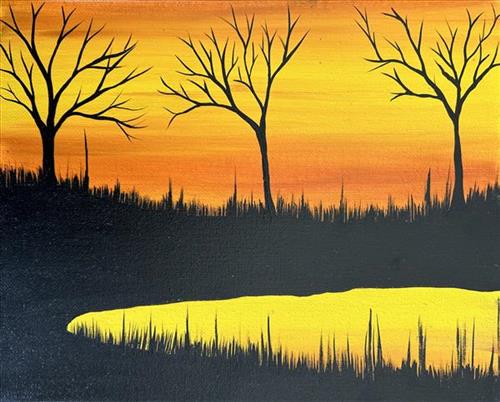
Sunset
A beautiful sunset while sitting near the Dhungala
222082294793
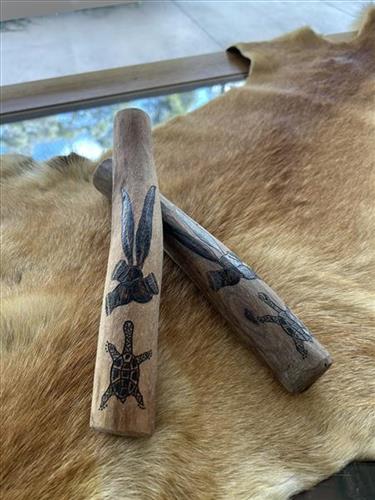
Clapsticks
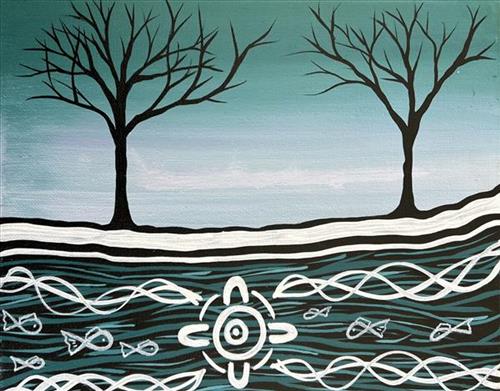
Red Gum trees are native to Australia and the gum nuts need to be burnt well to germinate.
222082294792
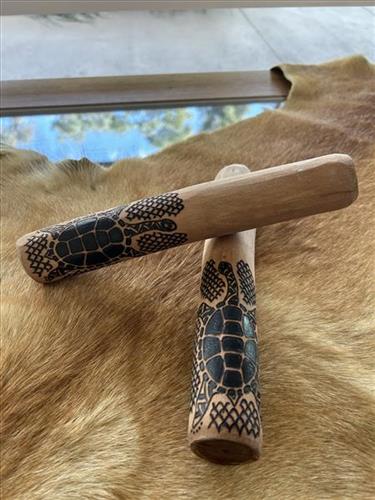
Clapsticks
Turtle is the totem of the Yorta Yorta people, moving to another waterhole.

377810582294788
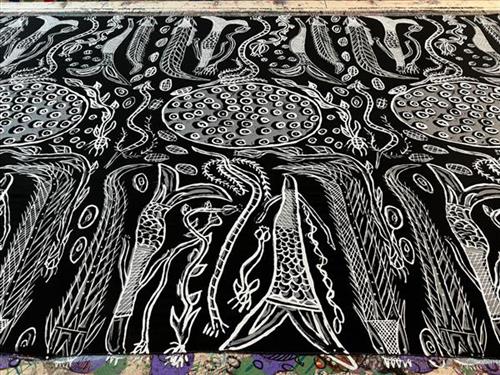
Djomi Egg
This design depicts the story of the artist’s ancestral dreaming, the Djomi freshwater spirit mermaid.
The Djomi figure is a mermaid like spirit with fish tail that lives in the freshwater stream that flows out to the sea cliff near Maningrida. Djomi is a known to be a very powerful fertility symbol.
‘There is a swamp by the ocean, near my home, where all the Djomi live and come to lay their eggs, they lay them here to grow more and more Djomi. When the wet season comes, the cyclones, storms, and big rain, brings enough water for the Djomi to swim out and into the water ways surrounding Maningrida.
Anyone wanting to have a baby can go to that place and Djomi will give them a baby. This is a real story; we have lots of Djomi babies here in Maningrida.
When the big rains of wet season are too strong, Djomi swim up into the pipes to hide and keep safe. Sometimes they will keep swimming further up the pipes and into pipes of people’s homes, they can travel everywhere. The Djomi carries human babies with them and will sometimes put babies into the water that people in Maningrida drink, that’s why we see many young women expecting babies.’ – Joy Garlbin 2023
359709482293538
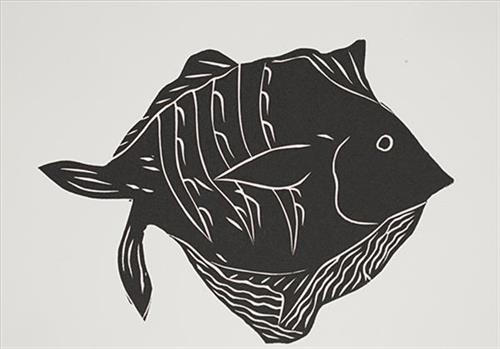
Karmui
Karmui is a well known fish in the Torres Strait it can be cooked as fried, boiled or roasted.
Artist: Samoa Tomsana
Printer: Fiona Mosby
Printed: Kubin, Moa Arts Studio, Feb 2024.
359709482293470
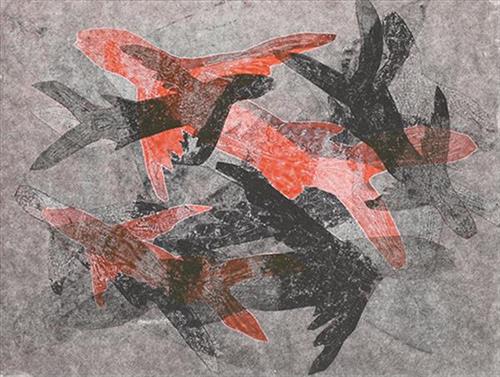
Sigai 4 OF 8
Sigai is a flying fish that lives on sign east side of Mao island it is a totem of my father and is now my family totem. Sigai is a significant fish to our family it represents our identification to who we are and our tribe Sigai.
Art Centre notes:
The artwork is a ‘pochoir’ print, or monoprint, printed on BFK Rives paper
(100% cotton rag with strong archival properties).
(The print covers the paper from edge to edge.)
Artist: Ivy Trinkoon
Printer: Dian darmansjah
Printed: Moa Arts, February 2024.

377810582293998
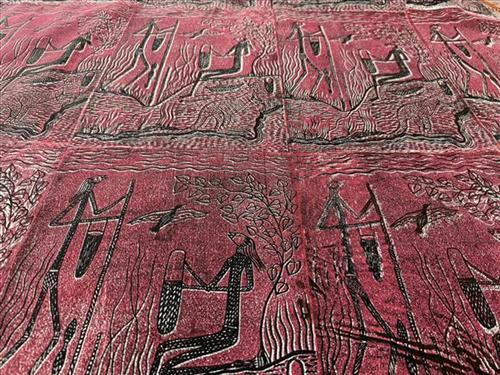
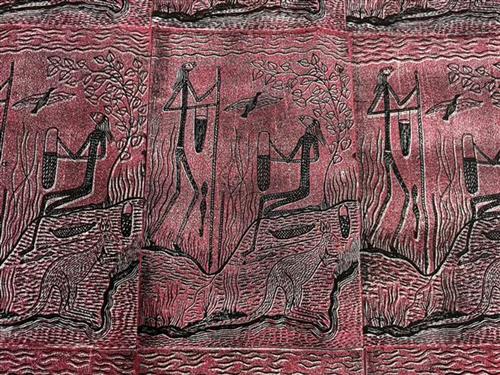
Namurre Boko
A two colour screen print design from 2022. Jay’s first large format design to join the Bábbarra Designs Collection.
‘This is my first one, I’m really happy, I’m proud. It’s just a songline for everybody. This story is from my great great grandfather on my fathers side. The songline was made by my second father. The mimihs tell the story. The painting took a long time, a few weeks to finish.’ Jay Jurrupula Rostron
‘Bini-murreko means two brothers – big brother and little brother.
Two brothers were really strong leaders and good hunters, sharing animals with different tribes.
With those different tribe there were jealousy going on.
Little brother went walkabout and heard the different tribe was talking about his tribe.
They said ngarribin manre djed-djedme bokko
Meaning: will make spear for them
Ngarrbin danj-bun, ngarrbinbun
Meaning: will spear them kill them
little brother turn around went back tell his brother
Namurre bokko kadi marne djed-djedme Karre wonens, kardi-djal danjbun
Meaning: they making spear for us, they gonna spear us
Couple of months they saw different tribe
They changed their attitude
They been bringing lots of animals to them and start asking for women
And that tribe realise that’s how those brothers died.
They kill them
This Why? They got jealous because two brothers was a good hunter.
This story written on the rock art and it stays forever.’

377810582293921
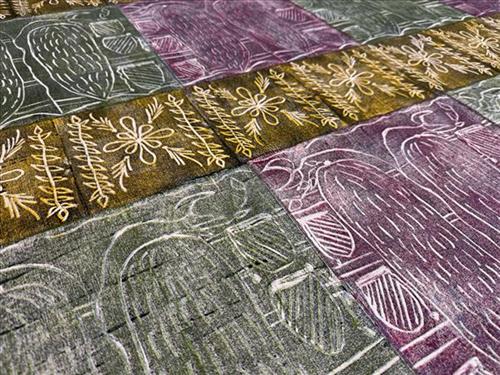
Karrbarda (Long Yam)
“This design is about collecting karrbarda (yams). The old people use these kungarrndutj (digging sticks) to dig the yams from under the ground. They carry the kunmatj (dilly bags) on their heads for collecting bush food. These yams are purple on the saltwater side of country and inland they are white.” – Deborah Wurrkidj
Deborah Wurrkidj is a Kuninjku artist from the Kurulk clan whose country lies around the outstation of Mumeka in central Arnhem Land. In this design, she has depicted Kun-madj (dilly bag) and karrbarda (long yam). Women dig up long yams with kungarrndutj (digging sticks) and they are then cooked in the ashes of the fire to be eaten.
Kun-madj, or dilly bag, is a large woven collecting basket. These large bags are often made from the vine ‘Malasia scandens’, a strong pliable plant that grows along the floor and into the canopy of monsoon vine thickets. The bags are used to collect heavy foods, such as fish caught in conical fish traps or large collections of yams. They can also be made from Pandanus spiralis, a plant that grows in many areas of Arnhem Land.