Penza (Frangapani)
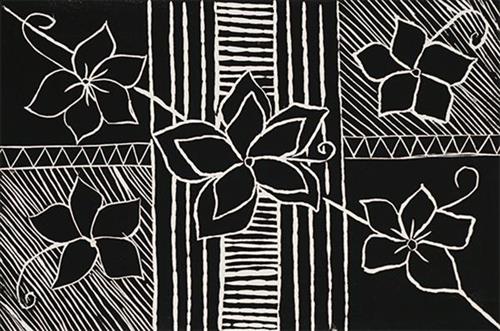
Penza (Frangipani) a beautiful flowers that is used for all occasions even as hair pieces. It is well known in the Torres straits as a island flower.
Artist: Samoa Tomsana
Printer: Fiona Mosby
Printed: Moa Arts Kubin 2023.
Penza (Frangipani) a beautiful flowers that is used for all occasions even as hair pieces. It is well known in the Torres straits as a island flower.
Artist: Samoa Tomsana
Printer: Fiona Mosby
Printed: Moa Arts Kubin 2023.
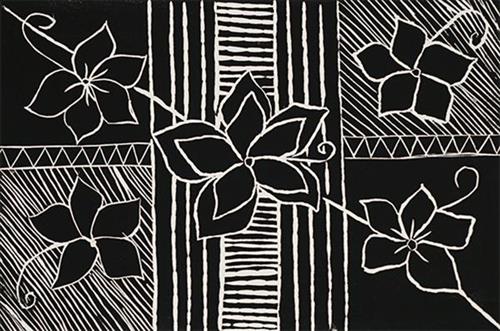
Penza (Frangipani) a beautiful flowers that is used for all occasions even as hair pieces. It is well known in the Torres straits as a island flower.
Artist: Samoa Tomsana
Printer: Fiona Mosby
Printed: Moa Arts Kubin 2023.
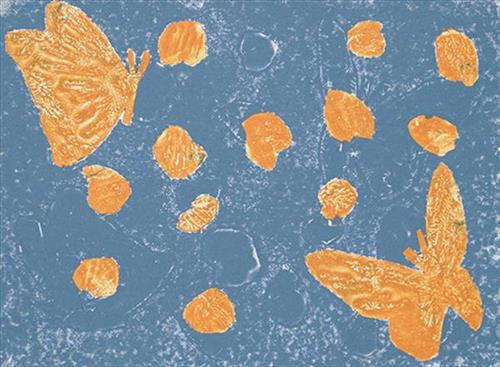
This print is about the beautiful butterfly in the sky that have beautiful bright coloured wings.
Artist: Kathy Trinkoon
Artist Assistant: Ivy Trinkoon
Printer: Dian Darmnsjah
Printed: Moa Arts February 2024.
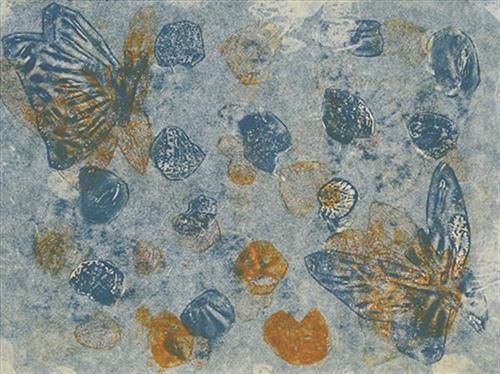
This print is about the beautiful butterfly in the sky that have beautiful bright coloured wings.
Artist: Kathy Trinkoon
Artist Assistant: Ivy Trinkoon
Printer: Dian Darmnsjah
Printed: Moa Arts February 2024.
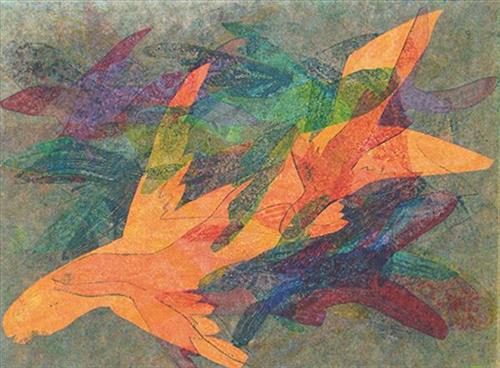
Sigai is a flying fish that lives on sign east side of Mao island it is a totem of my father and is now my family totem. Sigai is a significant fish to our family it represents our identification to who we are and our tribe Sigai.
Art Centre notes:
The artwork is a ‘pochoir’ print, or monoprint, printed on BFK Rives paper
(100% cotton rag with strong archival properties).
(The print covers the paper from edge to edge.)
Artist: Ivy Trinkoon
Printer: Dian darmansjah
Printed: Moa Arts, February 2024.
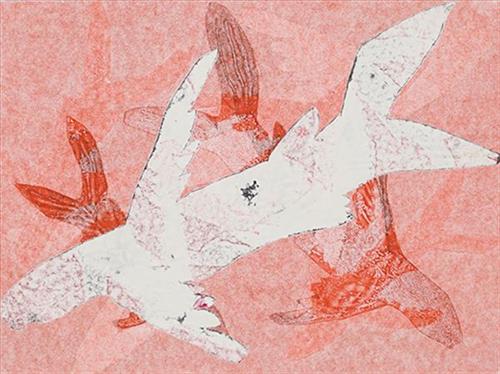
Sigai is a flying fish that lives on sign east side of Mao island it is a totem of my father and is now my family totem. Sigai is a significant fish to our family it represents our identification to who we are and our tribe Sigai.
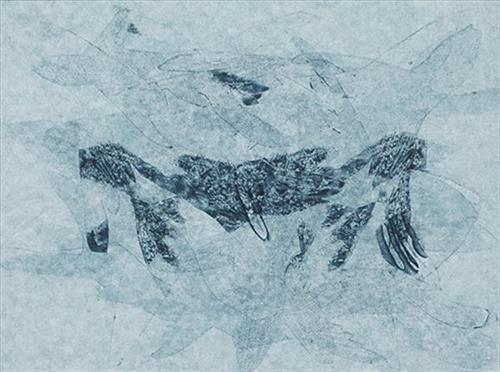
Sigai is a flying fish that lives on sign east side of Mao island it is a totem of my father and is now my family totem. Sigai is a significant fish to our family it represents our identification to who we are and our tribe Sigai.
Art Centre notes:
The artwork is a ‘pochoir’ print, or monoprint, printed on BFK Rives paper
(100% cotton rag with strong archival properties).
(The print covers the paper from edge to edge.)
Artist: Ivy Trinkoon
Printer: Dian darmansjah
Printed: Moa Arts, February 2024.

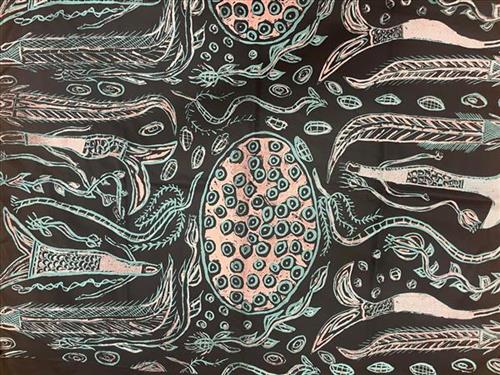
This design depicts the story of the artist’s ancestral dreaming, the Djomi freshwater spirit mermaid.
The Djomi figure is a mermaid like spirit with fish tail that lives in the freshwater stream that flows out to the sea cliff near Maningrida. Djomi is a known to be a very powerful fertility symbol.
‘There is a swamp by the ocean, near my home, where all the Djomi live and come to lay their eggs, they lay them here to grow more and more Djomi. When the wet season comes, the cyclones, storms, and big rain, brings enough water for the Djomi to swim out and into the water ways surrounding Maningrida.
Anyone wanting to have a baby can go to that place and Djomi will give them a baby. This is a real story; we have lots of Djomi babies here in Maningrida.
When the big rains of wet season are too strong, Djomi swim up into the pipes to hide and keep safe. Sometimes they will keep swimming further up the pipes and into pipes of people’s homes, they can travel everywhere. The Djomi carries human babies with them and will sometimes put babies into the water that people in Maningrida drink, that’s why we see many young women expecting babies.’ – Joy Garlbin 2023
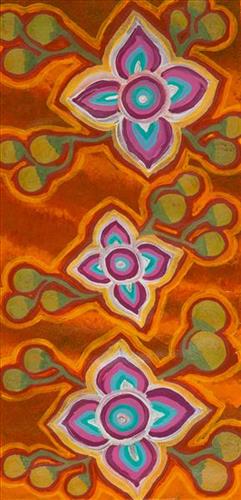
Wamula, or wamurla (bush tomato) is a spherical yellow bush fruit harvested from small, prickly shrubs. Wamurla are a favoured bush tucker amongst the Martu, popular for their sweet taste and for the relative ease with which they are foraged. The shrubs prolifically produce purple flowers before fruiting, and require fire burning followed by rains in the months preceding their growth. The fruit is high in vitamin C content, and has a taste likened to banana, passionfruit, and rockmelon. Wamurla can be eaten raw or dried, though only the thick outer rind is eaten; the black seeds and the thin inner part of the fruit are very bitter and inedible. Typically wamurla is collected in large quantities and then eaten or stored for later consumption.
During the pujiman (traditional, desert dwelling) period, Martu would traverse very large distances annually in small family groups, moving seasonally from water source to water source, and hunting and gathering bush tucker as they went. Whilst desert life has moved away from mobile hunter-gatherer subsistence throughout the course of the twentieth century, bush tucker continues to be a significant component of the modern Martu diet. Hunting and gathering bush tucker remains equally valuable as an important cultural practice that is passed on intergenerationally. Though hunting and gathering implements have been modernised, methods of harvesting, tracking and the use of fire burning to drive animals from their retreats are still commonly practiced today.
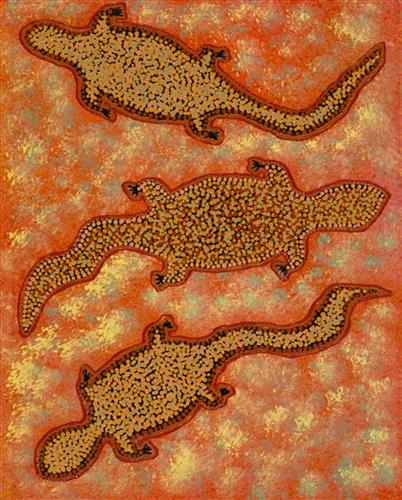
Parnajarrpa (sand goanna) are one of the most prized and reliable food sources hunted by Martu, found throughout Australia in sand plain and dune habitats. They are hunted by both men and women, though more often women working either alone or in pairs. Parnajarrpa hibernate in the cool months, emerging seasonally as temperatures warm in tuulparra (spring). When parnajarrpa are active they are tracked and dug from their burrows. When they are hibernating their burrows are ‘sounded’ by tapping wana (digging-sticks) on the ground, and then excavated. Traditional carved wana have been replaced with metal bars, though burning and tracking techniques continue to be practiced in the hunting of parnajarrpa. Targeted waru (fire) clears vegetation and exposes burrows, whilst simultaneously providing diverse regenerating habitats for future parnajarrpa. When consumed, they are singed and then cooked in a coal and ash bed.
During the pujiman (traditional, desert dwelling) period, Martu would traverse very large distances annually in small family groups, moving seasonally from water source to water source, and hunting and gathering bush tucker as they went. Whilst desert life has moved away from mobile hunter-gatherer subsistence throughout the course of the twentieth century, bush tucker continues to be a significant component of the modern Martu diet. Hunting and gathering bush tucker remains equally valuable as an important cultural practice that is passed on intergenerationally. Though hunting and gathering implements have been modernised, methods of harvesting, tracking and the use of fire burning to drive animals from their retreats are still commonly practiced today.