377813282084881


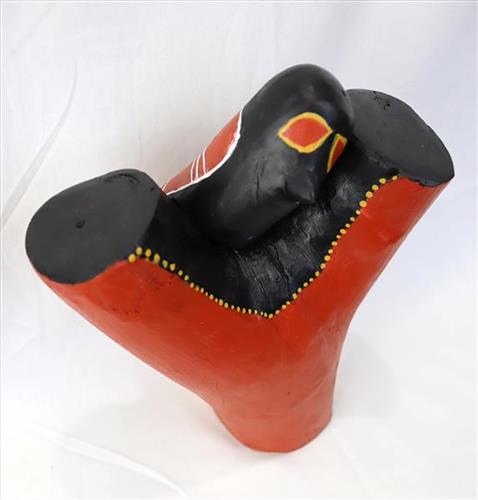
Wak Wak (Crow)

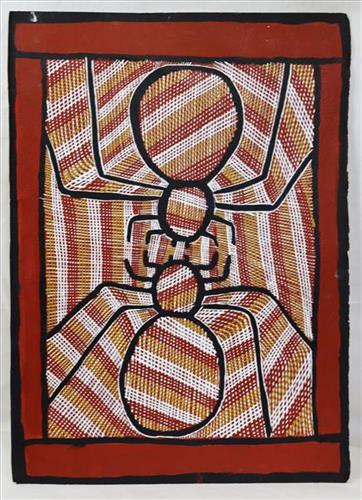
Wak is the language word for black crow in many Kakadu and West Arnhem language groups. It is also the name for a significant and sacred djang (dreaming) site in West Arnhem Land at a place called Kurruldul, specific to bininj (aboriginal people) of the Kurulk clan. Often when artists depict this djang, the rarrk (crosshatching) painted is representing ‘Djimarr’, the black crow that resides at Kurruldul. It is said that the ‘Djimarr’ took the form of a rock formation that now sits at the bottom of Kurrurldul creek. This design is sometimes used in sacred ceremonial practices in Arnhem Land, which is painted onto bodies, representing ‘Djimarr’. 
377813282109532


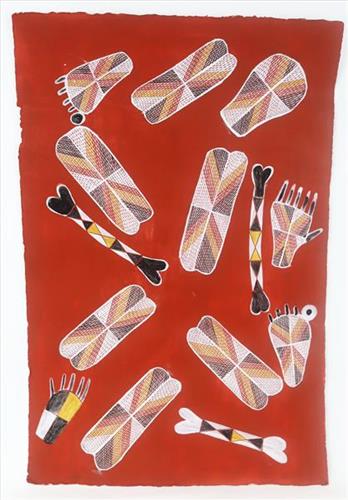
Djulng (Bones of deceased ancestors)

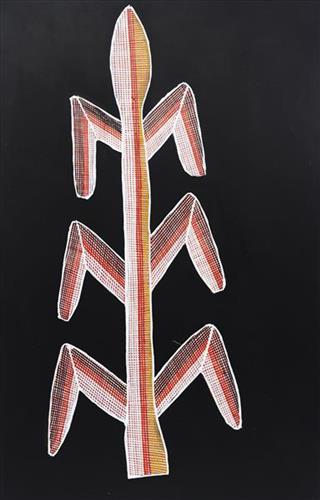
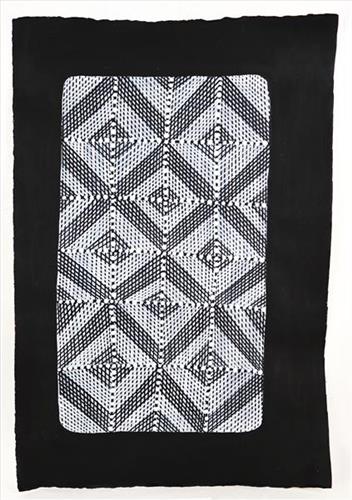
When artists depict Djulng, they represent the bones of deceased ancestors, deriving from the djang (dreaming) place, Dilebang. Dilebang is an extremely sacred site outside of Maningrida, that visitors and family members are strictly forbidden to visit or stay in fear big rain and storms will be cast upon community if disturbed. 

377813282130699


Mimih Spirit

Aboriginal people of western Arnhem Land say that their Mimih rock pictures were painted not by humans but by the Mimih spirits. The drawings, usually in red ochre, show elegant, graceful stick-like human figures in action – fighting, running, dancing, leaping and hunting , preparing meat and using fire.

The Mimih live in the nooks and crannies of the rocky landscape, coming out at night. They are said to be so thin and frail that they can emerge from their hiding places only when there is no wind, otherwise they would be blown away. The Mimih not only created these lively self-portraits, but also are the Dreaming ancestors who taught people to paint, hunt, dance and compose songs.

They are like humans but they live in a different dimension. They were depicted during the freshwater period.

The Mimih are dangerous if approached the wrong way, may kick, knee, slap, smash with a racket like object or sit on someone; which causes sometimes fatal injuries.

377813282132868


Kunkurra (Two Wind Dreaming)

The artist has painted kunkurra, the spiralling wind associated with several sites in the Kardbam clan estate. On one level, this painting can be interpreted as a depiction of the mini-cyclones common during the wet season in Arnhem Land, where the artist lives. Kunkurra also relates specifically to a site called Bilwoyinj, near Mankorlod, on Namunjdja’s clan estate. At this site, two of the most important Kuninjku creation beings, a father and son, known as the Nakorrkko, hunted and ate a goanna. They left some of the goanna fat behind, which turned into the rock that still stands there today.

The word ‘Bilwoyinj’ – the name of this site – also refers to the goanna fat. The Bilwoyinj site is also a ceremonial ground for Yabbadurruwa, a major ceremony owned by the Yirridjdja patrimoiety. The Yabbadurruwa ceremony is primarily concerned with initiation, land ownership and promoting the cyclical regeneration of the human and natural worlds.


Source: Hetti Perkins et al., ‘Crossing country: the alchemy of Western Arnhem Land art’, Art Gallery of New South Wales, Sydney, 2004

377813282172212


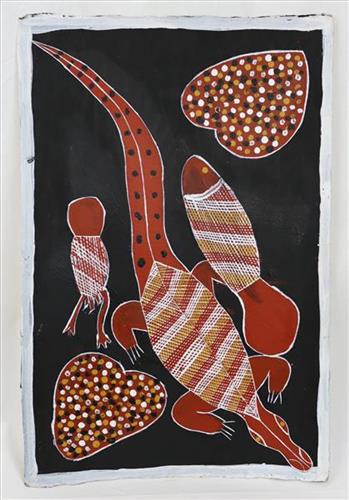
Kinga (Saltwater Crocodile)

The artist has depicted kinga, the saltwater or estuarine crocodile.

Kinga is a highly respected and feared animal that has significance as a food source and as a totem to many of the Kunwinjku people (the Aboriginal people of Western Arnhem Land).

Kinga are estuarine reptiles and although described as ‘saltwater crocodiles’ they are frequently found in billabongs and freshwater rivers throughout Western Arnhem Land where the artist lives.

Kinga usually eats fish, reptiles and crustaceans, although it has a reputation for attacking birds and mammals.

Saltwater crocodiles mate early in the wet season and about sixty eggs are laid in nests on riverbanks above the floodwaters. Also depicted in the print is one of the many species of water lilies, called Mandem, that abound in the rivers and billabongs of Arnhem Land. The artist has used the classic Kunwinjku ‘x-ray’ style, with internal organs of the animal and the roots and tubers of the plants showing. The ‘rarrk’ or cross hatching filling the rest of the body of the crocodile is symbolic of the sacred body design of the artist’s clan.

377813282172211


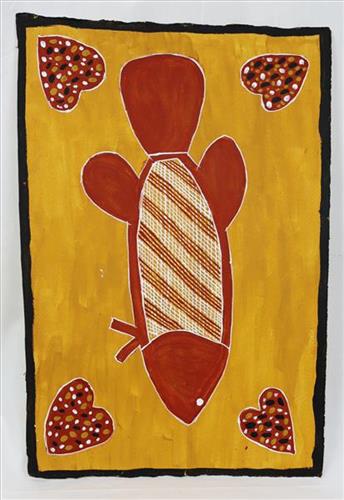
Namarnkol (Barramundi)

“Namarnkol, the Barramundi, is a very important fish for us Bininj (Aboriginal people). Barramundi are found in the ocean, in floodwaters, and in freshwater billabongs, rivers and creeks. In the old days, people used to spear them with djalakirradj (three-pronged fish spears) and walabi (traditional triangular nets). Nowadays, we catch them with fishing lines and modern nets.” Barramundi are most easily caught from the end of the monsoon (March -April) until the humid “build up” season (October-November). There are Barramundi Dreaming sites in lots of clan countries, where the ancestral Barramundi placed itself as a Dreaming. Men and women will say “My Dreaming is Barramundi, it placed itself in my country.”


377813282173079


Lorrkon

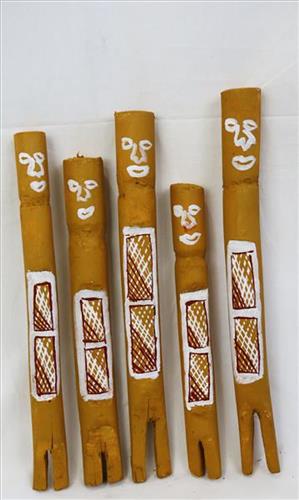
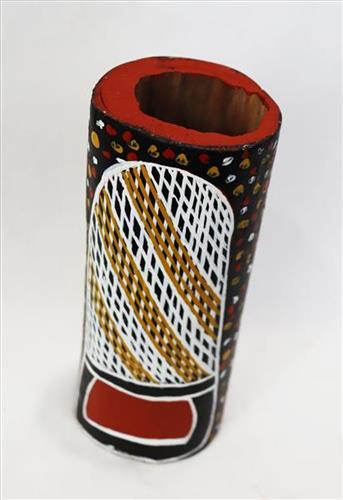
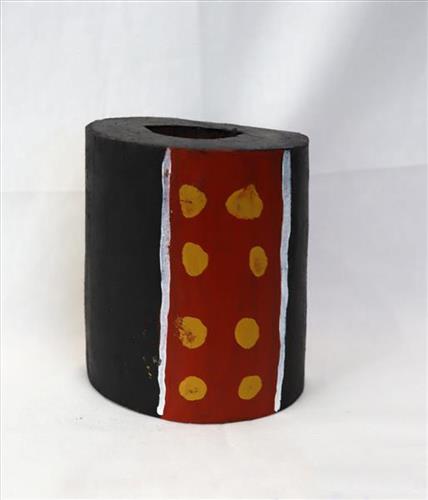
The Lorrkon is a hollow log coffin used by the people of Arnhem Land, Australia. It consists of a tree trunk hollowed out by termites and painted by a clan member of the deceased, with the bones placed inside.

The Lorrkon ceremony is the final ceremony in a sequence of mortuary rituals celebrated by the people of Arnhem Land. 

The ceremony involves the placing of the deceased’s bones into a hollow log which is decorated with painted clan designs and ceremonially placed into the ground where it remains until it slowly decays over many years.

The hollow log is made from a termite hollowed Stringybark tree (Eucalyptus tetradonta) and is decorated with totemic emblems.

The western Arnhem Land version of the Lorrkon ceremony involves the singing of sacred songs to the accompaniment of karlikarli—a pair of sacred boomerangs used as rhythm instruments.

In the past, the final evening of the ceremony involved dancers decorating themselves with kapok down. Today cotton wool is more commonly used. Much of the final segments of the ceremony are conducted in the secrecy of a restricted mens’ camp. 

The complete ceremony may stretch over a period of two weeks, but on the last night the bones of the deceased, which have been kept in a bark container (or more recently wrapped in cloth and kept in a suitcase) are taken out, painted with red ochre and placed inside the hollow log. This ceremony may take place many years after the person has died.

At first light on the final morning of the Lorrkon ceremony, the men appear, coming out of their secret bush camp carrying the pole towards the womens’ camp. The two groups call to each other using distinct ceremonial calls. The women have prepared a hole in which to stand the pole and when it is upright, women in particular kinship relationships to the deceased, dance around the pole in a jumping/shuffling motion. The Lorrkon is then often covered with a tarpaulin and left to slowly decay.

377813282174578


Lorrkon

The Lorrkon is a hollow log coffin used by the people of Arnhem Land, Australia. It consists of a tree trunk hollowed out by termites and painted by a clan member of the deceased, with the bones placed inside.

The Lorrkon ceremony is the final ceremony in a sequence of mortuary rituals celebrated by the people of Arnhem Land. 

The ceremony involves the placing of the deceased’s bones into a hollow log which is decorated with painted clan designs and ceremonially placed into the ground where it remains until it slowly decays over many years.

The hollow log is made from a termite hollowed Stringybark tree (Eucalyptus tetradonta) and is decorated with totemic emblems.

The western Arnhem Land version of the Lorrkon ceremony involves the singing of sacred songs to the accompaniment of karlikarli—a pair of sacred boomerangs used as rhythm instruments.

In the past, the final evening of the ceremony involved dancers decorating themselves with kapok down. Today cotton wool is more commonly used. Much of the final segments of the ceremony are conducted in the secrecy of a restricted mens’ camp. 

The complete ceremony may stretch over a period of two weeks, but on the last night the bones of the deceased, which have been kept in a bark container (or more recently wrapped in cloth and kept in a suitcase) are taken out, painted with red ochre and placed inside the hollow log. This ceremony may take place many years after the person has died.

At first light on the final morning of the Lorrkon ceremony, the men appear, coming out of their secret bush camp carrying the pole towards the womens’ camp. The two groups call to each other using distinct ceremonial calls. The women have prepared a hole in which to stand the pole and when it is upright, women in particular kinship relationships to the deceased, dance around the pole in a jumping/shuffling motion. The Lorrkon is then often covered with a tarpaulin and left to slowly decay.