115682294852


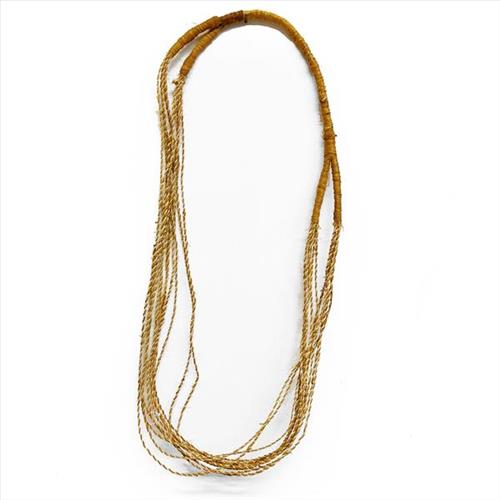
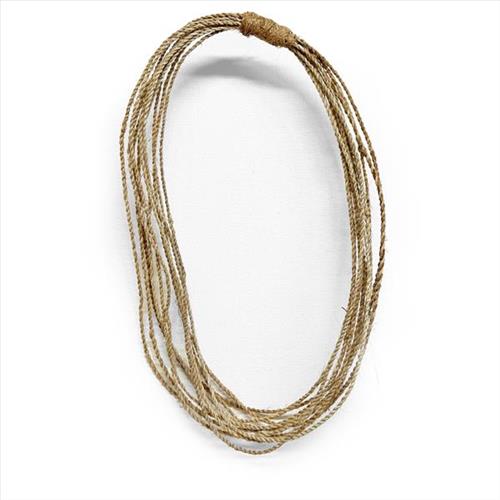
Malka (Ceremonial Head Wear)

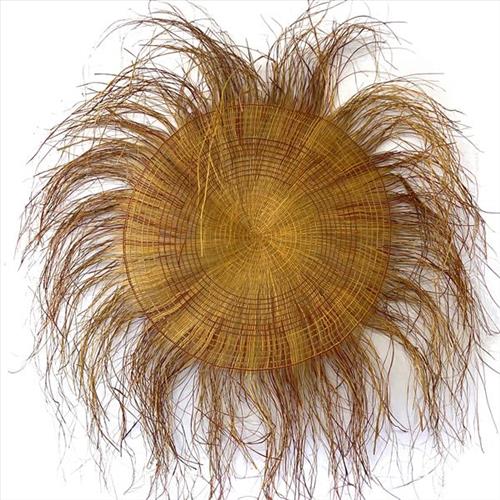
Malka are ceremonial head adornments made from balgurr (Kurrajong). The bark is stripped from the tree, smashed with a rock to soften then boiled, sometimes with natural bush dyes. The balgurr is then rolled in the a rope then used to create ceremonial wear. 

115682294851


Matjka (Ceremonial Body Wear)

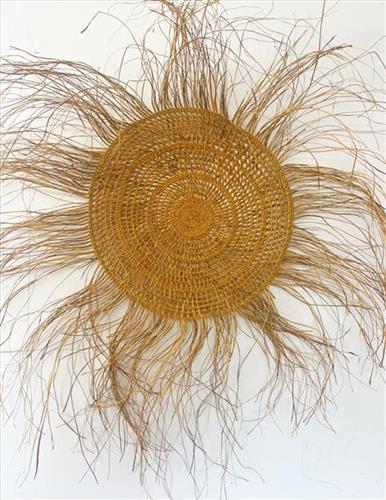
Matjka are ceremonial body adornments made from balgurr (Kurrajong). The bark is stripped from the tree, smashed with a rock to soften then boiled, sometimes with natural bush dyes. The balgurr is then rolled in the a rope then used to create ceremonial wear. 

115682294816


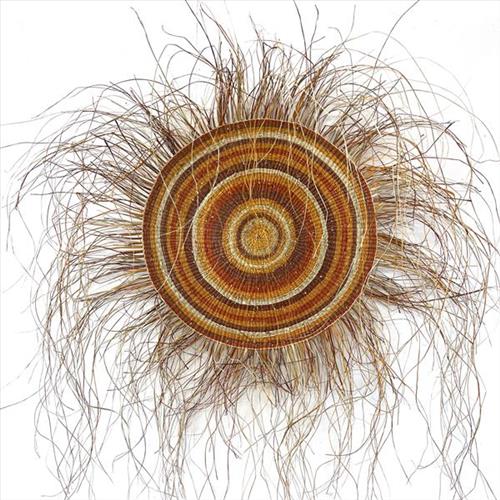
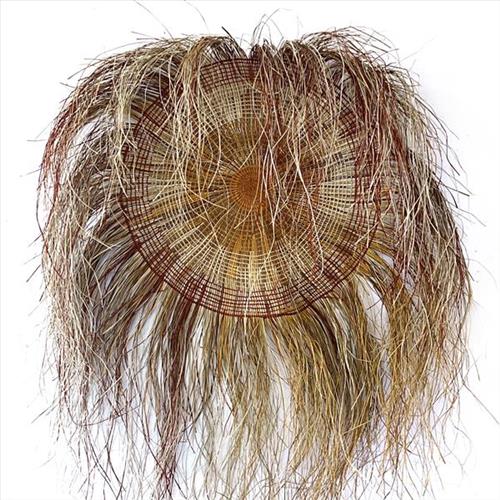
Woven Mat

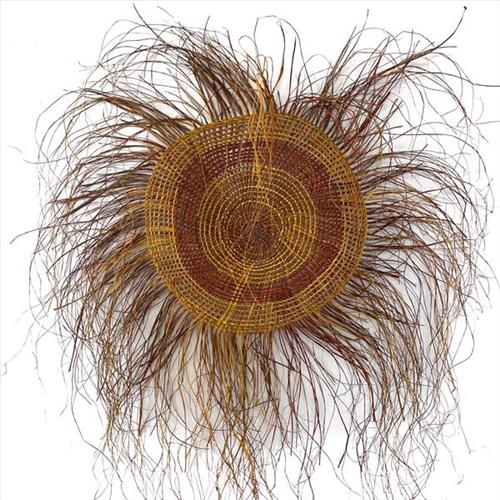
Traditionally, Nganiyal (conical mats) were used as an insect screen when erected, and as a sitting mat when folded. They are used in Ceremony as well as a functional item. 

Nowadays, artists weave many different shapes including flat, round and oblong. 

115682294815


Woven Mat

Traditionally, Nganiyal (conical mats) were used as an insect screen when erected, and as a sitting mat when folded. They are used in Ceremony as well as a functional item. 

Nowadays, artists weave many different shapes including flat, round and oblong. 

115682294814


Woven Mat

Traditionally, Nganiyal (conical mats) were used as an insect screen when erected, and as a sitting mat when folded. They are used in Ceremony as well as a functional item. 

Nowadays, artists weave many different shapes including flat, round and oblong. 

115682294789


Raypiny Dhawu (Fresh Water Story)

All Aboriginal people originate from a spiritual source, fixed in a particular place in their land or the sea. These ‘spiritual reservoirs’ are often in the form of special waterholes made by Wangarr (creative spirits) that were created long ago close to the beginning of time. These creator beings moved across the countryside, shaping the land and implanting in each tract of country, the spiritual life force for the people who were to own it. These creative spirits took many forms and when they gave the land to each group, they also gave songs, dances, ceremony, the associated laws and language.


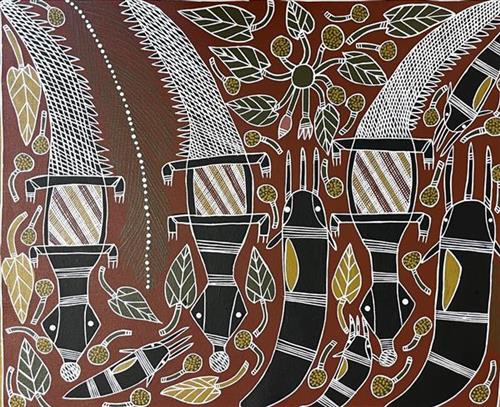
The creation story for Ganalbingu people took place near the middle section of the Glyde River where it becomes the Goyder River. Their land, Ngaliyindi, sits astride the Arafura Swamp in Central Arnhem Land. Many Ganalbingu artists paint totemic species significant to their clan. These can include baru (crocodile), banda (long necked turtle), buliya (catfish), yalman (waterlilies), gumang (magpie geese), dakawa (fresh water yabby), ratjuk (barramundi), warrnyu (flying fox) and more.
 

115682294740


Bottles

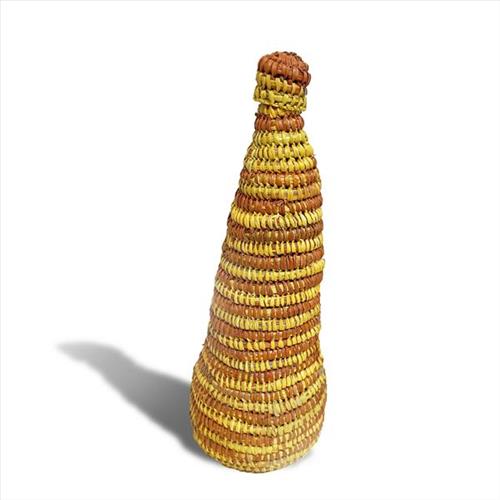
Robyn Djunginy began weaving bottle sculptures in 1983, after the Curator Djon Mundine, suggested to Djunginy that she may like to encase an empty gin bottle in Pandanus fibre ‘Chianti-style’ for an exhibition he was organising. Using a local twining technique, the artist began producing multiple woven bottles of various sizes. The sculptural qualities and the high workmanship of these objects have led them to be become recognised as key contemporary Aboriginal fibre works.

A decade after making her first bottle artworks, Djunginy began producing two-dimensional renderings of the woven sculptures on canvas.

Robyn has been the only artist from this area to produce and paint bottles, but has passed the bottle story on to her daughters.

This bottle is the creation of Janice Djupuduwuy, an emerging fibre artist and daughter of Robyn Djunginy. 

115682294690


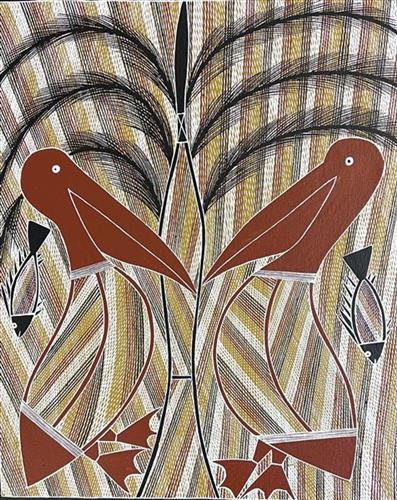
JB Fisher – Pelican (Warbalulu)

JB paints stories from his Dhuwa homeland in northeast Arnhem Land. Stories are passed on either paternally or maternally, and JB would have learnt these stories from his ancestors. The cross-hatching style is a traditional painting style of this area and can represent elements such as water, air and wind.

His paintings often feature totemic animals of the fresh waters of north east Arnhem Land.

115682295020


Woven Mat

Traditionally, Nganiyal (conical mats) were used as an insect screen when erected, and as a sitting mat when folded. They are used in Ceremony as well as a functional item. 

Nowadays, artists weave many different shapes including flat, round and oblong. 

115682295019


Woven Mat

Traditionally, Nganiyal (conical mats) were used as an insect screen when erected, and as a sitting mat when folded. They are used in Ceremony as well as a functional item. 

Nowadays, artists weave many different shapes including flat, round and oblong.