377813282210277


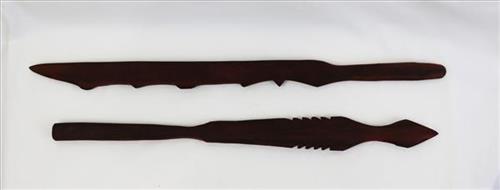
Mamurrkbijinungkwa (Hunting Spear)

Leanne and Joshua collect wood together, they bend spears over fire to make them straight, help each other by stripping, bending, and carving the wood into spears. Leanne paints the spears and Josh does the cutting and carving. Together these beautiful spears are made.

“We have to walk miles and miles to find the right wood, it takes 4-7 hours to make the spears, from stripping, drying, carving, and painting. They’re either Stringybark or Hibiscus wood. The spears with the echidna quills are good for fighting and hunting. We scrape the palm string and roll it into a rope and then we dye it in colours, it takes really long time. The stone heads take sometimes 12 hours to carve the stone into the right shape.”

377813282212214


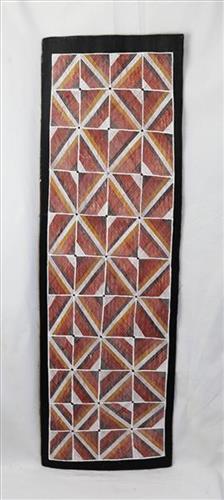
Rarrk

This rarrk (cross-hatching) design has been achieved using a manyilk. Manyilk is a sedge grass, dried and shaved down to create an extremely fine paint brush. 

377813282222562


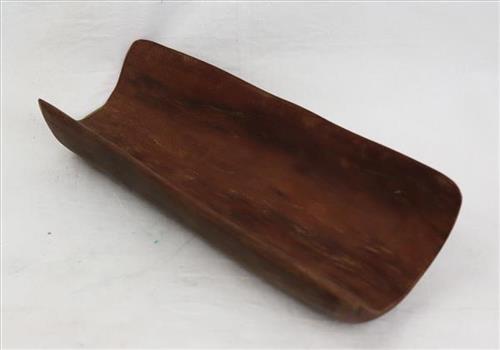
Amreba

A simple bowl used to store and carry food and other items. Joshua has carved this piece from heavy Ironwood

377813282234448


Waterhole at Dilebang

Dilebang is a sacred place, belonging to members of the Kurulk clan. Ngalyod (Rainbow Serpent), lives in the waterhole with a single Carpenteria palm tree growing out of her back, it is known to many that the bones of the Ancestors who died at Dilebang are inside Ngalyod. Bininj (aboriginal people) are often afraid to take people to this place, for if they disturb the ancestors resting there, big rain and floods will come. Artists painting this waterhole, often paint Djulng (dust (of the bones of the ancestors)), Ngalyod and the waterhole that all are associated with this sacred djang (dreaming).

115682291857


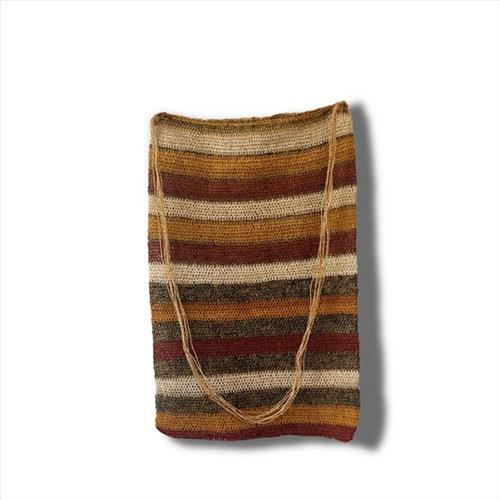
Gay’wu from Ngalindipuy dhäwu (bag from Moon Story)

This story has been told by old people when they heard this story. I heard from my grandma too. It’s a dream time story. Long time ago there live Moon he live near river bank with his family, two sons and wives. One day his two wives went out hunting looking for foods like yams, bush potatoes fruits and plums collecting cycad nuts to make damper for them. The two boys also decided to go out they ask their father to look for fish, ducks and goose for them to eat. They went to swamp area where there was lot of ducks and goose they started spearing, when it was enough, they went back to their camp and told their father they got plenty of ducks. When they were cooking and same time they were eating wings of the duck and said to their father, “Dad can you wait for body part of the duck meat so that you will have that instead of wings.” “Okay he said I’ll wait.” When all the ducks were cooked they did not give their father; the two sons said to him, “Dad can we go out to spear more ducks for us.” “Sure father reply I will wait for next lot.”

The two sons react three times, which they did not share because they were hungry or being greedy. But then their father was making fishing net sort of bag for catching fish. He ask them,” boys come here I’ll try you two to go into this fishing net to see how big will I catch fish for us.” The boys went into the net and their father said, “I will pull you two to the river bank, he told them,” he tied rope tightly and said ,”I will throw you two to the river to be drown, because you did not shared ducks for me to eat so now I will kill you two”. “Boys said no dad, don’t kill us.” Their father could not listen to them he was kept on pulling. Boys cried and cried to release them from net.

Father Moon just threw them into the river then they were sinking down into deep water and they were dead. After he threw them, on the way back to their camp he broke the branch of the tree and started pulling along the track that he was pulling them, just to get rid of track so that their mothers won’t see what had happen to them. Mothers of two sons came back from hunting they brought plenty of bush foods, when they were sitting they ask the father Moon.

 “Where did boys go. ” Father told them “they are still out spearing goose or ducks”.

They ask him again, “but it’s getting dark soon, where are they really,” “maybe they are resting because they speared lots of goose and ducks.” The two mothers talked among themselves. Hey sister we don’t need to give this food we have to look for them first and find where they are”. So other sister said, “Okay let’s search for them.” Mothers started looking for them, they look everywhere but could not find them, they said. “Maybe he killed them and we want to kill and burn him too,” same time they were crying for their children. So one of the mother said, “sister lets organise something ready to kill him tonight when he goes to sleep.” “That’s good let’s do it.”

They were collecting firewoods, grass, paper bark, twigs branches and so on. They hid near where their camp was. When the father Moon went to sleep, they were start putting around making circle where he was sleeping in the middle. “Let us now burn him while he is sleeping,” so they did, the fire was now burning getting close to him then he felt hot and said, “What are you doing to me.” “And the mothers said to him, we are burning because you killed our sons and it’s your turn to die.” He was now burning and same time changing his colour it turn white, after that he climb up the tree and said, “when people die they won’t come back to live like me, you can see me again I am the moon.”
115682295671


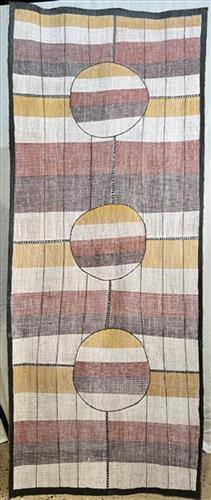
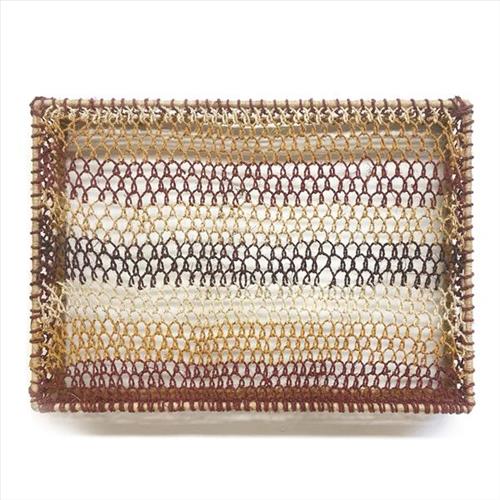
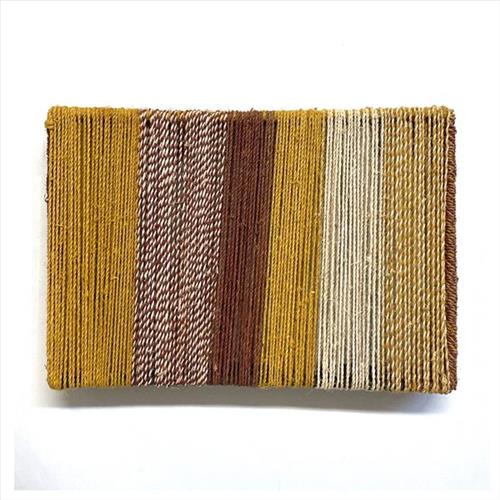
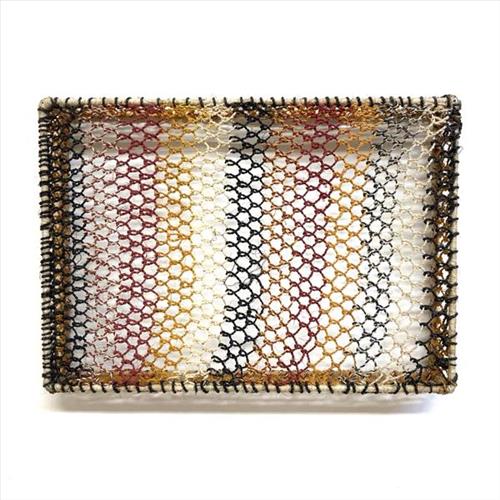
Balgurr naku raki wungili (Kurrajong bark string picture)

At the end of May 2024, Bula’bula artists, along with Milingimbi Arts and Culture, Maningrida Arts, and Gapuwiak Arts, were invited to attend the Langarra Bush Gallery—a three-day camp that included an exhibition, workshops, and discussions for the Weavers of Arnhem Land. Langarra is an island located a 20-minute boat ride from Elcho Island in the Arafura Sea.

The Bush Gallery provided weavers with an opportunity to create work that pushed their boundaries, encouraging them to experiment with new techniques or showcase unique skills. The goal was to foster a supportive environment where weavers could create and present work they were excited about, facilitate discussions, connections, growth, and instilling pride in their craft.

As a result of this project, our weavers produced traditional Yolngu items from hand-spun bush string, including bags, hunting and fishing items, and wearable ceremonial pieces. Additionally, they explored new approaches with string by creating canvas-shaped formats. This format invite viewers to examine the intricate details, colours, and craftsmanship, highlighting the inherent beauty of the raki.

115682295670


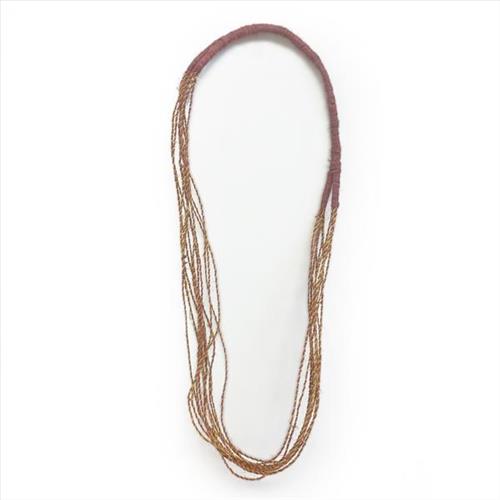
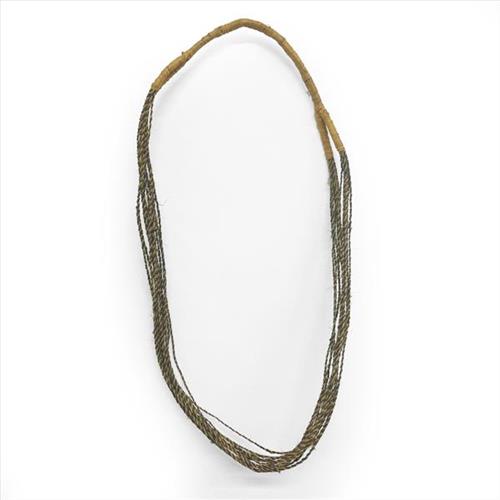
Matjka (Ceremonial Body Wear)

Matjka are ceremonial body adornments made from balgurr (Kurrajong). The bark is stripped from the tree, smashed with a rock to soften then boiled, sometimes with natural bush dyes. The balgurr is then rolled in the a rope then used to create ceremonial wear. 

115682295669


Matjka (Ceremonial Body Wear)

Matjka are ceremonial body adornments made from balgurr (Kurrajong). The bark is stripped from the tree, smashed with a rock to soften then boiled, sometimes with natural bush dyes. The balgurr is then rolled in the a rope then used to create ceremonial wear. 

115682297217


Balgurr naku raki wungili (Kurrajong bark string picture)

At the end of May 2024, Bula’bula artists, along with Milingimbi Arts and Culture, Maningrida Arts, and Gapuwiak Arts, were invited to attend the Langarra Bush Gallery—a three-day camp that included an exhibition, workshops, and discussions for the Weavers of Arnhem Land. Langarra is an island located a 20-minute boat ride from Elcho Island in the Arafura Sea.

The Bush Gallery provided weavers with an opportunity to create work that pushed their boundaries, encouraging them to experiment with new techniques or showcase unique skills. The goal was to foster a supportive environment where weavers could create and present work they were excited about, facilitate discussions, connections, growth, and instilling pride in their craft.

As a result of this project, our weavers produced traditional Yolngu items from hand-spun bush string, including bags, hunting and fishing items, and wearable ceremonial pieces. Additionally, they explored new approaches with string by creating canvas-shaped formats. This format invite viewers to examine the intricate details, colours, and craftsmanship, highlighting the inherent beauty of the raki.

115682297423


Balgurr naku raki wungili (Kurrajong bark string picture)

At the end of May 2024, Bula’bula artists, along with Milingimbi Arts and Culture, Maningrida Arts, and Gapuwiak Arts, were invited to attend the Langarra Bush Gallery—a three-day camp that included an exhibition, workshops, and discussions for the Weavers of Arnhem Land. Langarra is an island located a 20-minute boat ride from Elcho Island in the Arafura Sea.

The Bush Gallery provided weavers with an opportunity to create work that pushed their boundaries, encouraging them to experiment with new techniques or showcase unique skills. The goal was to foster a supportive environment where weavers could create and present work they were excited about, facilitate discussions, connections, growth, and instilling pride in their craft.

As a result of this project, our weavers produced traditional Yolngu items from hand-spun bush string, including bags, hunting and fishing items, and wearable ceremonial pieces. Additionally, they explored new approaches with string by creating canvas-shaped formats. This format invite viewers to examine the intricate details, colours, and craftsmanship, highlighting the inherent beauty of the raki.