220982297131


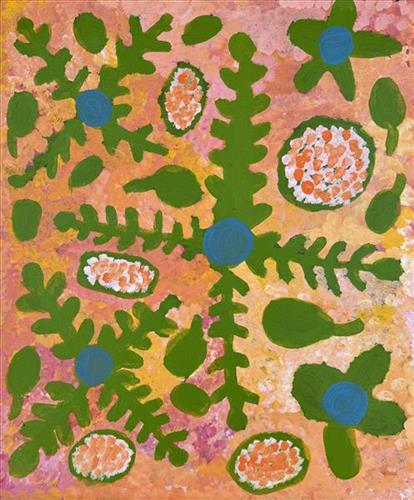
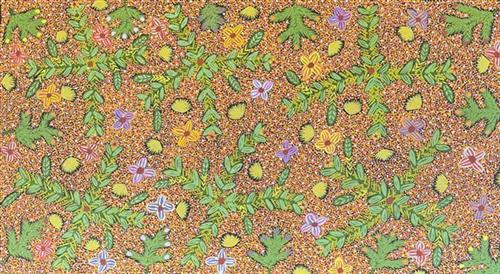
My Mother’s Country – Beverly Pula Luck

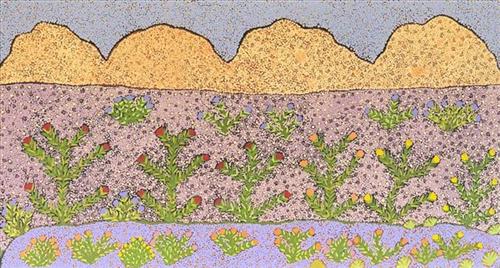
The community of Ampilatwatja made a conscious decision not to paint ‘altyerr’ dreaming stories. The artists paint their country where those stories sit.

Beverly has painted her Mother’s country. When Beverly was a child her mother took her all around her country and showed her the bush medicine and bush tucker.

220982300426


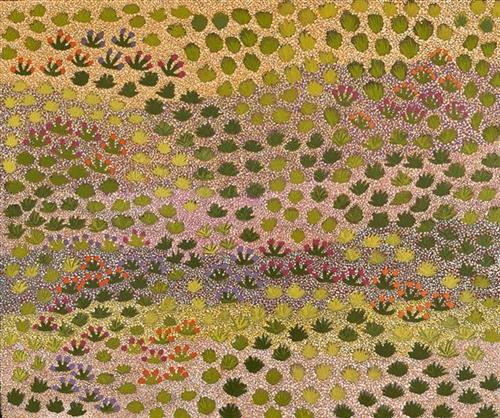
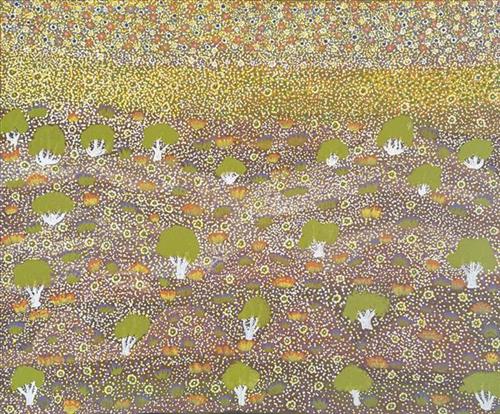
Anterrengeny – My Father’s Country – Leanne Teece

Anterrengeny is my Father’s country. I paint the country that come from, the beautiful landscapes and the many colours as they change during the session.

220982304629


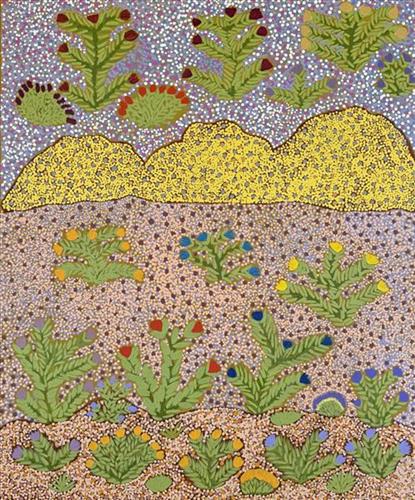
My Country – Diane Kemarre Ross

The community of Ampilatwatja made a conscious decision not to paint ‘altyerr’ dreaming stories. The artists paint their country where those stories sit.

“This is my country, it’s the country around Irrultja. This is where we like to go after big rain. After big rain there, we can go swimming. There is always good hunting on my country. It is good for me to paint my country and it makes me feel good.” – Dianne

220982304431


Bush Medicine Plants

“Bush medicine plants are used for healing on the body and for drinking. We make this by grinding the plants with a rock, we use the juice and the fibre of the plant.

We collect bush medicine plants when we are out hunting. Different kinds of plants grow during different seasons.

There are lots of different medicines, we know what their stories are, we learnt them from our parents and we teach these stories to our children.”

Bush medicine knowledge is still strong in Ampilatwatja, it continues to be passed down to the younger generations and is widely used.


When the women go hunting they often gather bush medicine. The plants depicted here are found in the country around Ampilatwatja, they are used for soothing skin infections and to make a drink to help with colds and coughs.


Painting bush medicine stories is important because it helps to maintain a strong knowledge and culture for the community.

220982306038


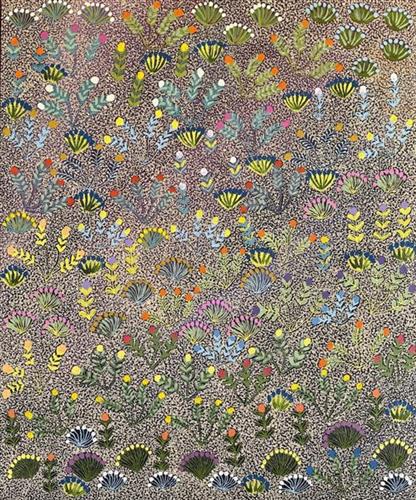
My Country – Michelle Pula Holmes

“When I go out hunting I always like to see the colour in the trees, the light, the dark and the bush medicine plants growing on the sand hills. The colours change at sunrise and sunset. I like hunting and seeing my country.”

I love to paint since childhood. My paintings show my deep love for my country and the beauty I see.

The community of Ampilatwatja made a conscious decision not to paint ‘altyerr’ dreaming stories. The artists paint their country where those stories belong.

220982306031


Bush Tucker – Maisie Petyarre Bundey;-

Maisie paints the bush tucker found in her country, the area that surrounds Boundary Bore in the Utopia homelands. She paints bush plums, bush bananas, bush potatoes and bush medicine plants. The main motif which recurs often in Maisie artworks is a full coolamon. When she paints she always speaks of gathering and hunting on her country ‘long way from here, long time ago’, filling up coolamons with ‘bush potato, bush banana, goanna and porcupine.’ Maisie always says her family are ‘happy ones, healthy ones.’
 

220982306405


Bush Medicine Plants

“Bush medicine plants are used for healing on the body and for drinking. We make this by grinding the plants with a rock, we use the juice and the fibre of the plant.

We collect bush medicine plants when we are out hunting. Different kinds of plants grow during different seasons.

There are lots of different medicines, we know what their stories are, we learnt them from our parents and we teach these stories to our children.”

Bush medicine knowledge is still strong in Ampilatwatja, it continues to be passed down to the younger generations and is widely used.


When the women go hunting they often gather bush medicine. The plants depicted here are found in the country around Ampilatwatja, they are used for soothing skin infections and to make a drink to help with colds and coughs.


Painting bush medicine stories is important because it helps to maintain a strong knowledge and culture for the community.

220982314249


Stock Camp – Kelvin Kemarre Ladd

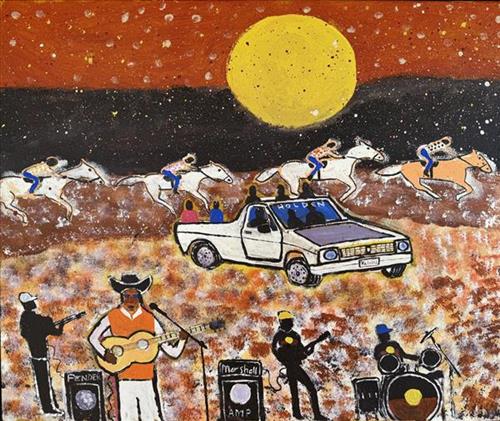
I like country music, and stock camp paintings, my paintings are all about those stock camp life, the horses, cattle, dogs and the music, I listen and play country today.  It’s the life that I grew up around in a stock camp.  I used to watch the old fellas mustering and breaking in horses.   It was a great upbringing, disciplined and with strong family connections.  Hunting was the most important thing and we had to hunt to provide for our families.  There was no technology in those times.   Sometimes I paint cars, Holdens, Fords,  and Valiants when they are new and when they are rusty.   Meeting new people and sharing stories is what I like.

222182315326


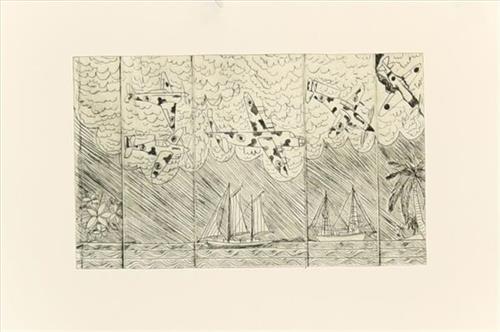
“KOEWBU THONAR” (war time)

This print is one of my first dry point medium I did this year printing using the recycled liquid milk container. The story is based on the WW2 time that Our Grandfather’s told Us when We were young. They would talk about how Japanese fighter planes that flew over head here on Badu island in the Torres Strait and the closest Japanese plane shot down by either our army us laying outside of kubin . They spoke also about the American and British fighter planes that fought alongside the Australian army. One of my Late Grandfather told me stories of how He was a crew on the lugger boats delivering food ransons to Our armys based on Maruki and Port Mosby during world war 2 . This dry point prints “Koewbu Thonar”(war time) I dedicated to Our Grandfather’s who took on armors to defend Our Beautiful Torres Strait Islands Nation against the Japanese invasion and who served in the Torres Strait Light Infantry Battalion.

Joseph AU

2024

222182315310


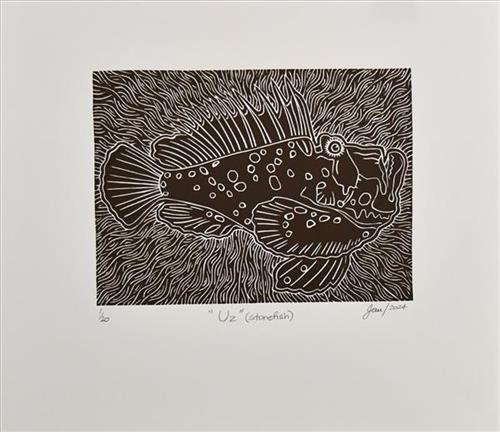
Uzu ‘Stonefish’

My new lino print is of the stonefish (synanceia) that is a genus of ray-finned fish belonging to the subfamily synanceiine, the stonefish,,which is classified with the family. The reef stonefish is the most venomous fish in the world It has thirteen short spines in the dorsal fin which can inject a highly toxic venom. The venom cause intense pain and is believed to have killed many pacific and indian ocean islanders. Synanceia are primarily marine but some species are known to live in rivers, most live in coral reefs near tropical pacific and indian oceans. The stonefish uses the spines defensively, not offensively so the fish won’t go out of its way to attack you. If you step on the fish however. Stonefish have thirteen spines lining it back that release venom under press so please be very careful when swimming up here in Our Beautiful Torres Strait Islands Waters

Joseph AU

2024