111582320495


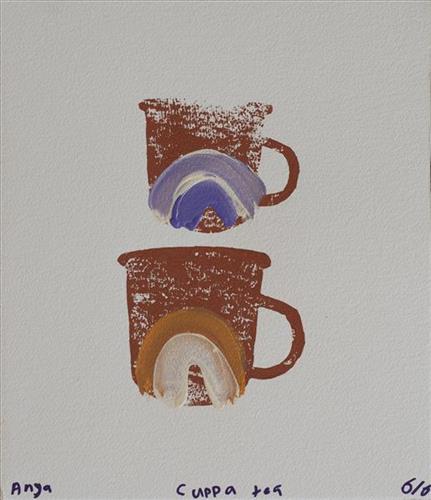
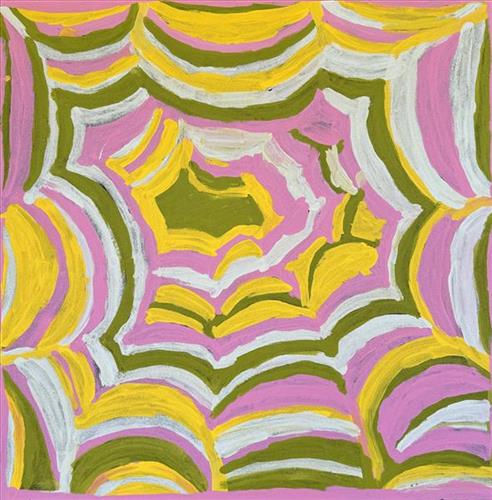
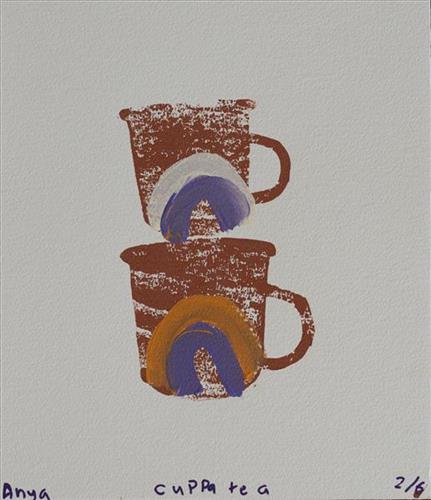
Cuppa Tea

The traditional lands of the Martu people encompass the Great Sandy Desert and Rudall River regions of Western Australia, and include speakers of Manyjilyjarra, Warnman, Kartujarra, Putijarra and Martu Wangka languages. Martumili Artists work in the Newman based gallery and studio spaces, as well as within remote Aboriginal communities Punmu, Parnngurr, Kunawarritji, Jigalong, Irrungadji (Nullagine), and Warralong. Recognised for their diverse, energetic and unmediated painting styles, their works reflect the dramatic geography and scale of their homelands.

The artists are predominantly painters, working in acrylics and oils, though many also weave baskets from gathered grasses and wool. Popular mediums among younger Martu artists include photography and animation. In this artwork, the process of printmaking has been explored to expand the artist’s creative repertoire. Through workshops in the Newman Studio, Martumili Artists have learnt to translate their designs to linoprint, using a printmaking press to edition their work.
111582320494


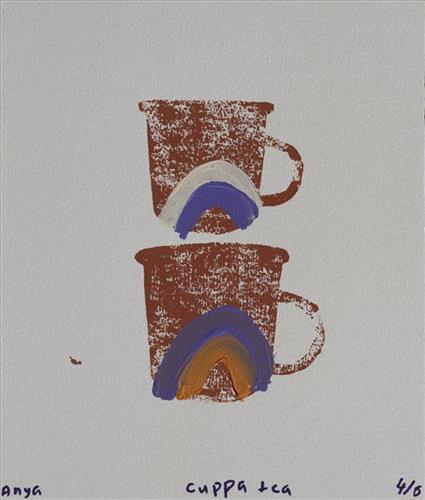
Cuppa Tea

The traditional lands of the Martu people encompass the Great Sandy Desert and Rudall River regions of Western Australia, and include speakers of Manyjilyjarra, Warnman, Kartujarra, Putijarra and Martu Wangka languages. Martumili Artists work in the Newman based gallery and studio spaces, as well as within remote Aboriginal communities Punmu, Parnngurr, Kunawarritji, Jigalong, Irrungadji (Nullagine), and Warralong. Recognised for their diverse, energetic and unmediated painting styles, their works reflect the dramatic geography and scale of their homelands.

The artists are predominantly painters, working in acrylics and oils, though many also weave baskets from gathered grasses and wool. Popular mediums among younger Martu artists include photography and animation. In this artwork, the process of printmaking has been explored to expand the artist’s creative repertoire. Through workshops in the Newman Studio, Martumili Artists have learnt to translate their designs to linoprint, using a printmaking press to edition their work.
111982320493


Lorrkon (Hollow Log)

The Lorrkon or bone pole coffin ceremony was the final ceremony in a sequence of mortuary rituals celebrated by the people of Arnhem Land. This ceremony involves the placing of the deceased’s bones into a hollow log which was decorated with painted clan designs and ceremonially placed into the ground where it remained until it slowly decayed over many years.

The log is made from a termite hollowed Stringybark tree (Eucalyptus tetradonta) and is decorated with totemic emblems. The western Arnhem Land version of the Lorrkon ceremony involves the singing of sacred songs to the accompaniment of karlikarli, a pair of sacred boomerangs used as rhythm instruments. During the final evening of the ceremony, dancers decorate themselves with kapok down, or today, cotton wool and conduct much of the final segments of the ceremony in the secrecy of a restricted mens’ camp. The complete ceremony may stretch over a period of two weeks, but on the last night the bones of the deceased, which have been kept in a bark container or today wrapped in cloth and kept in a suitcase are taken out, are painted with red ochre and placed inside the hollow log. This ceremony may take place many years after the person has died.

At first light on the final morning of the Lorrkon ceremony, the men appear, coming out of their secret bush camp carrying the pole towards the women’s camp. The two groups call to each other using distinct ceremonial calls. The women have prepared a hole for the pole to be placed into and when it is stood upright, women in particular kinship relationships to the deceased dance around the pole in a jumping/shuffling motion. The Lorrkon is then often covered with a tarpaulin and left to slowly decay.

111582320492


Cuppa Tea

The traditional lands of the Martu people encompass the Great Sandy Desert and Rudall River regions of Western Australia, and include speakers of Manyjilyjarra, Warnman, Kartujarra, Putijarra and Martu Wangka languages. Martumili Artists work in the Newman based gallery and studio spaces, as well as within remote Aboriginal communities Punmu, Parnngurr, Kunawarritji, Jigalong, Irrungadji (Nullagine), and Warralong. Recognised for their diverse, energetic and unmediated painting styles, their works reflect the dramatic geography and scale of their homelands.

The artists are predominantly painters, working in acrylics and oils, though many also weave baskets from gathered grasses and wool. Popular mediums among younger Martu artists include photography and animation. In this artwork, the process of printmaking has been explored to expand the artist’s creative repertoire. Through workshops in the Newman Studio, Martumili Artists have learnt to translate their designs to linoprint, using a printmaking press to edition their work.
111982320482


Mat

Mats can vary greatly. Artists commonly use a mix of naturally dyed and undyed fibre to create a striking variation of coloured bands. Some artists also incorporate different types of looping to produce different patterns and textured finishes. Each type of mat, fibre bag, basket and dilly bag has its own name in the various languages spoken in the Maningrida region.

111982320463


Lorrkon (Hollow Log)

The Lorrkon or bone pole coffin ceremony was the final ceremony in a sequence of mortuary rituals celebrated by the people of Arnhem Land. This ceremony involves the placing of the deceased’s bones into a hollow log which was decorated with painted clan designs and ceremonially placed into the ground where it remained until it slowly decayed over many years.

The log is made from a termite hollowed Stringybark tree (Eucalyptus tetradonta) and is decorated with totemic emblems. The western Arnhem Land version of the Lorrkon ceremony involves the singing of sacred songs to the accompaniment of karlikarli, a pair of sacred boomerangs used as rhythm instruments. During the final evening of the ceremony, dancers decorate themselves with kapok down, or today, cotton wool and conduct much of the final segments of the ceremony in the secrecy of a restricted mens’ camp. The complete ceremony may stretch over a period of two weeks, but on the last night the bones of the deceased, which have been kept in a bark container or today wrapped in cloth and kept in a suitcase are taken out, are painted with red ochre and placed inside the hollow log. This ceremony may take place many years after the person has died.

At first light on the final morning of the Lorrkon ceremony, the men appear, coming out of their secret bush camp carrying the pole towards the women’s camp. The two groups call to each other using distinct ceremonial calls. The women have prepared a hole for the pole to be placed into and when it is stood upright, women in particular kinship relationships to the deceased dance around the pole in a jumping/shuffling motion. The Lorrkon is then often covered with a tarpaulin and left to slowly decay.

220982320639


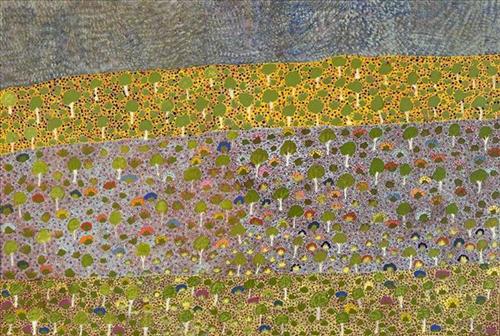
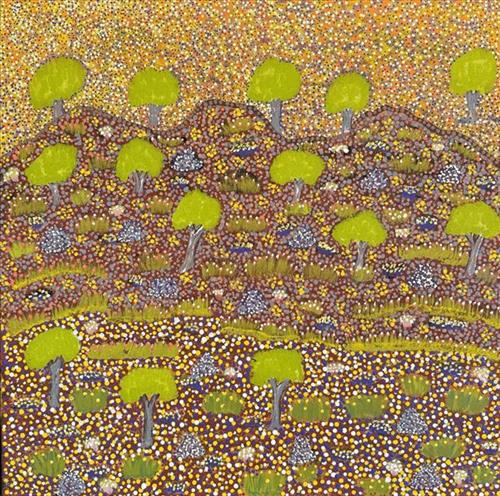
My Father’s Country – Rita Pitjara Beasley

“This is my Father’s country.

This place is our hunting place. I always go with my daughters and their children, I show them this place and teach them about the swampy country. We hunt for goannas, bush potato, bush tomato and after the big rain the bush medicine is picked and the roots are dug up to be used.

It is important as my mother taught me this and now I teach my family.”

The community of Ampilatwatja made a conscious decision not to paint ‘altyerr’ dreaming stories. The artists paint their country where those stories belong.

220982320635


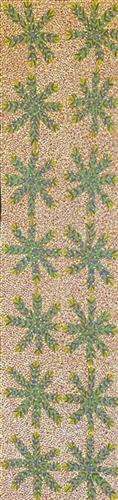
My Fathers Seed Dreaming – Lulu Teece

“Before my father died, he told me and my sister, that if we ever painted, he wanted us to paint his dreaming. His dreaming is the seed dreaming, from his country. I paint that story, it’s important. That’s why i always paint the seed dreaming.”- Lulu Teece

Lulu has a strong passion for bush medicine and provides the community with traditional bush medicine that she makes through facilities provided by the clinic.

This painting is a strong depiction of connection to culture, family and country.

220982320633


Bush Tucker – Maisie Petyarre Bundey;-

Maisie paints the bush tucker found in her country, the area that surrounds Boundary Bore in the Utopia homelands. She paints bush plums, bush bananas, bush potatoes and bush medicine plants. The main motif which recurs often in Maisie artworks is a full coolamon. When she paints she always speaks of gathering and hunting on her country ‘long way from here, long time ago’, filling up coolamons with ‘bush potato, bush banana, goanna and porcupine.’ Maisie always says her family are ‘happy ones, healthy ones.’
 

220982320597


Anterrengeny – My Father’s Country – Leanne Teece

Anterrengeny is my Father’s country. I paint the country that come from, the beautiful landscapes and the many colours as they change during the session.