An Eagle
When we come into Hermannsburg we see eagles on the road. And sometimes we have to be careful cos they come down and smash our windscreen!

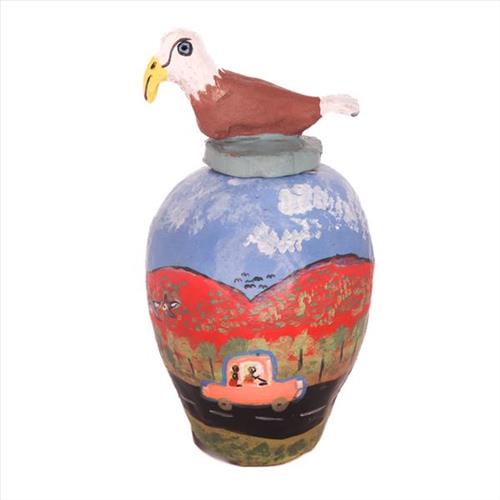
When we come into Hermannsburg we see eagles on the road. And sometimes we have to be careful cos they come down and smash our windscreen!

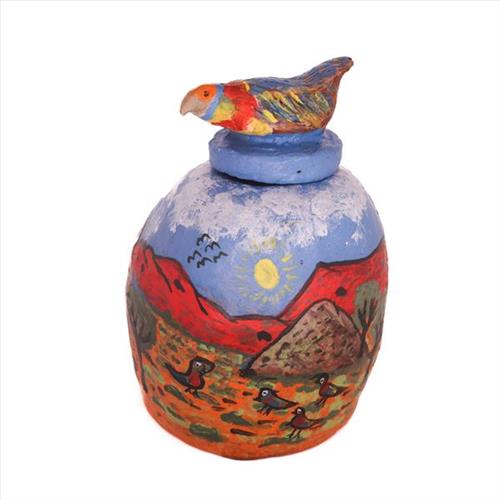
Palm Valley and Kings Canyon, thats two differnt scenery, you can tell hey. Many birds that we see, biggest mob of birds we see there. It’s just everywhere!

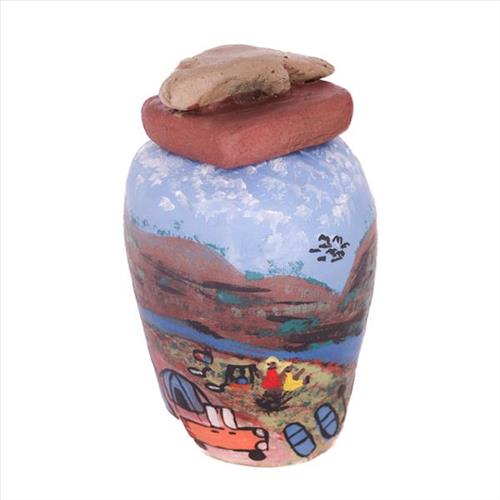
This is fish that got many bones. We used to line up with our nets and catch the fish, but the fish had many bones so children wasn’t allowed to touch it, only adults allowed to eat ‘em. This one was like a dangerous fish cos it had many bones, it was really strict. Adults never used to give us cos it would scare our parents that we would choke. Few times I ate and you can feel them little bones in your throat.

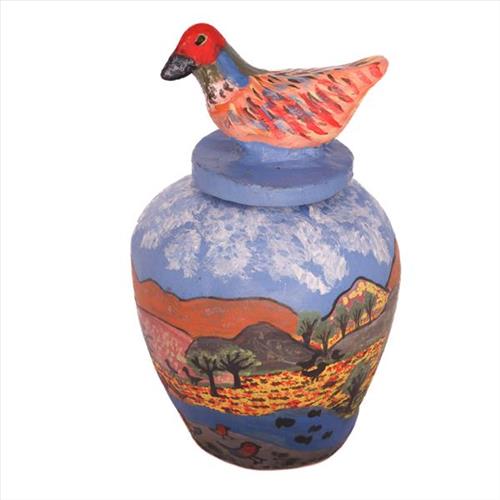
Travelling to Glen Helen. When we go swimming at Glen Helen Gorge we see all teh different coloured birds around.

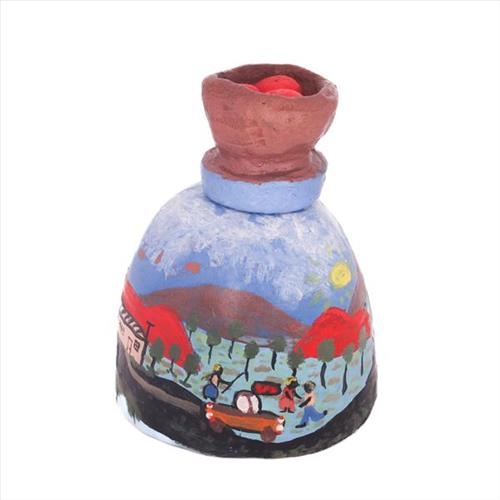
This is going through couple of the outstations around Hermannsburg and most of teh trees around here got bush tucker. And we go hunting when the season come, pack our bags and ready to go.

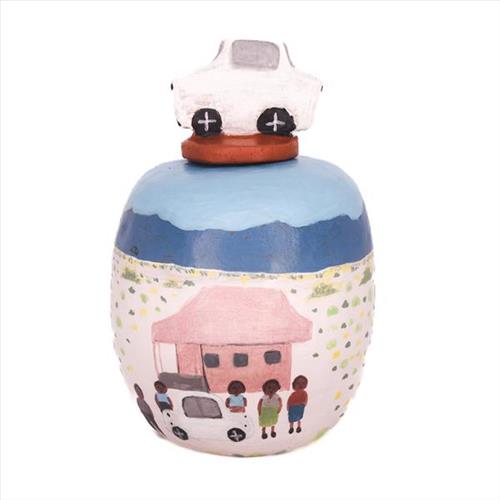
Driving to Alknarinja (Kepler Springs Outstation)

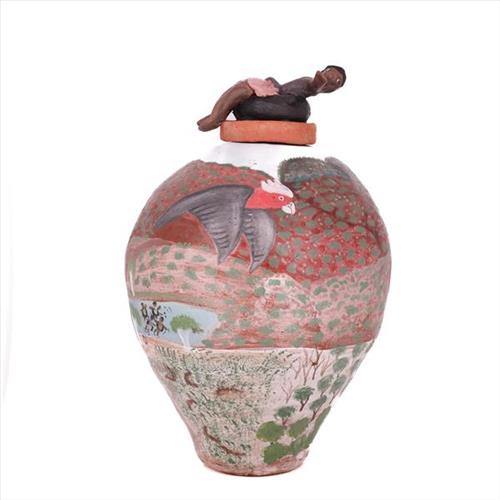
We are down at the river, me and all my family travelling around in the troopy when I was a young girl. We go fishing, everyone holds the fish net together. We throw them little babies back in the water and cook the big fishes on the fire and make tea. We go floating down the river in rubber rings too, relaxing and laughing, feeling good. All the birds are flying and my uncle bringing his horse too.

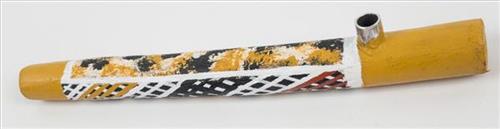
This pipe has been hand carved from Moyi (green plum tree), and hollowed out using a burning hot wire. Finished using modern acrylic paints. Cone piece is either from a discarded rifle case, or other similar round tube.
Wood carving has always been part of Aboriginal culture and Djilpin artists continue this tradition. Men carved wood for many purposes – tools for hunting or gathering food, axes and knives for building shelters, spears and clubs for protection of their lives and territory, objects for ceremony and to mark sacred sites.
Hunting implements include the boomerang, woomera and spear. The woomera is a lever which helps to increase the speed and distance the spear travels. Clapsticks are used as percussion instruments by the Songmen to accompany dancing along with the didgeridoo (mago).
As well as the more functional carvings, artists portray animals and birds in wood, and these carvings are often painted. Ceremonial carvings include spirit creatures including mukuy (devil devils) and mimi.
Some fine mimi figures have been cast in bronze.

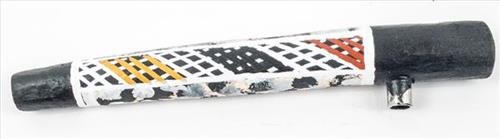
This pipe has been hand carved from Moyi (green plum tree), and hollowed out using a burning hot wire. Finished using modern acrylic paints. Cone piece is either from a discarded rifle case, or other similar round tube.
Wood carving has always been part of Aboriginal culture and Djilpin artists continue this tradition. Men carved wood for many purposes – tools for hunting or gathering food, axes and knives for building shelters, spears and clubs for protection of their lives and territory, objects for ceremony and to mark sacred sites.
Hunting implements include the boomerang, woomera and spear. The woomera is a lever which helps to increase the speed and distance the spear travels. Clapsticks are used as percussion instruments by the Songmen to accompany dancing along with the didgeridoo (mago).
As well as the more functional carvings, artists portray animals and birds in wood, and these carvings are often painted. Ceremonial carvings include spirit creatures including mukuy (devil devils) and mimi.
Some fine mimi figures have been cast in bronze.

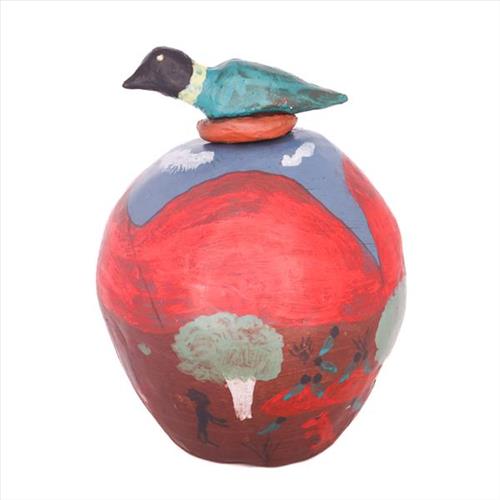
Urlpaatjala rraatninga anga ilkuma. Port Lincoln parrots eat wild passionflower seeds.