116181656396


Tjintjantji to Murinji

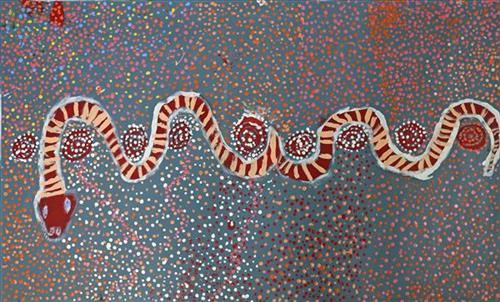
This painting shows a snake travelling from Tjitjantji to Murinji. Tjitjantji (concentric circle at the tail of the snake) is west of Kintore and there is a big hole there, lots of zebra finches and its in the desert on the other side of the snake. Murinji (the concentric circle at the head of the snake) is to the west of Haast Bluff.

115682109286


Ngambi (limestone spearheads)

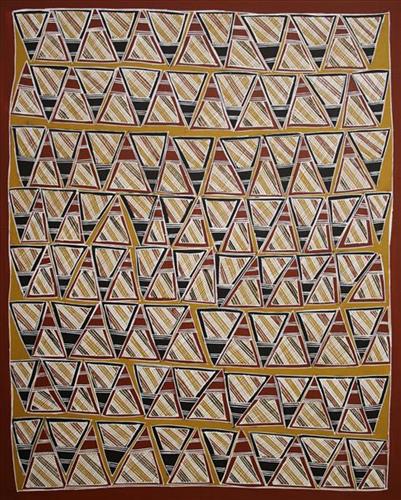
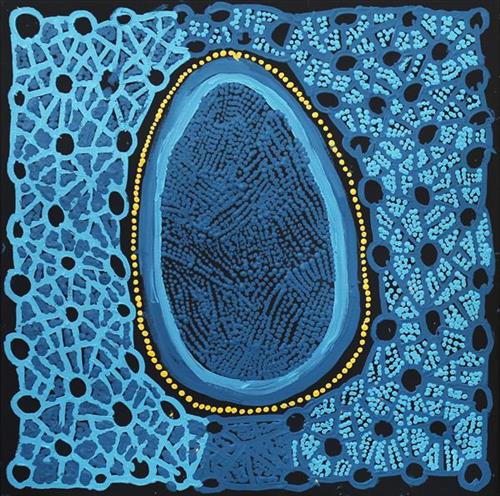
This painting illustrates elements from the Wagilag Sisters’ Creation story.  Ngambi are the stone spear heads that the sisters collected at Ngilipitji on their way to Mirarrmina.

The Wagilag Sisters’ Story is primarily an account of how in the distant past the two Wagilag Sisters came out of the southern interior and came across the countryside to the Liyagalawumirr waterhole at Mirarrmina. There the younger sister profaned the pool of the great Python by accidently allowing her  blood to fall into the waterhole. Because of this the women and the children were swallowed by the Olive Python, Wititj, along with all the water from the waterhole. The other snakes heard about this and demanded Wititj spit out the sisters. Wititj vomited the women out, along with the water, creating the first monsoon rains.

116182190459


Dog Dreaming, Mt Charlotte

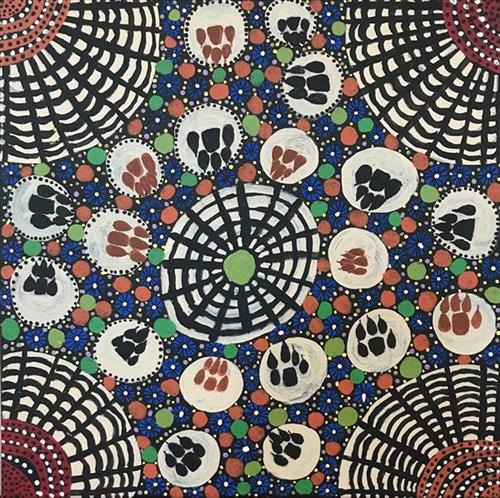
Dog Dreaming, Mt Charlotte down near Titjikala. The Hugh River runs through there. The circles are the waterholes in the middle of the riverbed. The river is really wide, but usually all dry on top, except for these special waterhole and the rocks and flowers. All the boulders are Papa (Dogs aka Dingoes) and their puppies. Big mob of them there. Stranger can’t come near, or Papa grab them. They got to throw stone into water. Got to sing out first, and then they can swim. If they don’t, Papa take them. Papa protect that place. It belongs to him. It’s very special place for families, who sit down and picnic, swim, and play along the banks of the river. The sand dune at the base of Mt Charlotte and the big and small boulders are all part of that Dreaming. It’s beautiful.

220182255455


Yalpirakinu

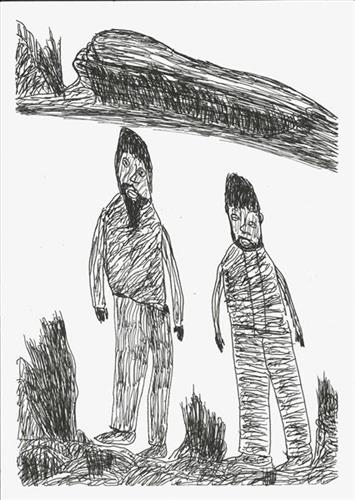
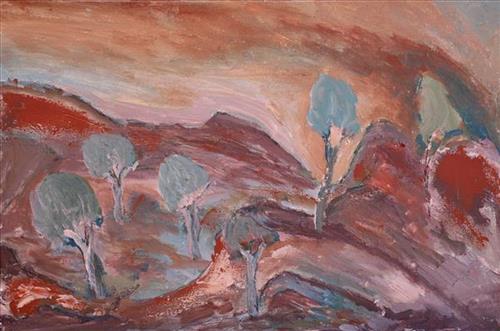
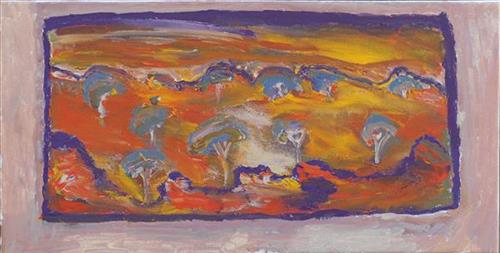
Yalpirakinu is Adrian’s mother’s country. Adrian’s mother is the late Eunice Napangardi, a well known painter herself. His artworks consistently refer to the desert mountains, ridges and trees which are part of Yalpirakinu. Using a restricted colour palette, Adrian’s  brushwork is loaded with energy, drama and memories. He is a deliberate and thoughtful painter; reworking, pushing and pulling the image to completion.

220182291105


Family in Yalpirakinu

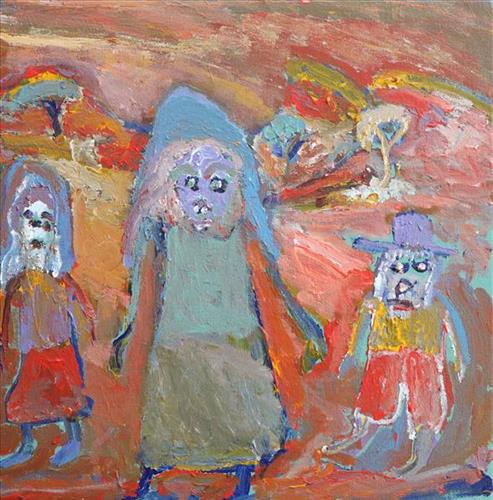
Yalpirakinu is Adrian’s mother’s country. Adrian’s mother is the late Eunice Napangardi, a well known painter herself. His artworks consistently refer to the desert mountains, ridges and trees which are part of Yalpirakinu. Using a restricted colour palette, Adrian’s brushwork is loaded with energy, drama and memories. In this painting Adrian has drawn from his memory to portray his family in Yalpirakinu.

220182298054


Yalpirakinu

Yalpirakinu is Adrian’s mother’s country. Adrian’s mother is the late Eunice Napangardi, a well known painter herself. His artworks consistently refer to the desert mountains, ridges and trees which are part of Yalpirakinu. Using a restricted colour palette, Adrian’s  brushwork is loaded with energy, drama and memories. He is a deliberate and thoughtful painter; reworking, pushing and pulling the image to completion.

116182300878


Swimming at Haasts Bluff

This is a memory from Doris’s past. Doris talks of the times when she was a young girl in the bush, swimming and hunting with her friends at Ikuntji (Haasts Bluff). She talks of sand hills where the young people would wander naked looking for water, “chasing” the water until they found a water hole. The young men and women would swim together and make love by the water hole. Eventually, Doris explains, the young people fall in love and are married. Doris is remembering the traditional tools and weapons that were used by her and her friends in the bush. Doris depicts Kali (boomerang), wana (digging stick), puli (grinding stone), kutitji (shield), kulata (spear) and kantikanti (hitting stick).

116182302937


Kungka Tjuta

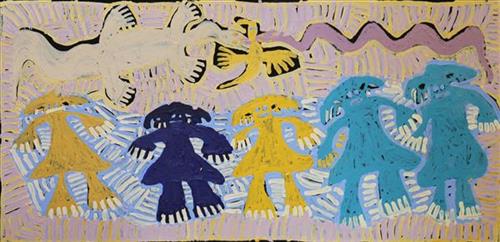
In this story Doris paints an assortment of important women in her life, each of them a representation and not strictly assigned to the individual. There is Doris’ two mothers, her sister and herself. In a display of their resilience they are shown surrounded by an abundance of bush tucker.