Basket
Art Centre notes:
The basket is made of natural raffia and sea chord.
It is made using a traditional ‘one twist’ method.
Size of Bowl: 13 x 5cm
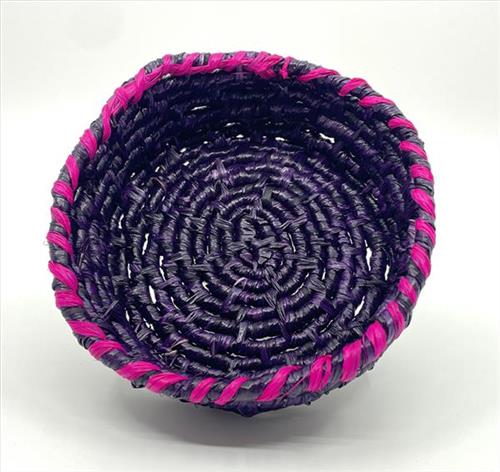
Art Centre notes:
The basket is made of natural raffia and sea chord.
It is made using a traditional ‘one twist’ method.
Size of Bowl: 13 x 5cm
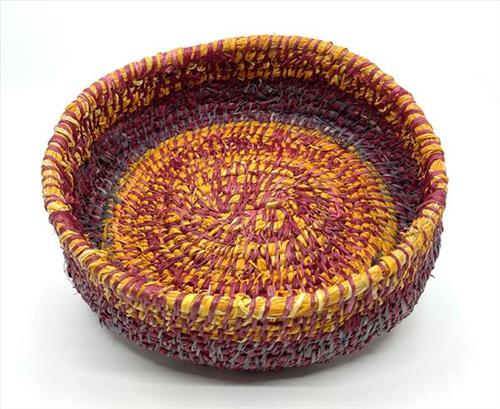
When the pewie pui changes colours during the wet season. Reminded me of my older sister hair colours.
Art Centre notes:
The basket is made of natural raffia and sea chord.
It is made using a traditional ‘one twist’ method.
Size of Bowl: 21 x 7cm
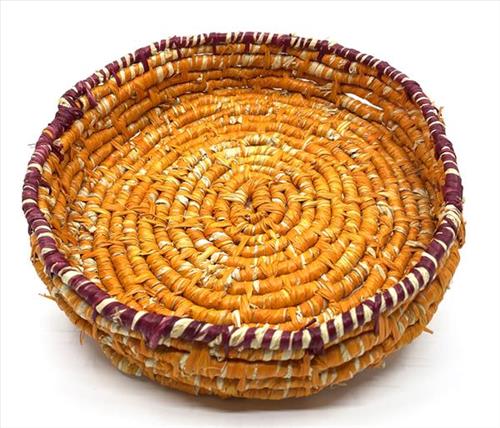
This Basket is a dedication to my Childrens lineage to Yam Island.
Art Centre notes:
The basket is made of natural raffia and sea chord.
It is made using a traditional ‘one twist’ method.
Size of Bowl: 24 x 6cm
Fish traps are placed into the river to face the oncoming fish. The woven tunnel traps the fish and prevents their escape. The traps are tapered so when they are submerged in the water, the water pressure wedges them into place. Traditionally, the fish traps are operated at night time.
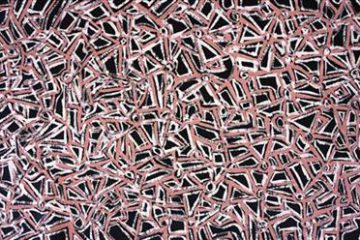
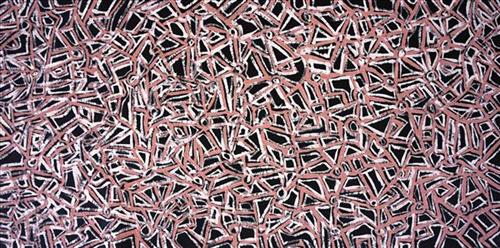
This is a special site for our people. A ceremonial place that has been passed down to us from elder to elder. It is a place where people ask for bush tucker in their country. For this to work, we rub the white chalk from Jiirda on our hands then scatter it back onto the Jiirda Hill and say where we want the plants to grow.
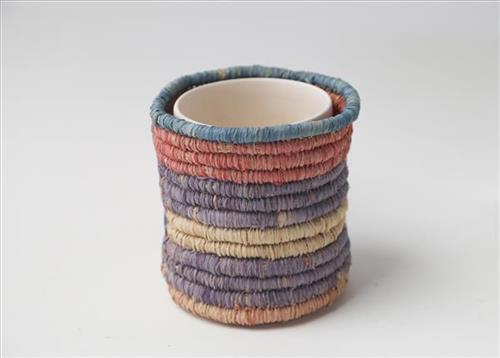
Weaving is a skill that has been practiced by Martu for thousands of years in the making of utilitarian and ceremonial items, such as yakapiri (bark sandals) and manguri (head pads for balancing carved carrying dishes). However, coiled basket weaving as an artform is a relatively newly adopted practice for the Martu, a skill passed on from Central Desert artists in the 1990’s. Leading Martu fibre arts practitioner Nola Taylor says that basket weaving was so popular amongst Martu women that it “spread across the desert like a waru (fire)”.
Each basket is built up through wrapping fine bundles of grass in brightly coloured wool and then stitching each round on to the previous one. The baskets are primarily made from puntayarra and minarri (Amphipogon Caricinus) grass, usually collected incidentally during trips to visit family, attend ceremonies, maintain Country, and hunt and gather bush tucker. Martu artists have developed a distinctive style of basketry and individual artists continue to develop new designs and incorporate novel materials, including steel, wire and wood, into their work.
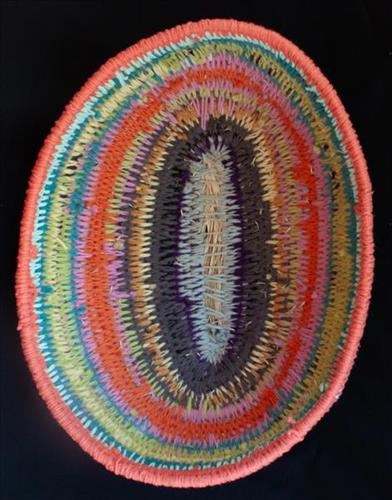
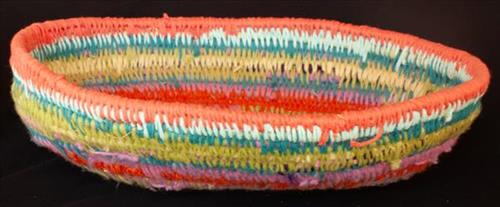
Weaving is a skill that has been practiced by Martu for thousands of years in the making of utilitarian and ceremonial items, such as yakapiri (bark sandals) and manguri (head pads for balancing carved carrying dishes). However, coiled basket weaving as an artform is a relatively newly adopted practice for the Martu, a skill passed on from Central Desert artists in the 1990’s. Leading Martu fibre arts practitioner Nola Taylor says that basket weaving was so popular amongst Martu women that it “spread across the desert like a waru (fire)”.
Each basket is built up through wrapping fine bundles of grass in brightly coloured wool and then stitching each round on to the previous one. The baskets are primarily made from puntayarra and minarri (Amphipogon Caricinus) grass, usually collected incidentally during trips to visit family, attend ceremonies, maintain Country, and hunt and gather bush tucker. Martu artists have developed a distinctive style of basketry and individual artists continue to develop new designs and incorporate novel materials, including steel, wire and wood, into their work.
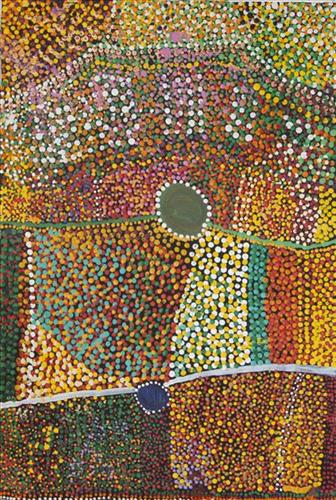
Martumili Artists work with over three hundred artists from remote Martu Aboriginal communities, including Punmu, Parnngurr, Kunawarritji, Jigalong, Irrungadji (Nullagine), and Warralong, as well as from the Parnpajinya (Newman) gallery and studio spaces. Known for their diverse, energetic, and unmediated painting styles, their works reflect the dramatic geography and scale of their homelands. Each artist, however, brings a unique approach to their craft.
Younger Martu artists often start painting alongside their parents, grandparents, and extended family, which fosters an organic learning process. This not only involves mastering painting techniques but also understanding specific locations, family histories, traditional ways of life, bush tucker, and Jukurrpa (Dreaming). Over time, with encouragement from their peers, they develop their own distinct styles and explore unique painting techniques and subject matter. In this work the artist brings a contemporary, evolving perspective to their work.
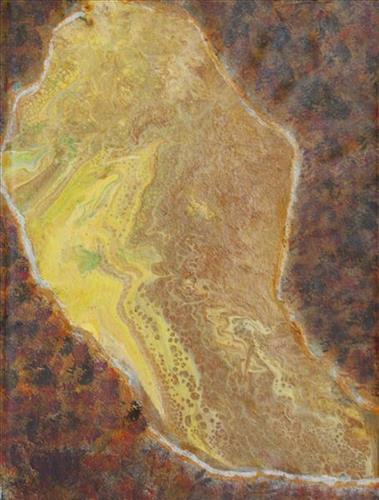
Place in the Western Desert Lands for the Wanmun people who lived and gather food as protect certain secret areas and living water.
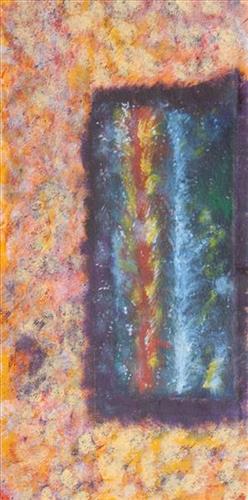
Fire and Brimstones clearing the land for hunting and new vegetation the cyclone season by burning country