225182334744
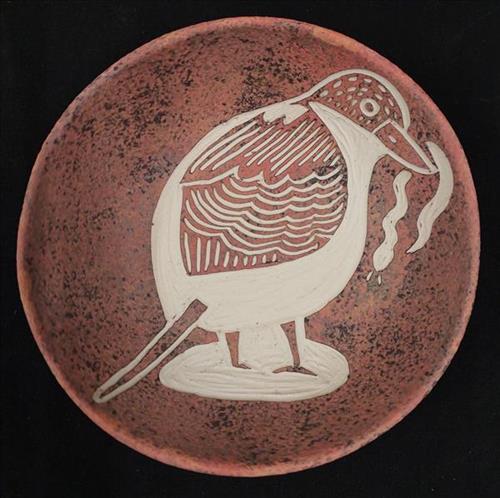
Yindili (Kingfisher)
The Kingfisher, known as Yindili in Kuku Yalanji language, is according to our culture one of the significant messenger birds. The Kingfisher will let us know when to expect a visit from families living in another community, And when we see a Kingfisher close by, we know that something good will soon happen in our personal life.
225182334743
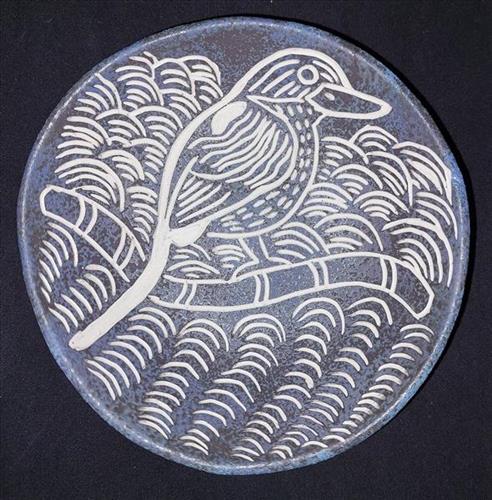
Yindili (Kingfisher)
The Kingfisher, known as Yindili in Kuku Yalanji language, is according to our culture one of the significant messenger birds. The Kingfisher will let us know when to expect a visit from families living in another community, And when we see a Kingfisher close by, we know that something good will soon happen in our personal life.
225182334742
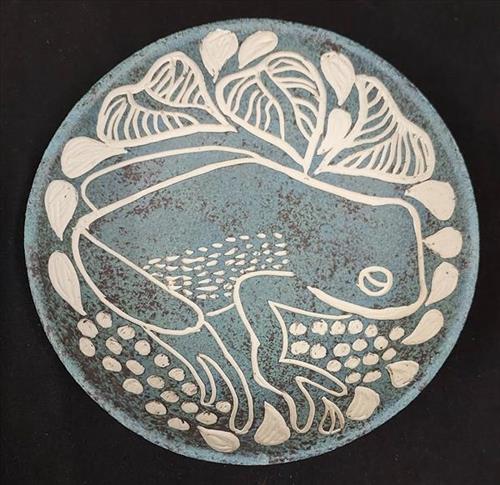
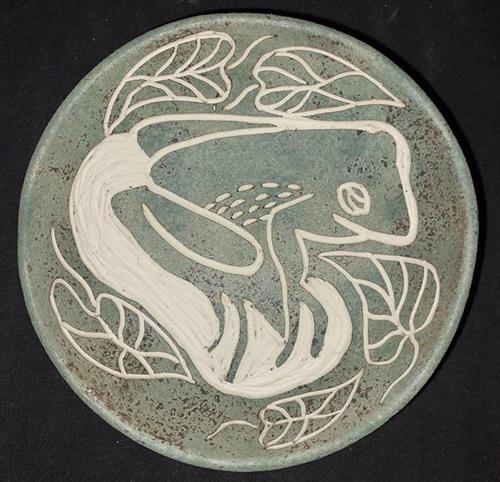
Karrkurr (Green Tree Frog)
225182334741
Karrkurr (Green Tree Frog)

377810582334740
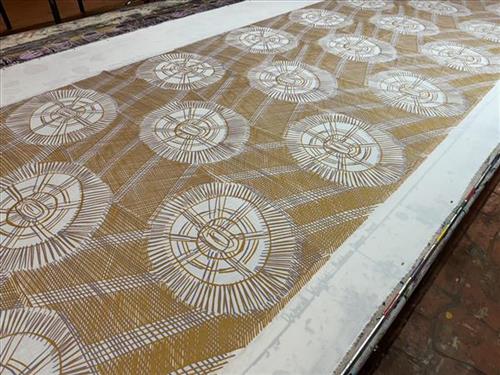
Marebu
Deborah Wurrkidj is a Kuninjku artist from the Kurulk clan whose country lies around the outstation of Mumeka in central Arnhem Land. She is an accomplished artist working across mediums including painting, sculpture, weaving and textile design. For this design, Deborah Wurrkidj has depicted Marebu (woven pandanus mats).
Works in fibre from the Maningrida region are widely recognised as some of the finest in Australia. Artists confidently push the boundaries of fibre craft and cultural expression, adapting traditional techniques and forms to produce strikingly inventive and aesthetically exquisite artworks.
Artists weave many different kinds of mats. Conical mats were traditionally used to shield babies from mosquitoes. Long flat mats were used for blocking creeks so that fish would be diverted into fish traps. A small triangular mat made of pandanus fibre used to be worn by women during ceremonial gatherings, tied around their back and covering them at the front. Mats are also used for wrapping and rinsing food in water.
Artists usually use kundayarr, pandanus spiralis, to weave decorative round or oblong mats, as well as the less common triangular and conical shapes. Weaving is physically hard work, now done only by women. They colour the pandanus using natural dyes made from the roots, leaves or flowers of plants within the weaver’s clan estate.
The radial woven patterns of the finest round mats appear to vibrate with colour, sometimes regarded as an aesthetic manifestation of deep cultural meaning, as there is a significant spiritual dimension to pandanus mats.
225182334737
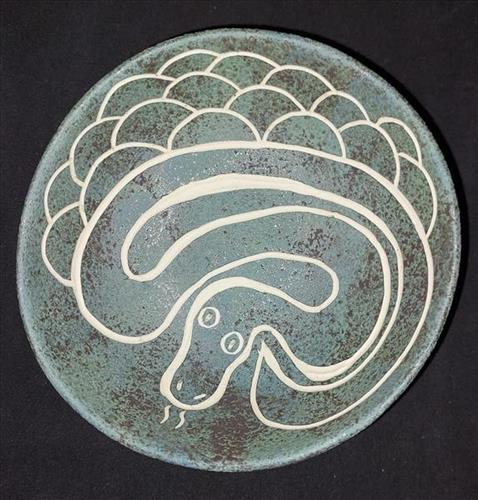
Kurriyala (Carpet Snake)
The carpet snake used to be an important food animal for our ancestors. They wrapped the meat in native ginger leaves and cooked it on the hot coals of the ground oven. They also used the skin to make head bands or skillfully sewed blankets to keep the families warm and dry at night.
The carpet snake also has spiritual significance for me. I inherited the carpet snake Totem and related cultural knowledge from my father’s side. According to our Kuku Yalanji creation stories, the carpet snake was an Ancestral Being that travelled in its human form across the country creating waterways wherever it went, including on my father’s clan lands.
In my upbringing I was taught to respect our elders who prepared me for my future role as carrier of cultural knowledge and spiritual traditions. I was also taught the values of taking responsibility for caring for our traditional clan country and help maintain it for the younger generations so they can become strong leaders.
Art is my way of keeping the cultural knowledge of my ancestors alive and passing it down to my children and grandchildren. Sharing this body of knowledge creates strong family ties and gives me my strength.
225182334736
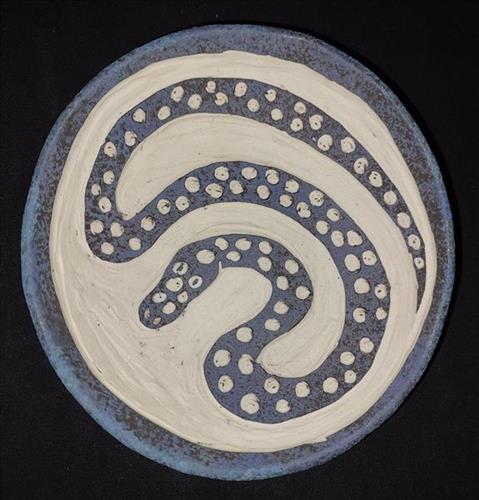
Kurriyala (Carpet Snake)
The carpet snake used to be an important food animal for our ancestors. They wrapped the meat in native ginger leaves and cooked it on the hot coals of the ground oven. They also used the skin to make head bands or skillfully sewed blankets to keep the families warm and dry at night.
The carpet snake also has spiritual significance for me. I inherited the carpet snake Totem and related cultural knowledge from my father’s side. According to our Kuku Yalanji creation stories, the carpet snake was an Ancestral Being that travelled in its human form across the country creating waterways wherever it went, including on my father’s clan lands.
In my upbringing I was taught to respect our elders who prepared me for my future role as carrier of cultural knowledge and spiritual traditions. I was also taught the values of taking responsibility for caring for our traditional clan country and help maintain it for the younger generations so they can become strong leaders.
Art is my way of keeping the cultural knowledge of my ancestors alive and passing it down to my children and grandchildren. Sharing this body of knowledge creates strong family ties and gives me my strength.
225182334733
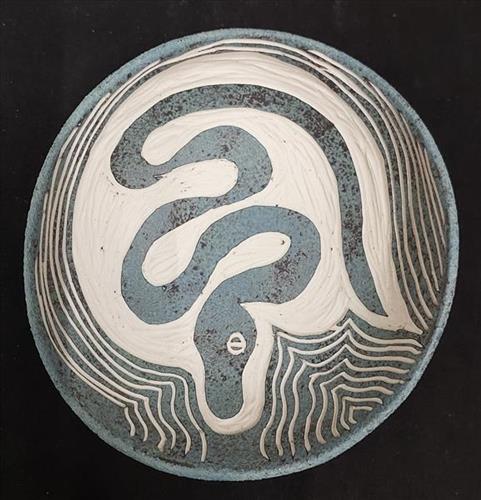
Kurriyala (Carpet Snake)
The carpet snake used to be an important food animal for our ancestors. They wrapped the meat in native ginger leaves and cooked it on the hot coals of the ground oven. They also used the skin to make head bands or skillfully sewed blankets to keep the families warm and dry at night.
The carpet snake also has spiritual significance for me. I inherited the carpet snake Totem and related cultural knowledge from my father’s side. According to our Kuku Yalanji creation stories, the carpet snake was an Ancestral Being that travelled in its human form across the country creating waterways wherever it went, including on my father’s clan lands.
In my upbringing I was taught to respect our elders who prepared me for my future role as carrier of cultural knowledge and spiritual traditions. I was also taught the values of taking responsibility for caring for our traditional clan country and help maintain it for the younger generations so they can become strong leaders.
Art is my way of keeping the cultural knowledge of my ancestors alive and passing it down to my children and grandchildren. Sharing this body of knowledge creates strong family ties and gives me my strength.
225182334732
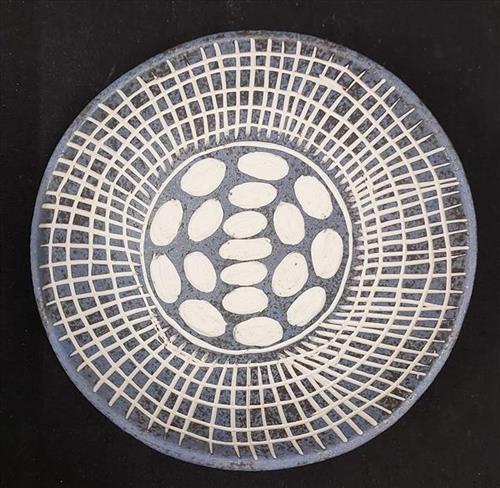
Jarruka Bulka (Scrubfowl Nest)
Jarruka Bulka (Scrubfowl Nest) and the Diwan Bulka (Brush Turkey Nest) is essential to the survival of our hunting and gathering practices, as the women and girls collect the eggs from these nests, every season.The Jarruka Bulka is more sought after and is the larger of these nests.