221382343627


Buffalo Skull

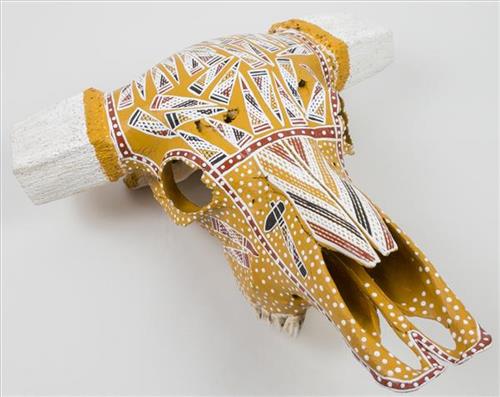
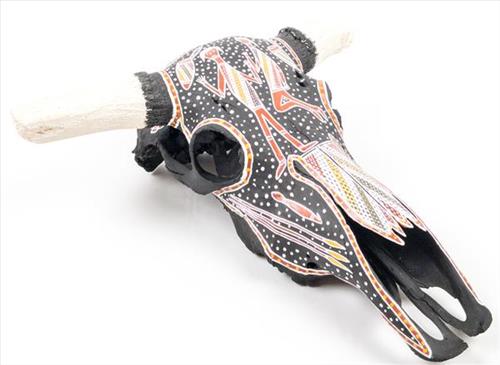
This commissioned Water Buffalo piece features an important Wagilak clan story along with a young man initiation ceremony body paint style. 

As a central piece on the water buffalo forehead are multiple Laar’da, or stone blades. Stones are harvested on country, and then skilfully shaped and used for hunting purposes. Young men need to learn this skill before they are allowed to hunt on their own.

On either side of the buffalo snout are two bush tool stone axes. These axes use the same stone but shaped differently. Central to the snout is ngarmbi or a large stone from which Laar’da and stone axes are formed.

White dots around the jaw and snout are similar to the body paint dots placed on young men when they go through initiation ceremony.

Raark or fine line work has been completed using a handmade grass reed brush called Jarlk. Raark is in Yirritja style and consists of mutliple lines before alternating colour.

Modern acrylic paint has been used. Skull was sanded smooth before painting so the Jarlk brush could flow easily.
221382343625


Buffalo Skull

This commissioned Water Buffalo piece features a Wagilak clan bush tool creation story along with a young man initiation ceremony body paint style.

Central to the piece are to Wagilak people. A man is on the left, and his wife on the right. “Man stomped on the big “ngarmbi” and was happy and yelled out to his wife I’ve been find family here. Ive been found stone.”

His wife replied “Alright, from this you must make tools. First he made a stone axe, by cracking the ngarmbi.” This is shown on the left and right side of the buffalo forehead.

Smaller pieces were shaped into stoneblades and razorblades, visible on the central part of the buffalo forehead. From here the man made more bush tools; spear and woomera. These are shown on the side of the buffalo snout. The wife then created an important dillybag from pandanus for carrying the stone blades. These dillybags are beside the Wagilak people. For carry water she made a coolamon, and a digging stick for harvesting ground yams. Below this are tools for making fire. These are shown on the opposite side of the snout.

White dots all over the piece are similar to the body paint dots placed on young men and women when they go through Wagilak initiation ceremony.

Raark or fine line work has been completed using a handmade grass reed brush called Jarlk. Raark is in Yirritja style and consists of mutliple lines before alternating colour.

Modern acrylic paint has been used. Skull was sanded smooth before painting so the Jarlk brush could flow easily.
221382343623


Buffalo Skull

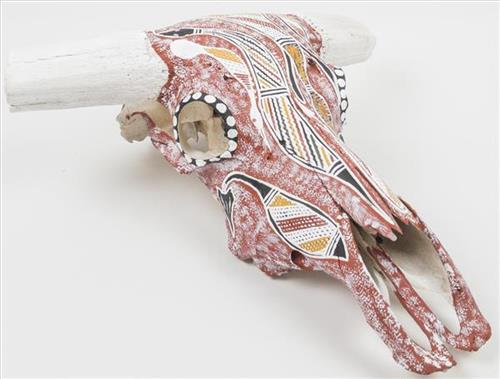
This commissioned Water Buffalo piece features plants and animals found in Beswick’s surrounding billabongs and wet areas.

Visible include a “Jaigung” or filesnake, two diving ducks, a barramundi as well as water lily roots called “dattum”. All are tasty tucker when cooked in coals. Dattum can be ground to make a flour for damper, and can also be eaten raw with a taste similar to quinoa.

Raark or fine line work has been completed using a handmade grass reed brush called Jarlk. Raark is in Yirritja style and consists of mutliple lines before alternating colour.

Modern acrylic paint has been used. Skull was sanded smooth before painting so the Jarlk brush could flow easily. White stippling effect on the red background was achieved using a modern paintbrush.
221382343558


Mukuy Spirit Figures

These finely crafted woven figures represent Mukuy Spirit creatures. The Mukuy belong in Yirritja country called Galanbirni. At night you might hear them playing the Didjeridu. The Mukuy travel around a lot and are often found in sacred places. They are mysterious, sometimes playful and sometimes cheeky characters, often referred to as Devil Devil. Mukuy figures tell the stories of country, culture and spiritual beliefs.

221382343557


Mukuy Spirit Figures

These finely crafted woven figures represent Mukuy Spirit creatures. The Mukuy belong in Yirritja country called Galanbirni. At night you might hear them playing the Didjeridu. The Mukuy travel around a lot and are often found in sacred places. They are mysterious, sometimes playful and sometimes cheeky characters, often referred to as Devil Devil. Mukuy figures tell the stories of country, culture and spiritual beliefs.

115682343556


Woven Mat

Traditionally, Nganiyal (conical mats) were used as an insect screen when erected, and as a sitting mat when folded. They are used in Ceremony as well as a functional item. 

Nowadays, artists weave many different shapes including flat, round and oblong. 

221382343555


Mukuy Spirit Figures

These finely crafted woven figures represent Mukuy Spirit creatures. The Mukuy belong in Yirritja country called Galanbirni. At night you might hear them playing the Didjeridu. The Mukuy travel around a lot and are often found in sacred places. They are mysterious, sometimes playful and sometimes cheeky characters, often referred to as Devil Devil. Mukuy figures tell the stories of country, culture and spiritual beliefs.

221382343554


Mukuy Spirit Figures

These finely crafted woven figures represent Mukuy Spirit creatures. The Mukuy belong in Yirritja country called Galanbirni. At night you might hear them playing the Didjeridu. The Mukuy travel around a lot and are often found in sacred places. They are mysterious, sometimes playful and sometimes cheeky characters, often referred to as Devil Devil. Mukuy figures tell the stories of country, culture and spiritual beliefs.

221382343553


woven mat

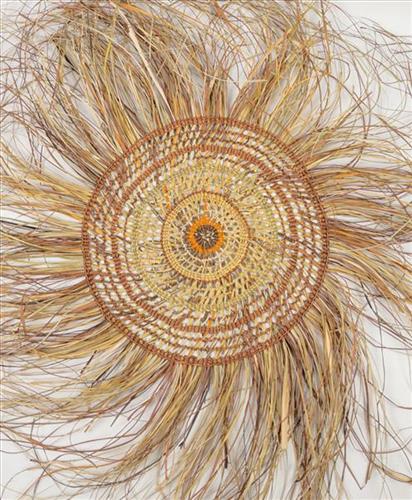
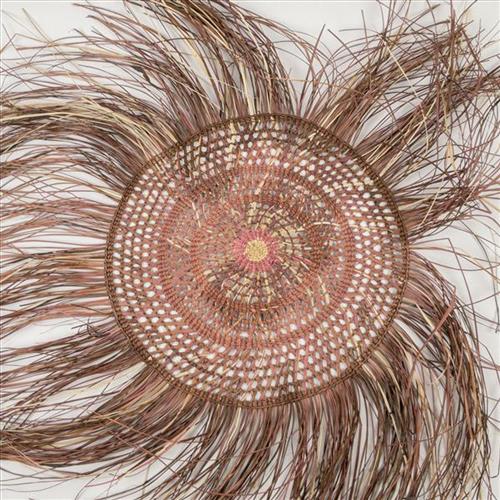
Fibre Art is an ancient Aboriginal women’s craft that is still made today using the same techniques as their ancestors. Making fibre art is labour intensive and much care and fine needlework is required to ensure the finished object is both functional and beautiful. Fibre art from Ghunmarn Culture Centre includes dilly bags, floor mats, bush fans, woven creatures found in the landscape, plants such as yams (bush potato), baskets, place mats, and spirit figures such as mermaids and Mukuys. Natural pandanus fibre (Mukarra), is used to make much of the fibre art produced by the artists of Djilpin Arts. Women collect the pandanus by pulling from the top of the pandanus tree, then stripping and drying the leaves before they are dyed with natural bush colour collected from the Beswick surrounds.

221382343550


woven mat

Fibre Art is an ancient Aboriginal women’s craft that is still made today using the same techniques as their ancestors. Making fibre art is labour intensive and much care and fine needlework is required to ensure the finished object is both functional and beautiful. Fibre art from Ghunmarn Culture Centre includes dilly bags, floor mats, bush fans, woven creatures found in the landscape, plants such as yams (bush potato), baskets, place mats, and spirit figures such as mermaids and Mukuys. Natural pandanus fibre (Mukarra), is used to make much of the fibre art produced by the artists of Djilpin Arts. Women collect the pandanus by pulling from the top of the pandanus tree, then stripping and drying the leaves before they are dyed with natural bush colour collected from the Beswick surrounds.