111982349807


Warraburnburn

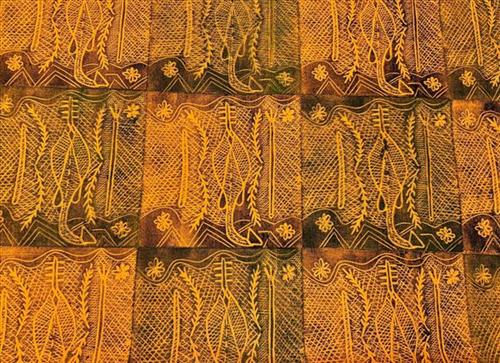
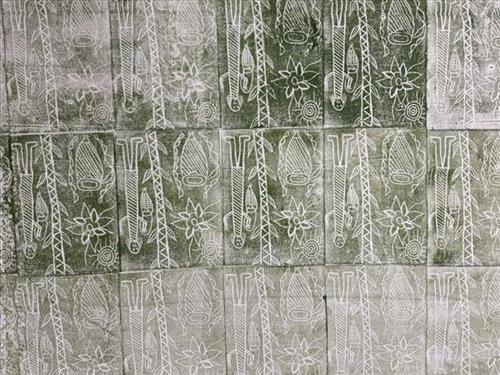
In Burarra and Gun-nartpa languages the figure represented in this artwork is generally known as a wangarra ‘ghost spirit’. For the Warrawarra clan ghost spirits have their own particular characteristics and their own name – Warraburnburn.

The Warraburnburn and the closely related Galabarrbarr spirit (owned by the Balkarranga clan) are also manikay song topics.  The spirits are related to each other as maternal grandparent and grandchild, just as the people of Warrawarra and Balkarranga are. The dancing of the two ghost spirit figures forms the finale performance for funerals, and is the final goodbye to a deceased family member.

In many ways the Warraburnburn and Galabarrbarr ghost spirits are like people. They emerge from the patches of jungle on Warrawarra and Balkarranga country in the late afternoon and go hunting in family groups of men, women and children. They stay in contact with each other by calling out as the men hunt for fish and the women walk with their dillybags looking for vegetable food. 

The ghost spirits are associated closely with white ochre and artists commonly paint the bodies of carved figures in white. Different types of ghost spirit wear different patterns. Warraburnburn is decorated with uniform white dots while others are painted white all over. Some ghost spirits are shown with a design painted on their chest infilled with rarrk ‘cross-hatching’, the same designs that are painted onto japi an-guyinda ‘male initiations’. 

They also have supernatural characteristics including superhuman size (jarra anbaykarda ‘super tall’). They know the country intimately – some are malevolent towards humans and will lead people astray, taking them to unfamiliar and dangerous places. These malevolent spirits are likened to an-muburda ‘sorcerers’ and can conduct dangerous rituals that cause harm to people. Others are benign and will lead humans back to familiar paths and their own camps.
 

377810582349503


Jin-merduwa (mermaid)

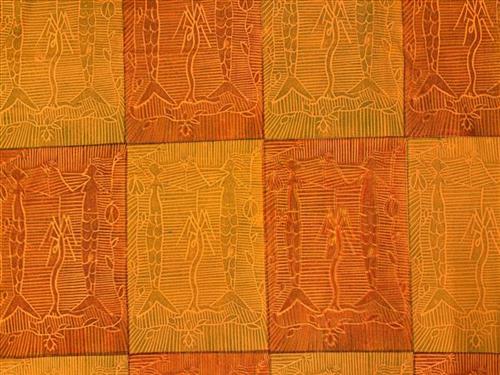
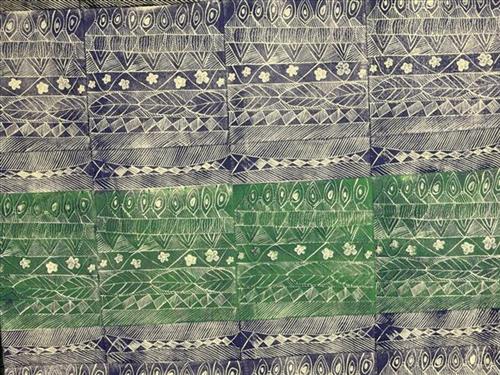
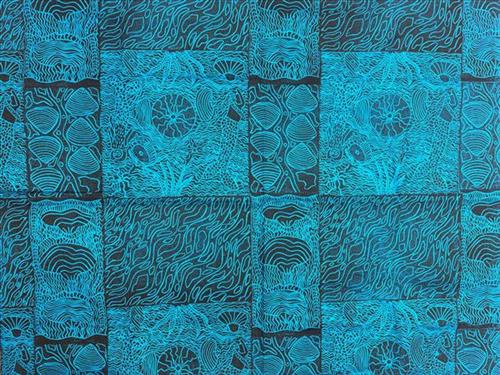
A beautiful, one-off, linocut, hand printed design by Elizabeth Wullunmingu depicting the story of Jin-merduwa.  Sometimes she also includes her Garriwa turtle print. 

My niece, Stephanie James, is singing a song called Diyama, and it is about Jin-merduwa. She is in the Ripple Effect Band. They are now famous in Maningrida and everywhere. Her great grandmother told her about the Jin-merduwa living at Gupanga.  I heard the story before Stephanie.  Now I hear her singing the story about that place.  I am very proud of her. We have the same country.  Our stories match.  She is singing the story, and I am making artwork about the story. 

My lino print shows the Jin-merduwa who live at Gupanga. Gupanga is located at the mouth of the Blyth River.  It is a saltwater place.  There must be more than one Jin-merduwa living there?  They eat fish, shellfish and seaweed.  Sometimes they travel to the end of the river to find food in the ocean, but they don’t go far and always swim back to their home.

Gupanga is a beautiful place.  The sand is golden, there are mangroves, and the water is cloudy.  It is good hunting in that area.  When we lived there, we got lots of barramundi, mud crabs, shellfish, everything!

This is a bit of a dangerous story.  I can’t say too much about this sacred place. The Rangers help to look after this place, but they also know they must be careful.   

Kuninjku people call mermaids yawkyawk.  Yawkyawk are freshwater.  In my language, Burarra, we call mermaids Jin-merduwa.  Jin-merduwa are a bit different to yawkyawk but are also a type of mermaid.

I love to make lino print fabric showing Jin-merduwa. I like using bright colours, but sometimes I print using black and white.

Ripple Effect Band – Diyama Song

 https://rippleeffectband.bandcamp.com/track/diyama

This song was written by Stephanie James in her language of Burarra. It is about the mermaids that live in the river in her country of Kupanga.


Her father sings the Kun-borrk traditional music from the Diyama song cycle to link his daughter’s music to the past.

Credits

from Wárrwarra, released July 5, 2018
Written by Stephanie James, D. Maxwell (father for Stephanie)
Produced by Paul Mac, Jodie Kell, Clint Bracknell
Audio Engineer: Campbell Barnes
Guitar: Jodie Kell, Jolene Lawrence
Bass guitar: Tara Rostron
Drums: Jolene Lawrence
Keys: Patricia Gibson
Lead Vocals: Stephanie James
Back up Vocals: Jodie Kell
Diyama vocals: D. Maxwell

377810582349514


Djabayéna (Ancestral sawfish spirit)


Djabayéna is a highly significant saw fish creation spirit that is part of the symbolic identity of the Ndjébbana speaking Kunibidji people of West Arnhem Land. 

When seen from the sky, the formation of a large Djabayéna can be seen at the opening of the Liverpool River on the Western Point.

‘When tide in and then tide out we can see it’s up there round the corner on the point. There is one Djabayéna, really big. He sleep all the time here. Our dreaming, Djabayéna. We make t-shirt and they play football – home ground with Djabayéna.’ Verity Bangarra 2023

377810582349513


Djomi (Fresh Water Spirit)

This design depicts the story of the artist’s ancestral dreaming, the Djomi fresh water spirit mermaid.

The Djomi figure is a mermaid like spirit with fish tail that lives in the fresh water stream that flows out to the sea cliff near Maningrida. Djomi is a known to be a very powerful fertility symbol.

‘If you go there you can get pregnant easily. Djomi has babies, and they can give others babies too. The Djomi spirit is so powerful, that women can end up with multiple babies at once, twins or sometimes even more. The Djomi spirits lay eggs near the sacred freshwater stream in Maningrida. Inside the eggs are human babies as well as young Djomi.

Men do not go near that swamp, because Djomi is so powerful that men might get pregnant there too. So men, they are too scared of that Djomi. When we visit the Djomi freshwater spring, we can hear young Djomi crying. They sound like normal babies crying, those Djomi spirits. They are looking for a mother.

This Djomi is my dreaming, I got permission from my djunguys to paint this Djomi design. For me I always ask my djunguy permission to paint, because that is our cultural way.

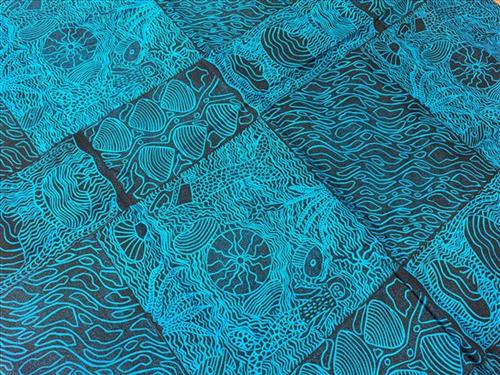
This design also depicts the fresh water lily leaves, and seaweed from the base of the sea floor.

377810582349512


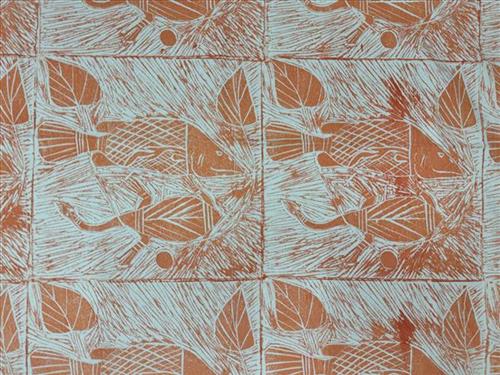
Barramundi and Turtle

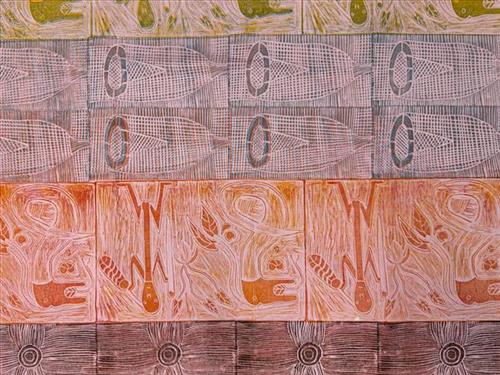
This fabric was created using the linocut printing technique. The lino tile has been carved by the artist in Maningrida, and has been printed by hand using a variety of colours and layers. The linocut technique ensures each textile piece is a one-off, limited edition piece. Bábbarra Women’s Centre supports the economic independence of Indigenous women in the Arnhem Land community of Maningrida, Northern Territory, Australia. Designs created by the women at Bábbarra reflect strong cultural knowledge, which is passed down to younger generations through their textile design practice.

377810582349511


Namurre Boko

‘Bini-murreko means two brothers – big brother and little brother.

Two brothers were really strong leaders and good hunters, sharing animals with different tribes.
With those different tribe there were jealousy going on.
Little brother went walkabout and heard the different tribe was talking about his tribe.
They said ngarribin manre djed-djedme bokko
Meaning: will make spear for them
Ngarrbin danj-bun, ngarrbinbun
Meaning: will spear them kill them
little brother turn around went back tell his brother
Namurre bokko kadi marne djed-djedme Karre wonens, kardi-djal danjbun
Meaning: they making spear for us, they gonna spear us
Couple of months they saw different tribe
They changed their attitude
They been bringing lots of animals to them and start asking for women
And that tribe realise that’s how those brothers died.
They kill them
This Why? They got jealous because two brothers was a good hunter.

This story written on the rock art and it stays forever.’

377810582349510


Bawáliba (Stone Country Mimih)

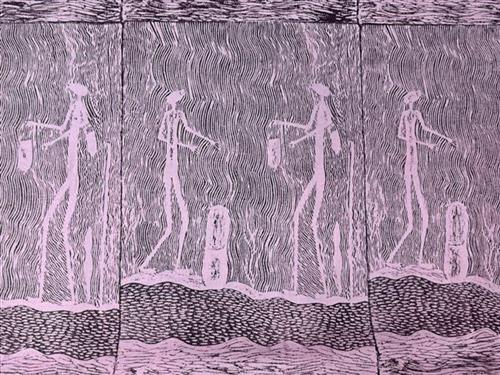
‘Bawáliba is the djang (Dreaming) of my mother and my uncles. They are good spirits, they protect us and they recognise families. They are really tall- just like human beings, like us. They dance late at night and have a lot of hair.

In olden times, long long long time ago Bawáliba were here, before people were on the land. Bawáliba used to go out hunting and care for country. They hunt carrying fish traps and digging sticks, near the homeland Djinkarr. They go out hunting on the floodplains with dilly bags and digging sticks. They collect a lot of bush foods, and sleep together with one bark shelter.
Sometimes now they still come alive when we sleep, they might come to our houses and peep through the window. At night, they cover themselves with white clay and red cloth tied around their waist. If we hear them, we jump out of bed and get up to look -but they have disappeared, they’re just too quick. Bawáliba might knock on the window to remind us they are there looking out for us.If you listen deeply you can hear them whisper, sometimes they talk about us and might say, ‘why are those people making camp here?’ then they realise ‘Oh they are family from here, it’s ok, they are just sleeping here for the night’.

During the day they always turn into stone and they sleep. We still know that green rock covered in moss near Djinkarr, that’s Bawáliba sleeping.
Some of my ancestors used to speak the same language as the Bawaliba, but all those old people are passed away now. It’s a little bit sad for us, because no one now can speak that Bawaliba language anymore.’ Lucy Yarawanga 2019

377810582349509


Welebme (flat)

This is a Kune word that refers to the flattening out of items stones, flat leaves and kunbad (money). 

This design shows different items that have flattened out. Carol designed this for her grandkids to show them the tradition of Welebme. 

377810582349508


Mábbarla (Jelly Fish)

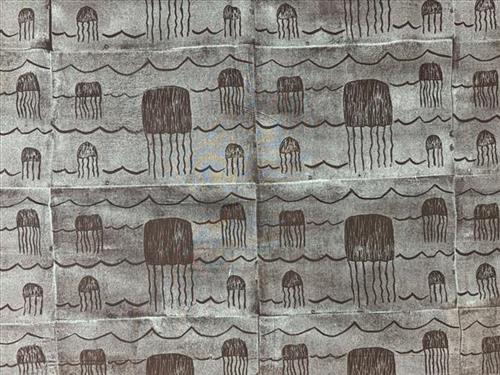
Mábbarla means Jelly Fish in Ndjébbana.

‘My homeland is Entrance island, Haulround island and Juda point. I really like Haulround island and that’s where we collect barruar (seagull egg). Entrance island is my favourite camping area, I go across with boat. Balanda (non-Aboriginal or European people) can’t go into those islands or Juda point without permission from me. We have a sacred totem ngaduma (palm tree) at those places and if people destroy it, we will have a strong wind and maybe a cyclone.’ Marilyn James 2021