Waterlily at the Djomi Spring – Joy Garlbin
Joy Garlbin depicts waterlily’s at the Djomi Spring sacred site.

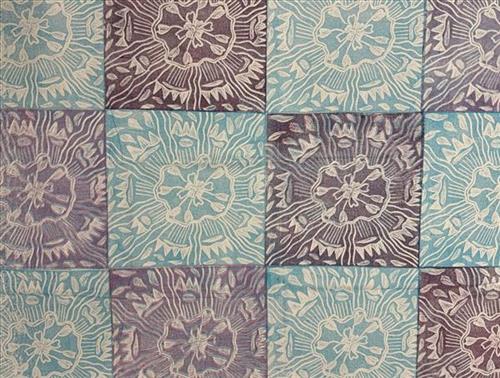
Joy Garlbin depicts waterlily’s at the Djomi Spring sacred site.



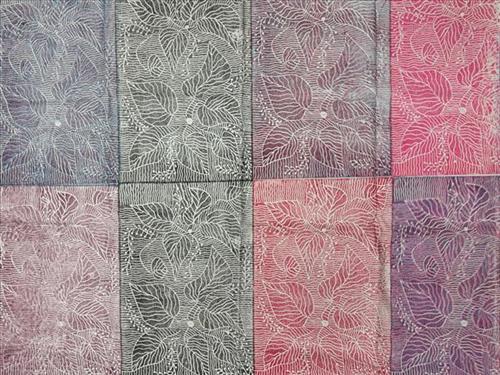
*Green Plum –
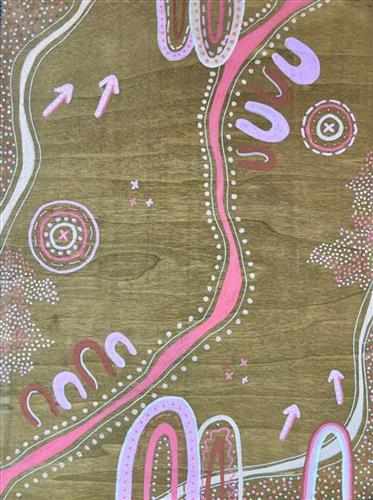
For me this artwork represents family teaching, and the passing down of tradition. The painting shows two groups of people moving together along a river. The painting is scattered with symbols of animal prints and meeting places. These two groups of people are families, teaching and learning traditional hunting, song, dance etc. I have enjoyed working with wooden canvases and the way they give a textured and naturally patterned background to the artwork. For this piece I chose to sick with a colour palette of natural colours and pinks to help the artwork have a cohesive feel.

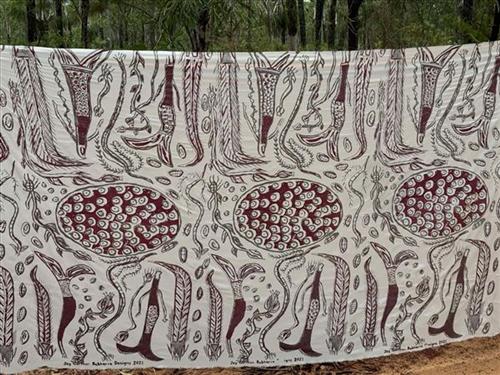


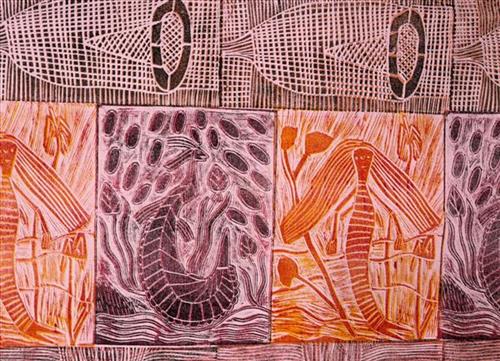
This design depicts the story of Blulandjan Joy’s ancestral dreaming, the Djomi freshwater spirit mermaid. In this design, the Djomi egg is also depicted in the centre.
‘The Djomi figure is a mermaid like spirit with fish tail that lives in the freshwater stream that flows out to the sea cliff near Maningrida. Djomi is a known to be a very powerful fertility symbol.
‘There is a swamp by the ocean, near my home, where all the Djomi live and come to lay their eggs, they lay them here to grow more and more Djomi. When the wet season comes, the cyclones, storms, and big rain, brings enough water for the Djomi to swim out and into the water ways surrounding Maningrida. Anyone wanting to have a baby can go to that place and Djomi will give them a baby. This is a real story; we have lots of Djomi babies here in Maningrida.When the big rains of wet season are too strong, Djomi swim up into the pipes to hide and keep safe. Sometimes they will keep swimming further up the pipes and into pipes of people’s homes, they can travel everywhere. The Djomi carries human babies with them and will sometimes put babies into the water that people in Maningrida drink, that’s why we see many young women expecting babies.’

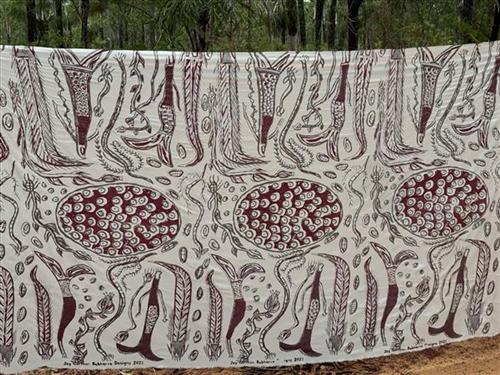
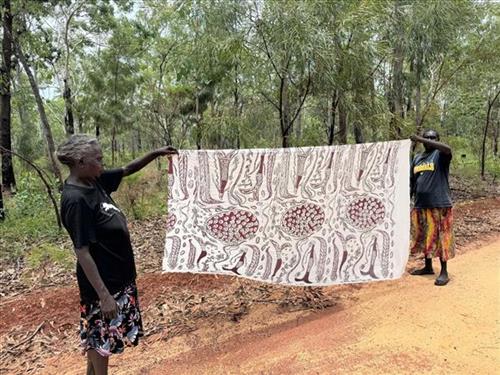
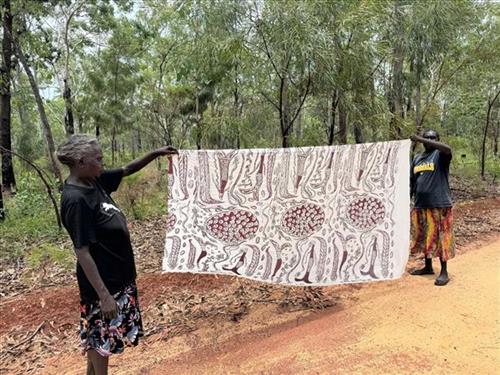
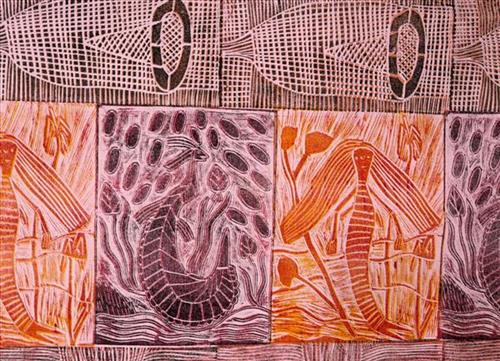
This design depicts the story of Blulandjan Joy’s ancestral dreaming, the Djomi freshwater spirit mermaid. In this design, the Djomi egg is also depicted in the centre.
‘The Djomi figure is a mermaid like spirit with fish tail that lives in the freshwater stream that flows out to the sea cliff near Maningrida. Djomi is a known to be a very powerful fertility symbol.
‘There is a swamp by the ocean, near my home, where all the Djomi live and come to lay their eggs, they lay them here to grow more and more Djomi. When the wet season comes, the cyclones, storms, and big rain, brings enough water for the Djomi to swim out and into the water ways surrounding Maningrida. Anyone wanting to have a baby can go to that place and Djomi will give them a baby. This is a real story; we have lots of Djomi babies here in Maningrida.When the big rains of wet season are too strong, Djomi swim up into the pipes to hide and keep safe. Sometimes they will keep swimming further up the pipes and into pipes of people’s homes, they can travel everywhere. The Djomi carries human babies with them and will sometimes put babies into the water that people in Maningrida drink, that’s why we see many young women expecting babies.’

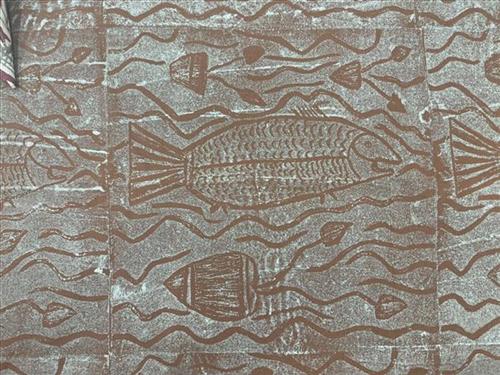
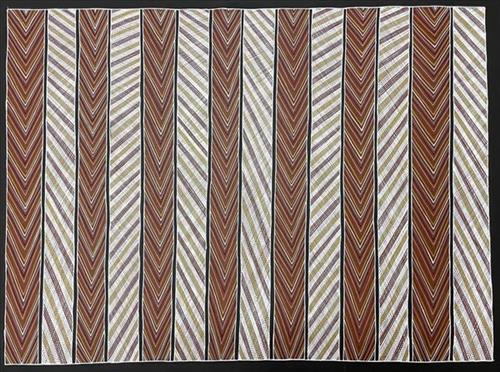
Lungurrma (North-east Wind) heralds the new season when seas are calm and new growth starts. The months for this type of wind are October to December. There are big clouds without thunder or rain. The triangular patterning represents monsoon clouds ‘standing up’ on the northern horizon. The Lunggurrma design belongs to the Yirritja moiety clans linked to this design are known as the ‘line of clouds’ clans

Wood carving has always been part of Aboriginal culture and Djilpin artists continue this tradition. Men carved wood for many purposes – tools for hunting or gathering food, axes and knives for building shelters, spears and clubs for protection of their lives and territory, objects for ceremony and to mark sacred sites.
Hunting implements include the boomerang, woomera and spear. The woomera is a lever which helps to increase the speed and distance the spear travels. Clapsticks are used as percussion instruments by the Songmen to accompany dancing along with the didgeridoo (mago).
As well as the more functional carvings, artists portray animals and birds in wood, and these carvings are often painted. Ceremonial carvings include spirit creatures including mukuy (devil devils) and mimi.
Some fine mimi figures have been cast in bronze.