22124006687


Status: Stock


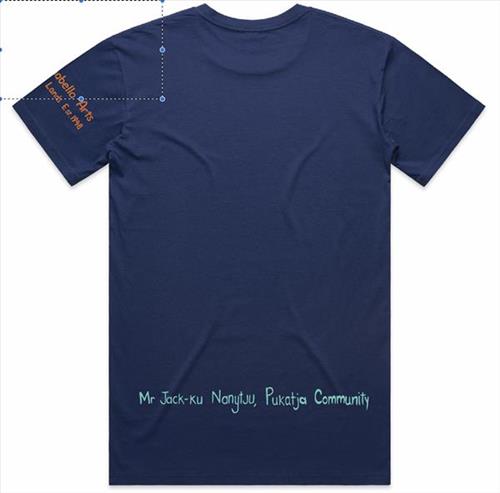
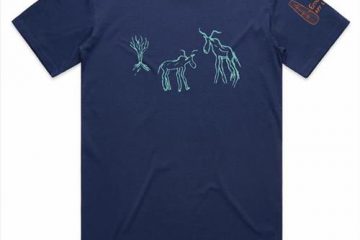
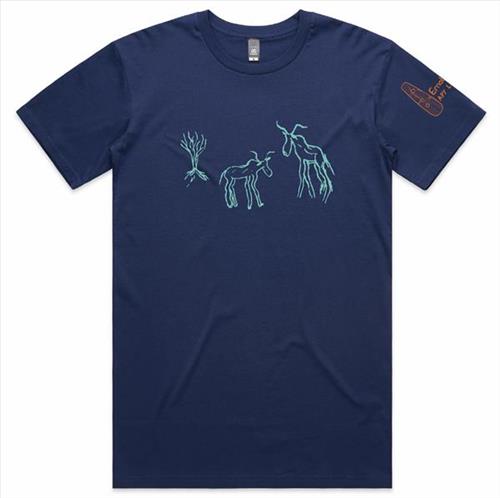
Nanytju – Horse T-Shirt by Rupert Jack

Mr Jack was a stockman in his younger days. He likes to tell stories about his time working on nearby cattle stations and as a young fella working on the sheep station at the Ernabella Mission. Mr Jack tells a story of how his father made a well with a wind mill to bring water up for the bullocks. ‘Kapi (water) from well and kuka (meat) and that bullock was good kuka. We didn’t need medicine or tablet, we had kuka!’

Our T-shirts are 100% cotton.

Original artwork created in Pukatja, APY Lands and screen printed by hand in Pathawilyangga/Glenelg, South Australia.

22124006686


Status: Stock


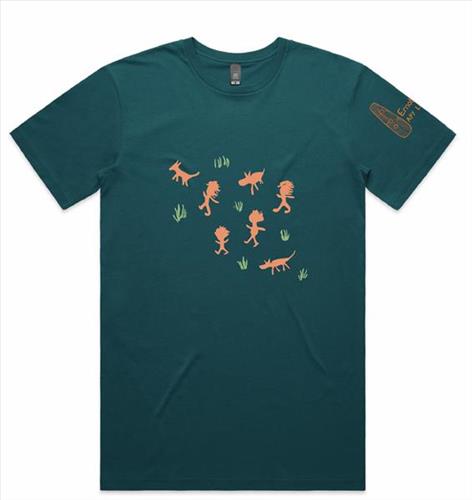
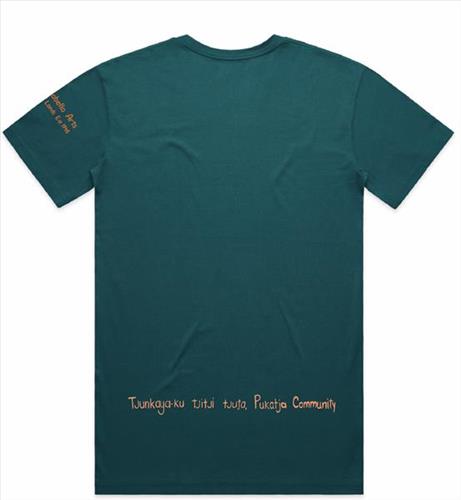
Tjitji Tjuta – Children T-Shirt by Tjunkaya Tapaya OAM

Tjunkaya grew up at the Ernabella Mission and is a highly respected senior leader in the community. The Pitjantjatjara concept of nintitjaku means to teach, show or pass down. This is something Tjunkaya is deeply passionate about and pursues through her work both inside and outside the art centre for tjitji tjuta (children) in Pukatja community.

 Our T-shirts are 100% cotton.

Original artwork created in Pukatja, APY Lands and screen printed by hand in Pathawilyangga/Glenelg, South Australia.

22124006685


Status: Stock


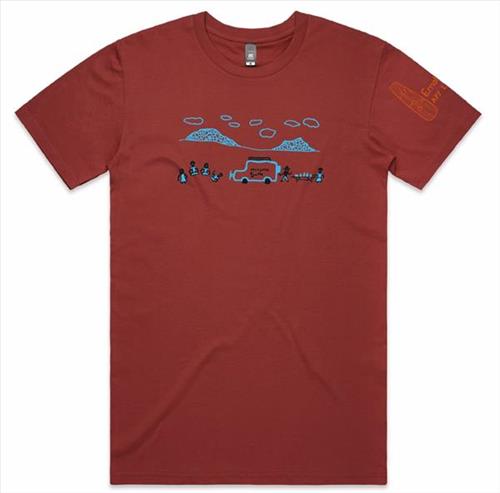
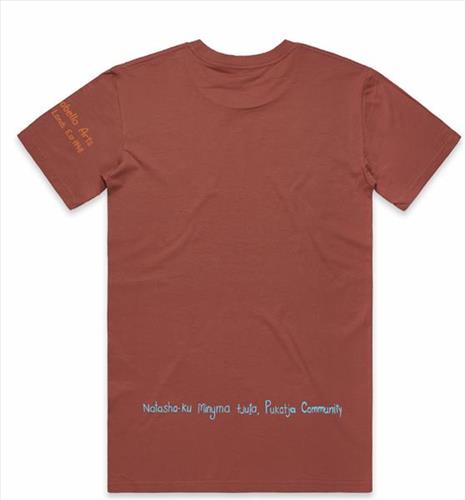
Minyma Tjuta – Women T-Shirt by Natasha Namatjira Carroll

Natasha’s narrative style of painting depicts community life with a quirky spin. She often paints on number plates and creates Toyota-shaped ceramic wall pieces. Our Minyma Tjuta t-shirt comes from one of Natasha’s numberplates and depicts a group of ladies going out bush in the Toyota for a picnic.


Our T-shirts are 100% cotton.

Original artwork created in Pukatja, APY Lands and screen printed by hand in Pathawilyangga/Glenelg, South Australia.

22124006289


Status: Stock


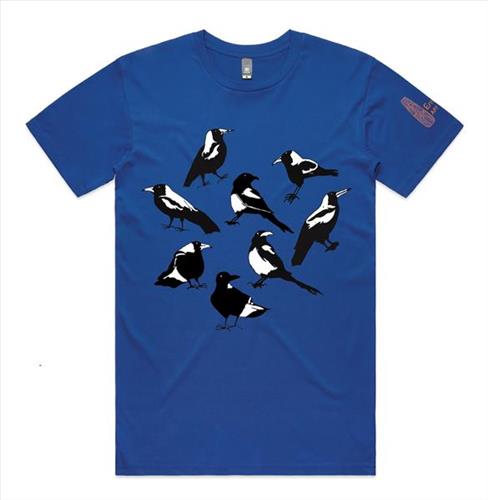
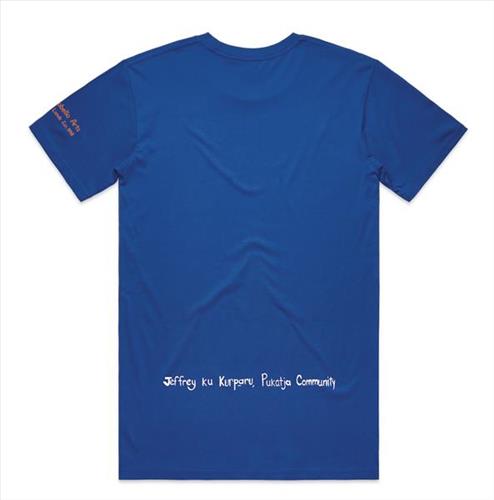
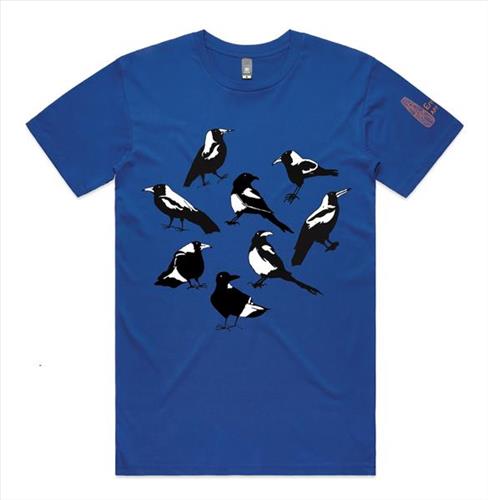
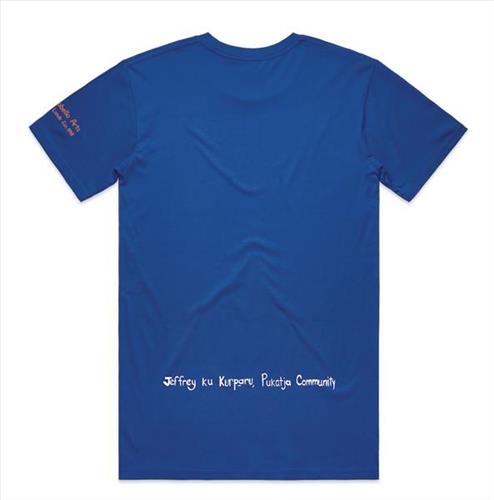
Kurparu – Magpie T-Shirt by Jeffrey Lewis

Jeffrey paints his favourite birds that live in the country around Ernabella. These include the kurparu (magpie), patilpa (Port Lincoln ringed neck parrot), kayarkiyarpa (galah), tjintir-tjintirpa (willy wag-tail), piil-piilpa (yellow throated minor) and kuurkuurpa (owls).

Our T-shirts our 100% cotton.

Original artwork created in Pukatja, APY Lands and screen printed by hand in Pathawilyangga/Glenelg, South Australia.

22124006287


Status: Stock


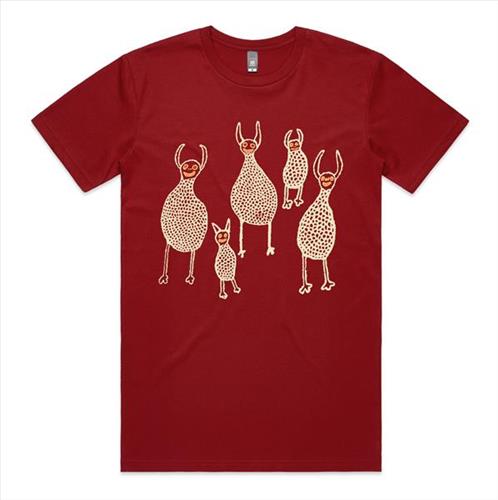
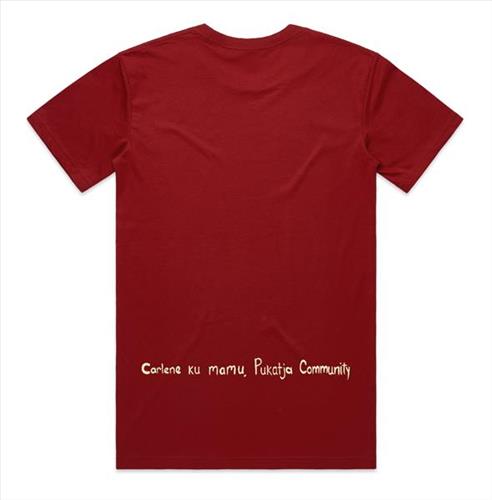
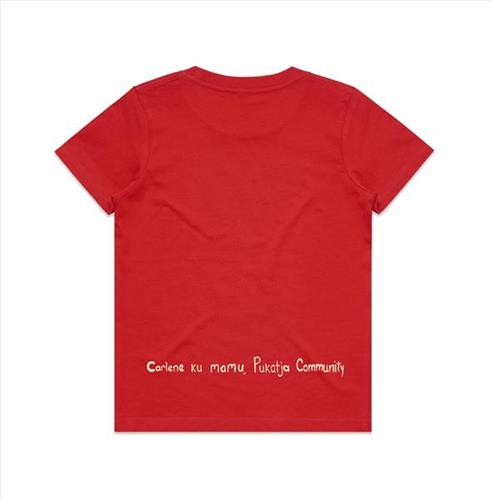
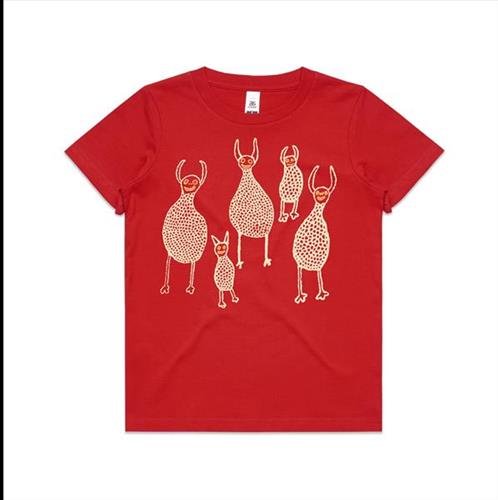
Mamu – Mischievous Spirits T-Shirt by Carlene Thompson

Carlene’s depiction of mamu has been told to her by her grandfather and grandmother. These mamu are the spirits of the ancestors who appear in the bush at night time. A mamu is a spirit which lives near waterholes. Mamu are usually depicted as bad spirits or monsters in traditional Pitjantjatjara stories, particularly those told to children by adults in order to scare them and thereby keep them close by and safe. Mamu can be dangerous especially for children, they are shape shifters and can appear like animals. Carlene’s mamu have scales, big fluffy ears, claws and a smile. When startled they make a growling sound like a nocturnal gecko called papangaurpa.

Our T-shirts our 100% cotton.

Original artwork created in Pukatja, APY Lands and screen printed by hand in Pathawilyangga/Glenelg, South Australia.


22124006291


Status: Stock


Kids Kurparu – Magpie T-Shirt by Jeffrey Lewis

Jeffrey paints his favourite birds that live in the country around Ernabella. These include the kurparu (magpie), patilpa (Port Lincoln ringed neck parrot), kayarkiyarpa (galah), tjintir-tjintirpa (willy wag-tail), piil-piilpa (yellow throated minor) and kuurkuurpa (owls).

Our T-shirts are 100% cotton.

Original artwork created in Pukatja, APY Lands and screen printed by hand in Pathawilyangga/Glenelg, South Australia.

22124006290


Status: Stock


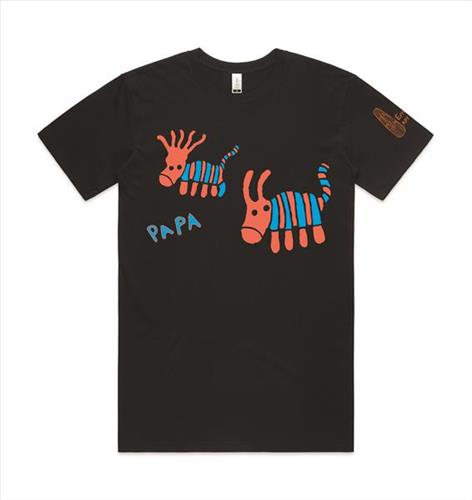
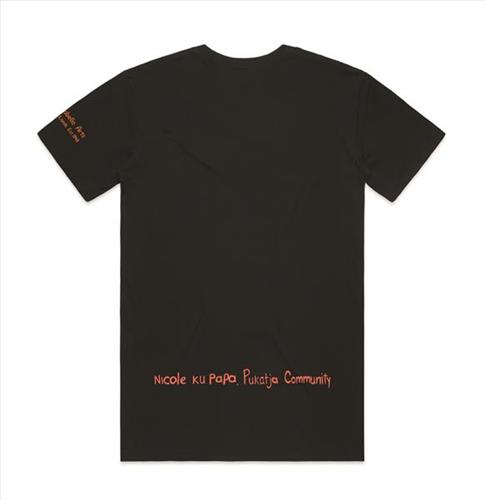
Papa – Dog T-Shirt by Nicole Rupert

Nicole’s grandmother, Nura Rupert, was a highly regarded Ernabella artist who passed away in 2016. Nura had a great sense of humour and wild imagination, and her artistic style was uniquely quirky. Nicole is inspired by her grandmother’s style and wants to keep her very original interpretation of the world alive in her own artworks. One of Nura’s favourite stories to paint was about all the camp dogs in Ernabella. ‘Papa tjuta ngura uwankara’ she used to say ‘there are many dogs everywhere!’. Some people have as many as ten dogs each as companions. This is Nicole’s depiction of the Ernabella camp dogs.

Our T-shirts our 100% cotton.

Original artwork created in Pukatja, APY Lands and screen printed by hand in Pathawilyangga/Glenelg, South Australia.


22124006293


Status: Stock


Kids Mamu – Mischievous Spirits T-Shirt by Carlene Thompson

Carlene’s depiction of mamu has been told to her by her grandfather and grandmother. These mamu are the spirits of the ancestors who appear in the bush at night time. A mamu is a spirit which lives near waterholes. Mamu are usually depicted as bad spirits or monsters in traditional Pitjantjatjara stories, particularly those told to children by adults in order to scare them and thereby keep them close by and safe. Mamu can be dangerous especially for children, they are shape shifters and can appear like animals. Carlene’s mamu have scales, big fluffy ears, claws and a smile. When startled they make a growling sound like a nocturnal gecko called papangaurpa.

Our T-shirts are 100% cotton.

Original artwork created in Pukatja, APY Lands and screen printed by hand in Pathawilyangga/Glenelg, South Australia.


11194005107


Status: Stock


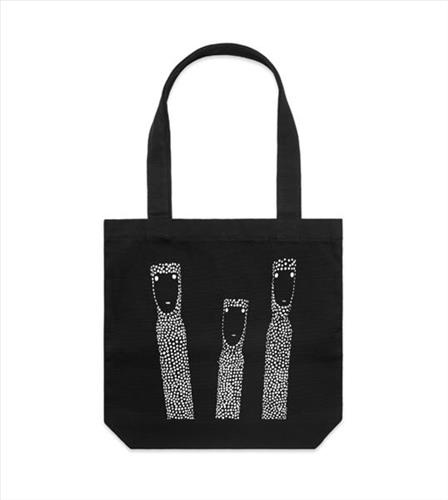
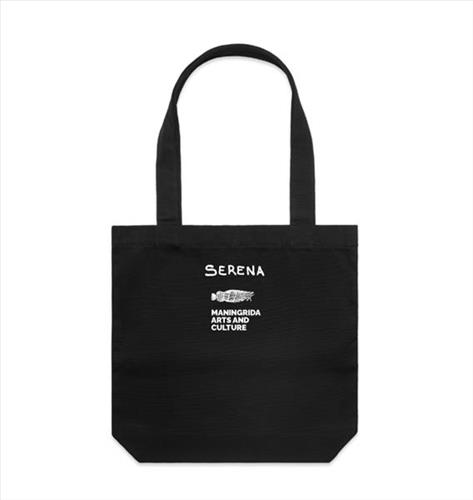
WARRABURNBURN Tote

In Burarra and Gun-nartpa languages the figure represented in this artwork is generally known as a wangarra ‘ghost spirit’. For the Warrawarra clan ghost spirits have their own particular characteristics and their own name – Warraburnburn.

The Warraburnburn and the closely related Galabarrbarr spirit (owned by the Balkarranga clan) are also manikay song topics.  The spirits are related to each other as maternal grandparent and grandchild, just as the people of Warrawarra and Balkarranga are. The dancing of the two ghost spirit figures forms the finale performance for funerals, and is the final goodbye to a deceased family member.

In many ways the Warraburnburn and Galabarrbarr ghost spirits are like people. They emerge from the patches of jungle on Warrawarra and Balkarranga country in the late afternoon and go hunting in family groups of men, women and children. They stay in contact with each other by calling out as the men hunt for fish and the women walk with their dillybags looking for vegetable food. 

The ghost spirits are associated closely with white ochre and artists commonly paint the bodies of carved figures in white. Different types of ghost spirit wear different patterns. Warraburnburn is decorated with uniform white dots while others are painted white all over. Some ghost spirits are shown with a design painted on their chest infilled with rarrk ‘cross-hatching’, the same designs that are painted onto japi an-guyinda ‘male initiations’. 

They also have supernatural characteristics including superhuman size (jarra anbaykarda ‘super tall’). They know the country intimately – some are malevolent towards humans and will lead people astray, taking them to unfamiliar and dangerous places. These malevolent spirits are likened to an-muburda ‘sorcerers’ and can conduct dangerous rituals that cause harm to people. Others are benign and will lead humans back to familiar paths and their own camps.
11194005106


Status: Stock


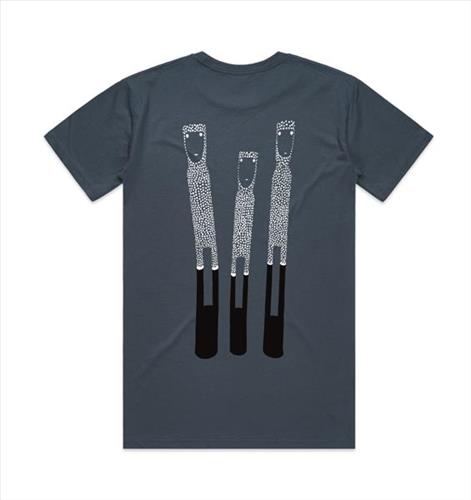
WARRABURNBURN Tee

In Burarra and Gun-nartpa languages the figure represented in this artwork is generally known as a wangarra ‘ghost spirit’. For the Warrawarra clan ghost spirits have their own particular characteristics and their own name – Warraburnburn.

The Warraburnburn and the closely related Galabarrbarr spirit (owned by the Balkarranga clan) are also manikay song topics.  The spirits are related to each other as maternal grandparent and grandchild, just as the people of Warrawarra and Balkarranga are. The dancing of the two ghost spirit figures forms the finale performance for funerals, and is the final goodbye to a deceased family member.

In many ways the Warraburnburn and Galabarrbarr ghost spirits are like people. They emerge from the patches of jungle on Warrawarra and Balkarranga country in the late afternoon and go hunting in family groups of men, women and children. They stay in contact with each other by calling out as the men hunt for fish and the women walk with their dillybags looking for vegetable food. 

The ghost spirits are associated closely with white ochre and artists commonly paint the bodies of carved figures in white. Different types of ghost spirit wear different patterns. Warraburnburn is decorated with uniform white dots while others are painted white all over. Some ghost spirits are shown with a design painted on their chest infilled with rarrk ‘cross-hatching’, the same designs that are painted onto japi an-guyinda ‘male initiations’. 

They also have supernatural characteristics including superhuman size (jarra anbaykarda ‘super tall’). They know the country intimately – some are malevolent towards humans and will lead people astray, taking them to unfamiliar and dangerous places. These malevolent spirits are likened to an-muburda ‘sorcerers’ and can conduct dangerous rituals that cause harm to people. Others are benign and will lead humans back to familiar paths and their own camps.