221282291356


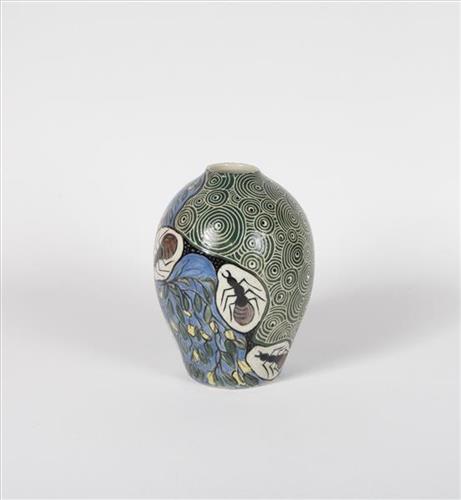
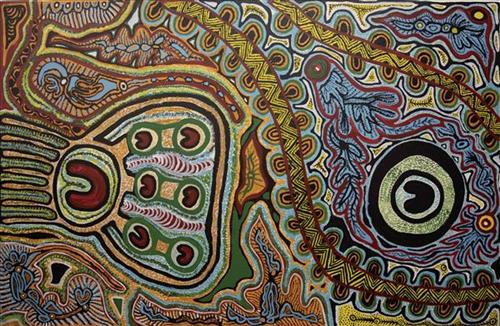
Tjala / Honey Ants

Tjala or honey ants live in nests about a metre underground beneath mulga trees, and they are a highly favoured food source. The tjala tunnels that lead down to the ants’ nests are called nyinantu, and the larvae are called ipilyka-ipilyka. After the rain when the ground is soft the women go digging for tjala by looking for the drill holes under the trees. They then use shovels and crowbars to dig down following the tunnels to find the tjala inside. Anangu suck the delicious rich honey-like liquid from the distended abdomen of the tjala. The story of the tjala is told across the Northern Territory into South Australia and is an important link between Anangu mythology and inter-dependence on the environment.
221282298487


Kungkarangkalpa / Seven Sisters

Kungkarangkalpa means the Seven Sisters. This is an extensive creation story that relates to the Pleiades constellation in the southern hemisphere. The story traverses Australia taking on different forms, however local women are privy to the part of the story which takes place in the country near Ernabella. For this part of the story, the man called Nyiru is chasing the sisters as he wants to sleep with the oldest sister. All the younger sisters are deeply afraid of him. As Nyiru is chasing the sisters, he tries to catch them by using magic to turn himself into the most tempting bush tomatoes for the sisters to eat and the most beautiful ili (fig) tree for the sisters to camp under. However, the sisters are aware of his magic and go hungry and run through the night rather than be caught by Nyiru. Eventually, to escape Nyiru, the sisters fly into the sky where they turn into stars and form the constellation.

221282298640


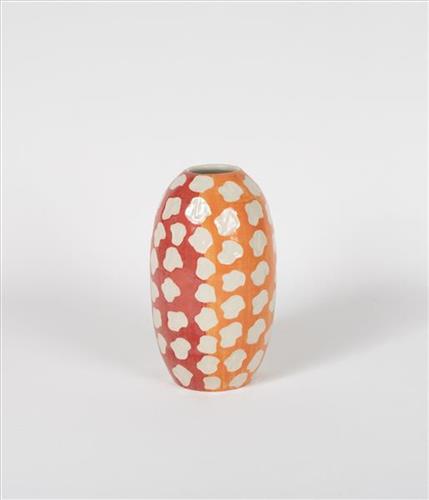
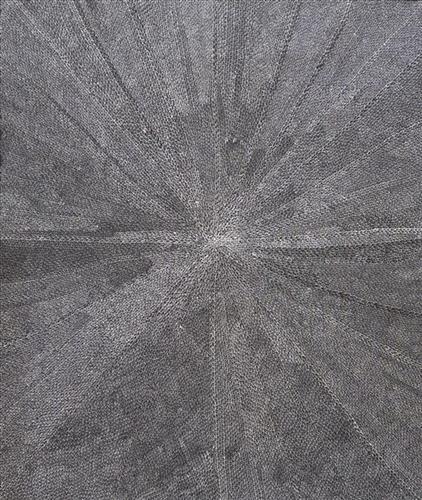
Ngayuku Walka / My Design

Walka means design or pattern. Artists use this title to describe artworks that are pattern based rather than descriptive or telling a story.

221282300122


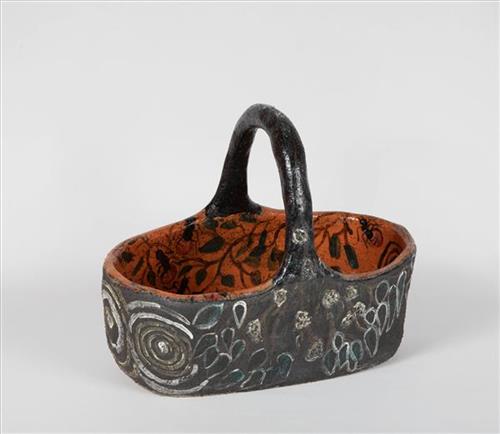
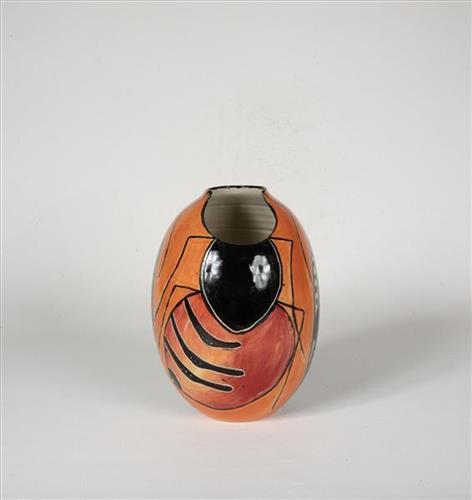
Tjala / Honey Ants

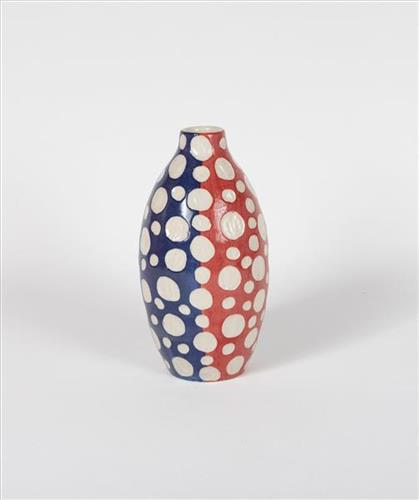
This ceramic basket was hand built by Lynette to her own design.

Tjala or honey ants live in nests about a metre underground beneath mulga trees, and they are a highly favoured food source. The tjala tunnels that lead down to the ants’ nests are called nyinantu, and the larvae are called ipilyka-ipilyka. After the rain when the ground is soft the women go digging for tjala by looking for the drill holes under the trees. They then use shovels and crowbars to dig down following the tunnels to find the tjala inside. Anangu suck the delicious rich honey-like liquid from the distended abdomen of the tjala. The story of the tjala is told across the Northern Territory into South Australia and is an important link between Anangu mythology and inter-dependence on the environment.
221282300147


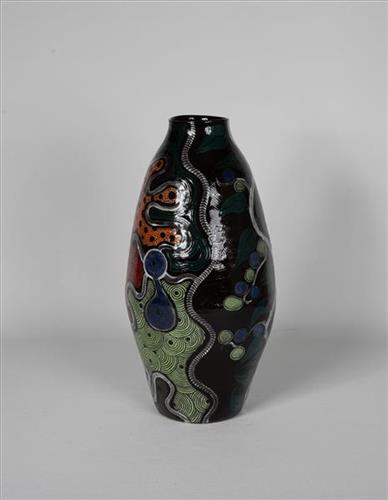
Kungkarangkalpa / Seven Sisters

Kungkarangkalpa means the Seven Sisters. This is an extensive creation story that relates to the Pleiades constellation in the southern hemisphere. The story traverses Australia taking on different forms, however local women are privy to the part of the story which takes place in the country near Ernabella. For this part of the story, the man called Nyiru is chasing the sisters as he wants to sleep with the oldest sister. All the younger sisters are deeply afraid of him. As Nyiru is chasing the sisters, he tries to catch them by using magic to turn himself into the most tempting bush tomatoes for the sisters to eat and the most beautiful ili (fig) tree for the sisters to camp under. However, the sisters are aware of his magic and go hungry and run through the night rather than be caught by Nyiru. Eventually, to escape Nyiru, the sisters fly into the sky where they turn into stars and form the constellation.

221282300120


Tjala / Honey Ants

Tjala or honey ants live in nests about a metre underground beneath mulga trees, and they are a highly favoured food source. The tjala tunnels that lead down to the ants’ nests are called nyinantu, and the larvae are called ipilyka-ipilyka. After the rain when the ground is soft the women go digging for tjala by looking for the drill holes under the trees. They then use shovels and crowbars to dig down following the tunnels to find the tjala inside. Anangu suck the delicious rich honey-like liquid from the distended abdomen of the tjala. The story of the tjala is told across the Northern Territory into South Australia and is an important link between Anangu mythology and inter-dependence on the environment.
221282300118


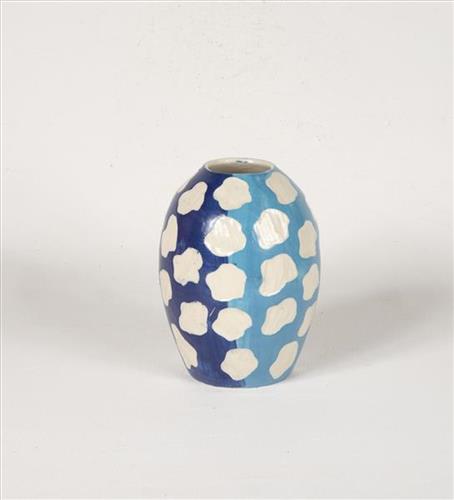
Ngayuku Walka / My Design

Walka means design or pattern. Artists use this title to describe artworks that are pattern based rather than descriptive or telling a story.

221282300117


Ngayuku Walka / My Design

Walka means design or pattern. Artists use this title to describe artworks that are pattern based rather than descriptive or telling a story.

220982303012


Ntang Native Seeds

The seeds are collected under a tree by laying a tarp on the ground and hitting the tree continuously until most of the seeds have fallen. Once the seeds are collected they are then ground with a mortar and grinding stone.

A number of these grinding stones have been in families for generations. Once seeds are ground, water is added and mixed until a damper like substance is formed and placed under the coals until cooked.

225482309918


Wandjina, Gyorn Gyorn & Unguds (cloud and rain spirits, Bradshaw & totems)

The Wandjina spirits are highly respected by the people of Mowanjum. The Wandjinas brought the law, culture and language. The people of Mowanjum believe that the first Wandjina was called Idjair who lives in the Milky Way and is the father of all Wandjinas. The Wandjina Wallungunda was Idair’s first son; he created the Earth and all life upon it. After he created the first human beings, the Gyorn Gyorn people, Wallungunda traveled back to Idjair to bring back more Wandjinas to give the Gyorn Gyorn people laws to live by. Today the Gyorn Gyorns are known to give our corroboree and became hunters, collectors and gatherers.The Wandjina is highly respected by the people because it gave the law, culture and language. The Unguds represent the dreaming of the people which the Wandjina has given. Before birth, the Ungud is given to the father or the grandfather of a child. It way come through dreams, or it may come as a living animal. The animal becomes a gift from the Wandjina to the unborn child which the child belongs to. When the child dies it will go back to being that animal. Today every individual has their own animal.