115682354788


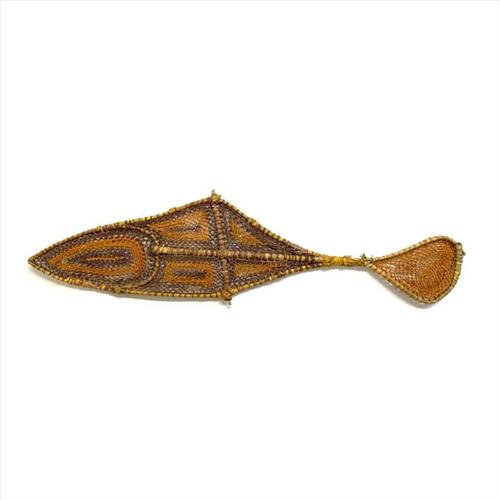
Woven Barramundi

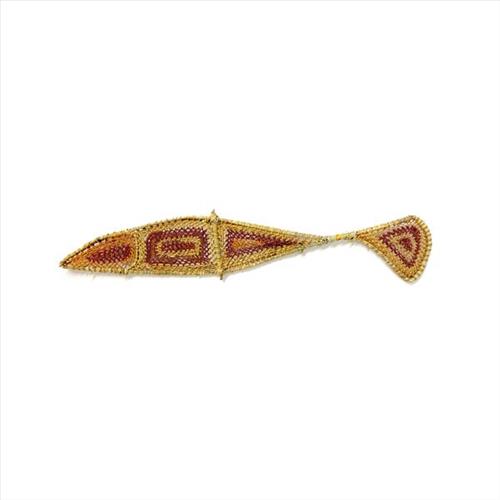
Aboriginal art in Ramingining, Central Arnhem Land is commonly illustrated through designs and images of animals, plants, and landscape. These motifs commonly reflect the artists ancestral inheritance and their dreamings and are referred to as totems.

For this weaving, the artist has created a barramundi. 

115682354787


Woven Barramundi

Aboriginal art in Ramingining, Central Arnhem Land is commonly illustrated through designs and images of animals, plants, and landscape. These motifs commonly reflect the artists ancestral inheritance and their dreamings and are referred to as totems.

For this weaving, the artist has created a barramundi. 

115682354786


Woven Barramundi

Aboriginal art in Ramingining, Central Arnhem Land is commonly illustrated through designs and images of animals, plants, and landscape. These motifs commonly reflect the artists ancestral inheritance and their dreamings and are referred to as totems.

For this weaving, the artist has created a barramundi. 

377810582354708


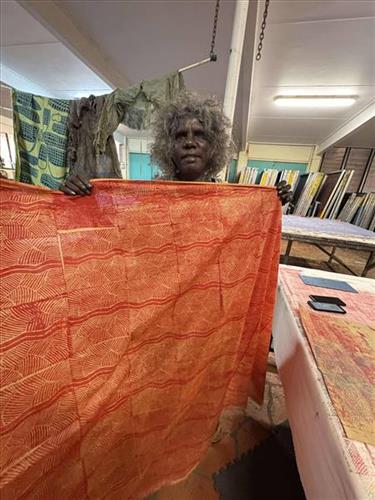
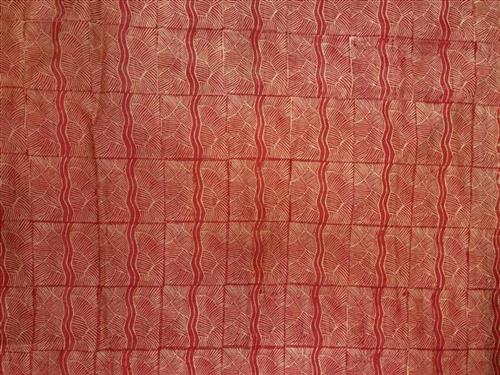
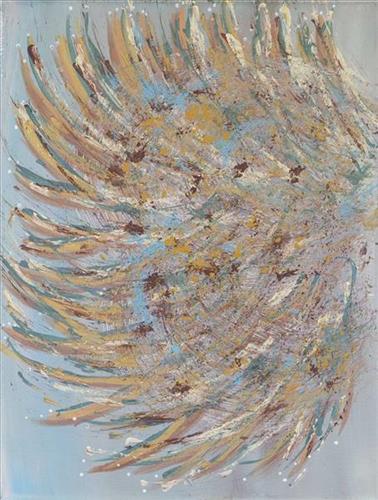
Kunkurra (Spiral Wind) – Margot

Margot has depicted kunkurra, the spiralling wind associated with several sites in the Kardbam clan. On one level, this design can be interpreted as a depiction of the kinds of mini-cyclones common during the wet season in Arnhem Land. Kunkurra also relates specifically to a site called Bilwoyinj, near Mankorlod, on the artist’s clan estate.

At this site, two of the most important Kuninjku creation beings, a father and son known as na-korrkko, are believed to have hunted and eaten a goanna. They left some of the goanna fat behind at the site, which turned into the rock that still stands there today.

Bilwoyinj site is also a ceremonial ground for a ceremony called Yabbaduruwa, a major ceremony owned by the Yirridja patrimoiety. The Yabbaduruwa ceremony is primarily concerned with initiation, land ownership and promoting the cyclical regeneration of the human and natural worlds.

This fabric has been dyed on country using natural Arnhem Land botanicals. It has been dyed by Maningrida pandanus artist, Jocelyn Koyole.

111582354862


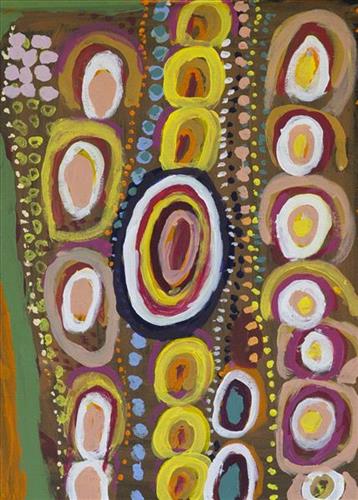
Tali, Tuwa (Sandhills)

The traditional lands of the Martu people encompass the Great Sandy Desert and Rudall River regions of Western Australia, an enormous tract dominated by distinctive red tali, or tuwa (sandhills). These sandhills present an unforgiving landscape; sparse vegetation covers a seemingly never ending expanse of dunes, and yet these lands and the location of resources within them was known intimately by its pujiman (traditional, desert dwelling) inhabitants. At this time, Martu traversed very large distances annually in small family groups, moving from water source to water source through the harsh desert landscape with incredible stamina and resourcefulness. Travel was often undertaken at night, and when travelling during the day, Martu wore yakipiri (woven bark sandals) to protect their feet from the hot desert sand.

111582354854


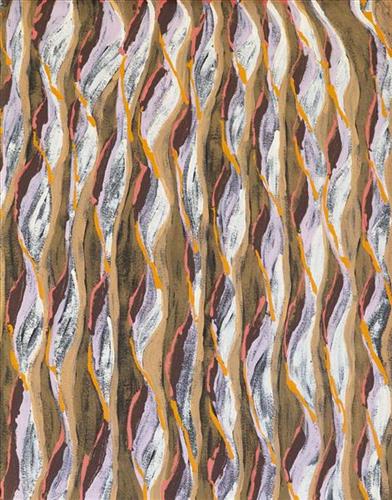
Spinifex – Kathleen Sorensen

“When I went back to County, I thought how beautiful the spinifex was. How the sun glazed against the spinifex. The County that I speak of is Jilukurru, my grandfather’s country.”

– Kathleen Maree Sorenson

Martu Country is dominated by striking permanent tali (sandhills) covered with spinifex, gums, and other trees and shrubs. Spinifex is a pale green, spiky grass that grows in clumps throughout the Central and Western Deserts of Australia. Some varieties yield edible seeds and another contains a resin. 

111582354853


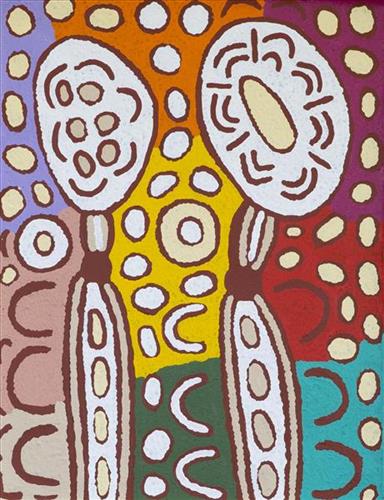
Punmu

“This area here is our Country. It’s our Country right here. We returned to our Country with a Toyota and a grader that made the road. A grader right up to here. Punmu is a good place. It’s a happy place to live. My spirit feels good living here. In pujiman (traditional, desert dwelling) time we lived in this area now. I’m happy with this life now, happy because I feel grounded by my Country. It’s important to hold onto the legacy of the ancestors. It’s up to the young people to carry it on now. For the ancestors past and present.”

– Minyawe Miller as translated by Kanyirninpa Jukurrpa


Punmu refers to a region and an Aboriginal community within its vicinity, located 670km North-East of Newman. Created during the return to Country movement of the 1980s, with the recognition of Martu land rights and native title, the community was named after a nearby Jukurrpa (Dreaming) story.

Punmu Aboriginal community sits on the edge of a large salt lake known as Nyayartakujarra, or Lake Dora. The lake runs south into Karlamilyi River (Rudall River). Surrounding Punmu are numerous fresh water soaks and the red tali (sandhills) typical of the area. The most frequently visited yinta (permanent springs) around Punmu include Wirlarra, Rawa, Yilyara, Jila-jila and Tuu-tuu.

The Country around Punmu features in several Jukurrpa stories. Of particular importance is the story of the Jila Kujarra (Two Snakes), one of the key Jukurrpa narratives for the Martu. Though the story belongs to Warnman people, it is shared across the Western Desert with several other language groups. The narrative centres on the travels of two snakes as they are pursued by the Niminjarra, spiritual ancestors of the Warnman people. 

Before transforming themselves into snakes, the Jila Kujarra were young brothers. As snakes, they began travelling home to their mother, but were intercepted by the Niminjarra, who tracked the Jila Kujarra to Paji, east of Nyayartakujarra (Lake Dora). Though the Jila Kujarra eluded their pursuers here by escaping under the lake at Paji, they were soon after speared and injured by two Pukurti (initiates with bundled hair) at Nyayartakujarra, who returned with the Niminjarra to cook the snakes at the site of Kumpupirntily (Kumpupintily, Lake Disappointment). As the Niminjarra cut down the length of the Jila Kujarra, the snake’s bladders were pierced, causing an explosion of scalding hot urine in which the Niminjarra all perished and became black rocks at the site. The spirits of the Jila Kujarra returned to their mother at Nyayartakujarra, where the mother and her sons entered the ground below Nyayartakujarra and remain to this day.

111582354851


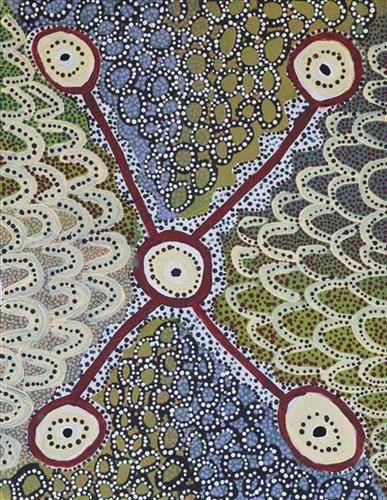
Marapinti (Marrapinti) – Daphne Larry

“Marapinti, close to Kiwirkurra. That’s my auntie’s ngurra (home Country, camp), her Jukurrpa (Dreaming). Most of that area is sandhill, with a big rock on the side. Very sacred place- no man can go. That’s a woman’s place. The Seven Sisters were there. They still there, they stayed after the Dreamtime. They always dance there, women meeting together. They used to dance like this [motions hands up and down]. There’s a tunnel inside the rocks, and bush tucker [from the Dreamtime] all around there inside, and two women- twins.

Sometimes I go dancing with my daughter there, with the other girls for culture, for learning. The old ladies have to go too- they boss for that Country. Sometimes we go for ranger trips too.”

– Daphne Larry


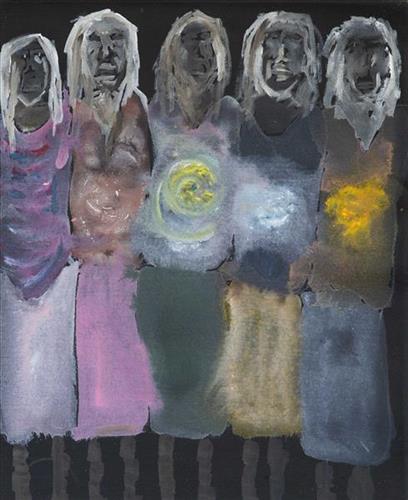
Marapinti is a rockhole located west of Kiwirrkurra in Western Australia’s Gibson Desert. The site is surrounded by many small rockholes and caves. Marapinti is an important site in the Minyipuru (Kanaputa, Jakulyukulyu, Seven Sisters) Jukurrpa (Dreaming). Minyipuru is a key creation narrative for Martu, Ngaanyatjarra, Pitjantjatjara and Yankunytjatjara people that is associated with the seasonal Pleiades star constellation. Beginning in Roebourne on the west coast of Western Australia, the story morphs in its movement eastward across the land, following a group of women as they walk, dance, and even fly from waterhole to waterhole. As they travel the women camp, sing, wash, dance and gather food, leaving markers in the landscape and creating landforms that remain to this day, such as groupings of rocks and trees, grinding stones and seeds. During the entirety of their journey the women are pursued by a lustful old man, Yurla, although interactions with other animals, groups of men, and spirit beings are also chronicled in the narrative.

Marapinti is the easternmost point visited by the Minyipuru in their journey across Martu Country. As they travelled, singing and dancing towards Pintupi Country, the Minyipuru created waters and landforms. On reaching Marapinti they performed ceremonies and pierced their septum with nose bones, a practice also known as marapinti. Today the Minyipuru can be seen at Marapinti as a group of rocks, sitting up like women.
111582354849


Marapinti (Marrapinti) – Daphne Larry

“Marapinti, close to Kiwirkurra. That’s my auntie’s ngurra (home Country, camp), her Jukurrpa (Dreaming). Most of that area is sandhill, with a big rock on the side. Very sacred place- no man can go. That’s a woman’s place. The Seven Sisters were there. They still there, they stayed after the Dreamtime. They always dance there, women meeting together. They used to dance like this [motions hands up and down]. There’s a tunnel inside the rocks, and bush tucker [from the Dreamtime] all around there inside, and two women- twins.

Sometimes I go dancing with my daughter there, with the other girls for culture, for learning. The old ladies have to go too- they boss for that Country. Sometimes we go for ranger trips too.”

– Daphne Larry


Marapinti is a rockhole located west of Kiwirrkurra in Western Australia’s Gibson Desert. The site is surrounded by many small rockholes and caves. Marapinti is an important site in the Minyipuru (Kanaputa, Jakulyukulyu, Seven Sisters) Jukurrpa (Dreaming). Minyipuru is a key creation narrative for Martu, Ngaanyatjarra, Pitjantjatjara and Yankunytjatjara people that is associated with the seasonal Pleiades star constellation. Beginning in Roebourne on the west coast of Western Australia, the story morphs in its movement eastward across the land, following a group of women as they walk, dance, and even fly from waterhole to waterhole. As they travel the women camp, sing, wash, dance and gather food, leaving markers in the landscape and creating landforms that remain to this day, such as groupings of rocks and trees, grinding stones and seeds. During the entirety of their journey the women are pursued by a lustful old man, Yurla, although interactions with other animals, groups of men, and spirit beings are also chronicled in the narrative.

Marapinti is the easternmost point visited by the Minyipuru in their journey across Martu Country. As they travelled, singing and dancing towards Pintupi Country, the Minyipuru created waters and landforms. On reaching Marapinti they performed ceremonies and pierced their septum with nose bones, a practice also known as marapinti. Today the Minyipuru can be seen at Marapinti as a group of rocks, sitting up like women.