Ara Irititja
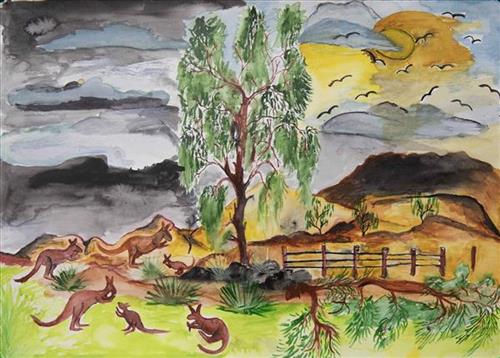
They went hunting. One man was waiting for the other to hunt first. Hunting malu (kangaroo) for the family back at the camp.
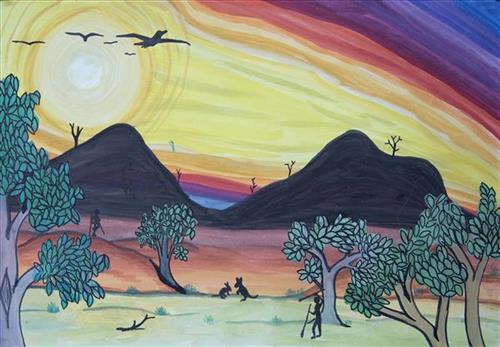
They went hunting. One man was waiting for the other to hunt first. Hunting malu (kangaroo) for the family back at the camp.
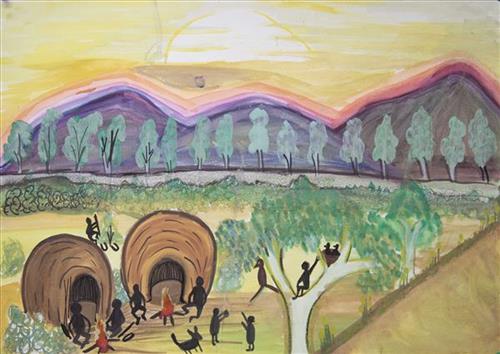
It’s a family in Ernabella, somewhere in the bush. They used to stay there near the creek.
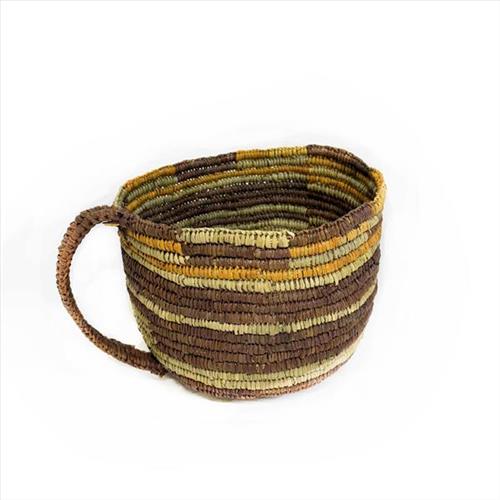
Janice found inspiration for this piece when a close family member returned from Singapore bearing gifts—one of which being a delightfully oversized tea cup. Janice is known for her unique artistic perspective, creating contemporary fibre works inspired by everyday items.
———————————————————————————————————————————————–
Yolŋu weavers of Arnhem Land craft both utilitarian and ceremonial objects using naturally sourced materials, with more recent works also including decorative pieces. The choice of fibre depends on the intended function of each piece.
One of the primary materials is the young, green leaves of the Pandanus spiralis tree, harvested with a long hook. The leaves are stripped of their prickles, and the smaller fibres are dried to produce a strong, resilient material. These fibres can be twisted, coiled, or combined using various techniques to create baskets (Bathi), dillybags (Mindirr), and mats—both in the modern flat style and the traditional conical style (Nganiyal).
Bula’bula weavers exclusively use natural dyes, derived from locally sourced roots, leaves and grasses. These pigments are extracted and infused into pandanus fibres by boiling over an open fire, producing the rich, vibrant colours characteristic of contemporary Yolŋu weavings.
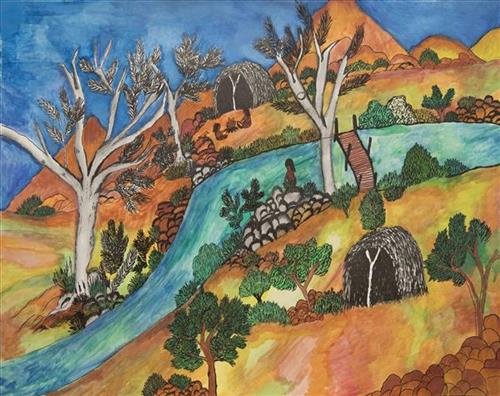
This is a story of how life was before. It’s a beautiful landscape without problems like we have today. There were no problems then, people were happy. They were connected as families. It shows what life was like for our people in the past before we had houses. Everything was silent, and all the animals were close by to the people. Everyone looked after the animals and the environment. People don’t have that life anymore.
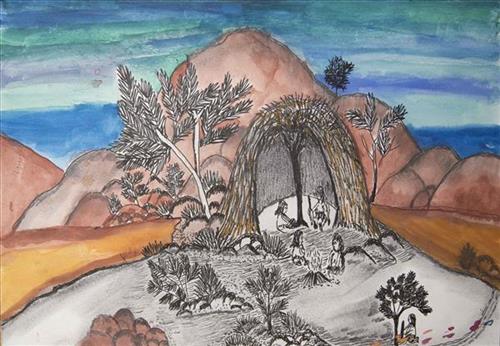
This is a story of how life was before. It’s a beautiful landscape without problems like we have today. There were no problems then, people were happy. They were connected as families. It shows what life was like for our people in the past before we had houses. Everything was silent, and all the animals were close by to the people. Everyone looked after the animals and the environment. People don’t have that life anymore.
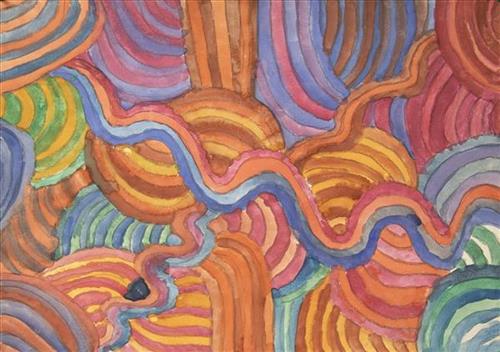
Artists use this title when they are depicting their Country. It might be a representation of a particular place or of different aspects of that area. The artist uses a combination of colour and design to indicate variations in the landscape. Inspiration is drawn from all elements of Country and might include bush tucker, water holes, meeting places, rock formation, birds or animals.
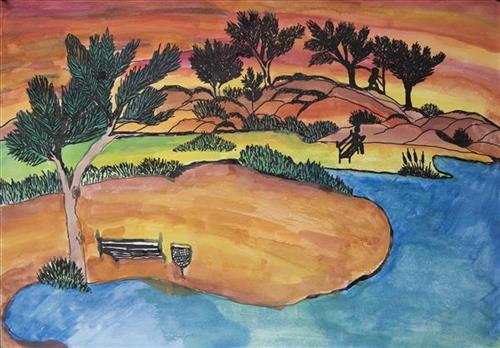
This is the favourite site for Aṉangu in the area. Everyone goes there for camping. Some men go there for footy training. The school kids go there for excursion.
I fell in love with this place when I was a kid in the early 1990’s and we used to go there on school trips. It used to be a nice big open space and we could see the red sand dune from a long way away. Now it’s all getting covered in buffel grass. This scene is at sunset when all the colours are changing on the rocks.
I put myself in the painting because I can see everything that I’m painting. The little girl is sitting with me and I’m showing her. There’s a wati (man) teaching a young boy football. The other ladies are teaching the parimpa (whitefellas) about cooking malu wipu (kangaroo tail). So this is a story about Aṉangu teaching others and passing on our knowledge and skills and stories.

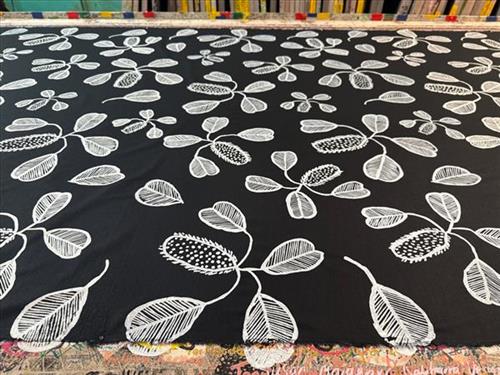
This design depicts the cheeky yam, which is found on the artist’s country, near the outstation of Mumeka in central Arnhem Land. Yams are an important bush food that are collected during the wet season.
Unlike other yams that can be eaten roasted, the cheeky yam can be poisonous if not properly prepared. The preparation process of the yam traditionally takes two days. Firstly, the yams are dug up with a digging stick and boiled over a fire. They are then peeled and sliced into thin strips, which are placed in a special dillybag woven by women from pandanus leaves. The yam-laden dillybag is then strung from an overhanging branch into a river, so the bag just touches the flowing fresh water. The cheeky yams are left like this overnight to allow the running water to remove the toxins. The next morning, people return and collect the dillybag, and leave the yam pieces in full sunlight to dry out. Finally, when the yam pieces have dried in the sun for a day, they are ready to eat.

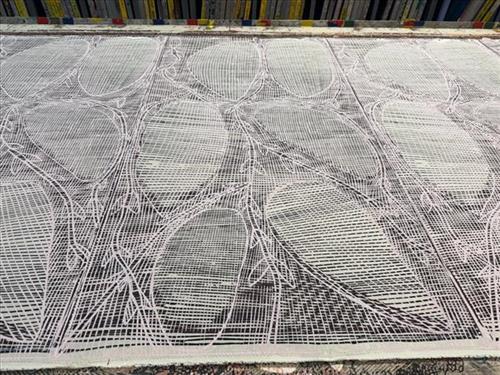
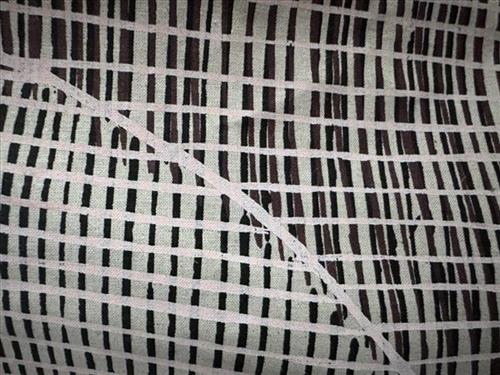
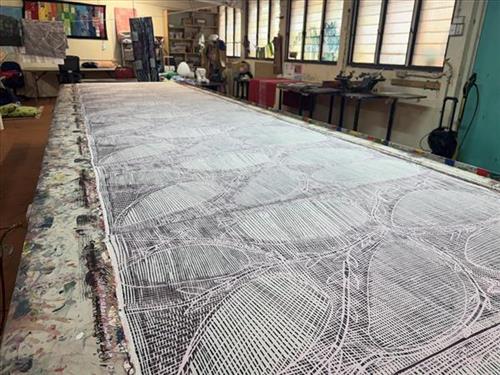
Susan Marawarr is a Kuninjku artist from the Kurulk clan whose country lies around the outstation of Mumeka in central Arnhem Land. In this design, she has depicted karrbarda (long yam) on her traditional country, the kunwardde (stone country).
The large stones represent the kunwardde rocky outcrops, which are elevated above the flat floodplains. The vines creeping around the large rocks are from the karrbarda. Women dig up karrbarda with kungarrndutj (digging sticks) and they are then cooked in the ashes of the fire to be eaten.
These yams are purple on the saltwater side of country and on inland freshwater country they are white. Karrbarda are an important manme (bush food) that are collected during the wet and dry seasons.