377810582360647


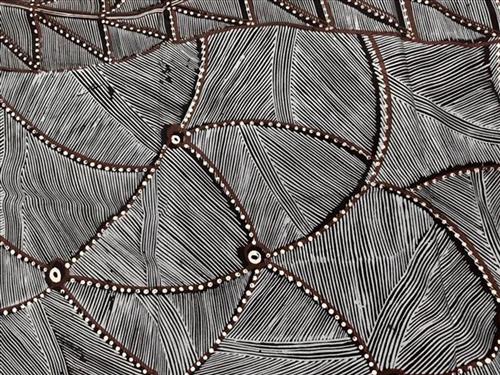
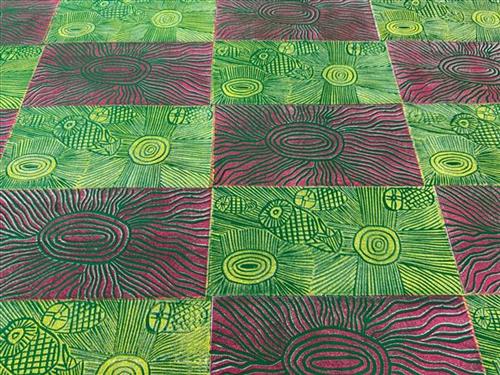
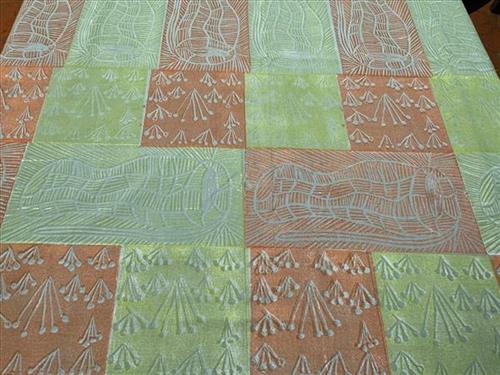
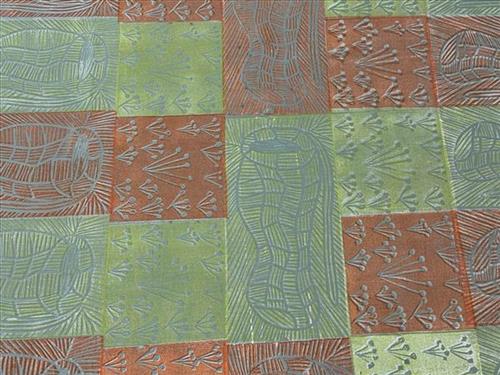
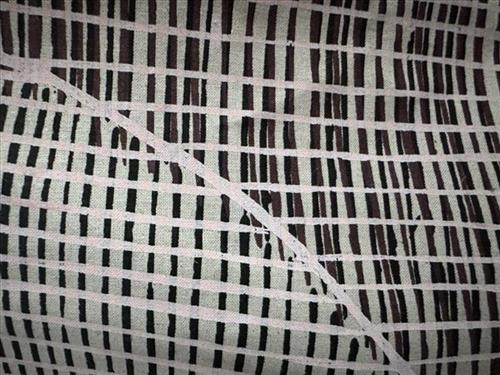
Kunwardde dja Karrbarda (Rocks and Yam Vine)

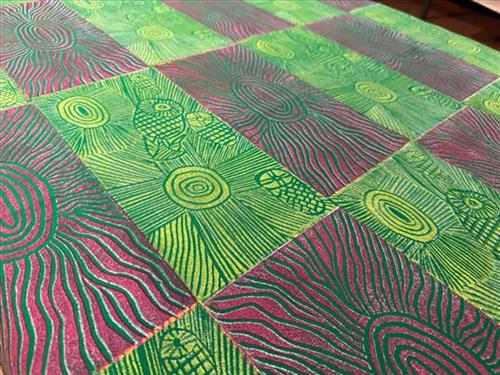
Susan Marawarr is a Kuninjku artist from the Kurulk clan whose country lies around the outstation of Mumeka in central Arnhem Land. In this design, she has depicted karrbarda (long yam) on her traditional country, the kunwardde (stone country).

The large stones represent the kunwardde rocky outcrops, which are elevated above the flat floodplains. The vines creeping around the large rocks are from the karrbarda. Women dig up karrbarda with kungarrndutj (digging sticks) and they are then cooked in the ashes of the fire to be eaten.

These yams are purple on the saltwater side of country and on inland freshwater country they are white. Karrbarda are an important manme (bush food) that are collected during the wet and dry seasons.

377810582360645


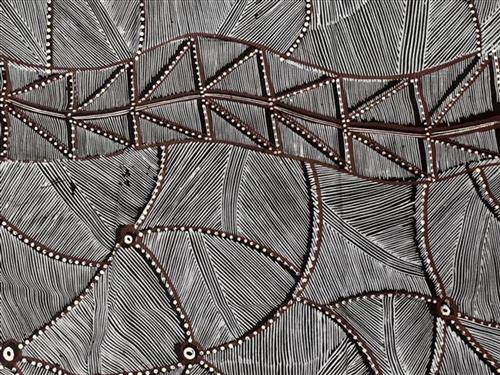
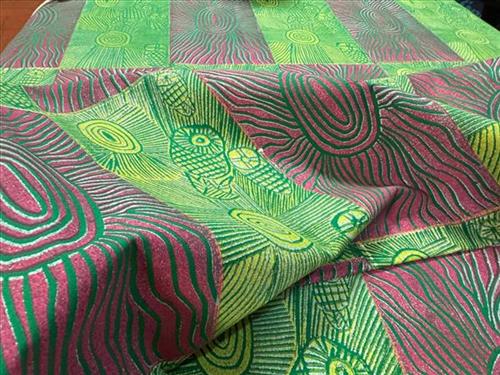
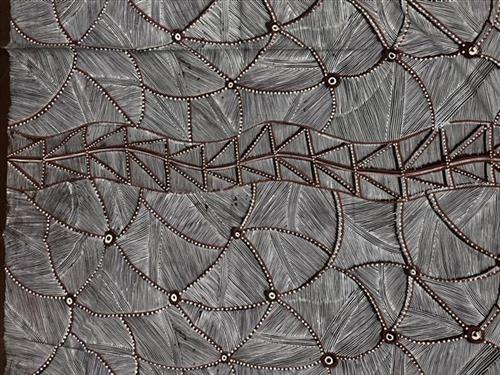
Kunkurra (Spiral Wind)

‘My designs, they are all alive living up in my head’- Janet Marawarr

Janet Marawarr has depicted kunkurra, the spiralling wind associated with several sites in the Kardbam clan. On one level, this design can be interpreted as a depiction of the kinds of mini-cyclones common during the wet season in Arnhem Land, where the artist lives. Kunkurra also relates specifically to a site called Bilwoyinj, near Mankorlod, on the artist’s clan estate.

At this site, two of the most important Kuninjku creation beings, a father and son known as na-korrkko, are believed to have hunted and eaten a goanna. They left some of the goanna fat behind at the site, which turned into the rock that still stands there today.

Bilwoyinj site is also a ceremonial ground for a ceremony called Yabbaduruwa, a major ceremony owned by the Yirridja patrimoiety. The Yabbaduruwa ceremony is primarily concerned with initiation, land ownership and promoting the cyclical regeneration of the human and natural worlds.

This is soft washed crepe de chine silk. 

The printing is near perfect but there are a few character flaws so we have given you a $50 discount on the per metre charge. (160/m for a 3 colour silk print) 

377810582360643


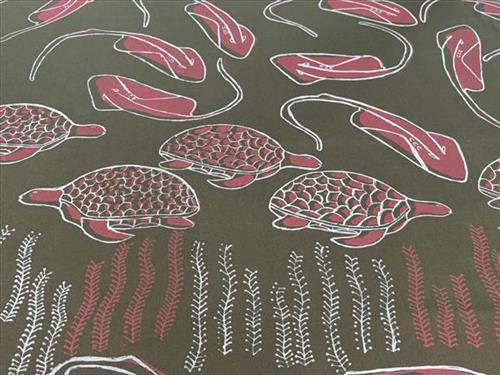
Mabbúlarr (Calm Still Water)

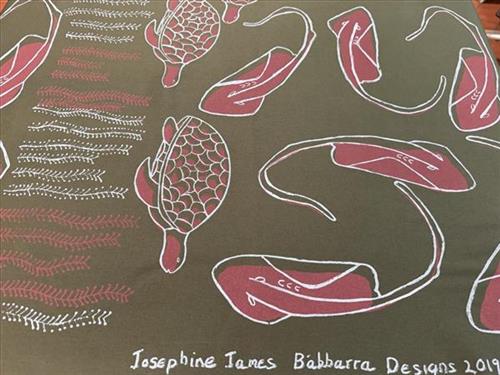
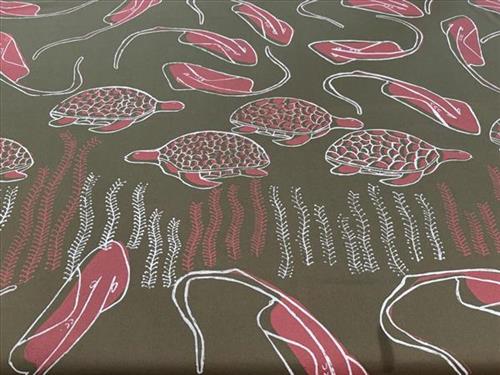
Mabbúlarr is the Ndjébbana word describing calm and stillness – both regarding people and the ocean.

This design tells the story of underwater life in the shallows. The turtle we call marláddja (green turtle, Chelonia mydas) and the stingray we call marnandjúbba (Cowtail Stingray, Pastinachus sephen).

‘When strong wind blows the sea is rough, when there’s no wind the sea is calm. We call that mábbularr. You can see through the water and look at the turtle and stingray eating karlómerr (sea grass) and dancing underwater to find their mate. When we go on the boat hunting, we go at times of mábbularr.

In the old days men used to hunt with a canoe and with traditional made harpoon.  Guided by our ancestors’ spirits they would paddle all day to find sea turtle and dugongs in the right places. The men had to be smart for the tide and know the weather to balance their canoes. They would go at times of mábbularr (calm), early morning in daytime or at night-time when there is no moon and the water glows. We call the night-time glimmer of phosphorescence mílarrng-milarrng. Today people still go hunting, it brings a lot of families together and they share eating down the beach.

We have songline for sea turtle, also men paint turtle on their back and dance turtle in the Míddjarn the same way turtle dance underwater. It is very important we look after our country and songline passed on from many generations’. Josephine James 2021

377810582360642


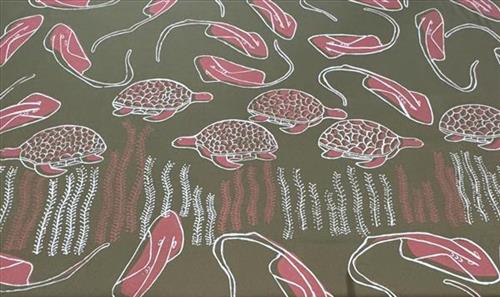
Mabbúlarr (Calm Still Water)

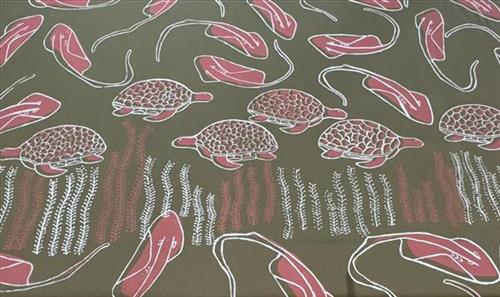
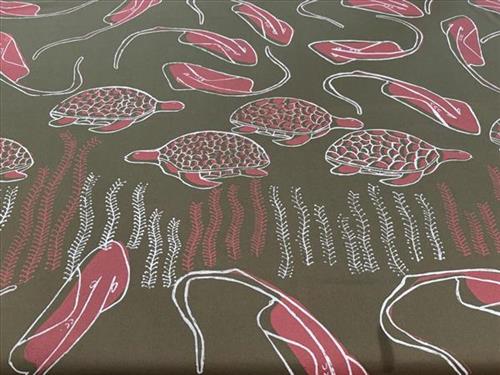
Mabbúlarr is the Ndjébbana word describing calm and stillness – both regarding people and the ocean.

This design tells the story of underwater life in the shallows. The turtle we call marláddja (green turtle, Chelonia mydas) and the stingray we call marnandjúbba (Cowtail Stingray, Pastinachus sephen).

‘When strong wind blows the sea is rough, when there’s no wind the sea is calm. We call that mábbularr. You can see through the water and look at the turtle and stingray eating karlómerr (sea grass) and dancing underwater to find their mate. When we go on the boat hunting, we go at times of mábbularr.

In the old days men used to hunt with a canoe and with traditional made harpoon.  Guided by our ancestors’ spirits they would paddle all day to find sea turtle and dugongs in the right places. The men had to be smart for the tide and know the weather to balance their canoes. They would go at times of mábbularr (calm), early morning in daytime or at night-time when there is no moon and the water glows. We call the night-time glimmer of phosphorescence mílarrng-milarrng. Today people still go hunting, it brings a lot of families together and they share eating down the beach.

We have songline for sea turtle, also men paint turtle on their back and dance turtle in the Míddjarn the same way turtle dance underwater. It is very important we look after our country and songline passed on from many generations’. Josephine James 2021

377810582360641


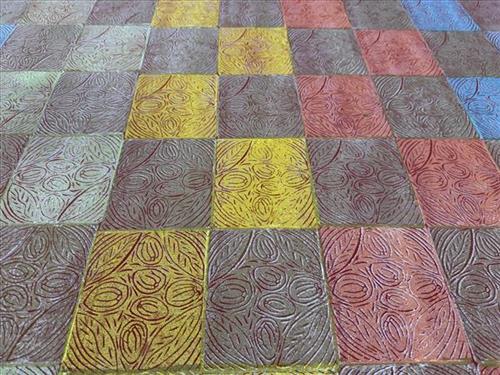
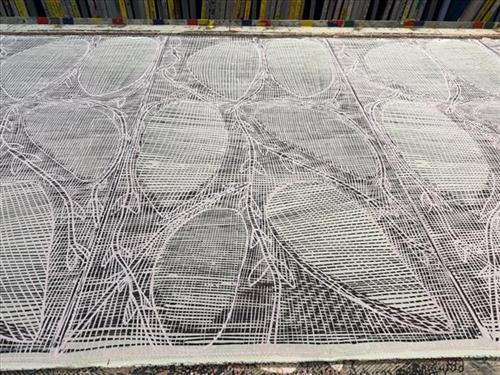
Bush Apples

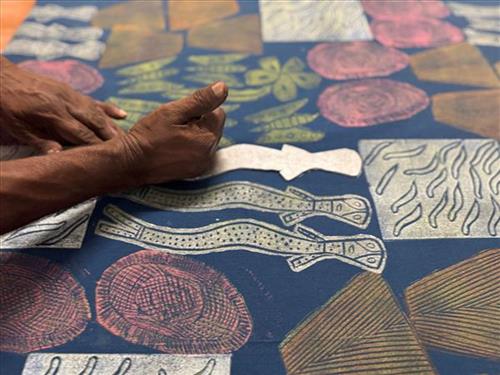
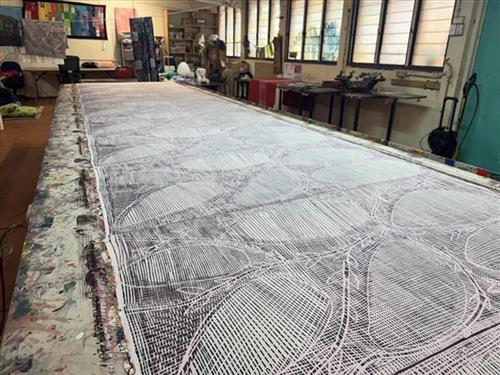
This fabric was created using the linocut printing technique.

The lino tile has been carved by the artist in Maningrida, and has been printed by hand using a variety of colours and layers. The linocut technique ensures each textile piece is a one-off, limited edition piece. Bábbarra Women’s Centre supports the economic independence of Indigenous women in the Arnhem Land community of Maningrida, Northern Territory, Australia. Designs created by the women at Bábbarra reflect strong cultural knowledge, which is passed down to younger generations through their textile design practice.

377810582360639


Marebu – Raylene Bonosn

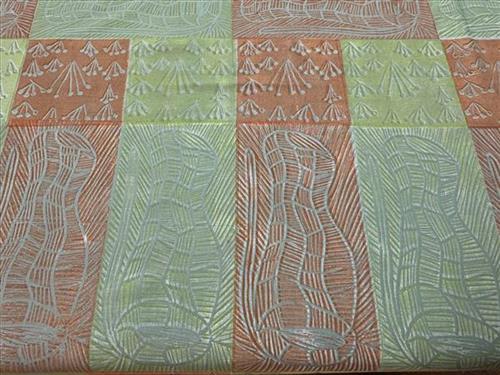
A ‘marebu’ is a hand-woven mat made of pandanus, often coloured with natural dyes. Marebu can be used as a floor mat, a fence to trap fish in waterways, a shield to cover babies from mosquitoes, a wrap for rinsing food in water, and a ceremonial skirt for women.

‘Marebu (pandanus floor mat) is used by lots of people for lots of things. When people go hunting, they use marebu to sit on and to put all the manme (food) they catch like freshwater fish and cheeky yam.

When the people are finished hunting, they can use the marebu to wrap up all the manme and carry it home to cook on the fire. You can put that marebu in the freshwater to wash it.

Marebu is also used and a bed to sleep on.

This design comes from my mother’s side and is a Kuninjku story.’

Link to ‘marebu’ definition – Njamed.com

https://njamed.com/entry/marebu/?tab=Dictionary

377810582360634


Mimih (spirit) and kunred (country)

This fabric depicts Janet’s grandmothers country. Her grandmothers djang (dreaming) of rolk (maggot) is mixed together with butterflies and pandanus mats in a playful pattern. 

‘Those mats are the special ones that only women use. There are also rock mimih, butterflies and kunwarrde ( rock) in this kunred (country)’. 

377810582360629


Kunmadj (dilly bag) and Kundalk (grass) – Temika

There are two distinct Lino print designs in this fabric. 

The first depicts a kunmadj (dillybag) made with Kundayarr (pandanus fibre). The second tile depicts Kundalk ( grass). 

This is Temika’s first Lino print design. She is the granddaughter of internationally acclaimed fibre and textile artist, Deborah Wurrkidj.

Works in fibre from the Maningrida region are widely recognised as some of the finest in Australia. Artists confidently push the boundaries of fibre craft and cultural expression, adapting traditional techniques and forms to produce strikingly inventive and aesthetically exquisite artworks.  Artists usually use kundayarr, pandanus spiralis, to weave decorative round or oblong mats, as well as the less common triangular and conical shapes. Weaving is physically hard work, now done only by women. They colour the pandanus using natural dyes made from the roots, leaves or flowers of plants within the weaver’s clan estate. 

377810582360615


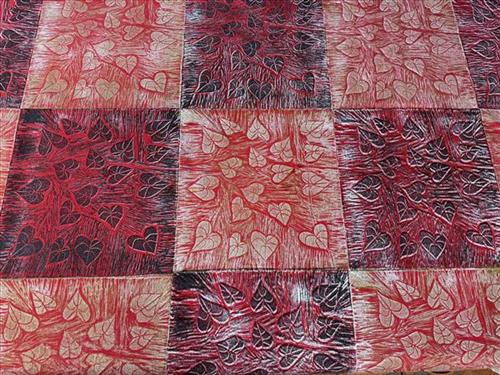
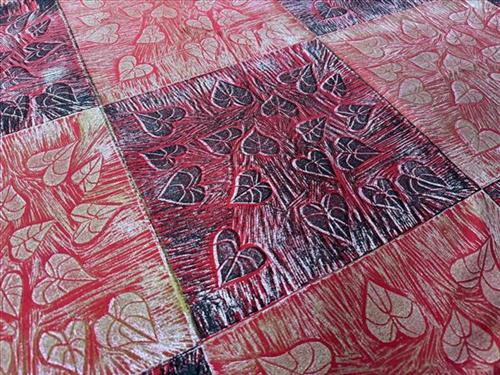
Yam Leaf

This fabric was created using the linocut printing technique. The Lino tile was carved by the artist in Maningrida and printed by hand using a variety of colours and layers. The linocut technique ensures each textile piece is a one-off, limited edition piece.

This botanical design features a yam leaf from the wild yam that grows around the swampy areas of Maningrida.

220982360529


Maisie Petyarre Bundey – Anhelengkw (Emu) Dreaming

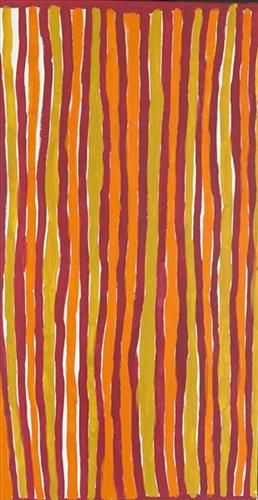
Anhelengkw (emu) dreaming is the breast body painting depicting the story of the mother emu who runs away and leaves the father emu to look after the eggs until they hatch, he then raises the chicks.

This story is passed down through Maisie’s family and celebrated in dance.