377810582367604


Marebu and Bush Dye – Deborah Wurrkidj

Deborah Wurrkidj is a Kuninjku artist from the Kurulk clan whose country lies around the outstation of Mumeka in central Arnhem Land. She is an accomplished artist working across mediums including painting, sculpture, weaving and textile design. 

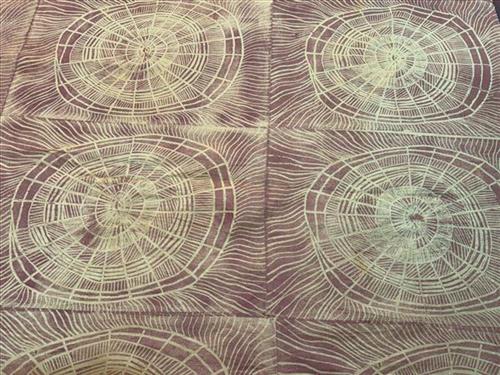
Deborah currently lives on her husbands country at  Kakodbebuldi where she is works from her home studio. Deborah dyes silk using locally harvested plants cooked over an open fire. She typically harvests yellow colour from the root of the man-kurdudjumuk plant (coelospermum reticulatum) which grows in sandy country near the flood plains. What follows is a laborious process to shave the root into a pot of boiling water and release the colour through hours of boiling. 

The print design is Marebu (woven pandanus mats).

Artists usually use kundayarr, pandanus spiralis, to weave decorative round or oblong mats, as well as the less common triangular and conical shapes. Weaving is physically hard work, now done only by women. They colour the pandanus using natural dyes made from the roots, leaves or flowers of plants within the weaver’s clan estate.

The radial woven patterns of the finest round mats appear to vibrate with colour, sometimes regarded as an aesthetic manifestation of deep cultural meaning, as there is a significant spiritual dimension to pandanus mats.

377810582367603


Djomi (Fresh Water Spirit)

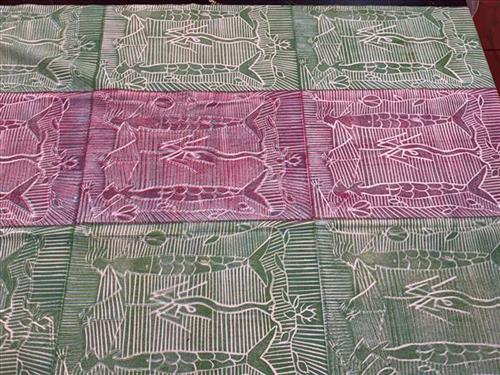
This design depicts the story of the artist’s ancestral dreaming, the Djomi fresh water spirit mermaid.

The Djomi figure is a mermaid like spirit with fish tail that lives in the fresh water stream that flows out to the sea cliff near Maningrida. Djomi is a known to be a very powerful fertility symbol.

‘If you go there you can get pregnant easily. Djomi has babies, and they can give others babies too. The Djomi spirit is so powerful, that women can end up with multiple babies at once, twins or sometimes even more. The Djomi spirits lay eggs near the sacred freshwater stream in Maningrida. Inside the eggs are human babies as well as young Djomi.

Men do not go near that swamp, because Djomi is so powerful that men might get pregnant there too. So men, they are too scared of that Djomi. When we visit the Djomi freshwater spring, we can hear young Djomi crying. They sound like normal babies crying, those Djomi spirits. They are looking for a mother.

This Djomi is my dreaming, I got permission from my djunguys to paint this Djomi design. For me I always ask my djunguy permission to paint, because that is our cultural way.

This design also depicts the fresh water lily leaves, and seaweed from the base of the sea floor.

377810582367601


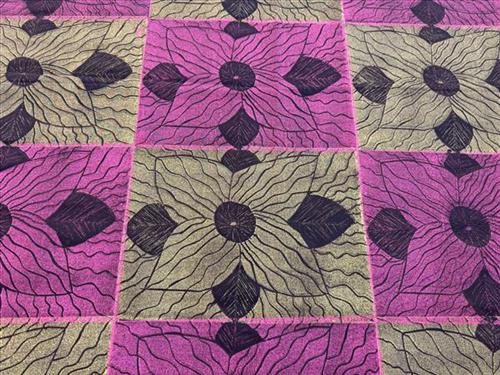
Wayuk (Waterlily)

Wayuk (Waterlily) Nymphaea violacea. 

The stem of wayuk is a popular bushfood and the beautiful flower is enjoyed across Arnhem Land. 

This fabric was created using the linocut printing technique. The lino tile has been carved by the artist in Maningrida, and has been printed by hand using a variety of colours and layers. The linocut technique ensures each textile piece is a one-off, limited edition piece. Bábbarra Women’s Centre supports the economic independence of Indigenous women in the Arnhem Land community of Maningrida, Northern Territory, Australia. Designs created by the women at Bábbarra reflect strong cultural knowledge, which is passed down to younger generations through their textile design practice.

377810582367599


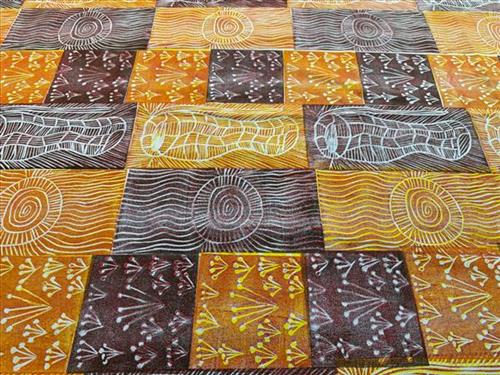
Kunmadj (dilly bag) and Kundalk (grass) – Temika

There are two distinct Lino print designs in this fabric. 

The first depicts a kunmadj (dillybag) made with Kundayarr (pandanus fibre). The second tile depicts Kundalk ( grass). 

This is Temika’s first Lino print design. She is the granddaughter of internationally acclaimed fibre and textile artist, Deborah Wurrkidj.

Works in fibre from the Maningrida region are widely recognised as some of the finest in Australia. Artists confidently push the boundaries of fibre craft and cultural expression, adapting traditional techniques and forms to produce strikingly inventive and aesthetically exquisite artworks.  Artists usually use kundayarr, pandanus spiralis, to weave decorative round or oblong mats, as well as the less common triangular and conical shapes. Weaving is physically hard work, now done only by women. They colour the pandanus using natural dyes made from the roots, leaves or flowers of plants within the weaver’s clan estate. 

377810582367598


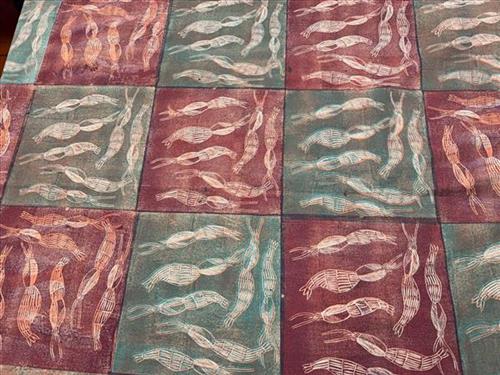
Ngalng (fresh water yabby)

Ngalng (fresh water yabby)

‘This is a story from Mankorlod. This is a djang story. This is the creation story about the fresh water yabby. Starting with the stone, that’s the raw one and the cooked one. The stone rock suddenly turned to ngalng, in a flash. Ngalng started growing and turned into a body. It’s a magic one and it can change from rock to ngalng to human and back to ngalng. Now it’s a ngalng. 

The country is near Mankorlod and Korlobididah. The ngalng is stuck there forever on the rock at Korlobididah,’ 

‘There is also duruk (camp dog) called ‘Djanbokkon’. This is a duruk that comes from water and no one has seen it. This is a true duruk, he goes everywhere in the country. His body is striped. He is a secret dog and he has a secret story.’ 

Janet Marawarr 2022

220182367536


Yalpirakinu

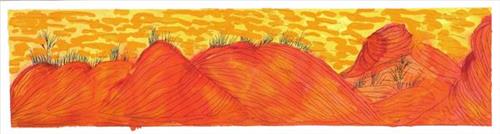
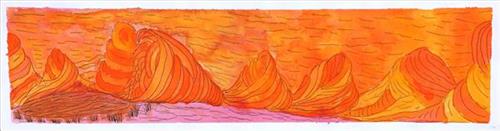
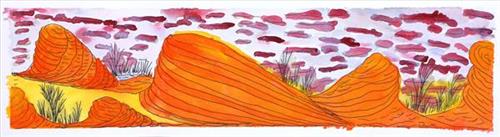
Yalpirakinu is Adrian’s mother’s country. Adrian’s mother is the late Eunice Napangardi, a well known painter herself. His artworks consistently refer to the desert mountains, ridges and trees which are part of Yalpirakinu. Using a restricted colour palette, Adrian’s  brushwork is loaded with energy, drama and memories. He is a deliberate and thoughtful painter; reworking, pushing and pulling the image to completion.

220182367535


Yalpirakinu

Yalpirakinu is Adrian’s mother’s country. Adrian’s mother is the late Eunice Napangardi, a well known painter herself. His artworks consistently refer to the desert mountains, ridges and trees which are part of Yalpirakinu. Using a restricted colour palette, Adrian’s  brushwork is loaded with energy, drama and memories. He is a deliberate and thoughtful painter; reworking, pushing and pulling the image to completion.

220182367534


Yalpirakinu

Yalpirakinu is Adrian’s mother’s country. Adrian’s mother is the late Eunice Napangardi, a well known painter herself. His artworks consistently refer to the desert mountains, ridges and trees which are part of Yalpirakinu. Using a restricted colour palette, Adrian’s  brushwork is loaded with energy, drama and memories. He is a deliberate and thoughtful painter; reworking, pushing and pulling the image to completion.

220182367528


Self Portrait

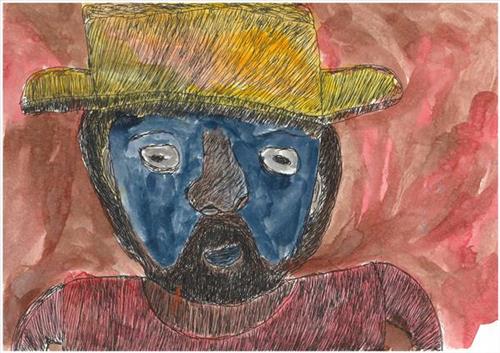
Yalpirakinu is Adrian’s mother’s country. Adrian’s mother is the late Eunice Napangardi, a well known painter herself. His artworks consistently refer to the desert mountains, ridges and trees which are part of Yalpirakinu. Using a restricted colour palette, Adrian’s brushwork is loaded with energy, drama and memories. In this painting Adrian has drawn from his memory to portray his family in Yalpirakinu.