220982363020


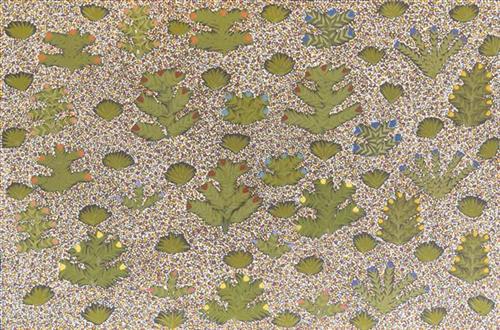
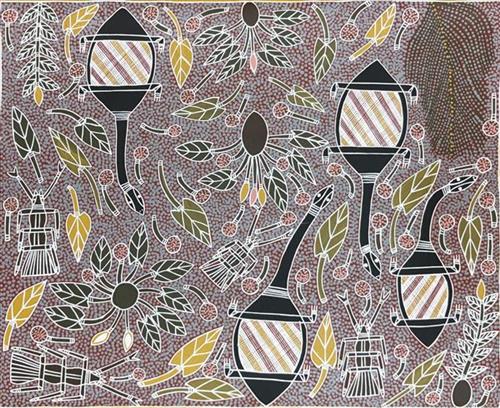
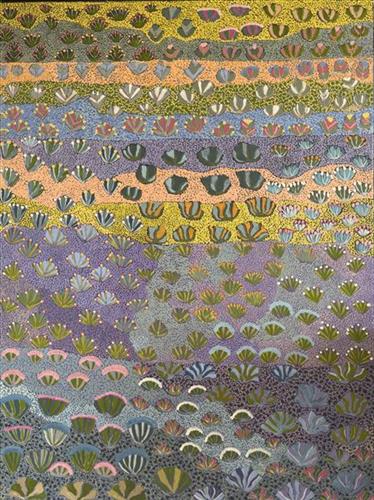
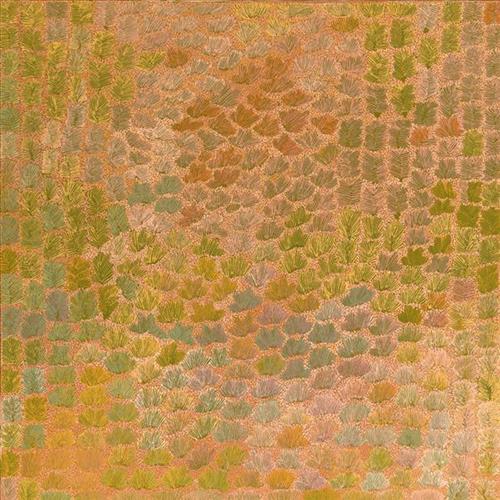
Betty Pula Morton – My Country and Bush Medicine

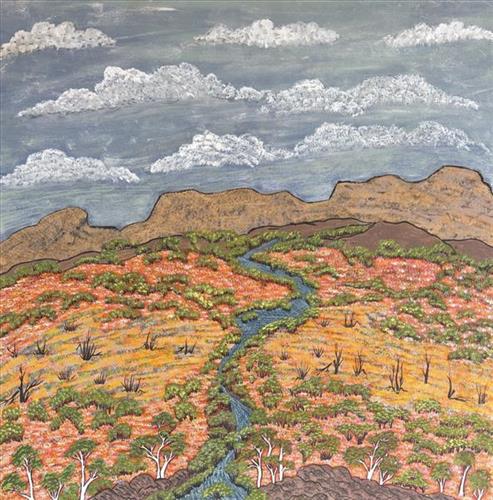
I paint my country where I find bush tucker and bush medicine. I am very happy when out bush hunting and gathering, it is where I feel connected to country and culture. My inspiration is from being out on the land, especially from the hunting and gathering trips where I see the different seasonal plants, bush foods and medicines, that are producing at that time and observes the ever-changing layered landscapes, it is always changing, with the light of day and the seasons of the year.

I enjoy and understand the importance of painting bush medicine plants. They help in the healing of my people and it keeps the tradition and knowledge strong. These particular plants are very plentiful after rain and can be used for numerous conditions, such as skin irritations, flu, coughs and infections.

Bush medicine plants are used for healing on the body and for drinking. We make this by smashing the plants with a rock, we use the juice and the fibre of the plant. We collect bush medicine plants when we are out hunting, different kinds of plants grow during different seasons.

There are lots of different medicines, we know what their stories are as we learnt them from our parents and we teach these stories to our children.

The artists of Ampilatwatja made a conscious decision not to paint altyerr (dreaming stories). The artists paint their country where those stories sit.
220982363258


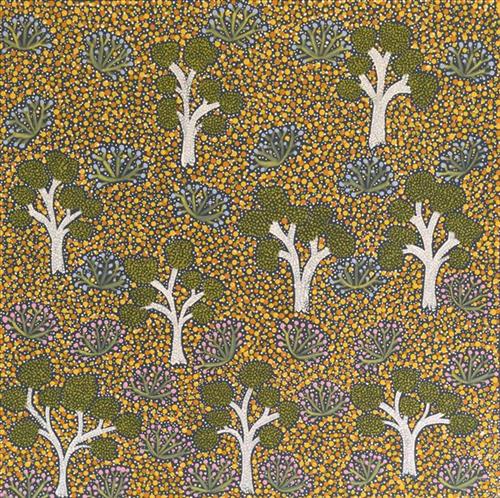
Nancy Pitjara Frank – Bush Flowers

I was born in the bush at Ammaroo Station, along the Sandover.  I have never seen the ocean or a big city. My mother and father were strong healthy people who taught me and my younger sister Rita the traditional way to hunt for Kangaroo, Goanna and Porcupine. 

We know how to gather bush tucker (secrets of the earth) and bush medicine plants.  My mother used grinding stones to make seed damper.

When I paint I think about good memories, being a young girl and walking through the land.  My mother made paint from two stones and showed us ceremony painting and how to sing and dance for ceremonies.  I still sing and dance and collect the bush medicines, I like to make tea from the small purple flowers of Arreth (hill fuchsia).

Painting bush medicine stories is important because it helps to maintain a strong knowledge and culture for the community.

220982363257


Beverly Pula Luck – My Mother’s Country

Beverly paints her Mother’s country. When Beverly was a child her mother took her all around her country and showed her the bush medicine and bush tucker.

The knowledge of the bush plants has been handed down through generation to generation and Beverly still spends time hunting and collecting bush medicine plants to use in everyday life.  Taught by her mother and grand mother, Beverly also sings the songs of the bush medicine plants. 

Beverly’s paintings are joyous and full of information regarding bush medicine plants.

The artists of Ampilatwatja made a conscious decision not to paint altyerr (dreaming stories). The artists paint their country where those stories sit.
220982363255


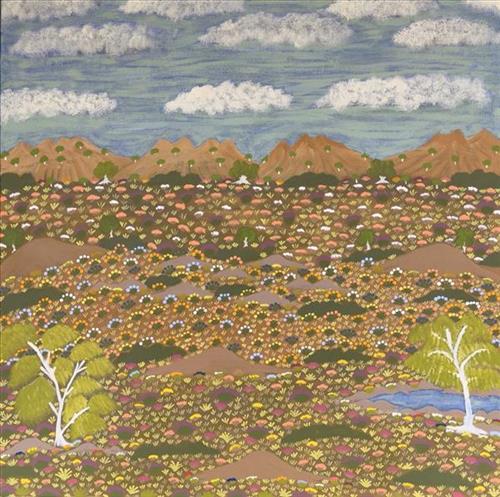
Valerie Kemarre Lewis – My Mothers Country

My mothers country is flowers, trees and mountains. I love to paint them. We see springs, the water from the springs is like rainwater, fresh and clean. We hunt goanna and turkeys, we roast them in the fire and the flesh is strong and sweet.

When we hunt we sleep at night next to the fire, the skies are big and the stars are beautiful, it makes me feel good.

115682363107


Raypiny Dhawu (Fresh Water Story)

All Aboriginal people originate from a spiritual source, fixed in a particular place in their land or the sea. These ‘spiritual reservoirs’ are often in the form of special waterholes made by Wangarr (creative spirits) that were created long ago close to the beginning of time. These creator beings moved across the countryside, shaping the land and implanting in each tract of country, the spiritual life force for the people who were to own it. These creative spirits took many forms and when they gave the land to each group, they also gave songs, dances, ceremony, the associated laws and language.


The creation story for Ganalbingu people took place near the middle section of the Glyde River where it becomes the Goyder River. Their land, Ngaliyindi, sits astride the Arafura Swamp in Central Arnhem Land. Many Ganalbingu artists paint totemic species significant to their clan. These can include baru (crocodile), banda (long necked turtle), buliya (catfish), yalman (waterlilies), gumang (magpie geese), dakawa (fresh water yabby), ratjuk (barramundi), warrnyu (flying fox) and more.


220982363302


Julieanne Ngwarraye Morton – My Country, My Bush Medicine

My Mother, Lilly Kemarre, taught me to paint. She likes to paint her Mother’s and Father’s country from the old days, when they used to live off of the land.

The landscape changes during the different seasons in the year. I paint the dried flowers and bushes from last season as well as the new plants that come after the rain. These plants have special meanings and uses for us. I have been taught how to read the country, and now I teach my children these skills.

Julieanne’s painting’s are inspired by her Mother’s stories of the old days, walking and living on their land, and also of her own experience of life out here in Alyawarr country.

220982363973


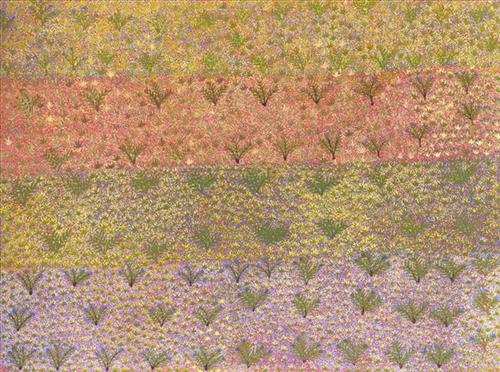
Alana Ngwarraye Holmes – Wild Flowers

Out in the plain after the rain the wild flowers grow and bloom, I see these flowers on my mother’s country.

The plant has pretty flowers, we take them home and show them to the children. They are a beautiful purple, yellow and pink colour.

220982363831


Yvonne Ngwarraye Bonney – My Hunting Country

Yvonne has painted her favourite hunting country after rain. “This is when the storm ants come and make the goannas nice and fat, the ground is soft for digging honey ants and it’s when the bush foods and grasses come up and grow strong. The country is normally bare with small stones and rocks everywhere, but after rain, everything comes alive.”

Yvonne is a tremendous hunter, she is skilled in reading tracks and reading the land. Painting hunting country is important and special to her. 

The community of Ampilatwatja made a conscious decision not to paint ‘altyerr’(dreaming stories). The artists paint their country where those stories sit.
115682363743


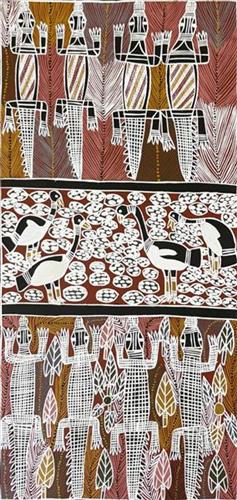
Baru Dhawu (Crocodile Story)

Baru (the crocodile man), was from the Gumatj clan. People usually call him Gurdu Gurdu or Baru which means crocodile. He lived his life at a place called Yirrkala. Living near him were other people, and when Baru didn’t have enough to eat he began to kill and eat these other people. After a while others noticed that some people were missing. When Baru went to the toilet, the people could smell this strong smell, so they knew that he ate the other people. Some men went to get help and they took message sticks to the other tribes. Some were sending smoke signals. When they came to Baru’s camp they started to spear him in the left side of his ribs. He dropped into the fire and burnt his left hand and maybe his right hand. He then ran into the bush and yelled to his countrymen – the animals, birds and fish that live on the land and in the sea. He stopped and he named the tribes and clans and also the places until he came to a place called Gamarru/Guyurru. There he took a rest and said to himself “This is where I stop and call this place Gamarru/Guyurru”. Baru, still in pain from the fire, then jumped into the water and turned himself into a crocodile. The fire left scars on his back. Baru paintings belong to Gumatj and Warrawarra and also the Marpi clan. This painting is used at death ceremonies or initiations and it normally is painted on the belly, which means the person the design is painted on is part of Gurdu Gurdu (the crocodile people).