225182364982
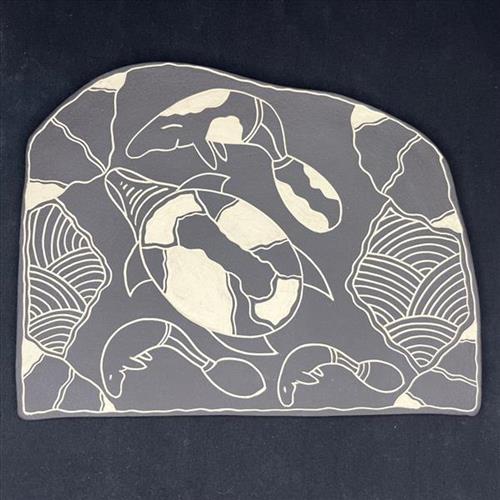
Kirbaji (Dugong) and Ngawiya (Sea Turtle)
Kirbaji (Dugong) and Ngawiya (Sea Turtle) are two ancestral spirit beings (Totems) that I inherited from my mother’s side. As a young boy my uncles and cousins took me out to sea teaching me how to hunt, cut and cook dugong and sea turtle. Only men were allowed to hunt them for very special occasions when lots of extended family members had to be fed during wedding, birth and funeral celebrations. They wrapped the meat in ginger leaves to get flavours and enclose them using a vine before cooking the meat it in a ground oven. Parts of the meat, fat and blood can also be boiled in the turtle shell to make a nourishing soup. The fat of the turtle was also melted to make a body oil.
225182364971
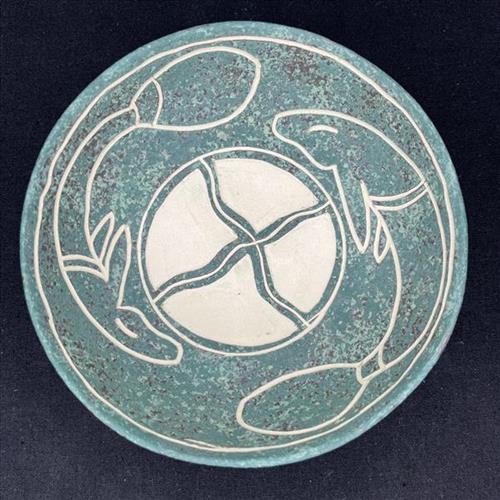
Kirbaji (Dugong)
Kirbaji (Dugong) is an Ancestral Spirit Being (Totem) that I inherited it from my mother’s side. It is my Totem. The dugong was also an important food source for my ancestors. Only men were allowed to hunt them, and only men had the right to cook and distribute the meat to all the families. My uncles and cousins showed me how to hunt dugongs and they passed down to me the cultural knowledge about them.
My ancestors used to wrap the dugong meat in ginger leaves for flavour, close the wraps with a vine and cook them in the ground oven. Dugongs were only hunted on special occasions such as births, weddings and funerals to provide food for large family gatherings.Dugong fat was also melted to make oil which was used as a medicine for skin and hair ailments or as ointment to treat an upset stomach.

114182365703
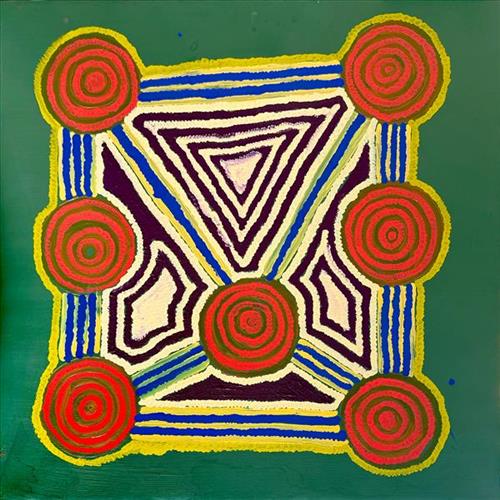
Kungkarrangkalpa (Seven Sisters)
‘Kungkarrangkalpa’ (The Seven Sisters or Pleaides) is significant Tjukurrpa (dreamtime). Its origins you may be familiar with in astronomy and its connection to ‘Wati Nyiru’ (Magic Man or Orion). The roots of this dreaming stems across indigenous groups around the world. The Australian Aboriginal songline is one part to the whole dreaming which can be traced all around the world. The ladies of the Ngaanyatjarra Lands depict their significant chapter and understanding of the journey of the sisters. The different versions of this story depend on where you live and the significance’s of local Tjukurrpa places.
Nyiru fell in love with the sisters but he was of the wrong skin group to marry, but he still pursued them on their journey. The sisters travel across the land to escape Nyiru’s unwanted attentions, but he is persistent and always finds them. There are significant land forms which can be sited today that evidence this dreaming. As Nyiru is chasing the sisters he tries to catch them by using magic to turn into the most tempting kampurarrpa (bush tomato) and the most beautiful Yirli (wild fig tree), for them to eat and camp under. However, the sisters are knowledgeable of his magic and too clever for Nyiru who they outwit again and again. They go hungry and run through the night rather than be caught by him. As the journey continues, Nyiru gets so frustrated at the wit of the sisters that he uses his magic to make the oldest sister sick to try and get closer to her. The other sisters rescue the big sister and nurse her back to health. It is said he also captures the youngest sister, but with the help of the oldest sister, she escapes back to her sisters who are waiting for her. Eventually, the sisters fly into the sky to escape Nyiru, forming the constellation. Nyiru felt lonely, longing for the sisters who were so far away. Nyiru used his magic to go to the sky, forever in pursuit.

114182365651
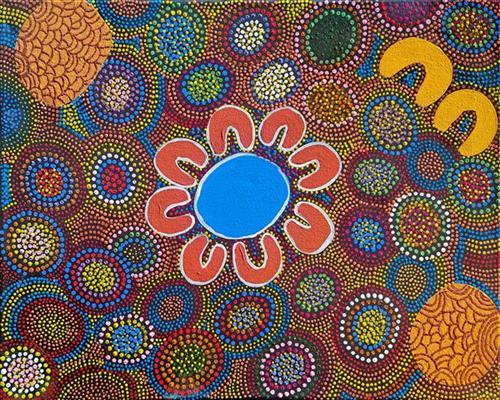
Kungkarrangkalpa (Seven Sisters)
‘Kungkarrangkalpa’ (The Seven Sisters or Pleaides) is significant Tjukurrpa (dreamtime). Its origins you may be familiar with in astronomy and its connection to ‘Wati Nyiru’ (Magic Man or Orion). The roots of this dreaming stems across indigenous groups around the world. The Australian Aboriginal songline is one part to the whole dreaming which can be traced all around the world. The ladies of the Ngaanyatjarra Lands depict their significant chapter and understanding of the journey of the sisters. The different versions of this story depend on where you live and the significance’s of local Tjukurrpa places.
Nyiru fell in love with the sisters but he was of the wrong skin group to marry, but he still pursued them on their journey. The sisters travel across the land to escape Nyiru’s unwanted attentions, but he is persistent and always finds them. There are significant land forms which can be sited today that evidence this dreaming. As Nyiru is chasing the sisters he tries to catch them by using magic to turn into the most tempting kampurarrpa (bush tomato) and the most beautiful Yirli (wild fig tree), for them to eat and camp under. However, the sisters are knowledgeable of his magic and too clever for Nyiru who they outwit again and again. They go hungry and run through the night rather than be caught by him. As the journey continues, Nyiru gets so frustrated at the wit of the sisters that he uses his magic to make the oldest sister sick to try and get closer to her. The other sisters rescue the big sister and nurse her back to health. It is said he also captures the youngest sister, but with the help of the oldest sister, she escapes back to her sisters who are waiting for her. Eventually, the sisters fly into the sky to escape Nyiru, forming the constellation. Nyiru felt lonely, longing for the sisters who were so far away. Nyiru used his magic to go to the sky, forever in pursuit.

114182365588
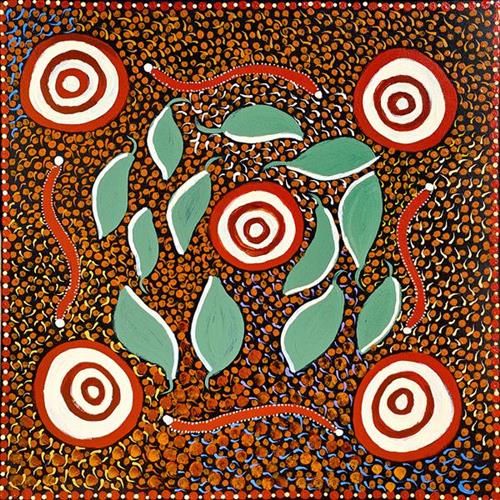
Yirmangka – Yirmangka ( Bush Medicine)
This is from a series of small works from our main artists depiocting the love of collecting from the bush traditional medicines and tucker.
115682365400
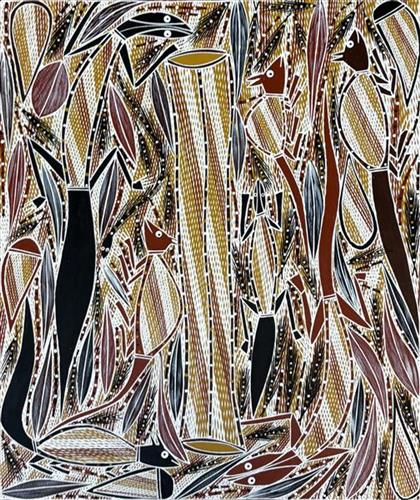
JB Fisher – Djanda (lizard)
JB paints stories from his Dhuwa homeland in northeast Arnhem Land. Stories are passed on either paternally or maternally and JB would have learnt these stories from his ancestors. The cross-hatching style (Rrark) is a traditional painting style of this area and can represent elements such as water, air and wind.
His paintings often feature totemic animals of the fresh waters of North East Arnhem Land.
116482365694
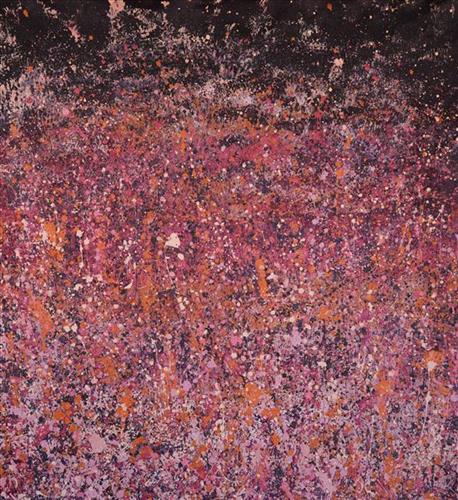
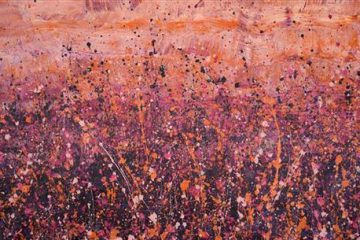
Pilbara wildflowers at Dusk
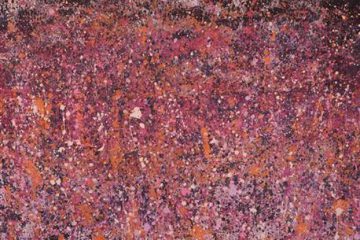
In the last light of the day, the wildflowers and Country take on new colours. In the earth you can see glimmers of darker copper colours and deep burgundy as the last light of the day hits the Pilbara. The pinks represent the mulla mulla flowers and the desert sturt pea has changed from bright red to a subtle bronze red.
116482365698
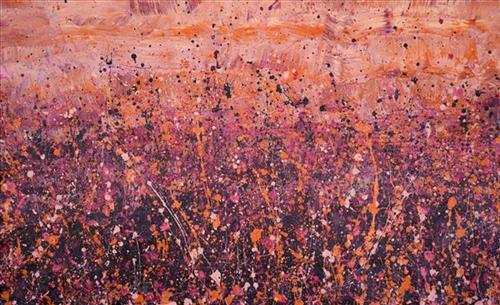
Pilbara Wildflowers at Dusk
In the last light of the day, the wildflowers and Country take on new colours. In the earth you can see glimmers of darker copper colours and deep burgundy as the last light of the day hits the Pilbara. The pinks represent the mulla mulla flowers and the desert sturt pea has changed from bright red to a subtle bronze red.
116482365696
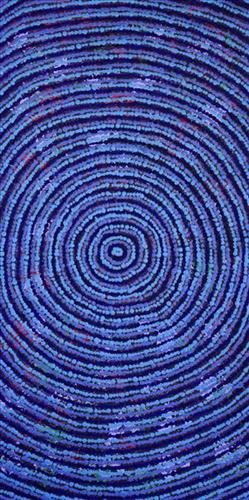
Fortescue Running
This story is about the Fortesuce River and during the cyclone season, we notice our country is filled with running water, this is a time when the fortesuce river is running with water and filled with good fish and the country is filled with wild flowers blooming in the sunset.