377815582366109


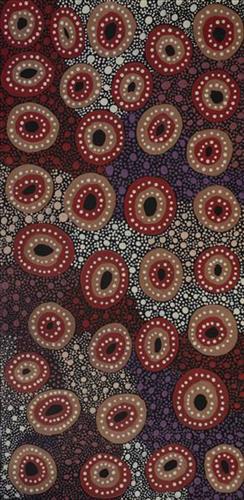
Nyurnma (burnt country)

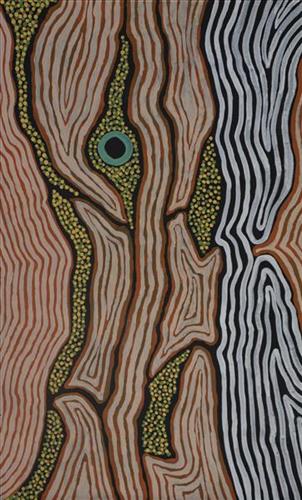
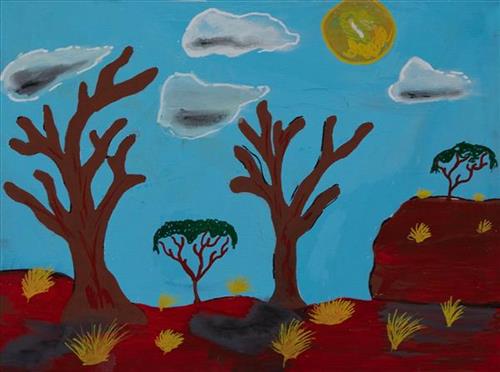
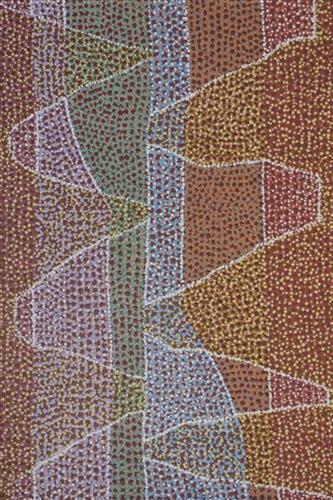
This painting is about the landscape, bushfire (waru), and bush foods. Seeing the difference after the waru burns, it leaves some patches on the ground, and when the regrowth of the bush plants come back to life, it leaves a mark.

Well, I learnt that story from my grandmother—going out bush, learning about the different sides of burning. Talking about before burning and after burning, and how people go hunting after burning, looking for goanna. Teaching the younger generation where and when to hunt for goanna.

I learnt painting from my grandmother (Nola Taylor) and my grandfathers (Muuki Taylor, Wokka Taylor) by going out on Country, sharing stories, and learning from them about bush plants and bush food. I painted before, but going to Parnngurr and being around old people really opened my mind—seeing them paint and the colours they used. My daughter started painting with the old people too, and now she watches me paint their stories. I’d like to be an inspiration to her and to young people.
377815582366105


Nyurnma (burnt country)

This painting is about the landscape, bushfire (waru), and bush foods. Seeing the difference after the waru burns, it leaves some patches on the ground, and when the regrowth of the bush plants come back to life, it leaves a mark.

Well, I learnt that story from my grandmother—going out bush, learning about the different sides of burning. Talking about before burning and after burning, and how people go hunting after burning, looking for goanna. Teaching the younger generation where and when to hunt for goanna.

I learnt painting from my grandmother (Nola Taylor) and my grandfathers (Muuki Taylor, Wokka Taylor) by going out on Country, sharing stories, and learning from them about bush plants and bush food. I painted before, but going to Parnngurr and being around old people really opened my mind—seeing them paint and the colours they used. My daughter started painting with the old people too, and now she watches me paint their stories. I’d like to be an inspiration to her and to young people.
115682366429


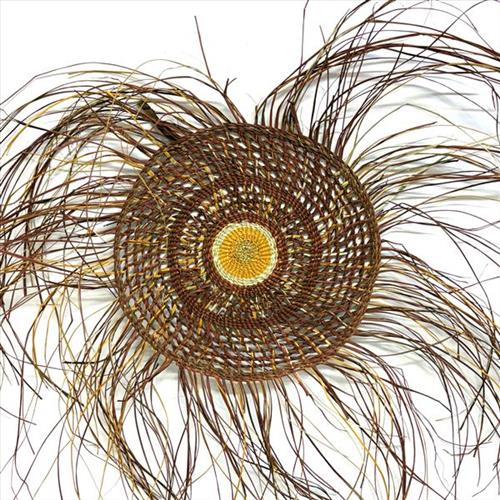
Woven Mat

Yolŋu weavers of Arnhem Land create utilitarian, ceremonial, and decorative pieces using naturally sourced materials. This mat is made from young Pandanus spiralis leaves, harvested with a wooden hook, stripped of prickles, and dried to create strong, resilient fibres. These fibres are then twisted, coiled, or woven using traditional techniques to produce both functional and decorative mats.

Bula’bula weavers exclusively use natural dyes, derived from locally sourced roots, leaves and grasses. These pigments are extracted and infused into pandanus fibres by boiling over an open fire, producing the rich, vibrant colours characteristic of contemporary Yolŋu weavings.

Traditionally, Nganiyal (conical mats) functioned as insect screens when erected and as seating mats when folded, playing an important role in both daily life and ceremonial practices. Today, Yolŋu artists create a variety of shapes, including flat, round, and oblong mats. These non-traditional styles and the use of bright colours became more common after Missionaries began commissioning pieces in this style.

116482366529


Pilbara Country

This is the Pilbara Country. There are reds and oranges of the rocks in our landscape and many spinifex dotting the environment everywhere you look. THese colours remind me of my home.

111582366517


Untitled

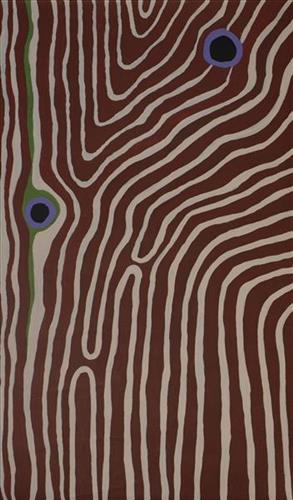
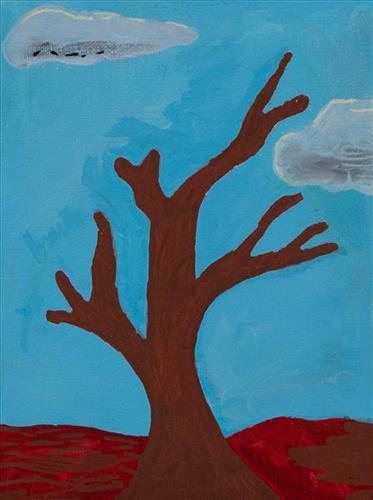
This work portrays an area known to the artist, painted here from memory. During the pujiman (traditional, desert dwelling) era one’s survival depended on their intimate knowledge of the location of resources; thus physical elements of Country, such as sources of kapi (water), tali (sandhills), and different varieties of warta (trees, vegetation) were carefully observed and remembered. Today, this relationship with Country remains equally strong, despite the movement of Martu out of the desert and into remote Aboriginal communities, towns and cities.

Also visible may be traces of life cycles based around kalyu (rain, water) and waru (fire). A thousands of year old practice, fire burning continues to be carried out as both an aid for hunting and a means of land management today. As the Martu travelled and hunted they would burn tracts of land, ensuring plant and animal biodiversity and reducing the risk of unmanageable, spontaneous bush fires. The patchwork nature of regrowth is visible in many landscape works, with each of the five distinctive phases of fire burning visually described with respect to the cycle of burning and regrowth.  

Finally, metaphysical information relating to a location may also be recorded; Jukurrpa (Dreaming) narratives chronicle the creation of physical landmarks, and can be referenced through depictions of ceremonial sites, songlines, and markers left in the land. 

111582366516


Untitled

This work portrays an area known to the artist, painted here from memory. During the pujiman (traditional, desert dwelling) era one’s survival depended on their intimate knowledge of the location of resources; thus physical elements of Country, such as sources of kapi (water), tali (sandhills), and different varieties of warta (trees, vegetation) were carefully observed and remembered. Today, this relationship with Country remains equally strong, despite the movement of Martu out of the desert and into remote Aboriginal communities, towns and cities.

Also visible may be traces of life cycles based around kalyu (rain, water) and waru (fire). A thousands of year old practice, fire burning continues to be carried out as both an aid for hunting and a means of land management today. As the Martu travelled and hunted they would burn tracts of land, ensuring plant and animal biodiversity and reducing the risk of unmanageable, spontaneous bush fires. The patchwork nature of regrowth is visible in many landscape works, with each of the five distinctive phases of fire burning visually described with respect to the cycle of burning and regrowth.  

Finally, metaphysical information relating to a location may also be recorded; Jukurrpa (Dreaming) narratives chronicle the creation of physical landmarks, and can be referenced through depictions of ceremonial sites, songlines, and markers left in the land.