111582369155


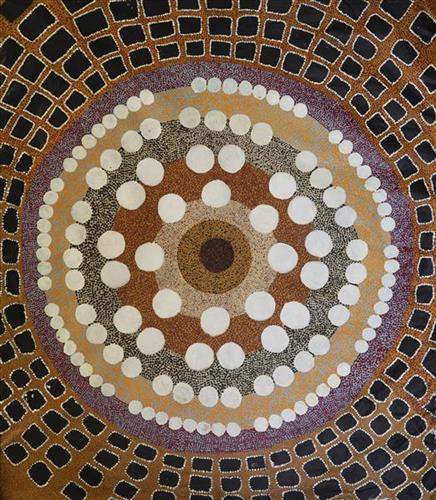
Jintullurru Ngumpulurru – Martu Kinship

‘The four skin groups that govern Martu social structures around marriage and lore are Jangala, Karimarra, Purungu and Milamga”. Anya is Milamgka, I am Karimarra skin. 

‘Within each skin grouping there is a male and female, and then only one other grouping with which each of these are right skin way for marriage.

‘It is simple but complex all in one; I have tried to explain by writing it all but now I am also trying to explain by painting. Using colour coding I thought might help to expain.

“You can see here there are eight colours which represent the eight different skins (four female and four male) and then the skin groupings of offspring as the circle moves out.

So the centre is the Lore and around this is the first grouping; us now, or our ancestors, depending on your perspective.

Each pairing, within the first circle, includes the male and femaile of each skin group. For example its red for male and blue for female in the Milamgka skin group.

The cycle moves through from great-grandparent to grand-child, and then back around to great-grandparent again. So a child can be an elders great grandmother as can an elder be a child’s grand-kid.”

-Clifton Gilbiba

Martu skin systems governed, and still govenn social structures and Lore throughour the area and the knowledge is passed through generations as common knowledge.
220982366312


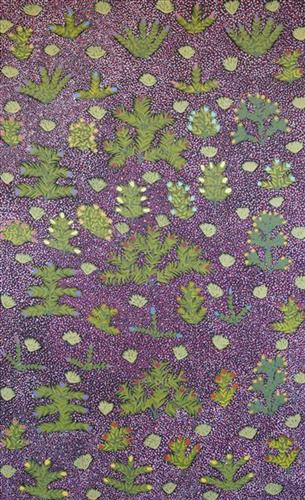
Beverly Pula Luck – My Mother’s Country

Beverly paints her Mother’s country. When Beverly was a child her mother took her all around her country and showed her the bush medicine and bush tucker.

The knowledge of the bush plants has been handed down through generation to generation and Beverly still spends time hunting and collecting bush medicine plants to use in everyday life.  Taught by her mother and grand mother, Beverly also sings the songs of the bush medicine plants. 

Beverly’s paintings are joyous and full of information regarding bush medicine plants.

The artists of Ampilatwatja made a conscious decision not to paint altyerr (dreaming stories). The artists paint their country where those stories sit.

220982366597


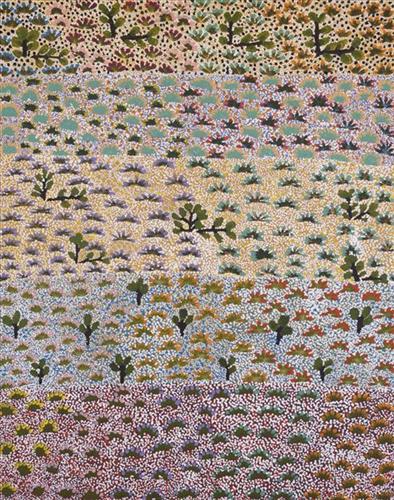
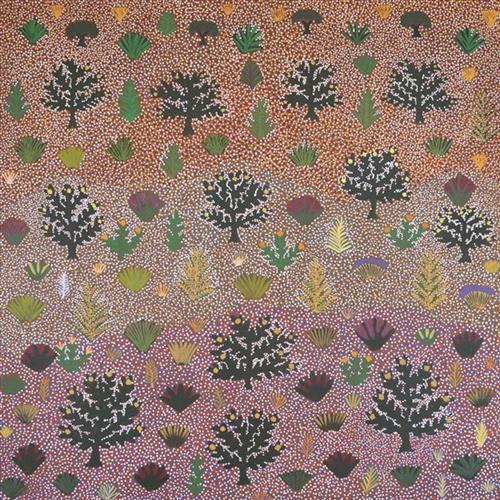
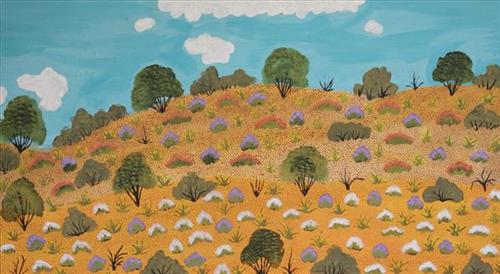
View Of Country

This shows the layered landscape of Alyawarr, Central Australia. Knowing your country is an important part of living in a remote community like Ampilatwatja.

Knowing when and where to go hunting and gathering, knowing where there is ‘soakage’ (where you can dig for water), travelling with family for ceremonies, and maintaining a connection with the land.

“This is my country, my view of country.”

The community of Ampilatwatja made a conscious decision not to paint altyerr (dreaming stories). The artists paint their country where those stories sit.


220982370288


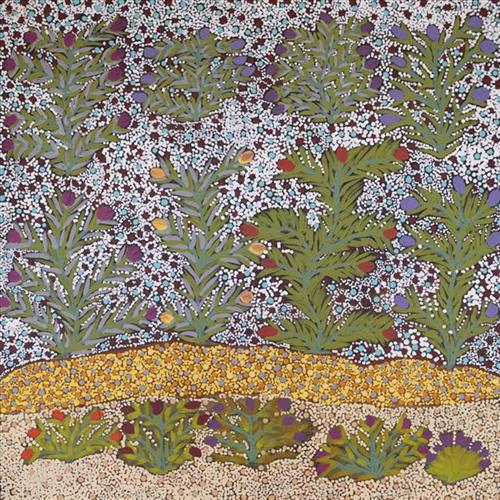
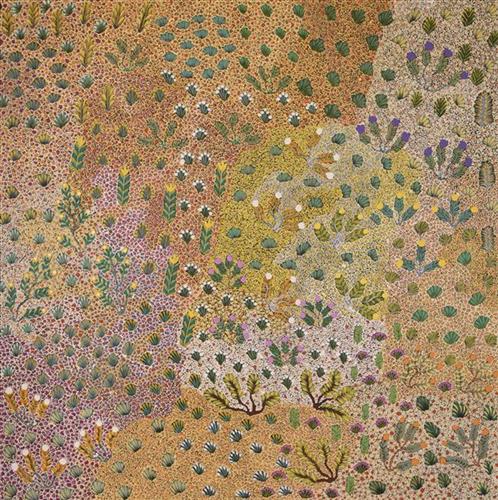
Bush Flowers

These bush flowers grow seasonly in Alyawarr country, some of which are also used in bush medicine remedies.

When I go out hunting, I like to see all the bush flowers that are flowering and then when I come back, I paint them.

The artists of Ampilatwatja made a conscious decision not to paint altyerr (dreaming stories). The artists paint their country where those stories sit.

220982370274


Kindy Kemarre Ross – Irrultja is My Country

My country is called Irrultja, it’s past the hill and the dried-up creek from here, it’s a nice place, my dad’s country too, and my Mum’s country is here in Ampilatwatja. When I go to see my country, we always go to gather bush medicine, we always climb up the hill that’s in the south, we always go there.

We like to look out over the land and there are lots of flowers and bush medicine up there. I love my countryside; I see the nice flowers and gather bush medicine for me and my family. I like to paint a mix of wildflowers and bush medicines in all my paintings because it reminds me of my favourite part of my country and when it rains the flowers come out. Yeah, my countryside.

The community of Ampilatwatja made a conscious decision not to paint altyerr (dreaming stories). The artists paint their country where those stories sit.

220982370269


Bush Medicine Plants

Bush medicine plants are used for healing on the body and for drinking. We make this by grinding the plants with a rock, we use the juice and the fibre of the plant.

We collect bush medicine plants when we are out hunting. Different kinds of plants grow during different seasons.

There are lots of different medicines, we know what their stories are, we learnt them from our parents and we teach these stories to our children.

Bush medicine knowledge is still strong in Ampilatwatja, it continues to be passed down to the younger generations and is widely used.


When the women go hunting they often gather bush medicine. The plants are found in the country around Ampilatwatja, they are used for soothing skin infections and to make a drink to help with colds and coughs.

Painting bush medicine stories is important because it helps to maintain a strong knowledge and culture for the community.

220982370777


Alec Pula Lewis – View of Country

Alec was born at McDonald Downs Station. He grew up there with his family living traditionally on the land.  Alec did not attend school, he moved between different communities with his family. 

Knowing your country is an important part of living in a remote community like Ampilatwatja. Knowing when and where to go hunting and gathering, knowing where there is ‘soakage’ (where you can dig for water), travelling with family for ceremonies, and maintaining a connection with the land.

“This is my country, my view of country.”

The artists of Ampilatwatja made a conscious decision not to paint altyerr (dreaming stories). The artists paint their country where those stories sit.

111582372839


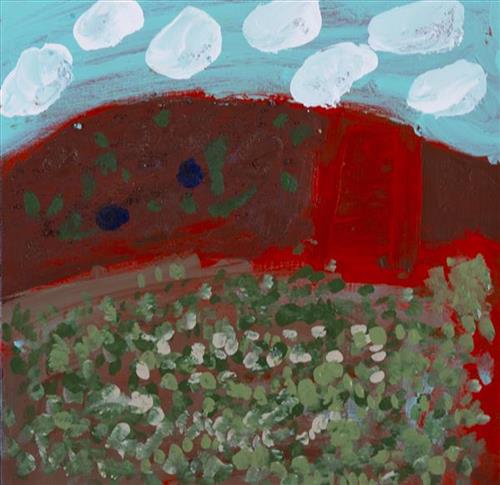
Rockhole

“I went on a KJ ranger trip for 3 days. The first day we slept near the water hole, the second day we went to the other water hole and the last day we slept near the soak. We went to the snake water hole, it had 2 water holes and it had a giant snake track.”

– Keyarhn Wongawol

111582372837


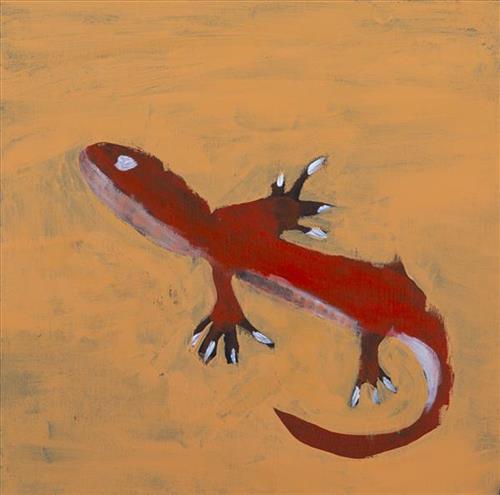
Mulyamiji (Great Desert Skink)

“I like painting because I love seeing my Grandparent paint their country and telling us about how they used to walk long distances.” – Amon Chapman

Amon is painting a Mulyamiji (Great Desert Skink) after learning from Carol Williams about local endangered species.

“This painting is of the Mulyamiji and the big clayplan out there – those red, white and yellow dots are the flowers that grow next to the claypan.”
“They go inside, and when they poo they go outside, that’s how they keep their home clean. That’s how we find them when we go out looking for them.”– Carol Williams

111582372836


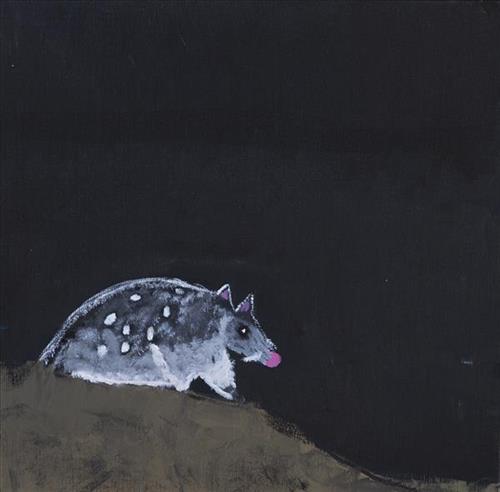
Mankarr (Greater Bilby)

“I like painting because I love seeing my Grandparent paint their country and telling us about how they used to walk long distances.” – Amon Chapman

Mankarr (greater bilby) is an omnivorous desert-dwelling mammal found in a range of arid habitats across northwestern and central Australia, including rocky soils, shrublands, woodlands and spinifex regions. Its fur is usually grey or white, and it has a long, sharp nose and long pinkish ears. At the time of European colonisation of Australia, there were two species. The lesser bilby became extinct in the 1950s, and while the greater bilby has survived, it remains a threatened species.