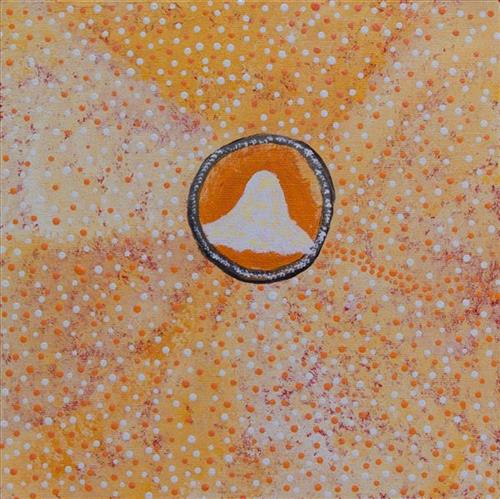
Water hole
This is the way the water runs off the sand into the much needed water hole where it stays for a long time. The travelers and animals can find water here.
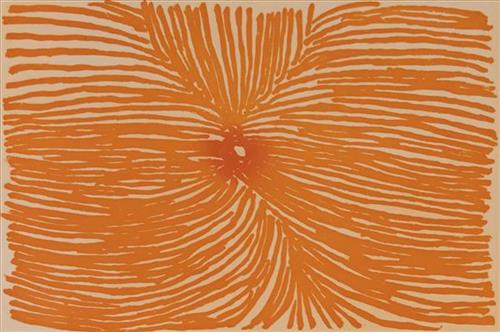
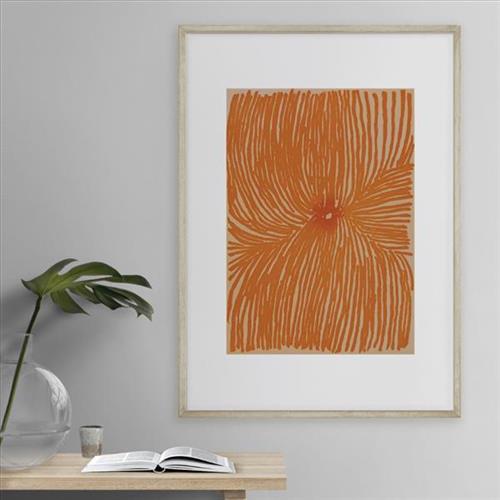
This is the way the water runs off the sand into the much needed water hole where it stays for a long time. The travelers and animals can find water here.
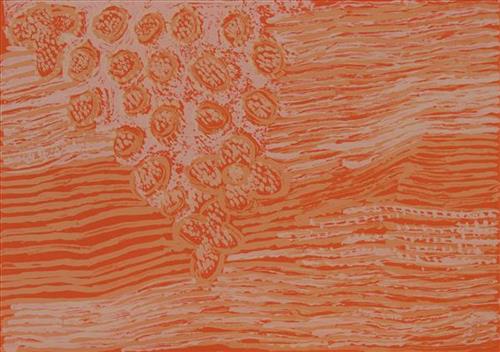
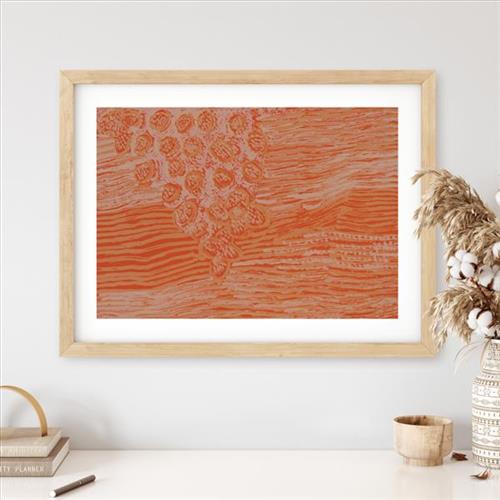
In this print Eunice depicts her father’s Tjukurrpa (Dreaming). It shows the country at Kuruyultu, near Tjukurrla in Western Australia.
Eunice Napanangka Jack says about the artwork:
‘This is my country. I can’t remember how it all happened, because it happened before I was born. I have a scar on my back from it. My grandfather speared a wallaby at Kuruyultu. That night he ate that wallaby. At the same time my mother could feel me moving inside her. She was heavily pregnant with me. That next morning, after my grandfather had speared the wallaby, killed it and eaten it, I was born. I was born at Kuruyultu, near the rockhole there. I can’t remember my grandfather or my grandmother. I was still a little baby. We left that place, Kuruyultu. My father, my mother, my big sister and my father’s brother, we all left together and went to Haasts Bluff. I grew up in Haasts Bluff. I have been back to Kuruyultu for visits but I never lived there again in my country. I think about it every day. Only my father knows all the stories for that country and he painted them too… all the men’s stories. I know the story of the wallaby mother and daughter which left me with a birthmark. That’s what I paint: the wallaby mother and daughter.’
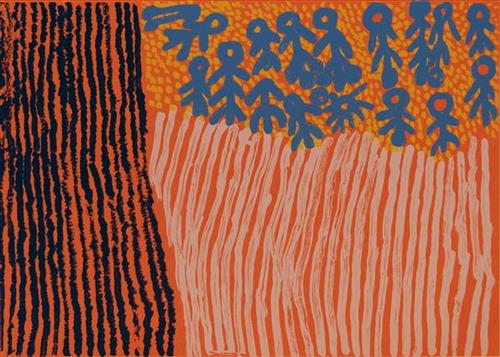
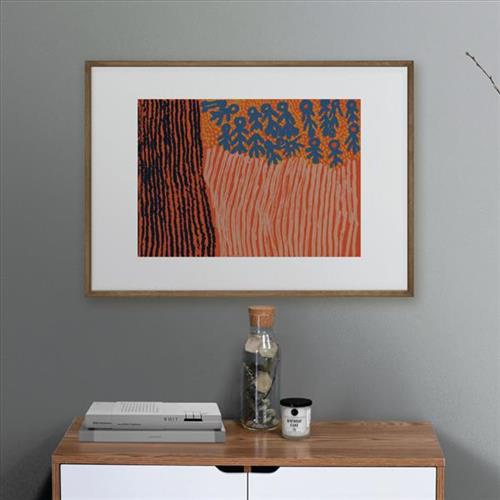
In this print Eunice depicts her father’s Tjukurrpa (Dreaming). It shows the country at Kuruyultu, near Tjukurrla in Western Australia.
Eunice Napanangka Jack says about the artwork:
‘This is my country. I can’t remember how it all happened, because it happened before I was born. I have a scar on my back from it. My grandfather speared a wallaby at Kuruyultu. That night he ate that wallaby. At the same time my mother could feel me moving inside her. She was heavily pregnant with me. That next morning, after my grandfather had speared the wallaby, killed it and eaten it, I was born. I was born at Kuruyultu, near the rockhole there. I can’t remember my grandfather or my grandmother. I was still a little baby. We left that place, Kuruyultu. My father, my mother, my big sister and my father’s brother, we all left together and went to Haasts Bluff. I grew up in Haasts Bluff. I have been back to Kuruyultu for visits but I never lived there again in my country. I think about it every day. Only my father knows all the stories for that country and he painted them too… all the men’s stories. I know the story of the wallaby mother and daughter which left me with a birthmark. That’s what I paint: the wallaby mother and daughter.’
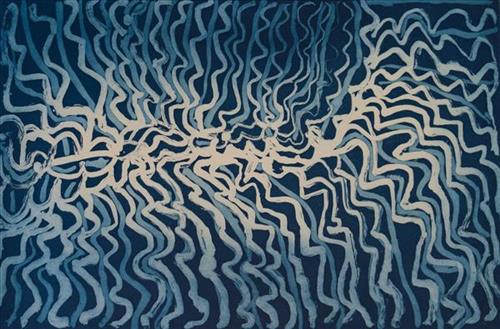
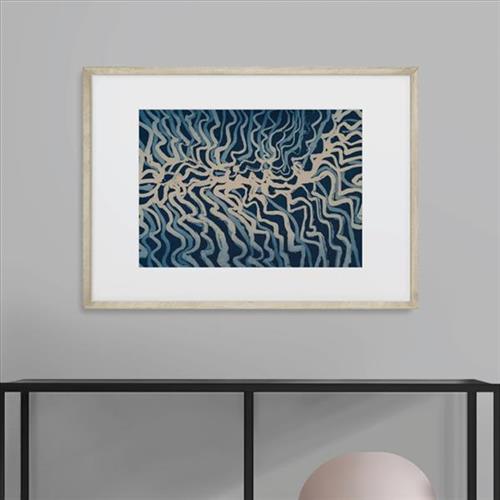
This is the story of Tjilkamala – the porcupine man. He is travelling around Talaalpi, west of Kintore and is looking for ants. He digs for them in the ground and creates holes. Meanwhile tracking behind him are women out hunting, hoping to make the porcupine their tucker for the evening. These holes fill with water after the rain and with the morning dew. Over many years they have become rockholes.
This work is the story of Alice’s personal Tjukurrpa (Dreaming) – the Porcupine. The setting is the rockholes in and around the swamp of Talaalpi in Western Australia.
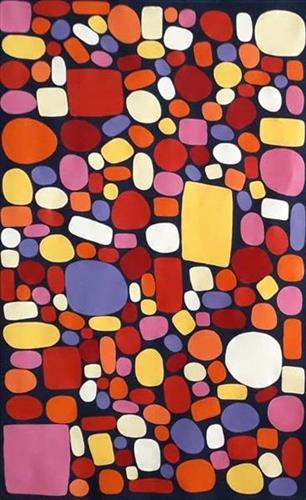
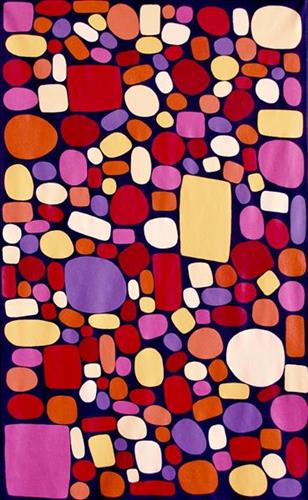
Keturah depicts the puli puli (rocks) at two different sites. She paints the landscapes at Haasts Bluff where she grew up and also at Karrkurrutintja (Lake Mcdonald in Pintupi), located west of Kintore along the Western Australia/Northern Territory border. Karrkurrutintja country is an important site of the Pilkati (snake) Tjukurrpa (dreaming) of Kaniya Kutjarra (two carpet snakes, two brothers, two Tjangalas). This story was passed town to her from her grandmother Narputta Nangala Jugadai, who was born there. Narputta was passed down this story from her father, Talaku Tjampitjinpa. Both Keturah’ss grandmother and mother, Molly Jugadai painted this same country. Narputta was one of the founding members of Ikuntji Artists, and has been painting since the beginning of the desert painting movement in the 1970’s. Keturah’s grandmother and mother have since passed away, with Keturah being the only remaining daughter in this lineage of artist to still be painting this story.
Keturah has been inspired by the painting legacy and tutorage from her grandmother and mother, though has developed a distinctive style over her practice. Keturah uses different colours and hues to depict the ways the puli puli change colours with the weather, especially at sunrise and sunset.
“The sand hills I paint are my mother’s story and the rocks I paint are my own story. My paintings are about my story and my mother’s… I like to paint; painting helps me forget my troubles. I paint every day. My Grandmother used to say to me when I was younger: “One day you will paint.”
In the artist’s words: This is the story in my father’s country of Pirrupa Kaala. It is the story of the white cocky (circle middle on top) with mako (witchetty grubs) in its mouth. The eagle (left bottom) brought malo (kangaroo) meat (circle left top) for the white cocky as she had a broken wing. But a crow (circle right side bottom) chased the white cocky all over the country because the white cocky had such a big mob of mako. The crow started to hit the white cocky with a nulla nulla and called her greedy. The eagle helped the cocky and chased the crow away. So it happend that the eagle came to stay with white cocky for a little while. But on day he said: ”Oh, I am going home to find another place to stay”, and left the white cocky behind to stay there by herself for good.
The blue colour shows the tracks from the water running into the deep water holes in the sand after the rain. The red colour shows the little mountains where the water comes from and goes into the creek flowing south.

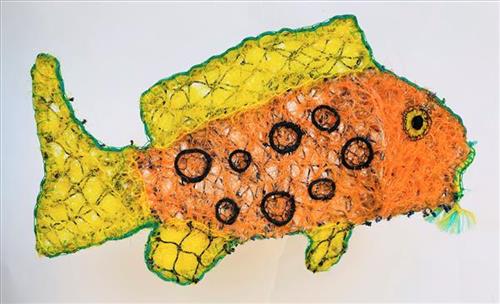
This fish has been created by stitching reclaimed fishing net, rope and twine. Reclaimed fishing nets (also known as ghost nets) are derelict fishing nets that drift aimlessly at sea indiscriminately fishing, killing turtles, other creatures and tangling boat propellers. We are recycling these nets, incorporating other flotsam and making products for enjoyment and use. By purchasing this product you are helping indigenous communities who collect this net and other groups who make items to develop economic opportunities. We hope this product brings you great joy and helps spread the ghost net message.
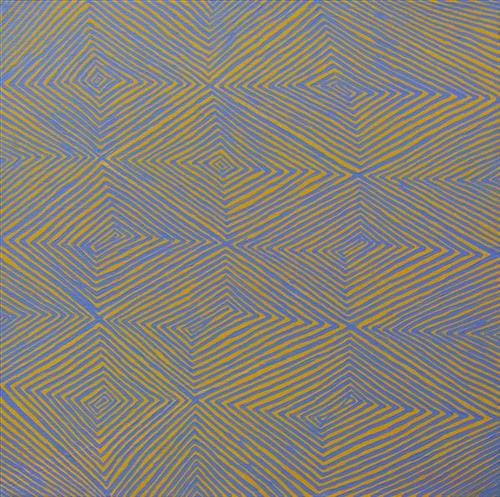
The story of this painting is Papa Tjukurrpa – Dog Dreaming. The country for this Tjukurrpa is at Nyuman, three hours south-west of Kintore. It is a little outstation. The dog lives at this place and can be seen as a rock.
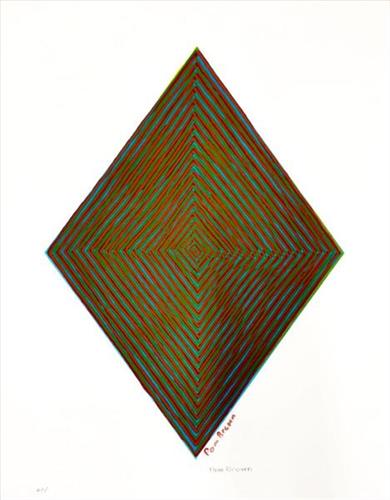
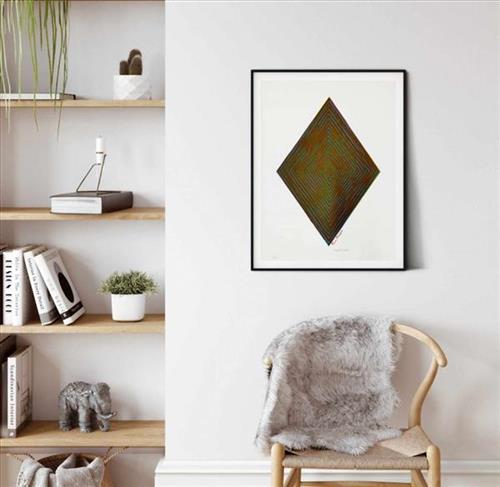
Pam paints the men’s ceremonial design associated with the Dog Dreaming. The diamond shape is painted as body design onto the men’s bodies during the ceremony.
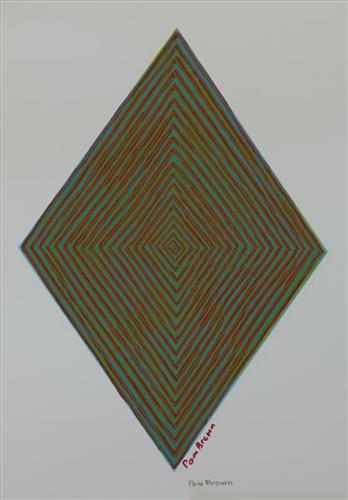
The story of this painting is Papa Tjukurrpa – Dog Dreaming. The country for this Tjukurrpa is at Nyuman, three hours south-west of Kintore. It is a little outstation. The dog lives at this place and can be seen as a rock.
Pam paints the men’s ceremonial design associated with the Dog Dreaming. The diamond shape is painted as body design onto the men’s bodies during the ceremony.