111582369903


Untitled

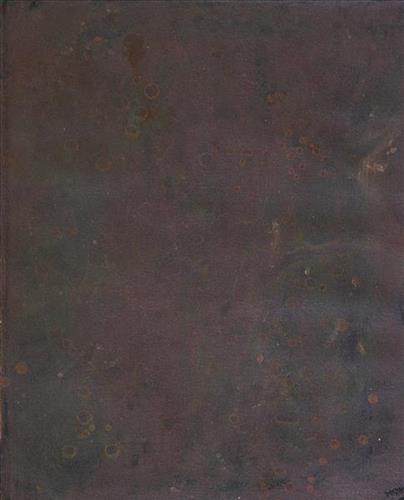
“When Martu paint, it’s like a map. Martu draw story on the ground and on the canvas, and all the circle and line there are the hunting areas and different waters and tracks where people used to walk, and [some you] can’t cross, like boundaries. So nowadays you see a colourful painting and wonder what it is, but that’s how Martu tell story long ago. It’s not just a lovely painting, it’s a story and a songline and a history and everything that goes with it.” 

– Ngalangka Nola Taylor and Joshua Booth

This work portrays an area of Country that can be interpreted in multiple ways. Firstly, the image may be read as an aerial representation of a particular location known to the artist- either land that they or their family travelled, from the pujiman (traditional, desert dwelling) era to now. During the pujiman period, Martu would traverse very large distances annually in small family groups, moving seasonally from water source to water source, and hunting and gathering bush tucker as they went. At this time, one’s survival depended on their intimate knowledge of the location of resources; thus physical elements of Country, such as sources of kapi (water), tali (sandhills), different varieties of warta (trees, vegetation), ngarrini (camps), and jina (tracks) are typically recorded with the use of a use of a system of iconographic forms universally shared across the desert. 

An additional layer of meaning in the work relates to more intangible concepts; life cycles based around kalyu (rain, water) and waru (fire) are also often evident. A thousands of year old practice, fire burning continues to be carried out as both an aid for hunting and a means of land management today. As the Martu travelled and hunted they would burn tracts of land, ensuring plant and animal biodiversity and reducing the risk of unmanageable, spontaneous bush fires. The patchwork nature of regrowth is evident in many landscape works, with each of the five distinctive phases of fire burning visually described with respect to the cycle of burning and regrowth.  

Finally, metaphysical information relating to a location may also be recorded; Jukurrpa (Dreaming) narratives chronicle the creation of physical landmarks, and can be referenced through depictions of ceremonial sites, songlines, and markers left in the land. Very often, however, information relating to Jukurrpa is censored by omission, or alternatively painted over with dotted patterns.
111582369902


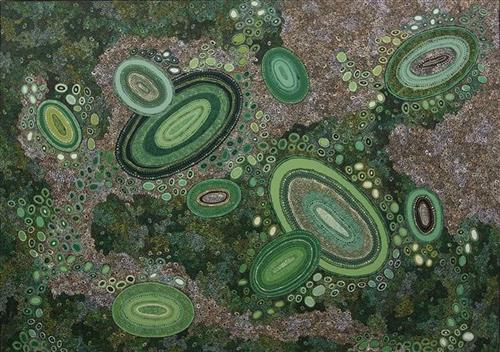
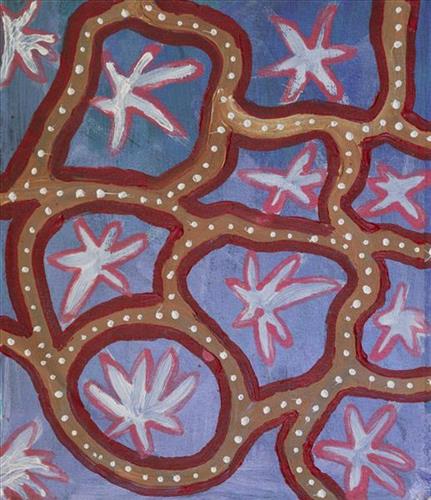
Linyji

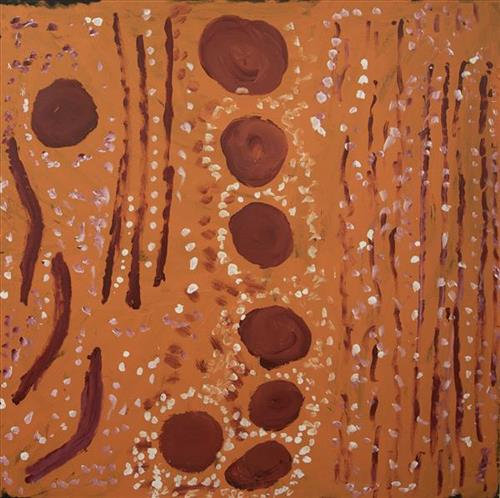
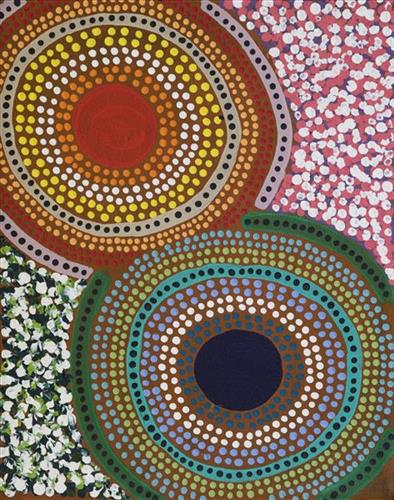
This work depicts a linyji (claypan) within the artists’ ngurra (home Country, camp), typically represented with circular forms. Claypans were visited more often during the wet seasons as they filled with water. 

During the pujiman (traditional, desert dwelling) period, knowledge of water sources was critical for survival, and today Martu Country is still defined in terms of the location and type of water. Each of the hundreds of claypans, rockholes, waterholes, soaks and springs found in the Martu desert homelands is known through real life experience and the recounting of Jukurrpa (Dreaming) narratives by name, location, quality and seasonal availability. This encyclopedic knowledge extends even to the nature and movement of arterial waterways, and sustained Martu as they travelled across their Country, hunting and gathering, visiting family, and fulfilling ceremonial obligations. They would traverse very large distances annually, visiting specific areas in the dry and wet season depending on the availability of water and the corresponding cycles of plant and animal life on which hunting and gathering bush tucker was reliant.

111582369901


Warnman Country

“When Martu paint, it’s like a map. Martu draw story on the ground and on the canvas, and all the circle and line there are the hunting areas and different waters and tracks where people used to walk, and [some you] can’t cross, like boundaries. So nowadays you see a colourful painting and wonder what it is, but that’s how Martu tell story long ago. It’s not just a lovely painting, it’s a story and a songline and a history and everything that goes with it.” 

– Ngalangka Nola Taylor and Joshua Booth

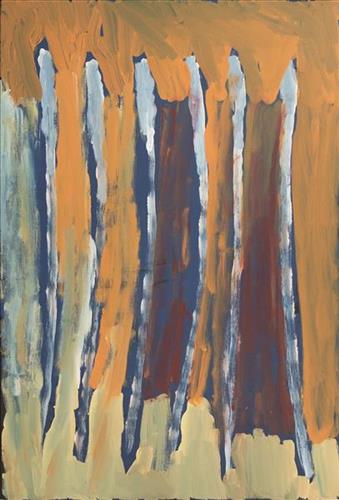
This work portrays an area of Country that can be interpreted in multiple ways. Firstly, the image may be read as an aerial representation of a particular location known to the artist- either land that they or their family travelled, from the pujiman (traditional, desert dwelling) era to now. During the pujiman period, Martu would traverse very large distances annually in small family groups, moving seasonally from water source to water source, and hunting and gathering bush tucker as they went. At this time, one’s survival depended on their intimate knowledge of the location of resources; thus physical elements of Country, such as sources of kapi (water), tali (sandhills), different varieties of warta (trees, vegetation), ngarrini (camps), and jina (tracks) are typically recorded with the use of a use of a system of iconographic forms universally shared across the desert. 

An additional layer of meaning in the work relates to more intangible concepts; life cycles based around kalyu (rain, water) and waru (fire) are also often evident. A thousands of year old practice, fire burning continues to be carried out as both an aid for hunting and a means of land management today. As the Martu travelled and hunted they would burn tracts of land, ensuring plant and animal biodiversity and reducing the risk of unmanageable, spontaneous bush fires. The patchwork nature of regrowth is evident in many landscape works, with each of the five distinctive phases of fire burning visually described with respect to the cycle of burning and regrowth.  

Finally, metaphysical information relating to a location may also be recorded; Jukurrpa (Dreaming) narratives chronicle the creation of physical landmarks, and can be referenced through depictions of ceremonial sites, songlines, and markers left in the land. Very often, however, information relating to Jukurrpa is censored by omission, or alternatively painted over with dotted patterns.
111582369900


Yala[ara

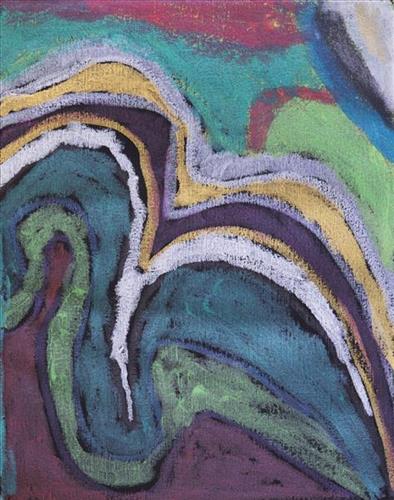
Martumili Artists work with over three hundred artists from remote Martu Aboriginal communities, including Punmu, Parnngurr, Kunawarritji, Jigalong, Irrungadji (Nullagine), and Warralong, as well as from the Parnpajinya (Newman) gallery and studio spaces. Known for their diverse, energetic, and unmediated painting styles, their works reflect the dramatic geography and scale of their homelands. Each artist, however, brings a unique approach to their craft.

Younger Martu artists often start painting alongside their parents, grandparents, and extended family, which fosters an organic learning process. This not only involves mastering painting techniques but also understanding specific locations, family histories, traditional ways of life, bush tucker, and Jukurrpa (Dreaming). Over time, with encouragement from their peers, they develop their own distinct styles and explore unique painting techniques and subject matter. In this work the artist brings a contemporary, evolving perspective to their work.

111582369899


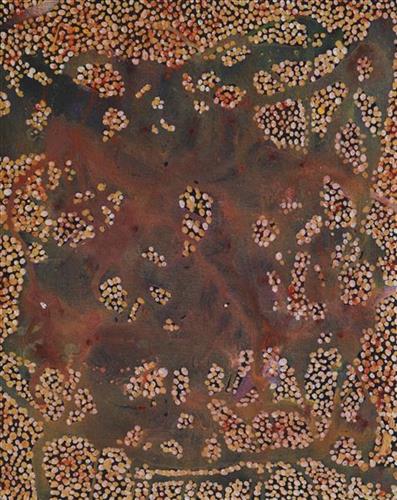
Warturata

“When Martu paint, it’s like a map. Martu draw story on the ground and on the canvas, and all the circle and line there are the hunting areas and different waters and tracks where people used to walk, and [some you] can’t cross, like boundaries. So nowadays you see a colourful painting and wonder what it is, but that’s how Martu tell story long ago. It’s not just a lovely painting, it’s a story and a songline and a history and everything that goes with it.” 

– Ngalangka Nola Taylor and Joshua Booth

This work portrays an area of Country that can be interpreted in multiple ways. Firstly, the image may be read as an aerial representation of a particular location known to the artist- either land that they or their family travelled, from the pujiman (traditional, desert dwelling) era to now. During the pujiman period, Martu would traverse very large distances annually in small family groups, moving seasonally from water source to water source, and hunting and gathering bush tucker as they went. At this time, one’s survival depended on their intimate knowledge of the location of resources; thus physical elements of Country, such as sources of kapi (water), tali (sandhills), different varieties of warta (trees, vegetation), ngarrini (camps), and jina (tracks) are typically recorded with the use of a use of a system of iconographic forms universally shared across the desert. 

An additional layer of meaning in the work relates to more intangible concepts; life cycles based around kalyu (rain, water) and waru (fire) are also often evident. A thousands of year old practice, fire burning continues to be carried out as both an aid for hunting and a means of land management today. As the Martu travelled and hunted they would burn tracts of land, ensuring plant and animal biodiversity and reducing the risk of unmanageable, spontaneous bush fires. The patchwork nature of regrowth is evident in many landscape works, with each of the five distinctive phases of fire burning visually described with respect to the cycle of burning and regrowth.  

Finally, metaphysical information relating to a location may also be recorded; Jukurrpa (Dreaming) narratives chronicle the creation of physical landmarks, and can be referenced through depictions of ceremonial sites, songlines, and markers left in the land. Very often, however, information relating to Jukurrpa is censored by omission, or alternatively painted over with dotted patterns.
221282369769


Michelle’s Tjala Dreaming (Honey Ant)

Michelle’s father’s country is tjala tjukurpa (honey ant dreaming). Michelle and her family still visit this country where she pays special attention to the natural elements on the land which are then represented in her paintings:

I am painting the landscape from above, as you might see it from an airplane or as a bird looking down. It is beautiful country both from on the ground and up above.

In Michelle’s work she creates how the tjala (honey ants) tunnel though the sandy soil. She also depicts the small groupings of intergenerational women and children sitting together and digging for the tjala. The earth is shown as soft because it’s been raining.

Tjala or honey ants live in nests about a metre underground beneath mulga trees, and they are a highly favoured food source. The tjala tunnels that lead down to the ants’ nests are called nyinantu, and the larvae are called ipilyka-ipilyka. After the rain when the ground is soft the women go digging for tjala by looking for the drill holes under the trees. They then use shovels and crowbars to dig down following the tunnels to find the tjala inside. Aṉangu suck the delicious rich honey-like liquid from the distended abdomen of the tjala. The story of the tjala is told across the Northern Territory into South Australia and is an important link between Aṉangu mythology and inter-dependence on the environment.

221282369748


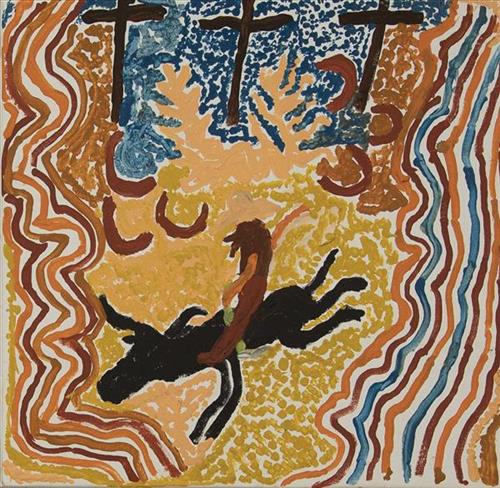
Pulukangka (Stockman)

Mr Jack was a stockman. He likes to tell stories about his time as a stockman on nearby cattle stations and as a young fella working on the sheep station at the Ernabella Mission. Mr Jack says about those days ‘good memories! good times! a time staying strong in my heart’. His artwork pays tribute to the stockmen sitting around a campfire drinking a kapati (cup of tea) and telling stories like Mr Kulyuru’s time at the rodeo in Alice Springs or Mr Ingkatji on his horse and cart. 

221282369747


Kulata Tjuta – Kungkarangkalpa Freddy’s Story

Kungkarangkalpa means the Seven Sisters. This is an extensive creation story that relates to the Pleiades constellation in the southern hemisphere. The story traverses Australia taking on different forms, however Freddy’s part of the story is from his father’s country west of Atila (Mt Connor). For this part of the story a man called Nyiru is chasing the sisters as he wants to sleep with the oldest sister. All the younger sisters are deeply afraid of him. 

Nyiru makes kulata tjuta (many spears) and leaves them leaning up against a tree. When the sisters are travelling they find the spears resting there and realise that the wati kura (bad man) is nearby. They get frightened and run away. Eventually, to escape Nyiru, the sisters fly into the sky where they turn into stars and form the constellation.

221282369744


Kulata Tjuta – Many Spears

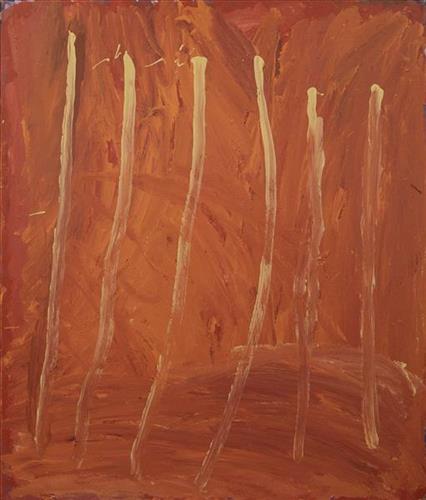
Freddy is painting his grandfather’s country in far west South Australia. He depicts kulata tjuta (many spears) travelling through the sky to catch wati wanampi (snake man). Those wati wanampi are moving fast through the sky. There was one woman waiting there with a baby and she said there was a wati who was nearby hiding in a bush, ready to duck down and go and then throw those spears.

221282369742


Kulata Tjuta – Many Spears

Freddy is painting his grandfather’s country in far west South Australia. He depicts kulata tjuta (many spears) travelling through the sky to catch wati wanampi (snake man). Those wati wanampi are moving fast through the sky. There was one woman waiting there with a baby and she said there was a wati who was nearby hiding in a bush, ready to duck down and go and then throw those spears.