111982369629


Kunkurra (The Spiralling Wind)

‘Kunkurra’, the spiralling wind is associated with several sites in the Kardbam clan estate. On one level, this painting can be interpreted as a depiction of the kinds of mini-cyclones common during the wet season in Arnhem Land, where the artist lives. In this painting, Kunkurra also relates specifically to a site called Bilwoyinj, near Mankorlod.

At this site, two of the most important Kuninjku creation beings, a father and son known as na-korrkko, are believed to have hunted and eaten a goanna. They left some of the goanna fat behind at the site, which turned into the rock that still stands there today. The word Bilwoyinj, which is the name of this site, also refers to the fat of the goanna. Bilwoyinj site is also a ceremonial ground for a ceremony called Yabbaduruwa, a major ceremony owned by the Yirridja patrimoiety. The Yabbaduruwa ceremony is primarily concerned with initiation, land ownership and promoting the cyclical regeneration of the human and natural worlds.
111982369628


Kunkurra (The Spiralling Wind)

‘Kunkurra’, the spiralling wind is associated with several sites in the Kardbam clan estate. On one level, this painting can be interpreted as a depiction of the kinds of mini-cyclones common during the wet season in Arnhem Land, where the artist lives. In this painting, Kunkurra also relates specifically to a site called Bilwoyinj, near Mankorlod.

At this site, two of the most important Kuninjku creation beings, a father and son known as na-korrkko, are believed to have hunted and eaten a goanna. They left some of the goanna fat behind at the site, which turned into the rock that still stands there today. The word Bilwoyinj, which is the name of this site, also refers to the fat of the goanna. Bilwoyinj site is also a ceremonial ground for a ceremony called Yabbaduruwa, a major ceremony owned by the Yirridja patrimoiety. The Yabbaduruwa ceremony is primarily concerned with initiation, land ownership and promoting the cyclical regeneration of the human and natural worlds.
111982369627


Kunkurra (The Spiralling Wind)

‘Kunkurra’, the spiralling wind is associated with several sites in the Kardbam clan estate. On one level, this painting can be interpreted as a depiction of the kinds of mini-cyclones common during the wet season in Arnhem Land, where the artist lives. In this painting, Kunkurra also relates specifically to a site called Bilwoyinj, near Mankorlod.

At this site, two of the most important Kuninjku creation beings, a father and son known as na-korrkko, are believed to have hunted and eaten a goanna. They left some of the goanna fat behind at the site, which turned into the rock that still stands there today. The word Bilwoyinj, which is the name of this site, also refers to the fat of the goanna. Bilwoyinj site is also a ceremonial ground for a ceremony called Yabbaduruwa, a major ceremony owned by the Yirridja patrimoiety. The Yabbaduruwa ceremony is primarily concerned with initiation, land ownership and promoting the cyclical regeneration of the human and natural worlds.
111982369626


Kunkurra (The Spiralling Wind)

‘Kunkurra’, the spiralling wind is associated with several sites in the Kardbam clan estate. On one level, this painting can be interpreted as a depiction of the kinds of mini-cyclones common during the wet season in Arnhem Land, where the artist lives. In this painting, Kunkurra also relates specifically to a site called Bilwoyinj, near Mankorlod.

At this site, two of the most important Kuninjku creation beings, a father and son known as na-korrkko, are believed to have hunted and eaten a goanna. They left some of the goanna fat behind at the site, which turned into the rock that still stands there today. The word Bilwoyinj, which is the name of this site, also refers to the fat of the goanna. Bilwoyinj site is also a ceremonial ground for a ceremony called Yabbaduruwa, a major ceremony owned by the Yirridja patrimoiety. The Yabbaduruwa ceremony is primarily concerned with initiation, land ownership and promoting the cyclical regeneration of the human and natural worlds.
111982369625


Kunkurra (The Spiralling Wind)

‘Kunkurra’, the spiralling wind is associated with several sites in the Kardbam clan estate. On one level, this painting can be interpreted as a depiction of the kinds of mini-cyclones common during the wet season in Arnhem Land, where the artist lives. In this painting, Kunkurra also relates specifically to a site called Bilwoyinj, near Mankorlod.

At this site, two of the most important Kuninjku creation beings, a father and son known as na-korrkko, are believed to have hunted and eaten a goanna. They left some of the goanna fat behind at the site, which turned into the rock that still stands there today. The word Bilwoyinj, which is the name of this site, also refers to the fat of the goanna. Bilwoyinj site is also a ceremonial ground for a ceremony called Yabbaduruwa, a major ceremony owned by the Yirridja patrimoiety. The Yabbaduruwa ceremony is primarily concerned with initiation, land ownership and promoting the cyclical regeneration of the human and natural worlds.
111982369624


Kunkurra (The Spiralling Wind)

‘Kunkurra’, the spiralling wind is associated with several sites in the Kardbam clan estate. On one level, this painting can be interpreted as a depiction of the kinds of mini-cyclones common during the wet season in Arnhem Land, where the artist lives. In this painting, Kunkurra also relates specifically to a site called Bilwoyinj, near Mankorlod.

At this site, two of the most important Kuninjku creation beings, a father and son known as na-korrkko, are believed to have hunted and eaten a goanna. They left some of the goanna fat behind at the site, which turned into the rock that still stands there today. The word Bilwoyinj, which is the name of this site, also refers to the fat of the goanna. Bilwoyinj site is also a ceremonial ground for a ceremony called Yabbaduruwa, a major ceremony owned by the Yirridja patrimoiety. The Yabbaduruwa ceremony is primarily concerned with initiation, land ownership and promoting the cyclical regeneration of the human and natural worlds.
111982369623


Kalawan (Goanna)

This painting depicts two goannas embedded in an intricate depiction of kunkurra, the mini cyclones common during the wet season in Arnhem Land. Kunkurra also relates specifically to the Bilwoyinj site. At this site, two of the most important Kuninjku creation beings, a father and son, hunted and ate goanna. They left some goanna fat behind, which turned into the rock that still stands at the site today.

111982369622


Ngalkodjek Yawkyawk

This artwork depicts the Ngalkodjek Yawkyawk of Barrihdjowkkeng country.

“This story is very old. That old man [my father Crusoe Kuningbal] when he was alive, told that story to me, to all of us. He told us about the yawkyawk (mermaid) spirit women called Ngalkodjek who lives in the billabong on my country. He told us how they call out loudly, how they call out as they walk along.

That is what they do, calling out. They walked around eating bush foods like those little bush yams. They would pound the yams into a pulp and eat them. That is their traditional food which they eat.

When they walk down from the bush, they follow a set path that belongs to them and they walk along calling out. That is their path which they take. It is an old traditional route.

They placed a woman’s breast into the country. That rock was not there originally, but it was a woman’s breast. It is the breast of those women.

They put that djang [sacred place] there, and then at the time when non-Aboriginal people arrived in the region, then the breast turned to stone. Now it has turned solid into rock.”

– Owen Yalandja

111982369621


Lorrkon (Hollow Log)

The Lorrkon or bone pole coffin ceremony is the final ceremony in a sequence of mortuary rituals celebrated by the people of Arnhem Land. This ceremony involves the placing of the deceased’s bones into a hollow log decorated with painted clan designs and ceremonially placed into the ground where it remains until it slowly decays over many years.


The log is made from a termite hollowed Stringybark tree (Eucalyptus tetradonta) and is decorated with totemic emblems. The western Arnhem Land version of the Lorrkon ceremony involves the singing of sacred songs to the accompaniment of karlikarli, a pair of sacred boomerangs used as rhythm instruments. During the final evening of the ceremony, dancers decorate themselves with kapok down, or today, cotton wool and conduct much of the final segments of the ceremony in the secrecy of a restricted men’s camp. The complete ceremony may stretch over a period of two weeks, but on the last night the bones of the deceased, which have been kept in bark or wrapped in cloth, are taken out, painted with red ochre and placed inside the hollow log. This ceremony may take place many years after the person has died.


At first light on the final morning of the Lorrkon ceremony, the men appear, coming out of their secret bush camp carrying the pole towards the women’s camp. The two groups call to each other using distinct ceremonial calls. The women have prepared a hole for the pole to be placed into and when it is stood upright, women in particular kinship relationships to the deceased dance around the pole in a jumping/shuffling motion. The Lorrkon is then often covered with a tarpaulin and left to slowly decay.

359709482370138


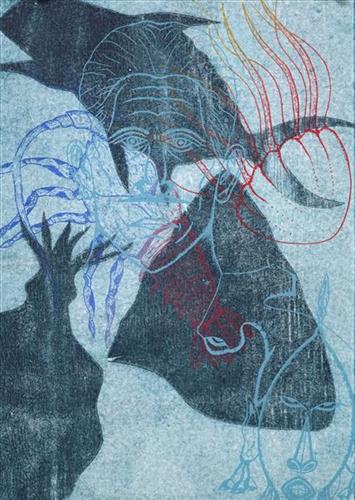
Malu Thumayawaik

The mask in the artwork represents the profound concerns of my ancestors regarding the exploitation of our marine environment, driven by climate change and pollution. For centuries since creation, Indigenous peoples have possessed a rich tradition of sustainable marine conservation, emphasising responsible harvesting to ensure that resources endure for generations. Coral reefs, mangroves, and seagrasses are not merely ecosystems but essential components of biodiversity, food security, and cultural identity. Protecting these invaluable ecosystems is not just an environmental obligation but a cultural imperative. We must unite globally to protect our oceans, ensuring their health and abundance for future generations.


Art Centre notes:

This artwork is a unique state, monotype screen print on BFK Rives paper (100% cotton rag paper with strong archival properties. 

Paper size; 39 x 28cm

Printed at Canberra, Feb 2025

Print Assistant: BasilHall.