359709482369979


Malu Thumayawaik

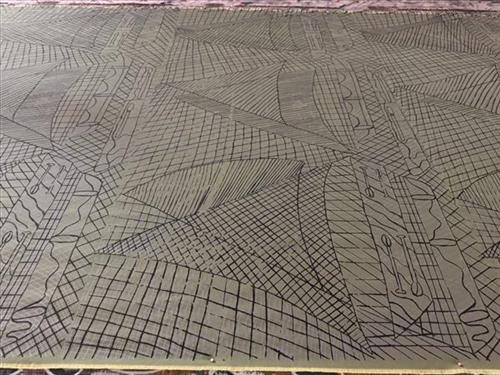
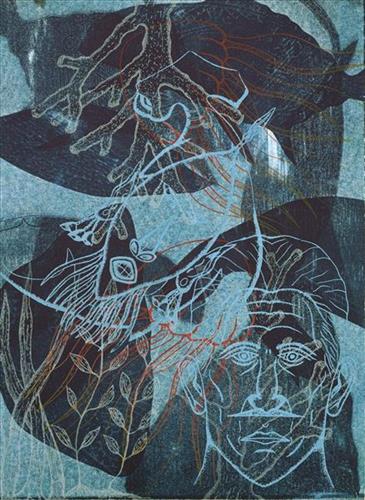
The mask in the artwork represents the profound concerns of my ancestors regarding the exploitation of our marine environment, driven by climate change and pollution. For centuries since creation, Indigenous peoples have possessed a rich tradition of sustainable marine conservation, emphasising responsible harvesting to ensure that resources endure for generations. Coral reefs, mangroves, and seagrasses are not merely ecosystems but essential components of biodiversity, food security, and cultural identity. Protecting these invaluable ecosystems is not just an environmental obligation but a cultural imperative. We must unite globally to protect our oceans, ensuring their health and abundance for future generations.


Art Centre notes:

This artwork is a unique state, monotype screen print on BFK Rives paper (100% cotton rag paper with strong archival properties. 

Paper size; 39 x 28cm

Printed at Canberra, Feb 2025

Print Assistant: BasilHall.
377810582369966


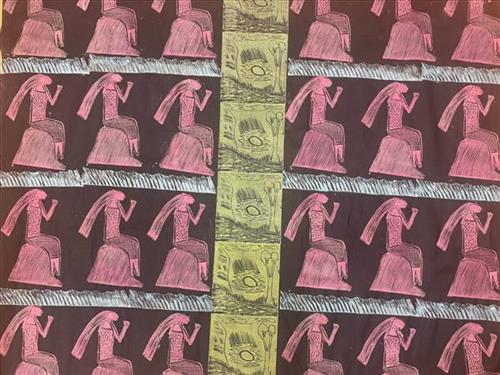
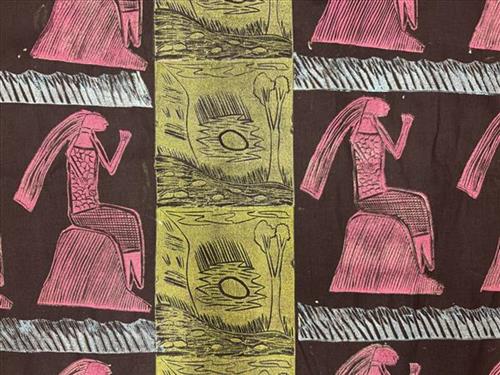
Yawkyawk (young women spirit) (on a rock)

“This mermaid lives in a special freshwater billabong in the manberrk (savanna woodland).

She is sitting on a rock on the edge of the kunronj (billabong). When we see the kunronj shining, and the sun goes down we call this kahbohmimihmeh.


111582370209


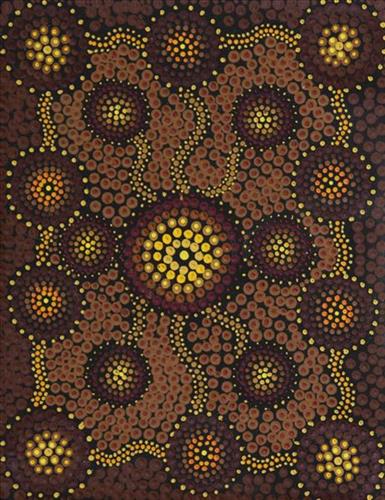
Jigalong Hill (Donkey Hill)

“When the three grannies ran away to Perth, one got caught near Wiluna. The other two walked along the fence.

Uncle sat on top of the hill for three days to make sure they were safe. It took nine weeks for the whole trip. [My mother was] a very smart woman. She would throw people off [their tracks] and they would walk on the fence.

When they were making the fence they had the donkeys helping, so some people called it Donkey Hill, east of Jigalong.

I’ve got a good memory – I can remember the colours pretty well. I just love country. It’s different, all the parts of the country, all the different colours.”

– Albert Pilkington


Jigalong Aboriginal Community, the largest of the Martu communities, is located on the western edge of the Little Sandy Desert, not far from the town of Newman. Jigalong was established in 1907 as the site for a maintenance and rations store for workmen constructing the Rabbit Proof Fence, and was converted into a camel breeding site in the 1930’s before finally becoming a Christian mission under the Apostolic Church in 1947. Old Jigalong is where the camp on Jigalong Station was situated before the present Community was built. Jigalong and its surrounding land was returned to the Martu in 1974. 

For many Martu, Jigalong Mission was the site where their pujiman (traditional, desert dwelling) lifestyle came to an end from the late 1940s. From this time, they mostly transitioned to a life as stockmen and women working in cattle stations in the Pilbara region and beyond. In the wake of the extreme and prolonged drought of the 1960s, the last of the remaining pujimanpa (desert dwellers) were forced to move to missions like Jigalong, where a supply of food and water was assured. There, many were reunited with family members that had already moved in from the desert.

377810582370212


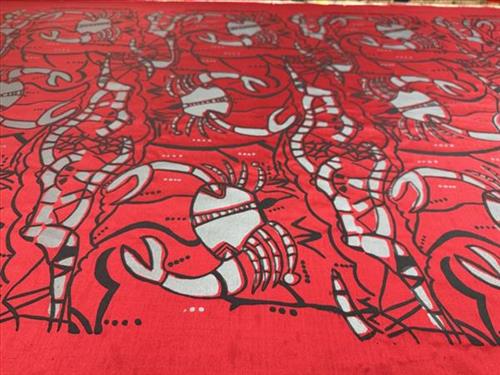
Rrugurrgurda (Mud Crab)

This design tells the story of Elizabeth’s homeland – a dreaming place, a good dreaming place with plentiful mud crabs. Elizabeth’s homeland lies east of Maningrida, at the mouth of Blyth river. This country is known for a large spiritual mud crab, which lives in the area.

Many families go and collect crabs to eat there with long sticks, or collect directly from the shores. Mud crabs hide in the muddy bottoms of estuaries and mangrove forests in areas surrounding Maningrida. After a king tide, a large cyclical tide that bring the crabs out from the mangroves, it is a good time to find crabs.

Rrugurrgurda (mud crabs) is pronounced Ahh-rewg-gurd-gurda in the Burarra language. Rrugurrgurda are good baladji (bush food in Burarra) and can be caught all year round. They are put on the fire to cook and they are ready when they turn a bright orange colour.

377810582370211


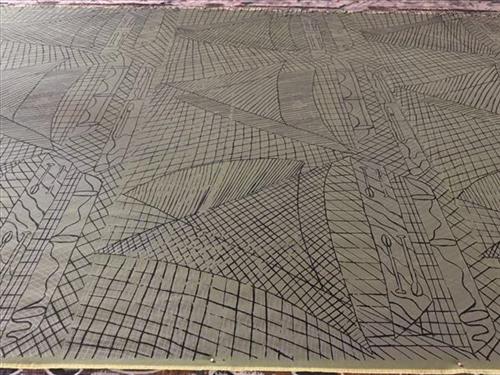
Wubbunj (Paperbark Canoe)

“Wubbunj is our traditional canoe. This design is the old history story of how people came to live in this place we call Maningrida. Two old people were staying on the other side of the saltwater, in Narlarrambarr area. The old people slept in a paper bark shelter and hunted on the water using their canoe.

A long time ago our people carved these canoes from the big paperbark trees. They had paddles with one person at the front, one at back, and other kids and passengers in the middle. Kunkot (paper bark) was used to make the sails which they would stand up and catch the wind.

One day these old people saw a new boat in their waters, which belonged to the Makassans (Indonesians). Those two old men saw the big Makassan boat coming in, and decided to paddle their canoe from Narlarrambarr to the other side (modern day Maningrida). We were scared of the Makassans, they gave us tobacco and tea, but they took many of our women.

When those two old people tasted that water at Maningrida from the Djomi spring, it was sweet freshwater and they decided to stay here. People here had no clothes in those time, we were just wearing string morkoi (loin cloths). Seven tribes were here then, but now in Maningrida there are lots more languages.” – Raylene Bonson

377810582370210


Wubbunj (Paperbark Canoe)

“Wubbunj is our traditional canoe. This design is the old history story of how people came to live in this place we call Maningrida. Two old people were staying on the other side of the saltwater, in Narlarrambarr area. The old people slept in a paper bark shelter and hunted on the water using their canoe.

A long time ago our people carved these canoes from the big paperbark trees. They had paddles with one person at the front, one at back, and other kids and passengers in the middle. Kunkot (paper bark) was used to make the sails which they would stand up and catch the wind.

One day these old people saw a new boat in their waters, which belonged to the Makassans (Indonesians). Those two old men saw the big Makassan boat coming in, and decided to paddle their canoe from Narlarrambarr to the other side (modern day Maningrida). We were scared of the Makassans, they gave us tobacco and tea, but they took many of our women.

When those two old people tasted that water at Maningrida from the Djomi spring, it was sweet freshwater and they decided to stay here. People here had no clothes in those time, we were just wearing string morkoi (loin cloths). Seven tribes were here then, but now in Maningrida there are lots more languages.” – Raylene Bonson

111582370206


Untitled

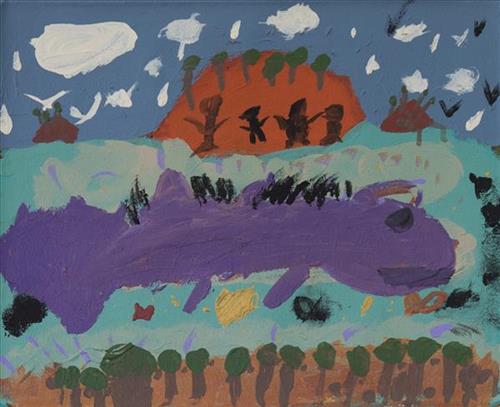
Martumili Artists work with over three hundred artists from remote Martu Aboriginal communities, including Punmu, Parnngurr, Kunawarritji, Jigalong, Irrungadji (Nullagine), and Warralong, as well as from the Parnpajinya (Newman) gallery and studio spaces. Known for their diverse, energetic, and unmediated painting styles, their works reflect the dramatic geography and scale of their homelands. Each artist, however, brings a unique approach to their craft.

Younger Martu artists often start painting alongside their parents, grandparents, and extended family, which fosters an organic learning process. This not only involves mastering painting techniques but also understanding specific locations, family histories, traditional ways of life, bush tucker, and Jukurrpa (Dreaming). Over time, with encouragement from their peers, they develop their own distinct styles and explore unique painting techniques and subject matter. In this work the artist brings a contemporary, evolving perspective to their work.

111582370204


Untitled

Martumili Artists work with over three hundred artists from remote Martu Aboriginal communities, including Punmu, Parnngurr, Kunawarritji, Jigalong, Irrungadji (Nullagine), and Warralong, as well as from the Parnpajinya (Newman) gallery and studio spaces. Known for their diverse, energetic, and unmediated painting styles, their works reflect the dramatic geography and scale of their homelands. Each artist, however, brings a unique approach to their craft.

Younger Martu artists often start painting alongside their parents, grandparents, and extended family, which fosters an organic learning process. This not only involves mastering painting techniques but also understanding specific locations, family histories, traditional ways of life, bush tucker, and Jukurrpa (Dreaming). Over time, with encouragement from their peers, they develop their own distinct styles and explore unique painting techniques and subject matter. In this work the artist brings a contemporary, evolving perspective to their work.