
111582370690
Untitled
Martumili Artists work with over three hundred artists from remote Martu Aboriginal communities, including Punmu, Parnngurr, Kunawarritji, Jigalong, Irrungadji (Nullagine), and Warralong, as well as from the Parnpajinya (Newman) gallery and studio spaces. Known for their diverse, energetic, and unmediated painting styles, their works reflect the dramatic geography and scale of their homelands. Each artist, however, brings a unique approach to their craft.
Younger Martu artists often start painting alongside their parents, grandparents, and extended family, which fosters an organic learning process. This not only involves mastering painting techniques but also understanding specific locations, family histories, traditional ways of life, bush tucker, and Jukurrpa (Dreaming). Over time, with encouragement from their peers, they develop their own distinct styles and explore unique painting techniques and subject matter. In this work the artist brings a contemporary, evolving perspective to their work.
221282370774
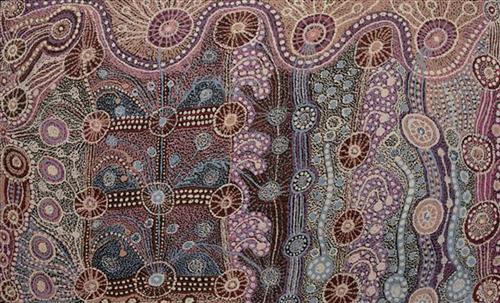
Tjukurpa Mulayangu / Atipalku’s Story
Tjukurpa Mulayangu is a men’s law place. This is Atipalku’s father’s country in the western part of the Aṉangu Pitjantjatjara Yankunytjatjara (APY) Lands in South Australia. Mulayangu was a wanampi (water snake) who travelled all over this area creating rockholes.
In 2020 Atipalku and her family travelled to this area and stayed at their homeland, Tangkana, for the first time in many years. Atipallku was able to show her children and grandchildren this special place and share stories with them that had been passed down to her.
This painting depicts Atipalku’s father’s country with tjanpi (grass) and many tjukula (waterholes).
221282370771
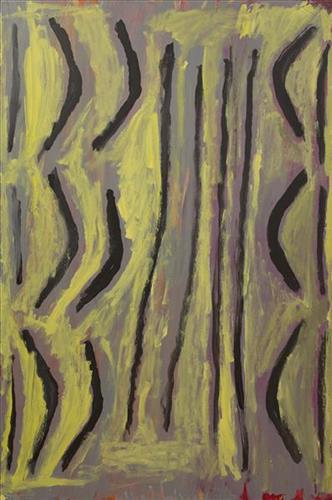
Kulata and Kali (Spear & Boomerang)
My father told me this story, it’s a dream he had. There was a man who was travelling for a long time. He was travelling with kulata (spear) and kali (boomerang) because someone was waiting there for fighting.
In the middle of the way someone came making problems and trouble. All the kulata gone, all the kali gone. That place is still there and the kangaroo and emu are still drinking there at that waterhole.
This is tjukurpa wiru – a good story. There are some stories I can’t tell you.
221282370769
Piltati
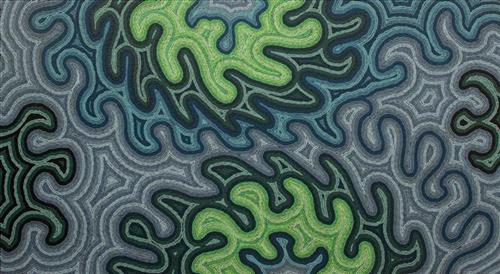
There were two sisters who married two brothers and they all lived together. One day the women went wandering and they went such a long way that they forgot about their husbands. Back at the camp, the two husbands were thinking, ‘Where are our wives?’ and they decided to go looking for them. One brother said to the other, ‘What should we become to go looking for them?’ and the other brother said ‘Why don’t we become Rainbow Serpents?’ And they travelled in the sky looking down for their wives. Finally they see them hunting for carpet snakes and they put something in the hole where the women were digging. The women find it and then dig another hole and once again the men have put something in there. And this is how the men lure the women back to Piltati where the men make the sisters transform into Wanampi, swallow them and keep .them in their throats. All four of them live together in the waterhole and still live there today.
221282370768
Tjukurpa Mulayangu / Atipalku’s Story
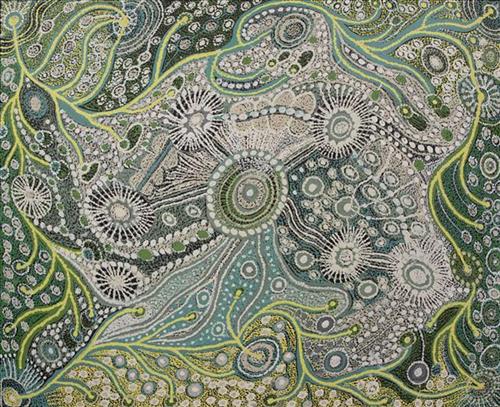
Tjukurpa Mulayangu is a men’s law place. This is Atipalku’s father’s country in the western part of the Aṉangu Pitjantjatjara Yankunytjatjara (APY) Lands in South Australia. Mulayangu was a wanampi (water snake) who travelled all over this area creating rockholes.
In 2020 Atipalku and her family travelled to this area and stayed at their homeland, Tangkana, for the first time in many years. Atipallku was able to show her children and grandchildren this special place and share stories with them that had been passed down to her.
This painting depicts Atipalku’s father’s country with tjanpi (grass) and many tjukula (waterholes).
221282370766
Tjukurpa Mulayangu / Atipalku’s Story
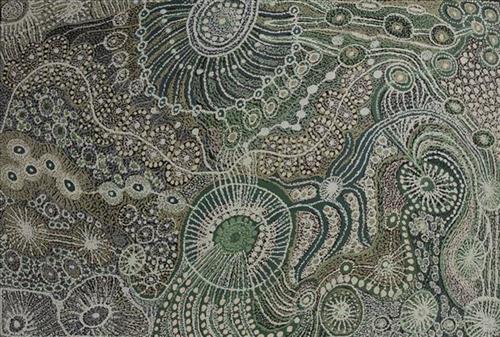
Tjukurpa Mulayangu is a men’s law place. This is Atipalku’s father’s country in the western part of the Aṉangu Pitjantjatjara Yankunytjatjara (APY) Lands in South Australia. Mulayangu was a wanampi (water snake) who travelled all over this area creating rockholes.
In 2020 Atipalku and her family travelled to this area and stayed at their homeland, Tangkana, for the first time in many years. Atipallku was able to show her children and grandchildren this special place and share stories with them that had been passed down to her.
This painting depicts Atipalku’s father’s country with tjanpi (grass) and many tjukula (waterholes).
221282370763
Kungkarangkalpa / Seven Sisters
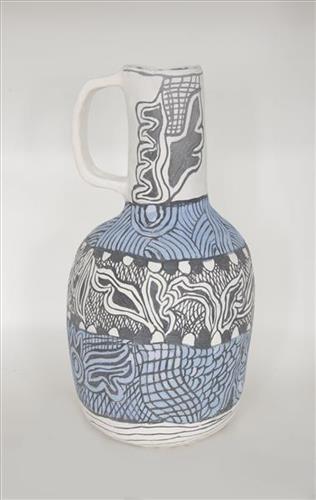
Kungkarangkalpa means the Seven Sisters. This is an extensive creation story that relates to the Pleiades constellation in the southern hemisphere. The story traverses Australia taking on different forms, however local women are privy to the part of the story which takes place in the country near Ernabella. For this part of the story, the man called Nyiru is chasing the sisters as he wants to sleep with the oldest sister. All the younger sisters are deeply afraid of him. As Nyiru is chasing the sisters, he tries to catch them by using magic to turn himself into the most tempting bush tomatoes for the sisters to eat and the most beautiful ili (fig) tree for the sisters to camp under. However, the sisters are aware of his magic and go hungry and run through the night rather than be caught by Nyiru. Eventually, to escape Nyiru, the sisters fly into the sky where they turn into stars and form the constellation.
221282370761

Tali / Sand dune
This design is inspired by the red sand dunes that are found throughout the central desert. There is a large red sand dune near Ernabella named Wamikata which is a popular place for looking for maku (witchetty grubs) and for teaching Milpatjunanyi (telling stories in the sand) to children.