111582375552


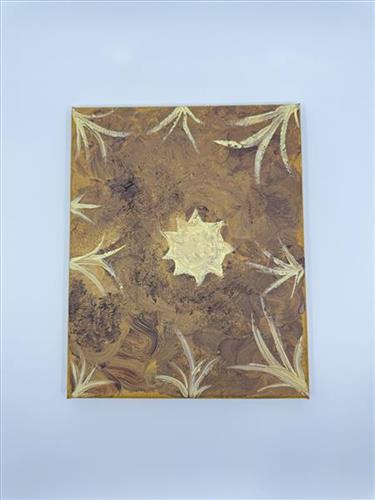
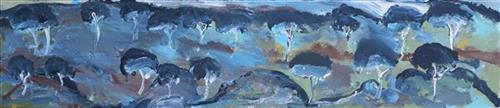
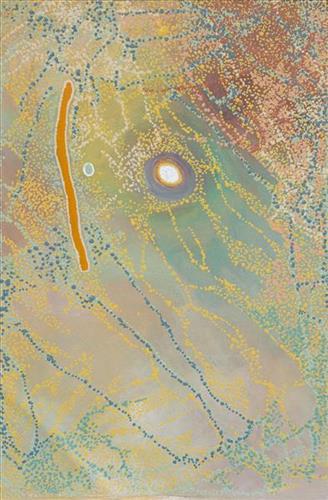
Kulyakartu

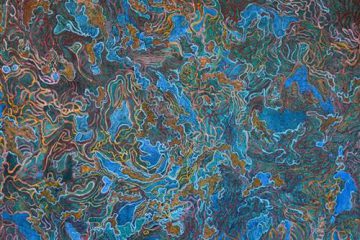
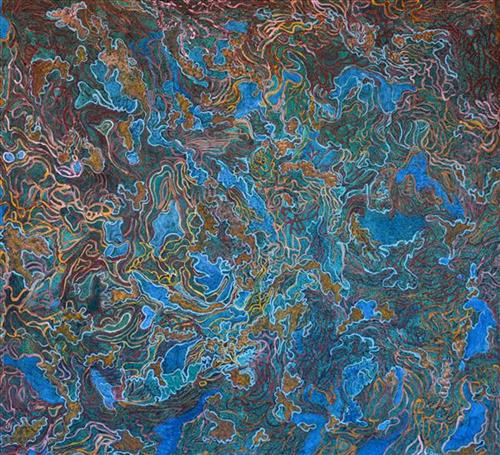
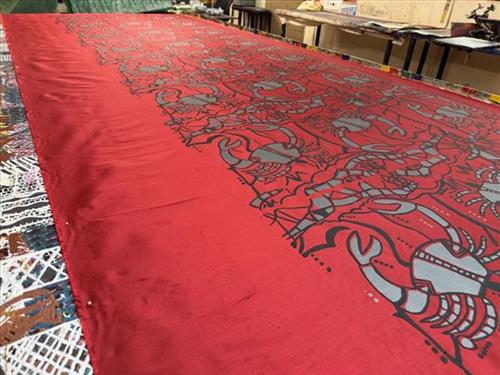
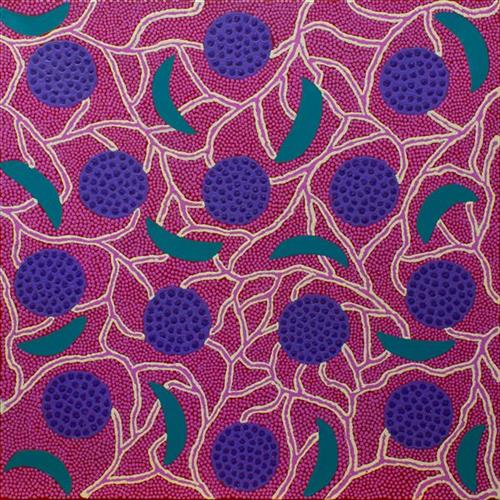
“Long time ago I been there. It is my grandmother’s, grandfather’s, father’s, [and] mother’s country, Kulyakartu.  I am painting this particular place. It keeps me connected, [gives me a] sense of belonging [to] tell my grandmother’s story through my art.  Where she was born, I’m a part of that. 

It makes me feel proud painting.  Most important is telling the story behind the painting so people can understand where I am coming from.  Kulyakartu is our ngurra (home Country, camp).  I will continue telling the story through my art.”

– Derrick Butt

This painting depicts Kulyakartu, Derrick’s ancestral ngurra (home Country, camp). Kulyakartu is a large area in the far north of the Martu homelands, near the Percival Lakes region of Western Australia’s Great Sandy Desert. Kulyakartu is mostly flat grass Country, and is known as a good hunting area. In particular, parnajarrpa (goanna), wild cats, and lunki (witchetty grub) are found in abundance here. In the wantajarra (wet season) the dry lakes in the region fill with water.
221382375546


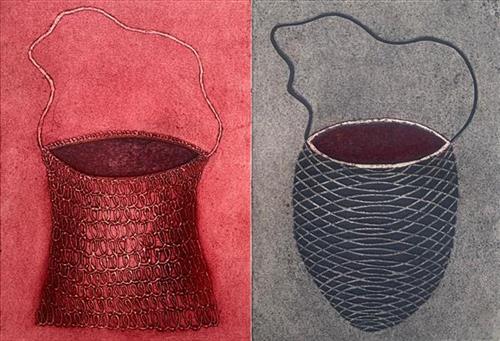
Gapu Series XII – Dilly Bags

The 2025 Gapu series is the 12th workshop series in Djilpin’s long collaboration with Basil Hall Editions. Djilpin Artists worked, for the first time, with Printmaker Antonia Aitken. Collograph plates were developed by 15 artists over a week in April at Djilpin Arts Centre in Wugularr (Beswick). For Series XII, artists have depicted traditional string and dilly bags, bathi, exploring the place of these artefacts in culture, ceremony and mythology.

Evangeline Wilson’s print for Gapu XII was selected for Walyalup Fremantle Arts Centre Print Award (August) with the complete Series launching at Honey Bones Galley, Melbourne (October 2025).

222082375821


Traditional Grasses On Country- Nurtured by the sun

There are many Traditional grasses within each Clans lands- We all as custodians of Country harvest, cultivate and trade with other clans.Grass are used for weaving- cultural dance. Grass skirts, headwear, making baskets and woven coolamons.

115682375825


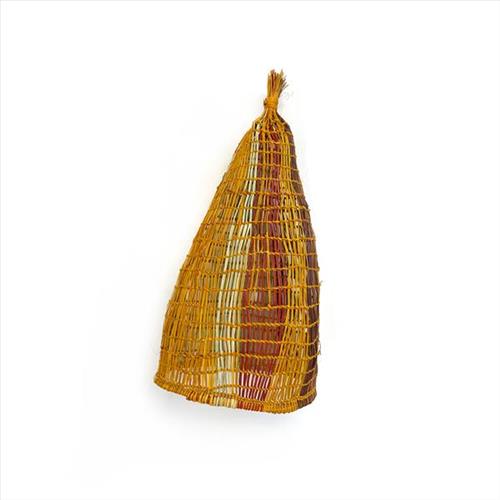
Dhawurr or Batjbarra (Fish Trap)

Dhawurr, or Batjbarra, is a traditional fishing method used by Indigenous people in the Arafura Swamp and surrounding wetlands of Arnhem Land. Yolŋu now prefer the modern fishing methods of reels and bait, however, weavers continue to make Batjbarra for cultural conservation and to be sold as decorative pieces.

When used for practical purposes, the Batjbarra was placed into the river with the opening facing oncoming fish. The woven tunnel trapped the fish with the weave tight enough to prevent escape but loose enough to allow water to freely flow through. The traps tapered so that when they were submerged, the water pressure wedged them into place.

The primary material used in this piece is the young, green leaves of the Pandanus spiralis tree, that were harvested using a long wooden hook. The leaves are stripped of their prickles, with the smaller fibres being dried to produce a strong, resilient material. These fibres are then twisted, coiled, or combined using various techniques to create the fish trap.

Bula’bula weavers exclusively use natural dyes, derived from locally sourced roots, leaves and grasses. These pigments are extracted and infused into pandanus fibres by boiling over an open fire, producing the rich, vibrant colours characteristic of contemporary Yolŋu weavings.

377810582375772


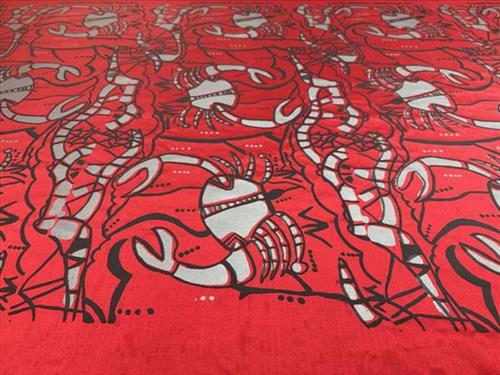
Rrugurrgurda (mud crab) * Burarra

This design tells the story of Elizabeth’s homeland – a dreaming place, a good dreaming place with plenty of mud crabs. Elizabeth’s homeland lies east of Maningrida, at the mouth of the Blyth river. This country is known for a large spiritual mud crab, which lives in the area.

Many families collect crabs to eat there with long sticks, or collect directly from the shores. Mud crabs hide in the muddy bottoms of estuaries and mangrove forests surrounding Maningrida. After a king tide, a large cyclical tide that brings the crabs out from the mangroves, it is a good time to find crabs.

Rrugurrgurda (mud crabs) is pronounced Ahh-rewg-gurd-gurda in the Burarra language. Rrugurrgurda are good baladji (bush food in Burarra) and can be caught all year round. They are put on the fire to cook, and they are ready when they turn a bright orange colour.
 

220282375702


Ipalu – Bush Banana

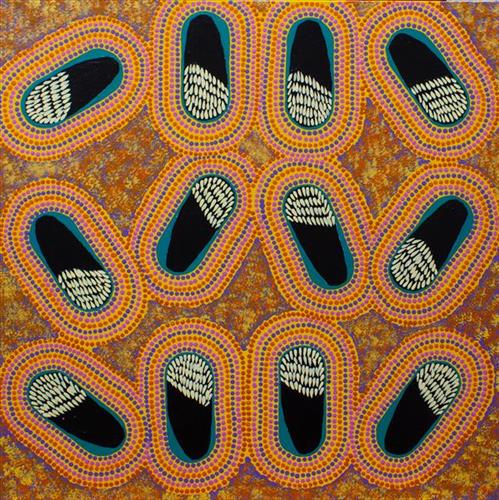
 “Ipalu, bush banana. It’s an oval shape. There’s two ways of eating it, from the tree and cooking it in warm ashes.” – Joyce Dixon

220282375700


Wanpanpi – Bush Coconut

“Wanpanpi, the bush coconut. You can’t just eat it because it has a hard shell. When you get it from the tree you have to hit it with a rock to open it up to see what kind is inside, then you can eat it. When you go hunting you can collect these, it’s in a tree like a gum tree. They use  that tree for Sorry Business. They are in the top of that tree with the gum nuts, its got seeds that you can make into a necklace. When people pass away they use those leaves and branches to walk into the place where the person used to be and give respect, feeling empathy. The tree is important. It’s special because people can use it.” – Joyce Dixon

220182375804


Yalpirakinu

Yalpirakinu is Adrian’s mother’s country. Adrian’s mother is the late Eunice Napangardi, a well known painter herself. His artworks consistently refer to the desert mountains, ridges and trees which are part of Yalpirakinu. Using a restricted colour palette, Adrian’s  brushwork is loaded with energy, drama and memories. He is a deliberate and thoughtful painter; reworking, pushing and pulling the image to completion.