221282382087


Tjitji Tjuta Walytjata

This Tjukurpa is from a place called Walytjata near Pipalyatjara. It’s a true story. You can see all the kids sitting there in the cave. The mother left and told the kids to stay there, but she never came back. It’s a sad story. The older brother, he was looking after everyone. He would go out hunting for malu (kangaroo), kalaya (emu) and bring back the kuka (meat) for all the kids.

221282382086


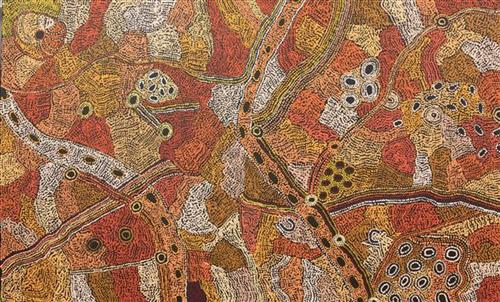
Minyma Maalila-ku Ngura – Maalila’s Country

This is a story of a woman named Maalila travelling south to west. She stopped near Kanpi area to look for a place to stay, her ngura (country). She was digging a hole to hide, she was scared of the wati (men). Maalila was with her daughter, they all lived in the underground cave hiding. They went out to gather bush food to take back to the cave. They dig for rabbits, kuka (meat) and they take kuka and mai (food) and they save for later in the cave. They have something to eat.

Story told by Teresa Baker

221282382085


Likara (Bark)

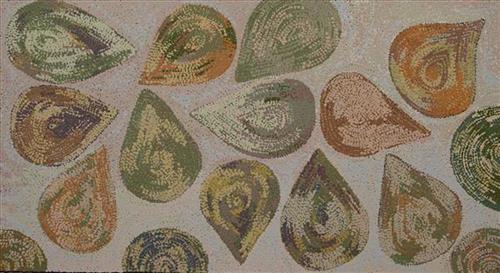
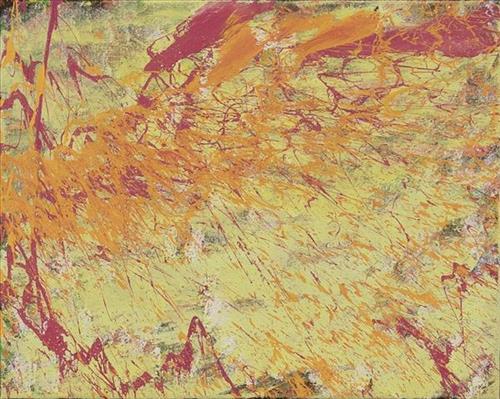
Alison is a quiet observer. She often walks gently around the community with her daughter on her shoulders looking at nature. Something she has been paying attention to is the movement of light on the trees. ‘I see the colour on the tree and I see it is always changing. When the sun is going down, colour is moving all over the tree’. Her paintings are inspired by the light catching the shifts and wandering lines of the bark.

221282382082


Piltati

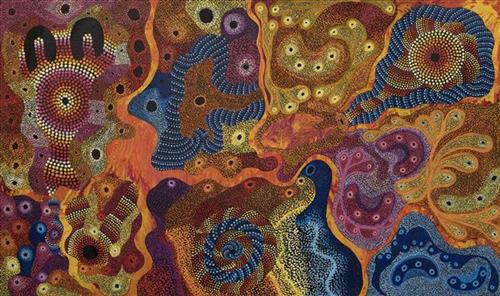
There were two sisters who married two brothers and they all lived together. One day the women went wandering and they went such a long way that they forgot about their husbands. Back at the camp, the two husbands were thinking, ‘Where are our wives?’ and they decided to go looking for them. One brother said to the other, ‘What should we become to go looking for them?’ and the other brother said ‘Why don’t we become Rainbow Serpents?’ And they travelled in the sky looking down for their wives. Finally they see them hunting for carpet snakes and they put something in the hole where the women were digging. The women find it and then dig another hole and once again the men have put something in there. And this is how the men lure the women back to Piltati where the men make the sisters transform into Wanampi, swallow them and keep .them in their throats. All four of them live together in the waterhole and still live there today.

221282382069


Dust Storm

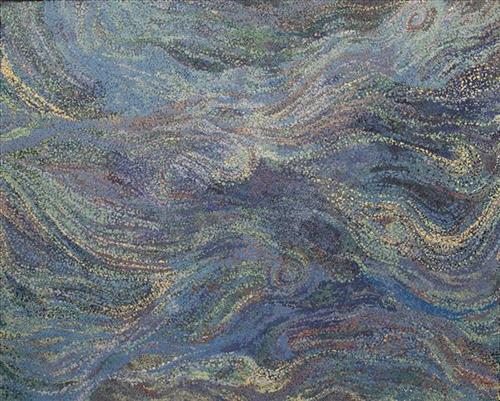
Rachael comes from the third generation of Lionel women painting at Ernabella Arts. Rachael draws inspiration for her paintings from the stories and messages she receives through her dreams. This painting is a dream she has about a dust storm. She was out in the desert and could see the dust storm rolling towards her.

221282382066


Margaret’s Father’s Country

My father’s place is Mt. Liebe, sandhill country.  The Wanapi rests there under the surface of the creek.  When we go to visit that country, the Wanapi stirs underneath the ground and bubbles rise up in the water.  He is there to protect that place.  We speak to that Wanapi in our language and he knows then that it is us. It’s okay for us to be there and the bubbles settle back down.  Close to this creek is where the Arkaryi women are sitting.  This is an important women’s site.  I can’t speak too much about that, as it would be dangerous to disturb those women.

221282382064


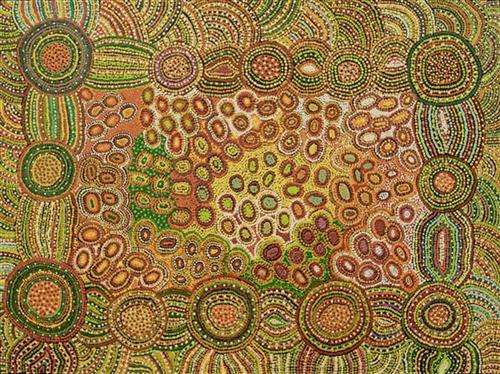
Ngayuku Walka / My Design

Walka means design or pattern. Artists use this title to describe artworks that are pattern based rather than descriptive or telling a story.

221282382062


Kaliny-kaliny / Honey Grevillea

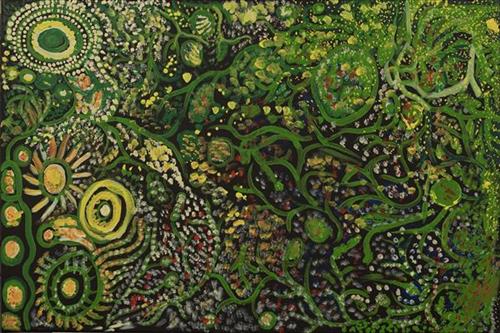
Stories are told of the Kaliny-kaliny or Honey Grevillea flower which is a favourite bush food of the Anangu Pitjantjatjara (people). Ultukunpa grows in the sandy soils on the plains. The flowers can be picked and placed in a billycan of water to create ‘honeywater’ (cordial) or they can be sucked for their sweet honey dew.

221282382055


Minyma Kutjara

There is a story of deep significance to women which contains metaphorical references to female cycles. It tells of two women travelling north. The pair meet with a group of women, including Kutungu, who are caring for a man who then passes away. They then travel to the area known as Mantaruta, near Uluru, where they chase a curious wanampi (serpent) deep into the ground while trying to catch him. They burn their body hair to attract him and hit him on the head and run away. From afar they throw a manguri/traditional head-ring for carrying which also hits him. He then comes and hits the women who travel on bleeding and hurt.

221282382054


Tjukula/Waterhole

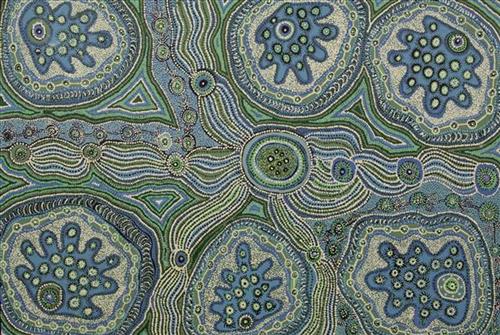
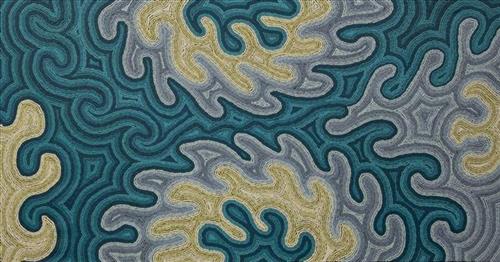
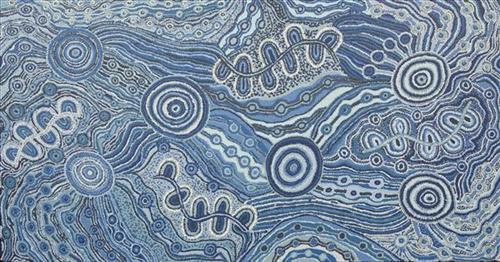
For the Pitjantjatjara people living in the desert, knowledge of their water sources was critical to their survival. This resulted in an intimate understanding of the landscape which continues today. Water is an essential element in the desert. These rock holes were particularly important during the dry season when most of the water holes and creeks dried up.  Deep familiarity with the topography of their country and the way rain would interact with the land ensured constant sources of water could be found. Knowledge of rock hole sites is passed on from generation to generation and revered by all Anangu (people).

Tjukula means rock-hole, which are found with surprising frequency in the Musgrave Ranges and country around Ernabella.  Between visits, Anangu would use a construction of rocks and spinifex to guard these important water sources from spoilage by feral and stock animals such as cattle, camels, horses and donkeys.