221282382052


Kungkarangkalpa / Seven Sisters

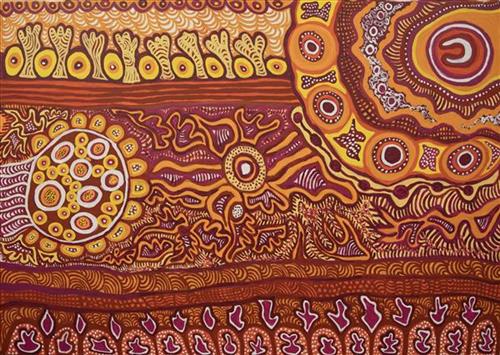
Kungkarangkalpa means the Seven Sisters. This is an extensive creation story that relates to the Pleiades constellation in the southern hemisphere. The story traverses Australia taking on different forms, however local women are privy to the part of the story which takes place in the country near Ernabella. For this part of the story, the man called Nyiru is chasing the sisters as he wants to sleep with the oldest sister. All the younger sisters are deeply afraid of him. As Nyiru is chasing the sisters, he tries to catch them by using magic to turn himself into the most tempting bush tomatoes for the sisters to eat and the most beautiful ili (fig) tree for the sisters to camp under. However, the sisters are aware of his magic and go hungry and run through the night rather than be caught by Nyiru. Eventually, to escape Nyiru, the sisters fly into the sky where they turn into stars and form the constellation.
221282382050


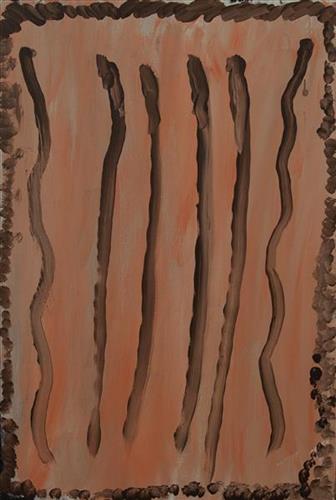
Kulata Tjuta – Many Spears

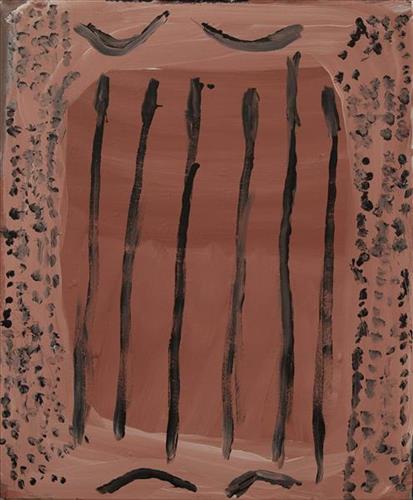
Freddy is painting his grandfather’s country in far west South Australia. He depicts kulata tjuta (many spears) travelling through the sky to catch wati wanampi (snake man). Those wati wanampi are moving fast through the sky. There was one woman waiting there with a baby and she said there was a wati who was nearby hiding in a bush, ready to duck down and go and then throw those spears.

221282382049


Kulata Tjuta – Kungkarangkalpa Freddy’s Story

Kungkarangkalpa means the Seven Sisters. This is an extensive creation story that relates to the Pleiades constellation in the southern hemisphere. The story traverses Australia taking on different forms, however Freddy’s part of the story is from his father’s country west of Atila (Mt Connor). For this part of the story a man called Nyiru is chasing the sisters as he wants to sleep with the oldest sister. All the younger sisters are deeply afraid of him. 

Nyiru makes kulata tjuta (many spears) and leaves them leaning up against a tree. When the sisters are travelling they find the spears resting there and realise that the wati kura (bad man) is nearby. They get frightened and run away. Eventually, to escape Nyiru, the sisters fly into the sky where they turn into stars and form the constellation.
359709482382506


Bag

Art Centre notes: 

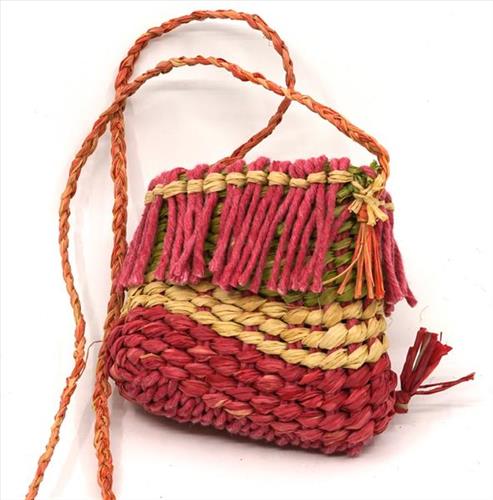
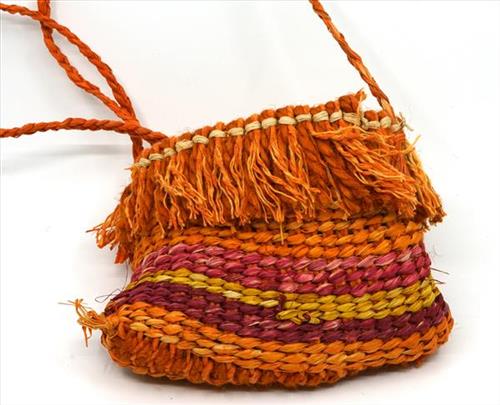
The basket / bag is made of natural raffia / cotton / jute / sea chord.

It is made using a traditional ‘one twist’ method. It has a thin / thick plaited strap and long tassles underneath. It has long tassels above and/or below.

The dyes are commercial and colour fast. 

Size of bowl:  10 x 11cm

Length of strap: 40cm

359709482382504


Bag

Art Centre notes: 

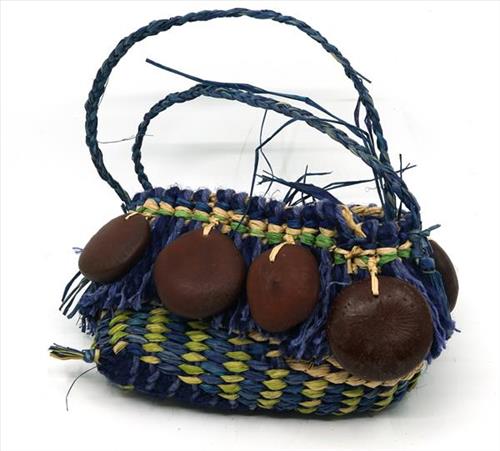
The basket / bag is made of natural raffia / cotton / jute / sea chord/ seeds.

It is made using a traditional ‘one twist’ method. It has a thin / thick plaited strap and long tassles underneath. It has long tassels above and/or below.

The dyes are commercial and colour fast. 

Size of bowl:  10 x 15cm

Length of strap: 40cm

359709482382503


Bag

Art Centre notes: 

The basket / bag is made of natural raffia / cotton / jute / sea chord.

It is made using a traditional ‘one twist’ method. It has a thin / thick plaited strap and long tassles underneath. It has long tassels above and/or below.

The dyes are commercial and colour fast. 

Size of bowl:  13 x 16cm

Length of strap: 40cm

222082383383


River red gum

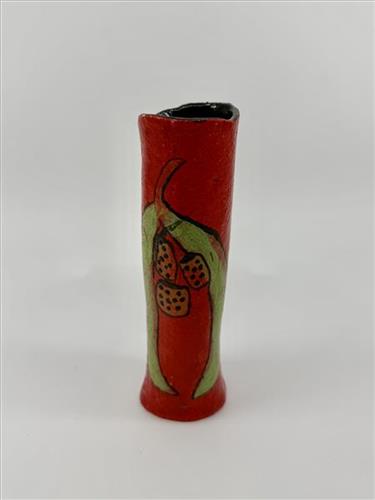
Like all my work I often like to paint and create work that reflect Yorta Yorta Country and memories of my childhood. The river red gum is a key memory for me, our landscape filled with red gum trees. It brings back memories as a child out bush with family.

114182383753


Kapi Tjukurla (Tjukurla Rock holes)

Kapi Tjukurla is a sacred women’s site where the sisters came to drink water from the rock hole. Knowledge of where to find Kapi Tjukurla was handed down through generations as it is a significant source in times of drought.

The kapi across the lands vary in size from as large as a car to as small as a deep kitchen sink. They can be found buried in the flat rock surface on the ground, at the bottom of a waterfall or among the ranges where there is an expanse of flat rock surface. Yarnangu kept these rock holes clear of dirt build up, dead animals and debris so the water can remain drinkable. These rock holes are still only used specifically for drinking and cooking when people go out on country. 

The circles in the painting represent Kapi Tjukurla. The lines connecting the circles are the creeks, streams or paths the water takes when it rains.