Dungala
The Murray River (Dungala)
The Murray River (Dungala)
All Aboriginal people originate from a spiritual source, fixed in a particular place in their land or the sea. These ‘spiritual reservoirs’ are often in the form of special waterholes made by Wangarr (creative spirits) that were created long ago close to the beginning of time. These creator beings moved across the countryside, shaping the land and implanting in each tract of country, the spiritual life force for the people who were to own it. These creative spirits took many forms and when they gave the land to each group, they also gave songs, dances, ceremony, the associated laws and language.
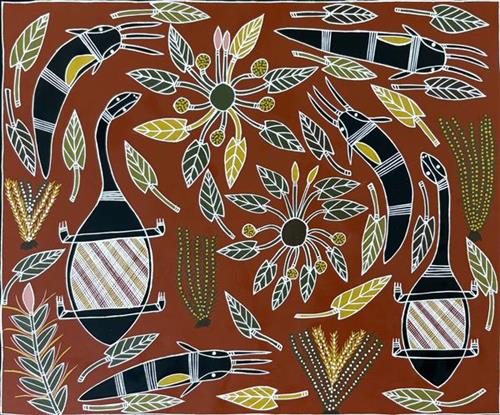
The creation story for Ganalbingu people took place near the middle section of the Glyde River where it becomes the Goyder River. Their land, Ngaliyindi, sits astride the Arafura Swamp in Central Arnhem Land. Many Ganalbingu artists paint totemic species significant to their clan. These can include baru (crocodile), banda (long necked turtle), buliya (catfish), yalman (waterlilies), gumang (magpie geese), dakawa (fresh water yabby), ratjuk (barramundi), warrnyu (flying fox) and more.
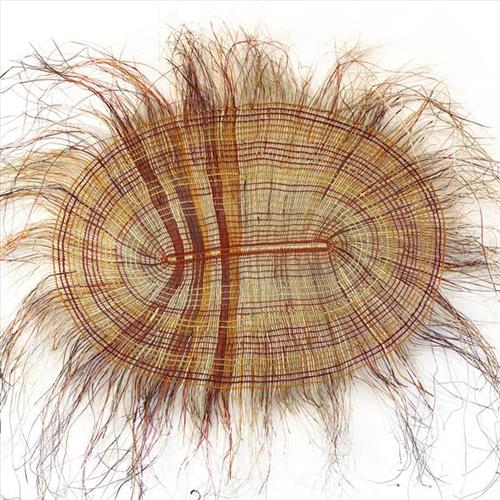
Yolŋu weavers of Arnhem Land create utilitarian, ceremonial, and decorative pieces using naturally sourced materials. This mat is made from young Pandanus spiralis leaves, harvested with a wooden hook, stripped of prickles, and dried to create strong, resilient fibres. These fibres are then twisted, coiled, or woven using traditional techniques to produce both functional and decorative mats.
Bula’bula weavers exclusively use natural dyes, derived from locally sourced roots, leaves and grasses. These pigments are extracted and infused into pandanus fibres by boiling over an open fire, producing the rich, vibrant colours characteristic of contemporary Yolŋu weavings.
Traditionally, Nganiyal (conical mats) functioned as insect screens when erected and as seating mats when folded, playing an important role in both daily life and ceremonial practices. Today, Yolŋu artists create a variety of shapes, including flat, round, and oblong mats. These non-traditional styles and the use of bright colours became more common after Missionaries began commissioning pieces in this style.
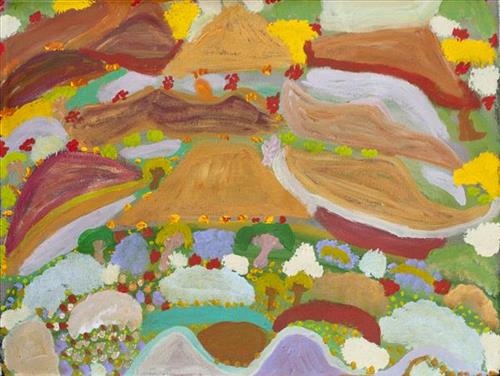
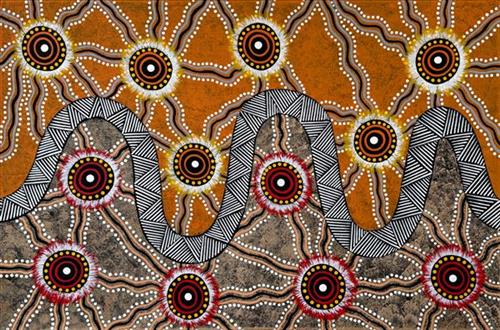
This Karlamilyi area, big land. That’s a ngurra (home camp) belonging to our old people, Warnman people. We talk for our land, our jila (dreamtime snake). At Nyayartakujarra (Lake Dora) two snakes been killed. Right here they got crook in the dreamtime. All the men, Nyanatjarra and Warnman, they were singing. One young fella, he threw a spear into the snake. That snake felt something there, got killed and burned.
There’s a big rain there, rain time. That river running through, he called Pirnpi. Whitefella way is Rudall River. There’s a bird, karuwarlkun (magpie), flying and singing everywhere in the Rudall River there. There’s a claypan there too, big claypan. Pangkartal we call him. Fill him up water when the rain time comes. Snake living there in Pangkartal, big one. He [the snake] going to listen to the owner of the land. When we sing out to him in a Warnman way, we tell him “Stop, don’t get cheeky. We coming in [to the land]”. He not cheeky, he a good one. Quiet snake.
The name for Kintyre is Yantikuji (Yandicoogina), red hill over there. They working, doing the mining there now. Next to Yantikuji is a big claypan, Wulpulpa, main camp and a water. That’s a hunting place. Plenty of bush tucker round there; kanjamarra (yam, bush carrot), like a carrot growing in the ground in the river bed there. You pull it out, just like a carrot! Lungki (witchedy grub), and jatarrpa, that’s like a seed, you gotta clean him up and grind it to make a flour wheat, make a damper in the waru (fire). We gonna get that seed and show you fellas. Minyarra (bush onion) there, and ngapurta (sweet, patterned green fruit, eaten raw), they all grow in the river banks.
I [Lily Long] was born there in Karlamilyi River, that’s my Country. Jartarr Ngarra, that’s the name for the place and that’s my name. That’s the living water place.”- Sisters Lily Long and Amy French
This painting depicts Karlamilyi, also known as Rudall River National Park. It is situated in between the communities of Parnngurr and Punmu and is a very beautiful and important area. Rudall River runs through Karlamilyi into Nyayartakujarra, or Lake Dora, a very large salt warla (lake). Karlamilyi is Warnman country, and lies in the very heart of the Martu homelands.
Status: Stock
Status: Stock
Hermannsburg Potters have had no working toilets for over a year. Our gallery and studio has been closed since September 2024 because of this and the artist have had to work in a temporary borrowed space that is not fit-for-purpose.
Can we say it’s a bit c***? A S***ty situation
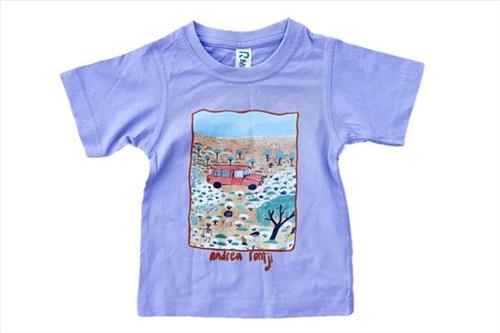
Celebrated artist (and comedian) Rona Rubuntja has designed this t-hsirt to raise funds to go towards the large-scale infrastructure works required to connect Hermannsburg Potters’ building to the sewer mains. It’s not a pretty or glamorous request, it’s been hard to drum up enthusiasm from supporters to construct a new sewer. But it’s a basic human need and essential for the art centre to re-open.
Status: Stock
Status: Stock
Status: Stock
When the season comes for bush fruit we go out to Country to look for bush orange called mpaltjarta. We been taught by our Elders- grandfather, grandmother, aunty, uncle. We go out to look for a mpaltjarta. When we find, we collect from the tree, others been on the ground. We collect them all up with a bucket or a box and bring it all back to share with family. It’s good for your health.
Status: Stock
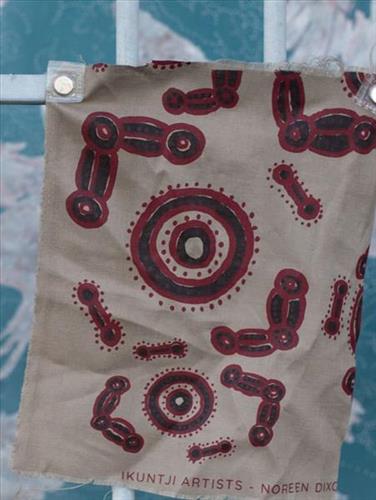
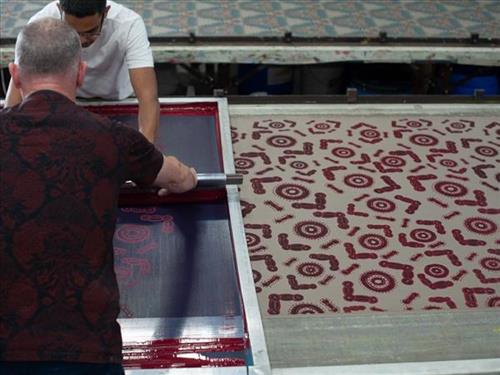
This design by Noreen Dixon shows the story of two female ancestors, sisters, in the Watarru area in South Australia.
These sisters are fleeing a man who is pursuing them, hiding in rockholes and caves amid the sandy desert plains. The hypnotising background patterns of lines and dots represent the vast sands of the desert. The younger sister is pregnant; this is indicated by the large symbol of concentric circles, which is the design painted onto pregnant women’s bellies for ceremony. The motif of two smaller circles connected by strong lines represents the body paint of the older sister, whose chest would be painted with this design. The oldest sister is caring for her younger sister and helping to keep them hidden from the man pursuing them.