111582385256


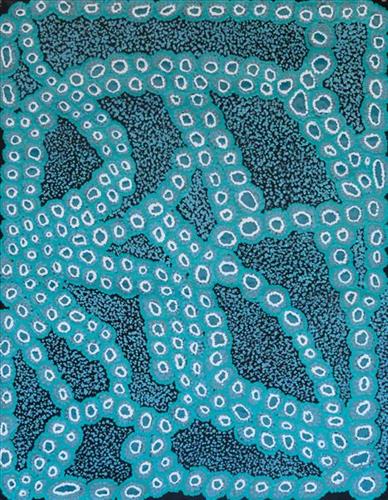
Kapi (Water)

“Martu people know how to find water in the desert, they know the Country looks different where there is water under the ground.”

– Corban Clause Williams

Depicted in this work are sources of kapi (water) within the artists’ ngurra (home Country, camp), typically represented with circular forms. During the pujiman (traditional, desert dwelling) period, knowledge of water sources was critical for survival, and today Martu Country is still defined in terms of the location and type of water. Each of the hundreds of claypans, rockholes, waterholes, soaks and springs found in the Martu desert homelands is known through real life experience and the recounting of Jukurrpa (Dreaming) narratives by name, location, quality and seasonal availability. This encyclopedic knowledge extends even to the nature and movement of arterial waterways, and sustained Martu as they travelled across their Country, hunting and gathering, visiting family, and fulfilling ceremonial obligations. They would traverse very large distances annually, visiting specific areas in the dry and wet season depending on the availability of water and the corresponding cycles of plant and animal life on which hunting and gathering bush tucker was reliant.
111582385255


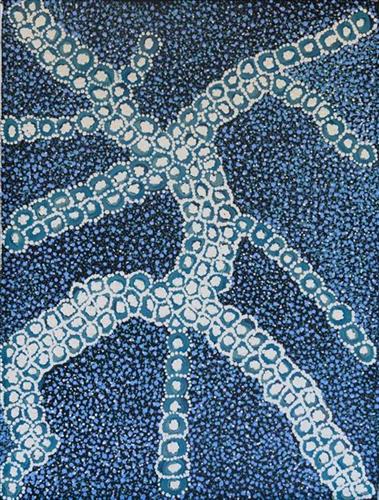
Kapi (Water)

“Martu people know how to find water in the desert, they know the Country looks different where there is water under the ground.”

– Corban Clause Williams

Depicted in this work are sources of kapi (water) within the artists’ ngurra (home Country, camp), typically represented with circular forms. During the pujiman (traditional, desert dwelling) period, knowledge of water sources was critical for survival, and today Martu Country is still defined in terms of the location and type of water. Each of the hundreds of claypans, rockholes, waterholes, soaks and springs found in the Martu desert homelands is known through real life experience and the recounting of Jukurrpa (Dreaming) narratives by name, location, quality and seasonal availability. This encyclopedic knowledge extends even to the nature and movement of arterial waterways, and sustained Martu as they travelled across their Country, hunting and gathering, visiting family, and fulfilling ceremonial obligations. They would traverse very large distances annually, visiting specific areas in the dry and wet season depending on the availability of water and the corresponding cycles of plant and animal life on which hunting and gathering bush tucker was reliant.

377810582385187


Manbirrbbirr (small bush flowers)

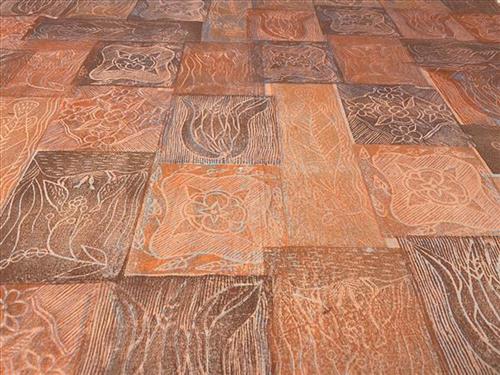
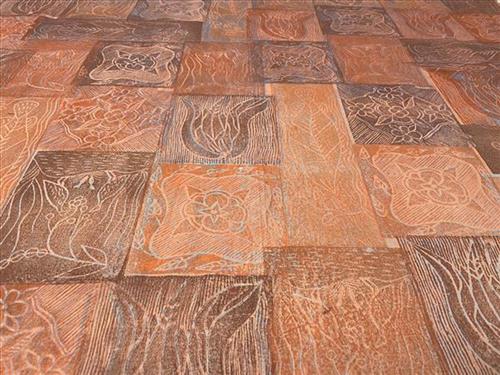
In Kuninjku the name manbirrbbirr is used for a number of densely flowering shrubs and small trees including Verticordia cunninghamii, yellow-flowering Austromyrtus species and also Acacia platycarpa which also has dense white flowers.

A multicoloured cloth with interlocking designs in a patchwork repeat. This cloth was printed by hand using the linocut technique. 


377810582385186


Manbirrbbirr (small bush flowers)

n Kuninjku the name manbirrbbirr is used for a number of densely flowering shrubs and small trees including Verticordia cunninghamii, yellow flowering Austromyrtus species and also Acacia platycarpa which also has dense white. This design is a patchwork of small Lino tiles representing various flowers in Arnhem Land. Abigail has incorporated the designs of her late mother. The cloth was hand dyed by Abigail’s aunt Deborah Wurrkidj. The striking yellow – orange hue comes from the root of the man-kurdudjumuk plant (coelospermum reticulatum) which has been harvested from the sandy country near the flood plains. This laborious and tiring process requires digging up the entire shrub. The root is shaven into a pot of water and the colour is released into water through the boiling process. Ashes have been added to soften the yellow into more of a peach orange tone.

37781464004631


Status: Stock


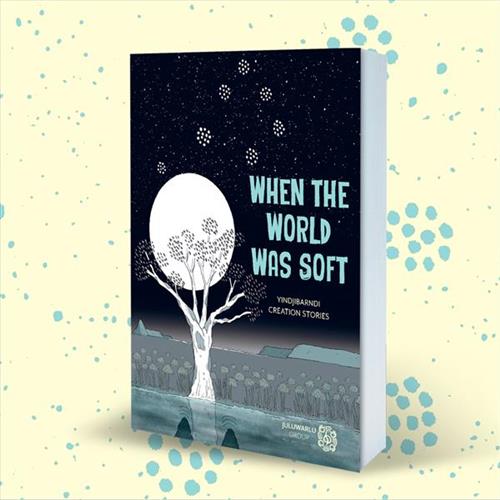
When the World Was Soft

A ground-breaking graphic novel sharing the stories of Yindjibarndi Creation-times in an immediate and engaging way for a contemporary audience.

FEATURES

  • QR code to listen to a reading of the book and educational resources.
  • Glossary of Yindjibarndi words and their English translations
  • 6 compelling Yindjibarndi Creation Stories 
  • Can be purchased with wings that invite children to immerse themselves in Creation Stories where the birds play a vital role

ABOUT

Yindjibarndi believe all creation is written in our landscape and was sung long ago, filling our Ngurra (Country) with sacred meanings and deep religious significance. At the dawn of time, Ngurra Nyujunggamu, the world was soft as clay and the sky was very low. Our Creator, Minkala, sang the songs from which all life and Ngurra evolved. These are some of our stories.

‘An extraordinary project, an invitation to share in a deep and sacred understanding of Country. When the World Was Soft imparts a sense of responsibility towards the young, and to Country, and is a testament to the power of communities telling their own stories.’ Books+Publishing

Dynamically illustrated by Alex Mankiewicz with striking artwork by members of the Juluwarlu Art Group, When the World Was Soft is a powerful gift of culture for young and old.

Juluwarlu Group Aboriginal Corporation is based in Roebourne and Ngurrawaana Community, in WA’s Pilbara region. Its purpose is to collect and promote knowledge of Yindjibarndi culture – our Ngurra, plants and animals; our language, genealogy, mythology, social history, and biography – to sustain our Yindjibarndi identity, giving self-esteem, respect, and other values we consider vital to our lives, our well-being, and our culture’s future. We do this for our children and our future generations so that they too, are inspired to contribute to our Australian national community. 

107581981246


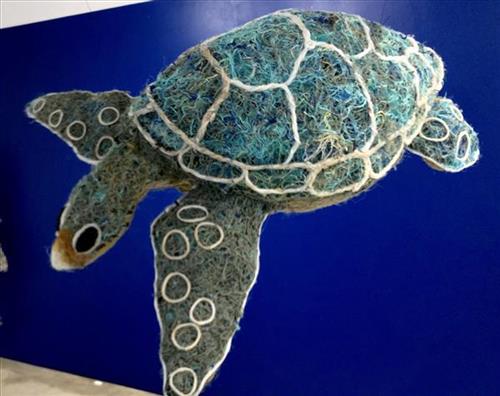
Kebi Neur

The turtle is significant to the people of Erub both as a tribal totem and as a traditional source of food for feastings and celebrations. A number of varieties of turtles nest and breed on the shores of the Torres Strait. Turtles are important to Torres Strait Islanders in so many different ways. It is one of their traditional tribal totems and it has been part of their customs to hunt turtles as one of their main food sources. In Australia, abandoned fishing nets (also known as ghost nets) from boats are washed ashore, trapping marine species such as turtles and dugongs. Sadly, these turtles make up 80 percent of the marine life found caught in these nets. As an environmental project, Erub Artists are utilising these abandoned ghost nets in an attempt to clean up the oceans. Their objective is to raise awareness about the negative impacts of ghost nets by creating art such as this turtle out of reclaimed fishing nets. We must respect the ocean because we need to make sure that we have turtles for the future. We only take what we need.

115982094708


Hunting Story

A husband is out hunting kangaroo while his partner cooks damper back at the camp.

115682378924


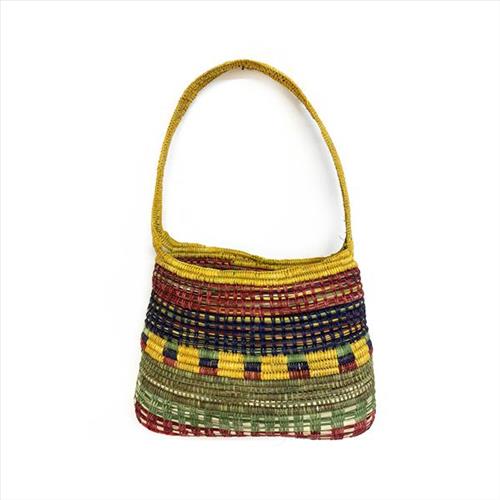
Bathi (Pandanus Basket)

Yolŋu weavers of Arnhem Land create utilitarian, ceremonial, and decorative pieces using naturally sourced materials. This Bathi (Pandanus Basket) is made from young Pandanus spiralis leaves, harvested with a wooden hook, stripped of prickles, and dried to create strong, resilient fibres. These fibres are then twisted, coiled, or woven using various techniques to produce both functional and decorative baskets.

Typically, Bathi are made using a coiling technique which was adapted from techniques used by Indigenous women throughout Southeast Australia. Introduced to Arnhem Land weavers in the 1930’s as Missionaries began commissioning pieces in this style.

Bula’bula weavers exclusively use natural dyes, derived from locally sourced roots, leaves and grasses. These pigments are extracted and infused into pandanus fibres by boiling over an open fire, producing the rich, vibrant colours characteristic of contemporary Yolŋu weavings.

225482382581


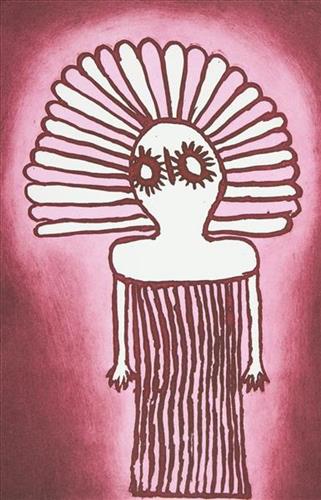
Wandjina the rainmaker

This Wandjina is called the rainmaker. Two lightning spirits in a cave are waiting for the clouds to gather up, so he can make the rain and lightning. Where you see a lot of Wandjinas they represent the laws of trees, rivers, rocks, bush fruit, animals and all of creation. The Wandjinas give the law on how we have to treat and use these creations. These customs are carried on today. The Wandjina spirits are highly respected by the Worrora, Ngarinyin and Wunumbul people who live at Mowanjum and up the Gibb River Road to Kalumburru in the North West Kimberley region of Western Australia.